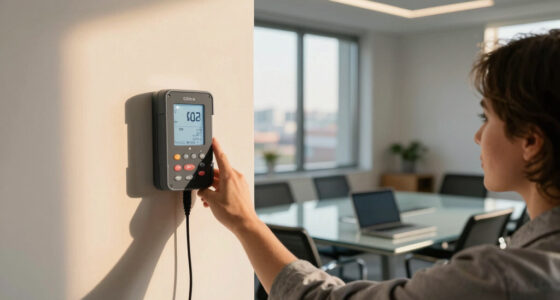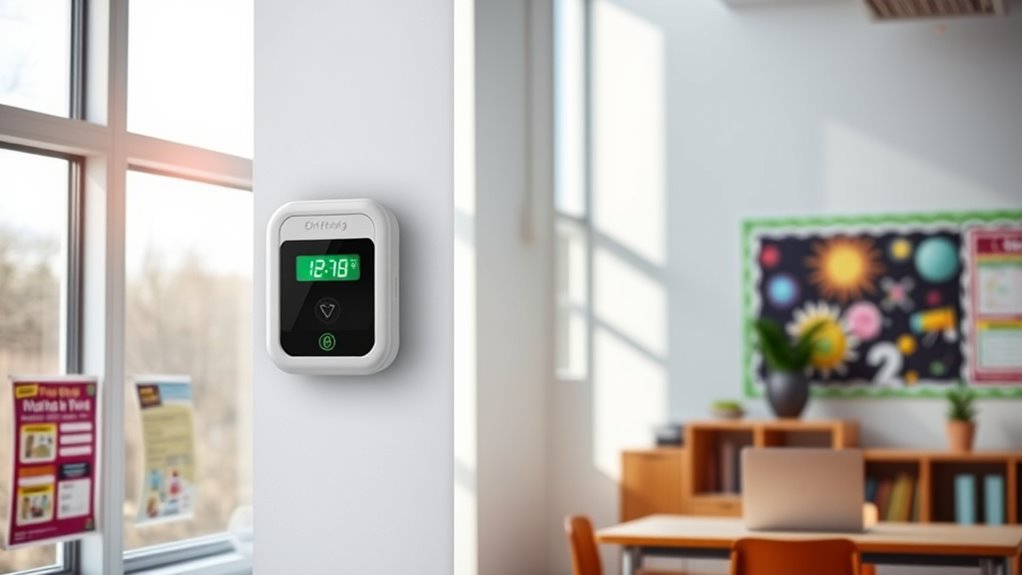
Choosing a combined CO₂ and VOC detector for schools is essential for maintaining healthy indoor air quality and ensuring safety. The Amazon Smart Air Quality Monitor stands out for its smart home integration and user-friendly design, making it ideal for tech-savvy schools. The AirKnight Premium Indoor Air Quality Monitor offers comprehensive data for proactive management, while the Kidde Smart Carbon Monoxide Detector & Indoor Air Quality Monitor provides seamless WiFi connectivity for real-time alerts. The main challenge for buyers lies in balancing advanced features with affordability and ease of installation. Continue reading for a detailed comparison to find the best fit for your school’s needs.

Get home appliances delivered free with Prime
- Fast, free delivery on millions of items
- Prime Video, Amazon Music and more included
- Member-only deals all year
Complete the kit


Key Takeaways
- Top picks combine CO₂ and VOC detection with user-friendly interfaces suitable for school staff.
- Wireless connectivity and smart features are crucial for real-time alerts and remote monitoring.
- Price varies significantly; the most advanced models tend to cost more but offer greater reliability.
- Many options include additional sensors for gases or particulate matter, adding value for comprehensive air quality management.
- Ease of installation and maintenance are often overlooked but essential for school environments to ensure ongoing safety.
| Amazon Smart Air Quality Monitor |  | Best Overall for Seamless Smart Home Integration | Particulate Matter (PM2.5): Yes | VOCs: Yes | Carbon Monoxide: Yes | VIEW ON AMAZON | See Our Full Breakdown |
| AirKnight Premium Indoor Air Quality Monitor |  | Best for Portable, All-in-One Air Quality Monitoring | Sensors: CO2, PM2.5, PM10, VOC, Formaldehyde | Display: Large LCD | Battery: 3000 mAh rechargeable | VIEW ON AMAZON | See Our Full Breakdown |
| BREATHE Airmonitor Plus Indoor Air Quality Monitor with CO₂, PM, and App (Gen 2) |  | Best for Data-Rich Monitoring with Mobile App Access | Battery Life: 6 hours | Data History: 90 days | Sensors: CO₂, PM1, PM2.5, PM10, TVOC, Formaldehyde, Temperature, Humidity | VIEW ON AMAZON | See Our Full Breakdown |
| Kidde Carbon Monoxide and Explosive Gas Alarm, Plug-in with Battery Backup |  | Best for Basic Indoor Gas Detection and Safety | Power Source: 120V plug-in with 9V battery backup | Alarm Sound: 85 dB | Display: Digital | VIEW ON AMAZON | See Our Full Breakdown |
| Kidde Smart Carbon Monoxide Detector & Indoor Air Quality Monitor |  | Best for Integrated Smart Safety and Air Quality Monitoring | Detection Type: 2-in-1 CO and air quality | Connectivity: WiFi, Alexa, Google Home, smartphone app | Installation: Plug-in | VIEW ON AMAZON | See Our Full Breakdown |
| TOPTES CT-580 Portable Carbon Monoxide Detector with TFT Color Display |  | Best for Portable CO Monitoring in Varied Environments | Detection Range: 0-1000 PPM | Alarm Modes: Visual, Audible, Vibration | Display: TFT Color Display | VIEW ON AMAZON | See Our Full Breakdown |
| combined co%e2%82%82 and voc detector for school | Display | Connectivity |
|---|---|---|
| Amazon Smart Air Quality Monit | — | Works with Alexa |
| AirKnight Premium Indoor Air Q | Large LCD | — |
| BREATHE Airmonitor Plus Indoor | Color display | Wi-Fi |
| Kidde Carbon Monoxide and Expl | Digital | — |
| Kidde Smart Carbon Monoxide De | — | WiFi, Alexa, Google Home, smartphone app |
| TOPTES CT-580 Portable Carbon | TFT Color Display | — |
More Details on Our Top Picks
Amazon Smart Air Quality Monitor
This option stands out for its easy integration with Alexa routines, making it ideal for schools already invested in Amazon smart devices. Unlike the Kidde Smart CO Detector, it not only monitors CO and VOCs but also tracks humidity and temperature, offering a more comprehensive indoor air picture. However, it depends heavily on Wi-Fi and Alexa, which could limit functionality if those systems are unavailable. Its straightforward setup and automation capabilities make it perfect for schools seeking a plug-and-play, connected solution. Still, the lack of portable design restricts use outside fixed indoor settings.
Pros:- Seamless integration with Alexa for automation and alerts
- Easy setup with minimal technical knowledge required
- Provides comprehensive indoor air quality monitoring (PM2.5, VOCs, CO, humidity, temperature)
Cons:- Requires Alexa device for full features, limiting flexibility
- Dependent on Wi-Fi connection, risking outages impacting alerts
Best for: Schools looking for a simple, integrated smart monitoring system that ties into existing Alexa setups
Not ideal for: Schools without Alexa devices or limited Wi-Fi infrastructure, as full functionality depends on these
- Particulate Matter (PM2.5):Yes
- VOCs:Yes
- Carbon Monoxide:Yes
- Humidity:Yes
- Temperature:Yes
- Connectivity:Works with Alexa
Our verdict“This monitor is ideal for schools seeking straightforward Alexa-compatible air quality management but less suited for environments without smart home infrastructure.”
AirKnight Premium Indoor Air Quality Monitor
Compared with the Amazon Smart Air Quality Monitor, the AirKnight offers a broader set of sensors, including CO2, formaldehyde, PM10, and PM2.5, making it ideal for schools needing detailed environmental data on the go. Its portability and rechargeable battery provide flexibility that fixed monitors lack, especially during emergencies like wildfires. Nonetheless, it requires users to understand air quality metrics, which might be a barrier for some staff. Its comprehensive detection and battery life make it suitable for temporary setups or mobile classrooms, but its lack of smart home integration limits automation options.
Pros:- Detects a wide range of pollutants including CO2, VOCs, formaldehyde
- Portable with rechargeable long-lasting battery
- Easy-to-read LCD display and user instructions
Cons:- No smart home integration, limiting automation
- Price information not transparent, potentially a barrier for some budgets
Best for: Schools that need portable, detailed air quality data during emergencies or in multiple locations
Not ideal for: Schools seeking automated, smart home-compatible solutions, as it lacks connectivity features
- Sensors:CO2, PM2.5, PM10, VOC, Formaldehyde
- Display:Large LCD
- Battery:3000 mAh rechargeable
- Portability:Yes
Our verdict“Ideal for mobile monitoring needs where portability and detailed detection are priorities, but less suited for automated or networked environments.”
BREATHE Airmonitor Plus Indoor Air Quality Monitor with CO₂, PM, and App (Gen 2)
Compared to the AirKnight, the BREATHE Airmonitor Plus emphasizes detailed data history and app control, making it more suitable for environments where ongoing monitoring is essential. Its 90-day data storage and detailed app interface make it a strong choice for schools wanting long-term insights into indoor air quality. However, its 6-hour battery life limits outdoor or off-grid use, and price considerations could be a barrier. Its Wi-Fi connectivity and data export options cater well to data-driven decision-making, but reliance on Wi-Fi means it’s vulnerable during outages.
Pros:- Provides comprehensive multi-sensor data including CO₂, PM, TVOC, formaldehyde
- Long-term data storage with 90-day history
- User-friendly app with alerts, graphs, and data export
Cons:- Limited to 6 hours of battery life, restricting outdoor use
- Requires Wi-Fi for full functionality, vulnerable during outages
Best for: Schools prioritizing detailed historical data and easy access via mobile app for ongoing indoor air quality management
Not ideal for: Schools needing long-term portable monitoring without frequent recharging, due to limited battery life
- Battery Life:6 hours
- Data History:90 days
- Sensors:CO₂, PM1, PM2.5, PM10, TVOC, Formaldehyde, Temperature, Humidity
- Connectivity:Wi-Fi
- Display:Color display
- Power:USB-C rechargeable
Our verdict“Best suited for schools looking for detailed, long-term indoor air data accessible via app, but less ideal for portable outdoor use.”
Kidde Carbon Monoxide and Explosive Gas Alarm, Plug-in with Battery Backup
This Kidde alarm focuses solely on gas detection, with no smart connectivity like the Kidde WiFi model, making it a straightforward safety device. Its plug-in design with battery backup ensures continuous operation during outages, making it reliable for basic CO and explosive gas detection. Compared with smart monitors, it lacks alerts via app or voice, limiting its integration into a broader monitoring system. Nonetheless, for schools needing a simple, dependable detector without smart features, this device provides essential safety without complexity.
Pros:- Simple plug-in installation with battery backup
- Digital display shows gas levels clearly
- Reliable detection of CO and explosive gases
Cons:- No smart connectivity or remote alerts
- Limited to indoor use without automation capabilities
Best for: Schools seeking a reliable, easy-to-install gas alarm without the need for smart home features
Not ideal for: Schools wanting integrated alerts, app control, or data export, as this model is purely alarm-based
- Power Source:120V plug-in with 9V battery backup
- Alarm Sound:85 dB
- Display:Digital
- Detection:CO, explosive gases
Our verdict“A solid choice for basic gas safety in environments where smart features are not required, but lacking in modern connectivity options.”
Kidde Smart Carbon Monoxide Detector & Indoor Air Quality Monitor
This device combines CO detection and air quality monitoring, with smart features like voice alerts and app notifications, making it an appealing upgrade over simple alarms like the Kidde plug-in model. It offers more comprehensive safety coverage and integrates with Alexa and Google Home, unlike the standalone Kidde alarm. However, its reliance on Wi-Fi and limited information about power backup can be drawbacks if outages occur. It’s ideal for schools seeking a single, connected device that covers multiple hazards and provides remote monitoring capabilities, but less suitable where wireless connectivity is unstable.
Pros:- Combines CO detection and air quality monitoring in one unit
- Voice alerts and app notifications enhance safety responses
- Easy installation with app setup and smart home compatibility
Cons:- Dependent on Wi-Fi connectivity for full features
- Limited details on power backup, risking gaps during outages
Best for: Schools wanting a multi-functional, smart safety device with voice alerts and remote monitoring
Not ideal for: Schools with unreliable Wi-Fi or those needing a purely battery-powered, non-connected device
- Detection Type:2-in-1 CO and air quality
- Connectivity:WiFi, Alexa, Google Home, smartphone app
- Installation:Plug-in
- Monitored Hazards:CO, TVOCs, humidity
Our verdict“Suitable for schools seeking a connected, all-in-one hazard detector with smart alerts, but less so where Wi-Fi stability is a concern.”
TOPTES CT-580 Portable Carbon Monoxide Detector with TFT Color Display
The TOPTES CT-580 stands out for its portability and user-friendly features, making it ideal for quick CO checks in multiple settings. Unlike stationary monitors like the Kidde Plug-in CO detectors, this device offers a compact design with a TFT color display that clearly shows real-time CO levels, ensuring immediate awareness. Its rapid response time of 0.3 seconds enhances safety during outdoor activities or travel, while adjustable brightness and a built-in flashlight add convenience in low-light conditions. However, its detection limit of 1000 PPM might be insufficient for certain industrial environments where higher concentrations can occur, unlike more specialized monitors designed for industrial safety. The device’s rechargeable USB-C power source improves portability but requires carrying a cable, which could be inconvenient. Overall, this pick makes the most sense for individuals needing reliable, on-the-go CO detection, such as campers or travelers who want quick visual confirmation of air quality without bulky equipment.
Pros:- Fast response time within 0.3 seconds for immediate alerts
- High-visibility TFT color display enhances readability
- Multiple alarm modes (visual, audible, vibration) for reliable alerts
- Compact, lightweight, and durable for outdoor use
Cons:- Requires a USB-C charging cable (not included), which could be inconvenient
- Limited detection range capped at 1000 PPM, unsuitable for high-risk industrial environments
Best for: Families, campers, or travelers needing portable CO detection with clear visual feedback
Not ideal for: Industrial facilities or technicians requiring detection beyond 1000 PPM or specialized sensors
- Detection Range:0-1000 PPM
- Alarm Modes:Visual, Audible, Vibration
- Display:TFT Color Display
- Power Source:USB-C Rechargeable
- Material:ABS Plastic
- Certifications:Certified by a national accredited lab
Our verdict“This device is perfect for those who need portable, quick, and visual CO detection in non-industrial settings.”

How We Picked
Our evaluation focused on performance, usability, build quality, and value. We prioritized products with accurate sensors, reliable connectivity, and straightforward interfaces suitable for school staff. Durability and ease of installation were also key, given the busy nature of educational settings. Our ranking reflects a balance between advanced features and cost-effectiveness, ensuring options are practical for different school budgets and technical capabilities.| combined co%e2%82%82 and voc detector for school | Connectivity | Display |
|---|---|---|
| Amazon Smart Air Quality Monit | Works with Alexa | — |
| AirKnight Premium Indoor Air Q | — | Large LCD |
| BREATHE Airmonitor Plus Indoor | Wi-Fi | Color display |
| Kidde Carbon Monoxide and Expl | — | Digital |
| Kidde Smart Carbon Monoxide De | WiFi, Alexa, Google Home, smartphone app | — |
| TOPTES CT-580 Portable Carbon | — | TFT Color Display |
Factors to Consider When Choosing Combined Co%e2%82%82 And Voc Detector For Schools
When selecting a combined CO₂ and VOC detector for schools, it’s important to consider several factors that go beyond basic features. Reliability and sensor accuracy are paramount, as false alarms can cause unnecessary disruptions or complacency. Ease of use and maintenance influence whether staff will actively monitor air quality or ignore alerts. Connectivity options, such as WiFi or app integration, enable remote monitoring, which is essential for large or multiple buildings. Finally, budget and long-term value should guide your choice—higher upfront costs may translate into lower total ownership expenses if the device requires less maintenance or delivers more reliable data.Sensor Accuracy and Reliability
Accurate sensors are the backbone of effective air quality monitoring. Devices with proven reliability reduce false alarms and provide trustworthy data for decision-making. In school environments, where safety is critical, sensors that calibrate easily and maintain accuracy over time are especially valuable. Cheaper sensors may save money initially but often compromise on precision, leading to potential safety risks or unnecessary disruptions.
Ease of Use and Maintenance
Devices should be straightforward for staff to operate without extensive training. Features like clear displays, simple calibration procedures, and minimal maintenance requirements help ensure consistent use. Overly complex systems can lead to neglect or misinterpretation of data, which diminishes their safety benefits. Look for models with intuitive interfaces and accessible support resources.
Connectivity and Alerts
Wireless connectivity, especially WiFi or Bluetooth, enhances the utility of air quality monitors by enabling remote alerts and data logging. Schools benefit from instant notifications to staff via apps or email, so issues are addressed promptly. However, reliance on WiFi introduces potential points of failure; therefore, evaluating the stability and security of connectivity options is advisable.
Coverage and Scalability
Consider the size of your facility and whether a single device suffices or multiple units are needed. Some detectors are designed for small rooms, while others can monitor entire classrooms or common areas. Scalability is important if your school plans to expand or wants centralized monitoring, which can simplify management and reporting.
Budget and Long-Term Value
While budget constraints are real, investing in higher-quality devices can reduce long-term costs related to maintenance, replacements, or false alarms. Cheaper models might seem attractive initially but may require more frequent calibrations or replacements. Balancing upfront costs with durability and feature set ensures the best value over time.
Frequently Asked Questions
How accurate are combined CO₂ and VOC detectors for schools?
Sensor accuracy varies across models, but reputable detectors use calibrated sensors that provide reliable readings over time. Accurate devices are designed to minimize false alarms and offer consistent data, which is vital for maintaining safe indoor environments. Regular calibration and proper placement also influence overall accuracy, so choosing a model with easy calibration features can help sustain reliability.
Can these detectors be connected to school alert systems or apps?
Many modern detectors include WiFi or Bluetooth connectivity, allowing integration with school alert systems or mobile applications. This capability enables staff to receive real-time notifications and monitor air quality remotely. However, compatibility varies, so verifying the specific integration options and ensuring the school’s network infrastructure supports these features is important before purchasing.
Are these detectors suitable for large school buildings?
Single detectors typically serve small to medium-sized rooms, so larger facilities may require multiple units for comprehensive coverage. Some models offer networked solutions that can centralize data from multiple sensors, providing a broader view of indoor air quality across the campus. Evaluating your building’s size and layout helps determine how many units are necessary for effective monitoring.
What is the typical maintenance required for these detectors?
Maintenance usually involves periodic calibration, sensor cleaning, and battery replacements if applicable. Many devices now feature self-calibration or low-maintenance designs, reducing ongoing effort for school staff. Regularly checking the device’s status indicators and following manufacturer guidelines can help ensure continued accuracy and reliability over time.
Is investing in a premium model worth it for a school?
Premium models often provide more advanced sensors, better build quality, and enhanced connectivity features, which can translate into more reliable data and easier management. For larger schools or those with strict safety standards, these benefits justify the higher initial investment. However, for smaller or budget-conscious schools, mid-range models may offer a good balance of accuracy and affordability, especially if supplemented with proper maintenance.
Conclusion
For school administrators seeking comprehensive safety solutions, the AirKnight Premium Indoor Air Quality Monitor offers a balanced mix of accuracy, ease of use, and connectivity, making it the best overall choice. Budget-conscious schools will find the Kidde Carbon Monoxide and Explosive Gas Alarm to be a reliable, affordable option for basic detection needs. Larger institutions or those prioritizing advanced remote monitoring might prefer the Kidde Smart Carbon Monoxide Detector & Indoor Air Quality Monitor with WiFi integration. For those new to air quality monitoring, simpler plug-in detectors like the TOPTES CT-580 provide an easy entry point. Ultimately, selecting the right device depends on your specific safety priorities, building size, and budget constraints.
Black Friday Picks

Philips Hue Play Floor Lamp, RGBWWIC LED, 53 Inch, Black
As an affiliate, we earn on qualifying purchases.