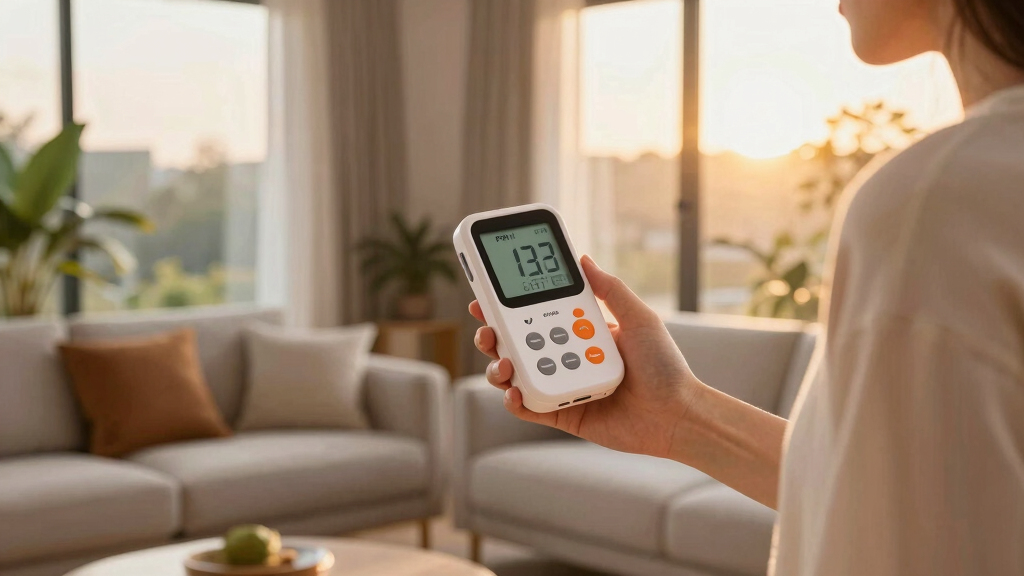

When wildfire smoke thickens the air, having an accurate PM2.5 monitor becomes essential for health and safety. The Temtop P600 stands out as the best overall choice for its reliable data and clear display, making it ideal for those monitoring outdoor air. For more budget-friendly options, the INKBIRDPLUS offers portability and strong alerts, perfect for quick checks around a home or car. Meanwhile, the 18-in-1 Smart Air Quality Monitor provides comprehensive indoor data via WiFi, suited for tech-savvy users seeking detailed insights. The main tradeoffs in this category involve balancing accuracy, ease of use, and connectivity features. Continue reading for a detailed breakdown of each monitor’s strengths and tradeoffs.
Key Takeaways
- The top-performing monitors excel in providing real-time, accurate PM2.5 data, especially during high pollution events like wildfires.
- Portability and ease of setup vary widely; compact models like the INKBIRDPLUS are best for quick checks, while more advanced units offer extensive data but require setup.
- Connectivity features such as WiFi or app integration significantly enhance data access and historical tracking, but often come with higher costs.
- Build quality and durability are crucial for outdoor use, with some units rated for both indoor and outdoor environments.
- Price ranges reflect feature sets; more expensive models tend to offer better accuracy, longer battery life, and comprehensive data analysis.



More Details on Our Top Picks
Temtop Air Quality Monitor PM2.5 PM10 Particle Counter, Formaldehyde, Temperature, Humidity, TVOC AQI Tester for Indoor/Outdoor Air Pollution Detection w/Data Export
This model stands out for its all-in-one design, measuring PM2.5, PM10, formaldehyde, VOCs, temperature, humidity, and AQI with sensors tested for high accuracy (R2 up to 0.999). Compared with the Temtop P600, it offers more comprehensive data export options and real-time histograms, making long-term tracking straightforward. The Dart electrochemical sensors provide consistent readings, but all consumer formaldehyde sensors can be affected by alcohol or cleaning products, which is a potential drawback. Its portability and data export capabilities make it ideal for users needing detailed air quality logs, especially during wildfire season. However, calibration influences can slightly skew formaldehyde readings if substances like air fresheners are present. Best suited for homeowners and outdoor enthusiasts seeking reliable, multi-factor data.
Specs: Multi-parameter measurement, Data export, Durable sensor, Up to 3 months recording, High accuracy sensors, Easy-to-read display, All-in-one design, 20,000 hours sensor lifespan.Pros:- Highly accurate sensors for multiple air quality factors
- Data export and historical histogram features
- Long sensor lifespan and durable build
- Pre-calibrated sensors for ease of use
Cons:- Formalhyde readings can be affected by household substances
- Relatively larger and less discreet for quick spot checks
Best for: Homeowners and outdoor adventurers needing comprehensive, long-term air quality data during wildfire season
Not ideal for: Casual users or those only interested in PM2.5 levels, as this device offers extensive features that may be unnecessary
- Measurement Range:PM2.5, PM10, Formaldehyde, VOCs, Temp, Humidity
- Data Export:Yes, CSV/Excel compatible
- Sensor Lifespan:20,000 hours
- Connectivity:Data export via USB
- Display:Easy-to-read digital
- Battery:Built-in lithium battery
- Size:6.9 x 2.6 x 1.2 inches
- Weight:0.9 pounds
Bottom line: This monitor is best for users who want detailed, reliable air quality data across multiple parameters, especially during wildfire season.
Air Quality Monitor, Formaldehyde Detector, Temperature & Humidity Meter, Pollution Tester, Sensor; Detect PM2.5/PM10/PM1.0 Micron Dust, Test Indoor TVOC Volatile Organic Compound Gas; eBook
This pick makes the most sense for users who want a straightforward, portable device for quick air quality checks, with a focus on PM levels, TVOC, and formaldehyde. Unlike the Temtop models, it emphasizes portability with a built-in stand and a bright color LCD, making it ideal for spot checks in different locations. The inclusion of an internal fan and advanced sensors means fast, real-time readings, but it lacks long-term data logging or export functions, which could be a limitation during extended wildfire seasons. Its accuracy matches that of more expensive models, but the simplified interface and compact size trade some detailed insights for ease of use. Best suited for individuals needing quick, on-the-go indoor air quality assessments.
Specs: Portable design, Built-in fan, Color LCD display, Real-time measurements, Formaldehyde, TVOC, PM detection, Auto calibration, Comes with eBook.Pros:- Portable and easy to carry
- Fast real-time readings with built-in fan
- Bright LCD display for quick assessment
- Includes educational eBook for better understanding
Cons:- No long-term data storage or export
- Limited to indoor use and spot checks
- Battery life may be limited with frequent use
Best for: Individuals who want quick, portable indoor air quality checks, especially in homes or hotel rooms
Not ideal for: Users needing detailed logs or long-term data analysis during wildfire seasons, as this device lacks export features
- Display:Color LCD 2.8” 320×240
- Power:Built-in lithium battery
- Sensors:Laser dust, electrochemical formaldehyde & TVOC
- Measurement Range:PM1.0, PM2.5, PM10, Formaldehyde, TVOC
- Auto Calibration:Yes
- Size:Portable with stand
- Connectivity:No data export
- Included:eBook on air hazards
Bottom line: This device is best for users seeking a simple, portable way to monitor indoor air quality during wildfire season without complex features.
INKBIRDPLUS PM2.5 Indoor Air Quality Monitor, Portable PM2.5 PM10 and Temperature Humidity Detector, with Sound and Light Dual Alert, PM2.5 PM10 Indication, for Home, Office, School
This 4-in-1 device excels at providing immediate visual and audible alerts when PM2.5 or PM10 levels surpass safe thresholds, making it ideal for environments where quick responses are needed. Its intuitive 3-color breathing light and sound alarms give clear indicators, contrasting with the Temtop P600, which focuses on data visualization over real-time alerts. While its accuracy is reliable for everyday use, it doesn’t offer long-term data storage or export options, which limits its use for detailed trend analysis. Its compact size and dual alert system make it highly practical for homes, schools, and offices during wildfire season. A tradeoff is that it emphasizes alerts over detailed data, which may not suit users needing in-depth analysis. Best suited for people who prefer immediate alerts for safety concerns.
Specs: 4-in-1 detection, Visual and sound alerts, PM2.5/PM10 levels, Portable size, Easy to understand indicator lights, Adjustable alert thresholds, Power source: battery or USB, Compact design.Pros:- Clear visual and audible alerts
- Easy-to-understand color breathing lights
- Portable and simple to operate
- Adjustable alert thresholds for safety
Cons:- No data export or long-term storage
- Limited to indoor alerts without detailed logs
- Accuracy may vary with environmental factors
Best for: Home users, school administrators, and office managers needing quick alerts on air quality hazards
Not ideal for: Data analysts or those seeking long-term tracking, as it lacks data logging or export features
- Detection:PM2.5, PM10
- Alert System:Sound and light dual alerts
- Display:Color breathing light
- Power:Battery/USB
- Size:Compact portable
- Measurement Range:PM2.5 up to 1000 μg/m³
- Calibration:Auto
- Connectivity:None
Bottom line: This monitor is ideal for users who prioritize immediate safety alerts over detailed data during wildfire season.
Temtop PM2.5 Monitor P600, Essential Air Particle Meter PM2.5 PM10 Air Quality Tester for Indoor/Outdoor Air Pollution Detection, Particle-Centric Detector w/Data Histogram Display
This model makes the most sense for users who want to observe air quality trends over time; its large data histogram displays PM2.5 and PM10 levels over the past 12 hours, unlike the others that focus on real-time snapshots. The Temtop P600’s industrial-grade sensor offers over 20,000 hours of lifespan and uses advanced particle swarm optimization for stability, but it lacks export capabilities, limiting long-term analysis outside the device. Its straightforward display and histogram are perfect for users who want to understand fluctuations in wildfire season, but it doesn’t provide detailed multi-parameter data like formaldehyde or VOCs. Its simplicity favors those who prefer trend visualization over multiple air quality factors. Best suited for users who need visual trend data for indoor/outdoor air quality during wildfire events.
Specs: Particle sensor, Data histogram, Long sensor lifespan, Indoor/outdoor use, User-friendly display, 12-hour data storage, Particle swarm algorithm, No data export, Handheld design.Pros:- Detailed 12-hour histogram display
- Industrial-grade sensor with long lifespan
- User-friendly interface
- Effective for trend analysis
Cons:- No data export or detailed chemical analysis
- Limited to PM2.5 and PM10
- Does not measure formaldehyde or VOCs
Best for: Environmental enthusiasts and homeowners interested in tracking air quality trends during wildfire season
Not ideal for: People needing detailed chemical or VOC measurements, as this device focuses on PM levels alone
- Sensor Type:Particle laser sensor
- Data Storage:12 hours
- Display:Histogram
- Measurement Range:PM2.5, PM10
- Lifespan:Over 20,000 hours
- Indoor/Outdoor:Yes
- Connectivity:None
- Size:Lightweight handheld
Bottom line: This monitor is best for users who want clear visual trend data of particulate levels during wildfire season, rather than detailed chemical analysis.
8-in-1 Air Quality Monitor Indoor, CF-20 Portable Air Quality Tester CO2 Monitor (PM2.5, PM10, CO2, VOC, Formaldehyde, Humidity, Temp) Wildfire Protection Long Battery Life & Real-Time Data
This pick excels at tracking multiple variables relevant during wildfire season: PM levels, CO2, VOCs, formaldehyde, humidity, and temperature, all in a portable, easy-to-read device. Compared with the Temtop models, it offers more comprehensive indoor monitoring with real-time data and alerts, making it ideal for homes, schools, and workplaces. Its NDIR sensor for CO2 and high-performance particle sensors ensure quick and accurate readings, while the auto-dimming screen conserves power. The device’s long battery life and audible/visual alerts make it particularly suitable for wildfire-prone areas where air quality can change rapidly. A tradeoff is that it may be more expensive and slightly larger, which could be less convenient for discreet or quick checks. Best for those needing all-around indoor air quality monitoring with wildfire risk in mind.
Specs: 8-in-1 detection, Real-time data, Long battery life, Portable LCD, CO2, PM2.5/10, VOC, Formaldehyde, Humidity, Temp, Auto-dimming, Suitable for indoor use.Pros:- Multi-parameter detection including CO2 and formaldehyde
- Real-time alerts and long battery life
- Portable with large LCD display
- Auto-dimming for night use
Cons:- Higher cost compared to simpler PM monitors
- Larger size may reduce portability for quick spot checks
- Complex interface for users only interested in PM levels
Best for: Families, schools, and workplaces requiring broad indoor air quality monitoring during wildfire season
Not ideal for: Users seeking solely outdoor or short-term assessments, as this device is optimized for continuous indoor use
- Parameters:PM2.5, PM10, CO2, VOC, Formaldehyde, Humidity, Temp
- Display:Large LCD
- Battery:Extended 2600mAh
- Auto Dimming:Yes
- Portability:Yes
- Indoor/Outdoor:Indoor
- Alerts:Visual and audible
- Size:Moderate
Bottom line: This device is best for users who need detailed, multi-parameter indoor air quality data with wildfire concerns in mind.
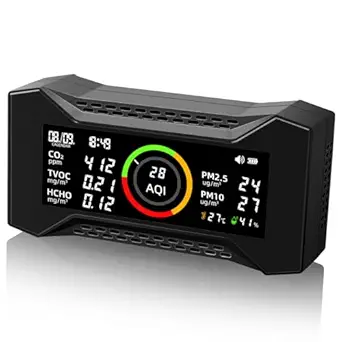
18-in-1 Smart Air Quality Monitor, WiFi Indoor Air Detector with Dual Chip, Real-Time Monitoring for AQI, CO2, PM2.5, PM1.0, PM10, TVOC, HCHO, Time, Temperature and Humidity with APP
This device stands out for its extensive sensor array, providing not only PM2.5 data but also CO2, TVOC, HCHO, temperature, and humidity readings, making it ideal for those who want a thorough picture of indoor air quality. Compared with simpler monitors like the INKBIRDPLUS, it offers a broader range of metrics, with the added benefit of real-time app connectivity that logs historical data and sends notifications. The dual-chip technology enhances accuracy and responsiveness, ensuring quick detection of pollutants and gas buildup. While its versatility is impressive, the device’s size and reliance on Wi-Fi for full functionality may be a drawback for users seeking a straightforward, standalone PM2.5 monitor. Its battery life of approximately 6 hours on screen and the need for Wi-Fi setup might limit portability for some. Nonetheless, for those wanting detailed, multi-faceted indoor air insights, this monitor makes a compelling choice.
Pros:- Provides a wide range of air quality metrics including PM1.0, PM10, CO2, TVOC, and HCHO
- Dual-chip technology ensures high accuracy and fast response times
- App connectivity allows remote monitoring, data logging, and notifications
- Versatile mounting options—wall-mountable or stands vertically
Cons:- Relies on Wi-Fi, which may limit usability in low-connectivity areas
- Battery life of 5.5 to 6 hours with the screen on; needs constant power for extended use
- Larger size may be less discreet or portable than smaller, dedicated PM2.5 monitors
Best for: Homeowners or facility managers who need detailed, real-time indoor air quality data across multiple parameters for health-sensitive environments.
Not ideal for: Users seeking a simple, portable PM2.5-only device or those with limited Wi-Fi access, as this monitor’s full functionality depends heavily on app integration and stable internet.
- Sensor Range:AQI, CO2, PM1.0, PM2.5, PM10, TVOC, HCHO
- Connectivity:Wi-Fi (2.4GHz), App (Smart Life, Tuya Smart)
- Display:HD LCD with adjustable brightness
- Power:3000mAh battery, Type-C charging, 7-15 hours standby
- Size:2 x 4 x 3 inches
- Additional features:Wall-mountable, auto-brightness, notifications
Bottom line: This monitor is best suited for users who prioritize comprehensive indoor air quality tracking and data management over portability.

How We Picked
In selecting these monitors, I prioritized accuracy in measuring PM2.5 levels, especially during wildfire events, as this directly impacts health decisions. Ease of use, including setup, display clarity, and alert systems, was also a key factor, since quick interpretation can be lifesaving. Build quality and durability, particularly for outdoor or portable use, mattered to ensure longevity and resilience in challenging conditions. Connectivity features like app integration were considered for those who want detailed tracking and historical data. Cost was weighed against these features to identify options that offer the best value for different budgets. The ranking reflects a balance of performance, usability, durability, and overall value, aiming to serve different user needs from casual homeowners to tech enthusiasts.Factors to Consider When Choosing Best Pm2.5 Monitor For Wildfire Season
Choosing the right PM2.5 monitor for wildfire season involves understanding several key factors. Beyond just accuracy, consider how the device fits into your environment, your budget, and how you plan to use it. A good monitor should be reliable, easy to read, and provide timely alerts. Additional features like connectivity or portability can greatly enhance its usefulness, but also impact the price. Carefully weighing these factors ensures you get a monitor that effectively protects your health during wildfire events.Accuracy and Sensor Quality
Accurate PM2.5 readings are vital during wildfire season because they directly influence your health choices. Look for monitors with recognized sensor technology that can reliably detect fine particles in varying conditions. Cheaper models may sacrifice precision, leading to false reassurance or unnecessary concern. Reading reviews and checking calibration features can help identify units that maintain accuracy over time.
Ease of Use and Display
A monitor should present data in a clear, easy-to-understand manner, especially during stressful wildfire events. Large, backlit displays, simple icons, and straightforward alert systems are valuable. Consider whether the device offers real-time updates and whether the interface is user-friendly for quick decision-making. Complicated setups or obscure data can diminish the device’s utility when it’s needed most.
Portability and Durability
For outdoor use or moving between locations, portability becomes essential. Compact designs with long battery life allow you to carry the monitor outdoors or keep it in different rooms. Durability matters if you plan to use it outside, where weather conditions can affect performance. Waterproof or rugged models are better suited for outdoor wildfire environments, preventing damage from moisture or impacts.
Connectivity and Data Access
Many advanced monitors include WiFi or Bluetooth for real-time data access via apps, which can be a game-changer during wildfire seasons. These features allow you to track historical trends, set alerts, and share data with health professionals or family members. However, increased connectivity often adds to the cost and complexity, so consider if these features align with your tech comfort level and needs.
Price and Value
Price points vary widely from basic, budget options to high-end models with extensive features. Determine your budget and weigh it against the features you need—accuracy, alerts, connectivity, and durability. Sometimes, paying more results in more reliable performance and longer lifespan, but budget models can still provide sufficient data for casual monitoring. Avoid overspending on features you won’t use, but don’t skimp on quality if safety is your priority.
Frequently Asked Questions
How accurate are these PM2.5 monitors during wildfire events?
Most monitors listed here provide reliable data during wildfire seasons, especially those with proven sensor technology. While no device can be perfectly precise, models like the Temtop P600 are designed for high accuracy in outdoor conditions. Regular calibration and proper placement—away from direct sunlight or sources of interference—help ensure the readings remain trustworthy. For critical health decisions, using a monitor with validated sensors is advisable.
Can I use these monitors outdoors during wildfires?
Some monitors, such as the Temtop P600 and rugged models like the 8-in-1, are built to withstand outdoor conditions, including moisture and dust. Portable monitors with weather-resistant features are ideal for outdoor use, enabling you to monitor air quality in real-time outside your home or during outdoor activities. Always check the device’s specifications to confirm outdoor durability before exposing it to harsh elements.
How often should I check the air quality during wildfire season?
During wildfire events, frequent checks—every 15 to 30 minutes—are recommended, especially if you’re vulnerable to respiratory issues. Many monitors feature real-time updates and alerts, allowing you to set thresholds for automatic notifications. Consistent monitoring helps you make timely decisions about evacuations, ventilation, or protective gear, minimizing health risks during high pollution periods.
Are WiFi-enabled monitors worth the extra cost?
WiFi-enabled monitors provide significant advantages in data tracking and remote monitoring, which can be especially useful during prolonged wildfire seasons. They allow you to access historical data, receive alerts on your phone, and share information easily. However, they often come at a higher price and require a stable internet connection. If you value detailed tracking and remote alerts, investing in a WiFi-capable device can be worthwhile.
What should I consider if I want a monitor for both indoor and outdoor use?
For dual indoor and outdoor use, look for a monitor with rugged, weather-resistant construction and calibration suitable for outdoor conditions. Portability and battery life are also important, so you can carry it easily between locations. Ensure the device’s sensors are accurate in various environments and that the display remains visible in different lighting conditions. This flexibility allows you to track air quality wherever wildfire smoke might impact your safety.
Conclusion
For most users seeking reliable, easy-to-use monitoring during wildfire season, the Temtop P600 offers the best balance of accuracy and durability. Those prioritizing affordability and portability will find the INKBIRDPLUS ideal, especially for quick indoor checks. If you want comprehensive indoor data with smart features, the 18-in-1 Smart Air Quality Monitor is the best choice for tech-savvy users. Finally, for outdoor use or rugged environments, select models with weather resistance. Your choice should align with your specific needs—whether for safety, convenience, or detailed analysis.