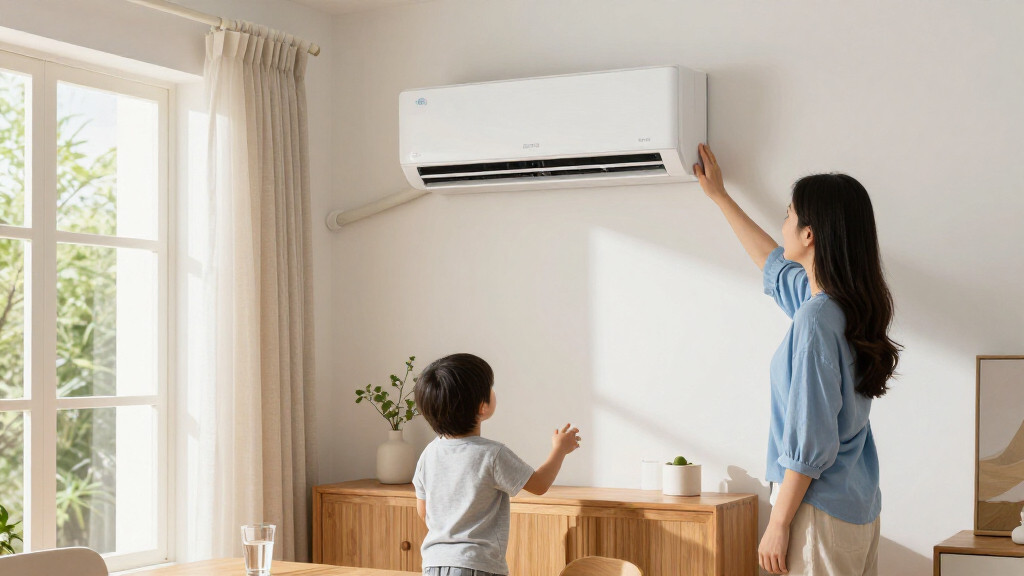

When shopping for the best high-efficiency air conditioners, the decision usually comes down to one tradeoff: inverter models cost more upfront but slash electricity bills, while basic units stay cheap but run louder and guzzle power. My top pick is the Midea Duo 14,000 BTU Inverter Portable Air Conditioner, which pairs dual-hose cooling with inverter-driven efficiency in a format that needs no permanent installation. The DREO 14000 BTU Dual-Hose Inverter Portable (740S) is a close runner-up for larger rooms, while the Midea 8,000 BTU Smart Inverter Window unit is the smartest choice if you want maximum efficiency at a mid-range price. Window units generally beat portables for efficiency, but portables win on flexibility. Read on for the full breakdown of all 15 models.

Get home appliances delivered free with Prime
- Fast, free delivery on millions of items
- Prime Video, Amazon Music and more included
- Member-only deals all year
Complete the kit


![[Genuine] Waterdrop PF-01A Water Filter Replacement for W...](https://m.media-amazon.com/images/I/41+5tl9EiKL._SX342_SY445_QL70_FMwebp_.jpg)
Key Takeaways
- Every model in the top tier uses inverter compressor technology, which runs the compressor at variable speeds instead of cycling on and off — this was the single biggest separator between efficient and wasteful units in this comparison.
- Dual-hose portable designs (Midea Duo, DREO 740S) clearly outperform single-hose portables like the Shinco and BLACK+DECKER because they exhaust heat without creating negative room pressure that pulls hot air back in.
- Midea dominates the lineup with six entries, and its inverter-equipped window units offer the best efficiency-per-dollar ratio of anything here — its basic 5,000 BTU EasyCool units are the least efficient picks in the roundup.
- Small rooms under 200 sq. ft. don’t need 14,000 BTU: oversizing causes short cycling that wastes energy and leaves rooms muggy, so the 5,000–8,000 BTU window picks are actually the efficient choice for compact spaces.
- The Midea 12,000 BTU and 8,000 BTU models with supplemental heat stand out as year-round value picks, offsetting their higher cost by replacing a space heater in cooler months.
| Midea Duo 14,000 BTU Inverter Portable Air Conditioner |  | Best Overall Portable | Cooling capacity: 14,000 BTU | Hose design: Dual hose-in-hose | Technology: Variable-speed inverter | VIEW LATEST PRICE | See Our Full Breakdown |
| Midea 7,800 BTU Inverter Window Air Conditioner |  | Best Efficiency in a Window Unit | Cooling capacity: 7,800 BTU | Room coverage: Up to 340 sq ft | Energy efficiency ratio: 15.1 | VIEW LATEST PRICE | See Our Full Breakdown |
| BLACK+DECKER BPACT10WT Portable Air Conditioner, 10,000 BTU, White |  | Best No-Fuss Portable for Small Budgets | Cooling capacity: 10,000 BTU (5,550 DOE) | Functions: Air conditioner, dehumidifier, fan | Recommended room size: Up to 450 sq ft | VIEW LATEST PRICE | See Our Full Breakdown |
| Midea EasyCool 5,000 BTU Window Air Conditioner |  | Best Budget Pick for Small Rooms | Cooling capacity: 5,000 BTU | Coverage area: Up to 150 sq ft | Modes: Cooling, 3-speed fan, dehumidifier | VIEW LATEST PRICE | See Our Full Breakdown |
| Shinco 12,000 BTU Portable Air Conditioner with Remote and Installation Kit |  | Best Portable for Cooling and Dehumidifying | Cooling capacity: 12,000 BTU (ASHRAE) / 7,500 BTU (SACC) | Recommended room size: Up to 450 sq ft | Dehumidification capacity: Up to 43.2 L/day | VIEW LATEST PRICE | See Our Full Breakdown |
| Frigidaire 5,000 BTU Window-Mounted Air Conditioner |  | Best Budget Pick for Small Bedrooms | Brand: Frigidaire | Cooling Capacity: 5,000 BTU | Coverage Area: Up to 150 sq. ft. | VIEW LATEST PRICE | See Our Full Breakdown |
| ZAFRO Smart Inverter Portable Air Conditioner, 14,000 BTU |  | Best Value Smart Portable | Cooling Power: 14,000 BTU (10,000 BTU SACC) | Energy Efficiency: CEER 12.8 | Noise Level: 42 dB | VIEW LATEST PRICE | See Our Full Breakdown |
| DREO 14000 BTU Dual-Hose Inverter Portable Air Conditioner (740S) |  | Best Premium Portable | Cooling Power: 14,000 BTU ASHRAE (10,000 BTU DOE) | Coverage Area: 200-300 sq. ft. | Noise Level: 42 dB | VIEW LATEST PRICE | See Our Full Breakdown |
| TURBRO Greenland 14,000 BTU Inverter Portable Air Conditioner with Dehumidifier, Fan, Remote, WiFi, and Alexa/Google Assistant |  | Best for Large Rooms and Humidity Control | Cooling Power: 14,000 BTU | Coverage Area: Up to 600 sq. ft. | Dehumidification Capacity: 85 pints/day | VIEW LATEST PRICE | See Our Full Breakdown |
| Midea 12,000 BTU Window Air Conditioner with Supplemental Heat, 550 Sq. Ft. | | Best Two-Season Window Unit | Cooling Capacity: 12,000 BTU | Coverage Area: Up to 550 sq. ft. | Cooling Efficiency: CEER 13.3 | VIEW LATEST PRICE | See Our Full Breakdown |
| 14000 BTU Portable Air Conditioner with Remote, Fan & Dehumidifier | 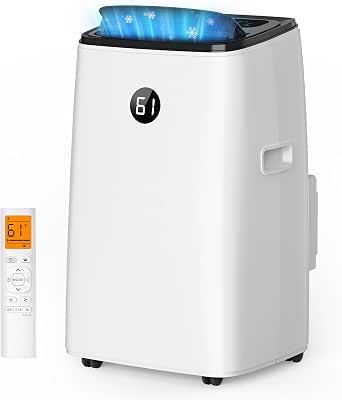 | Best High-Capacity Portable | Cooling Capacity: 14,000 BTU (ASHRAE) / 10,000 BTU (SACC) | Coverage Area: Up to 700 sq. ft. | Functions: Cooling, fan, dehumidifier | VIEW LATEST PRICE | See Our Full Breakdown |
| Midea EasyCool 5,000 BTU Window Air Conditioner |  | Best Budget Window Pick | Cooling Capacity: 5,000 BTU | Room Coverage: Up to 150 sq. ft. | CEER: 11.0 | VIEW LATEST PRICE | See Our Full Breakdown |
| Midea 8,000 BTU Window Air Conditioner with Electronic Controls |  | Best Smart Value Window Unit | Cooling Capacity: 8,000 BTU | Coverage Area: Up to 350 sq. ft. | Installation Type: Window | VIEW LATEST PRICE | See Our Full Breakdown |
| Midea 8,000 BTU Smart Inverter Window Air Conditioner with Heat and Dehumidifier |  | Best Year-Round Efficiency | Cooling Capacity: 8,000 BTU | Coverage Area: Up to 350 sq. ft. | Functions: Cool, Heat, Dry, Fan, Auto | VIEW LATEST PRICE | See Our Full Breakdown |
| 14,000 BTU Portable Air Conditioner for Rooms up to 700 Sq. Ft. |  | Best Family-Friendly Portable | Cooling Capacity: 14,000 BTU (ASHRAE) / 10,000 BTU (SACC) | Coverage Area: Up to 700 sq. ft. | Refrigerant: R-32 | VIEW LATEST PRICE | See Our Full Breakdown |
| high-efficiency air conditioner | Cooling capacity | Noise level | Coverage area | Controls |
|---|---|---|---|---|
| Midea Duo 14,000 BTU Inverter | 14,000 BTU | As low as 42 dB | — | — |
| Midea 7,800 BTU Inverter Windo | 7,800 BTU | As low as 39 dBA | — | — |
| BLACK+DECKER BPACT10WT Portabl | 10,000 BTU (5,550 DOE) | — | — | Top-mounted panel with LED display and remote |
| Midea EasyCool 5,000 BTU Windo | 5,000 BTU | As low as 52 dB on low mode | Up to 150 sq ft | — |
| Shinco 12,000 BTU Portable Air | 12,000 BTU (ASHRAE) / 7,500 BTU (SACC) | 52 dB | — | — |
| Frigidaire 5,000 BTU Window-Mo | 5,000 BTU | 52 dBA | Up to 150 sq. ft. | — |
| ZAFRO Smart Inverter Portable | — | 42 dB | — | Wi-Fi app and remote |
| DREO 14000 BTU Dual-Hose Inver | — | 42 dB | 200-300 sq. ft. | App, Remote, Alexa Voice |
| TURBRO Greenland 14,000 BTU In | — | 43 dB | Up to 600 sq. ft. | App/Remote, Alexa and Google Assistant |
| Midea 12,000 BTU Window Air Co | 12,000 BTU | As low as 45 dBA | Up to 550 sq. ft. | Panel, remote, app, Alexa, Google Assistant |
| 14000 BTU Portable Air Conditi | 14,000 BTU (ASHRAE) / 10,000 BTU (SACC) | 48 dB (sleep mode) | Up to 700 sq. ft. | Push button, remote (28 ft range) |
| Midea EasyCool 5,000 BTU Windo | 5,000 BTU | — | — | Mechanical |
| Midea 8,000 BTU Window Air Con | 8,000 BTU | — | Up to 350 sq. ft. | Electronic, remote, SmartHome app, voice assistant |
| Midea 8,000 BTU Smart Inverter | 8,000 BTU | As low as 45 dBA | Up to 350 sq. ft. | — |
| 14,000 BTU Portable Air Condit | 14,000 BTU (ASHRAE) / 10,000 BTU (SACC) | 52 dB; under 48 dB in sleep mode | Up to 700 sq. ft. | — |
More Details on Our Top Picks
Midea Duo 14,000 BTU Inverter Portable Air Conditioner
This model earns the top portable spot because it solves the two biggest portable AC complaints at once: wasted energy and hot air leakage. The dual hose-in-hose design keeps the unit from pulling hot outdoor air back into the room, which is the weakness of single-hose units like the Shinco 12,000 BTU. Pair that with variable-speed inverter technology that uses over 40% less energy than the federal standard, and the running cost gap over a full summer becomes real money. Compared with the BLACK+DECKER BPACT10WT, it also runs far quieter — as low as 42 dB versus the constant compressor cycling of non-inverter portables. The tradeoff is setup effort: you still have to install the window hose assembly, and voice control only works if you already own Alexa or Google devices.
Pros:- Dual hose-in-hose design prevents hot outdoor air from seeping back inside
- Inverter technology uses more than 40% less energy than the U.S. federal standard
- Wi-Fi app plus Alexa and Google Assistant voice control
- Runs as quiet as 42 dB, quieter than most portable units
Cons:- Requires installation of a window hose assembly before use
- Voice control depends on owning compatible Alexa or Google Assistant devices
Best for: Renters and homeowners who want powerful, quiet, whole-room cooling in a portable format without the energy penalty of a basic single-hose unit
Not ideal for: Anyone unwilling to install a window hose kit, or households without a compatible smart speaker who would be paying for connectivity they can’t use
- Cooling capacity:14,000 BTU
- Hose design:Dual hose-in-hose
- Technology:Variable-speed inverter
- Energy savings:More than 40% vs. U.S. federal standard
- Noise level:As low as 42 dB
- Connectivity:Wi-Fi, SmartHome app, Alexa, Google Assistant
Our verdict“If you need a portable air conditioner and want the lowest long-term running costs with the quietest operation, this is the one to beat.”
Midea 7,800 BTU Inverter Window Air Conditioner
Among the window options in this roundup, this is the efficiency standout. Its EER of 15.1 and ENERGY STAR certification translate into up to 37% energy savings versus the conservation standard — a meaningful edge over the non-inverter Midea EasyCool 5,000 BTU, which relies on Eco mode and a timer rather than true compressor modulation. The inverter also pays off in comfort and noise: at 39 dBA on low, it’s quieter than every portable in this lineup, including the Midea Duo. Coverage up to 340 square feet makes it right for a bedroom or living room, and the four modes plus 24-hour timer give it scheduling flexibility. The catch is fit: it needs single- or double-hung windows 23–36 inches wide and at least 19.6 inches tall, so casement-window owners are out of luck.
Pros:- EER of 15.1 with ENERGY STAR certification and up to 37% energy savings
- Inverter-driven compressor cools steadily and quietly at 39 dBA
- Covers rooms up to 340 sq ft with Auto, Cool, Dry, and Fan modes
- App, voice assistant, and 24-hour timer scheduling
Cons:- Not compatible with casement windows
- Requires a window at least 19.6 inches high
Best for: Homeowners with standard hung windows who want the lowest energy bills and quietest operation for a bedroom or mid-sized room
Not ideal for: Anyone with casement windows or openings shorter than 19.6 inches — the unit simply won’t fit
- Cooling capacity:7,800 BTU
- Room coverage:Up to 340 sq ft
- Energy efficiency ratio:15.1
- Noise level:As low as 39 dBA
- Modes:Auto, Cool, Dry, Fan
- Window compatibility:Single- or double-hung, 23–36 in wide, 19.6 in min height
- Certification:ENERGY STAR
Our verdict“This is the window unit to buy if efficiency and quiet are your priorities and your windows fit the required dimensions.”
BLACK+DECKER BPACT10WT Portable Air Conditioner, 10,000 BTU, White
Where the Midea Duo pushes efficiency and smart features, this BLACK+DECKER keeps things deliberately simple, and that’s its appeal. It’s a three-in-one unit — air conditioner, dehumidifier, and fan — with a straightforward top-mounted panel and a remote whose Follow Me thermostat reads the temperature where you’re actually sitting rather than at the unit. The casters and side handles make it genuinely easy to wheel between rooms, something a window unit like the Midea 7,800 BTU inverter can’t do at all. The honest tradeoff: there’s no inverter compressor here, so it cycles on and off the old-fashioned way, meaning higher running costs and more audible starts than the Midea options. Note the honest 5,550 BTU DOE rating — plan around that, not the headline number, for larger rooms.
Pros:- Combines air conditioning, dehumidifying, and fan functions in one unit
- Follow Me remote adjusts cooling based on temperature where you are
- Casters and side handles make room-to-room moves easy
- Window installation kit included in the box
Cons:- No inverter compressor, so it runs less efficiently than the Midea options
- DOE-rated at 5,550 BTU despite the 10,000 BTU headline figure
Best for: Buyers who want a simple, movable cooling unit for occasional use in different rooms and don’t care about smart features or peak efficiency
Not ideal for: Anyone cooling a large room daily on a tight electricity budget — the non-inverter compressor will cost more to run than the Midea Duo or inverter window units
- Cooling capacity:10,000 BTU (5,550 DOE)
- Functions:Air conditioner, dehumidifier, fan
- Recommended room size:Up to 450 sq ft
- Dimensions:15.3 × 14 × 24.8 in
- Controls:Top-mounted panel with LED display and remote
- Mobility:Bottom casters and side handles
Our verdict“A sensible pick if you want uncomplicated, portable cooling for modest rooms and are okay giving up efficiency for simplicity.”
Midea EasyCool 5,000 BTU Window Air Conditioner
Not every room needs a 14,000 BTU workhorse. This unit is built for the 150-square-foot bedroom, office, or nursery where a bigger machine like the Midea Duo would be overkill and overpriced. It still covers the basics well: cooling, a three-speed fan, and a dehumidifier mode, plus a remote, a reusable filter you can rinse instead of replace, and Eco mode with a programmable timer for energy-conscious scheduling. Compared with the Frigidaire 5,000 BTU window unit in this roundup, the EasyCool’s electronic controls and remote give it more convenience at the same compact size. The tradeoffs are straightforward — it’s loud relative to the inverter models at 52 dB on low, and it won’t meaningfully cool anything beyond a small room. You’ll also need your own screwdriver for installation.
Pros:- Cooling, fan, and dehumidifier modes in one compact window unit
- Reusable filter cuts ongoing maintenance costs
- Eco mode and programmable EasyTimer support lower-energy scheduling
- All window mounting accessories included
Cons:- Only suited to spaces up to 150 sq ft
- Runs at 52 dB on low — noticeably louder than inverter models
Best for: Budget-conscious buyers cooling a single small room like a bedroom, dorm, or home office
Not ideal for: Anyone cooling more than 150 square feet or sensitive to noise while sleeping — it lacks an inverter and runs louder than the 39 dBA Midea window model
- Cooling capacity:5,000 BTU
- Coverage area:Up to 150 sq ft
- Modes:Cooling, 3-speed fan, dehumidifier
- Noise level:As low as 52 dB on low mode
- Energy features:Eco mode and programmable EasyTimer
- Warranty:1-year parts and labor
Our verdict“If your needs are small and your budget is smaller, this covers a single room capably without paying for capacity or features you won’t use.”
Shinco 12,000 BTU Portable Air Conditioner with Remote and Installation Kit
Humid climates are where this Shinco earns its place. It pulls up to 43.2 liters of moisture per day — more dehumidification focus than either the BLACK+DECKER BPACT10WT or the budget generic 14,000 BTU portables — while still covering rooms up to 450 square feet on a 7,500 BTU SACC rating. The self-evaporating operation means you rarely have to empty a drain bucket, which is a genuine daily-life convenience, and the swing function plus 23-foot remote range make it comfortable to live with. Be clear-eyed about the tradeoffs, though: at 52 dB it’s the loudest option in this batch’s portables, and with no inverter compressor it will cost more to run than the Midea Duo over a long season. Read the honest SACC figure before sizing your room.
Pros:- Dehumidifies up to 43.2 L/day, ideal for muggy climates
- Self-evaporating operation minimizes bucket emptying
- Covers rooms up to 450 sq ft with cool, fan, and dehumidifier modes
- Casters, swing function, 24-hour timer, and remote included
Cons:- Runs at 52 dB, the loudest tier among these picks
- No inverter compressor, so efficiency trails the Midea Duo
Best for: Households in humid regions who need serious moisture removal alongside cooling in a movable unit
Not ideal for: Light sleepers or quiet-room use — 52 dB is loud — and anyone prioritizing energy savings, since it lacks an inverter
- Cooling capacity:12,000 BTU (ASHRAE) / 7,500 BTU (SACC)
- Recommended room size:Up to 450 sq ft
- Dehumidification capacity:Up to 43.2 L/day
- Modes:Cool, fan, dehumidifier
- Noise level:52 dB
- Timer:24 hours
- Refrigerant:R-410A
Our verdict“Choose this if humidity is your co-enemy and you want strong moisture removal in a portable format; skip it if quiet or low running costs matter most.”
Frigidaire 5,000 BTU Window-Mounted Air Conditioner
If your goal is efficient cooling for a single small room without paying for smart features you won’t use, this Frigidaire unit is the simplest path there. It runs at 52 dBA, which isn’t library-quiet, but it’s calm enough for a bedroom and quieter than many comparably sized budget units. Compared with the ZAFRO 14,000 BTU portable, it trades raw power and app control for a fraction of the complexity — no hoses, no drain management, no Wi-Fi setup. The Effortless Temperature Control holds a setpoint automatically rather than cycling on a crude timer, and the auto restart feature restores settings after outages, a nice touch at this level. The tradeoff is real, though: two fan speeds and a 150 sq. ft. ceiling mean this is strictly a single-room solution, not a whole-apartment answer.
Pros:- Quiet 52 dBA operation suitable for sleeping
- Auto Restart restores settings after power outages
- Washable filter keeps maintenance nearly free
- Extra-long power cord and adjustable side panels make DIY install easy
Cons:- Limited to rooms up to 150 sq. ft.
- Only two fan speeds, limiting fine control over noise and airflow
Best for: Renters and homeowners who need quiet, affordable cooling for one small bedroom or office under 150 sq. ft.
Not ideal for: Anyone hoping to cool a living room or open-plan space — the 5,000 BTU capacity runs out of steam quickly beyond a single small room.
- Brand:Frigidaire
- Cooling Capacity:5,000 BTU
- Coverage Area:Up to 150 sq. ft.
- Fan Speeds:2
- Noise Level:52 dBA
- Filter:Washable
- Features:Auto Restart, Effortless Temperature Control, Adjustable Side Panels
Our verdict“Buy this if you want dependable, no-frills cooling for one small room and would rather skip the price and setup of a smart portable unit.”
ZAFRO Smart Inverter Portable Air Conditioner, 14,000 BTU
The ZAFRO earns its spot by pairing an inverter compressor with a dual-hose design at a price point where most portables still use single-hose layouts that waste conditioned air. That combination means the compressor ramps up and down instead of surging, which is where the real efficiency gains — and the CEER 12.8 rating — come from. Against the DREO 740S, the ZAFRO draws 1,250 W versus DREO’s 1,540 W, making it the cheaper unit to run hour after hour, though the DREO answers with Alexa voice control. Six modes including Sleep and Eco give it flexibility the Frigidaire 5,000 BTU window unit simply can’t match, and 42 dB is genuinely quiet for a portable. The compromise is portability itself: at 54 pounds with a bulky chassis, moving it room to room is a chore, and humid climates will still need a drain hose despite the 72-hour drainage-free claim.
Pros:- Inverter compressor with dual-hose design delivers efficient, consistent cooling
- Wi-Fi app and remote control with a 24-hour timer
- Runs as low as 42 dB for nighttime use
- Drainage-free operation up to 72 hours in moderate humidity
Cons:- Drain hose required in very humid conditions
- Bulky dimensions and 54 lb weight limit true portability
Best for: Buyers who want efficient, app-controlled portable cooling for a medium room without stepping up to premium pricing.
Not ideal for: People in very humid regions — the drainage-free system needs a hose when humidity climbs above 90%.
- Cooling Power:14,000 BTU (10,000 BTU SACC)
- Energy Efficiency:CEER 12.8
- Noise Level:42 dB
- Modes:Cool, Dry, Fan, Sleep, Extra, Eco
- Controls:Wi-Fi app and remote
- Power Consumption:1,250 W
- Drainage-Free Operation:Up to 72 hours below 90% humidity
Our verdict“This is the smart pick for anyone who wants dual-hose inverter efficiency and app control while spending less than the premium portables cost.”
DREO 14000 BTU Dual-Hose Inverter Portable Air Conditioner (740S)
DREO’s 740S sits at the top of the portable stack because it checks every box: inverter efficiency (32% better than traditional models), dual-hose cooling, and a self-evaporating design that spares you the bucket-emptying routine that defines older portables. Where the ZAFRO offers app and remote control, the DREO adds Alexa voice commands, so adjusting the temperature mid-task never requires finding a phone. Both units run at 42 dB, but the DREO’s broader window fit — 20 to 53 inches — makes installation far less fussy across hung or sliding windows. The honest tradeoff is power draw: at 1,540 W it consumes noticeably more than the ZAFRO’s 1,250 W, so its efficiency advantage comes from smarter operation rather than lower wattage. And like all self-evaporating designs, it falters in humidity above 90%.
Pros:- 32% more energy-efficient than traditional portable models
- Drainage-free self-evaporating design eliminates manual emptying in most conditions
- App, remote, and Alexa voice control options
- Fits a wide 20-53 inch range of hung or sliding windows
Cons:- Heavy at 55.4 lbs, limiting true portability
- Higher wattage draw (1,540 W) than rival inverter portables
- Self-evaporating design fails above 90% humidity
Best for: Tech-forward buyers who want voice control, drainage-free convenience, and strong cooling for a 200-300 sq. ft. room.
Not ideal for: Anyone planning to frequently relocate the unit — at 55.4 lbs it’s best treated as semi-permanent.
- Cooling Power:14,000 BTU ASHRAE (10,000 BTU DOE)
- Coverage Area:200-300 sq. ft.
- Noise Level:42 dB
- Hose Type:Dual-Hose
- Controls:App, Remote, Alexa Voice
- Window Fit:20-53 inches
- Wattage:1,540 W
Our verdict“Choose the 740S if voice control and hands-off drainage matter more to you than minimizing wattage — it’s the most feature-complete portable in this lineup.”
TURBRO Greenland 14,000 BTU Inverter Portable Air Conditioner with Dehumidifier, Fan, Remote, WiFi, and Alexa/Google Assistant
Where the DREO 740S tops out around 300 sq. ft., the TURBRO Greenland claims coverage up to 600 sq. ft., making it the portable choice when one unit needs to tame an open living area. Its 50%+ reduction in energy consumption comes from the inverter compressor, and it cools twice as fast as conventional portable units — a real outcome when a hot afternoon demands relief quickly. The standout feature is dehumidification up to 85 pints per day, which no other unit in this batch matches; in muggy climates, that matters as much as the cooling itself. It undercuts the DREO’s wattage too, drawing 1,300 W. The price you pay is physical: at 71.2 lbs and nearly 20 inches wide, it eats floor space and resists relocation far more than the 54 lb ZAFRO.
Pros:- Inverter technology cuts energy consumption by over 50%
- Removes up to 85 pints of moisture per day
- 3-in-1 design: AC, dehumidifier, and fan
- WiFi app plus Alexa and Google Assistant voice control
Cons:- Heavy at 71.2 lbs, difficult to move between rooms
- Large footprint takes up significant floor space
Best for: Households in humid climates who need serious cooling and moisture removal for large rooms up to 600 sq. ft.
Not ideal for: Apartment dwellers with tight floor space or anyone who expects to wheel the unit between rooms regularly — it’s too heavy and wide for that.
- Cooling Power:14,000 BTU
- Coverage Area:Up to 600 sq. ft.
- Dehumidification Capacity:85 pints/day
- Noise Level:43 dB
- Compressor Type:Inverter
- Controls:App/Remote, Alexa and Google Assistant
- Wattage:1,300 W
Our verdict“If humidity is your enemy as much as heat and your room is large, this is the most capable all-in-one portable here — just plan to keep it in one place.”
Midea 12,000 BTU Window Air Conditioner with Supplemental Heat, 550 Sq. Ft.
This Midea is the rare window unit that heats as well as cools, which changes the math for anyone in a climate with chilly shoulder seasons. Its CEER of 13.3 is the strongest efficiency rating in this batch, beating the ZAFRO portable’s 12.8 — a meaningful gap if the unit runs daily through summer. Unlike the TURBRO Greenland, which occupies floor space, the Midea tucks into a window and frees your room entirely, while still covering up to 550 sq. ft. Control flexibility is a standout: panel, remote, app, Alexa, and Google Assistant are all supported. Two honest limits apply. The heat pump shuts off at 41°F outdoor temperatures, so it’s supplemental, not primary, heating. And it requires a compatible double-hung window between 24 and 38.5 inches — renters with casement windows are out of luck.
Pros:- Cooling, dehumidification, and supplemental heat in one unit
- Full control suite: panel, remote, app, Alexa, and Google Assistant
- Strong CEER 13.3 efficiency with inverter technology and ECO mode
- Quiet operation as low as 45 dBA with four fan speeds
Cons:- Heat pump does not operate at outdoor temperatures of 41°F or below
- Requires a compatible double-hung window 24-38.5 inches wide
Best for: Homeowners who want one efficient window unit to cool a large room in summer and take the chill out during mild fall and spring weather.
Not ideal for: Buyers in genuinely cold regions — the heat function stops working below 41°F outdoors, and non-double-hung windows won’t fit it.
- Cooling Capacity:12,000 BTU
- Coverage Area:Up to 550 sq. ft.
- Cooling Efficiency:CEER 13.3
- Noise Level:As low as 45 dBA
- Modes:Heat, Auto, Cool, Dry, Fan
- Controls:Panel, remote, app, Alexa, Google Assistant
- Window Width:24-38.5 inches
Our verdict“Pick this if you want the best energy efficiency in the lineup plus off-season warmth — just don’t count on it as your winter heater.”
14000 BTU Portable Air Conditioner with Remote, Fan & Dehumidifier
This unit stands out for large-room portable cooling, pairing 14,000 BTU (ASHRAE) output with a 96-pint-per-day dehumidifier — more moisture removal than the Shinco 12,000 BTU portable or BLACK+DECKER BPACT10WT can offer. The self-evaporating design means most buyers rarely touch a drain hose during cooling, which is the maintenance headache that plagues cheaper portables. A 48dB sleep mode is quieter than the B0HHJMMTXY’s standard 52dB operation, making it the better bedroom-friendly portable of this size. The tradeoff: portables simply can’t match the efficiency of a window unit like the Midea 8,000 BTU Smart Inverter, so expect higher running costs. And in genuinely humid climates, even self-evaporating designs need occasional continuous drainage.
Pros:- High 14,000 BTU (ASHRAE) capacity for rooms up to 700 sq. ft.
- 96 pints/day dehumidification outclasses most portables
- Drainage-free self-evaporating cooling minimizes upkeep
- Quiet 48dB sleep mode with 24-hour programmable timer
Cons:- Continuous drainage still required in high-humidity environments
- Remote batteries (2 AAA) not included
Best for: Renters or homeowners cooling open-plan spaces up to 700 sq. ft. who can’t install a window unit
Not ideal for: Budget-focused buyers — portable units cost more to run than comparable window models
- Cooling Capacity:14,000 BTU (ASHRAE) / 10,000 BTU (SACC)
- Coverage Area:Up to 700 sq. ft.
- Functions:Cooling, fan, dehumidifier
- Dehumidification:96 pints/day
- Noise Level:48 dB (sleep mode)
- Timer:24 hours
- Controls:Push button, remote (28 ft range)
Our verdict“This is the pick if you need serious portable cooling for a big space and want minimal maintenance between seasons.”
Midea EasyCool 5,000 BTU Window Air Conditioner
Sometimes efficiency is about right-sizing, not fancy tech. This 5,000 BTU unit is the simplest, most affordable way to cool a bedroom or home office up to 150 sq. ft., and its 11.0 CEER rating is respectable for a non-inverter machine. Compared with the Frigidaire 5,000 BTU window unit, it adds two-way air direction and a broader spread of seven temperature settings, which helps even out hot spots. Mechanical dial controls mean no remote, no app, no timer — that’s the honest tradeoff versus the Midea 8,000 BTU electronic model. But fewer electronics also means fewer things to fail. It fits windows 23–36 inches wide; outside that range, you’re out of luck.
Pros:- Right-sized efficiency for rooms up to 150 sq. ft.
- Seven temperature settings with 2-way air direction
- Removable reusable filter keeps long-term costs down
- Mounting accessories and 1-year parts and labor warranty included
Cons:- Requires a screwdriver for installation (not included)
- Only fits windows 23–36 in. wide with 13 in. minimum height
Best for: Budget-minded buyers cooling a single small bedroom, nursery, or office up to 150 sq. ft.
Not ideal for: Anyone wanting smart features, a remote, or a timer — mechanical controls offer none of these
- Cooling Capacity:5,000 BTU
- Room Coverage:Up to 150 sq. ft.
- CEER:11.0
- Settings:7 temperatures, 2 cooling speeds, 2 fan speeds
- Controls:Mechanical
- Window Fit:23–36 in. wide, 13 in. min. height
- Warranty:1 year parts and labor
Our verdict“A no-frills window unit that makes sense when your cooling problem is one small room and a tight budget.”
Midea 8,000 BTU Window Air Conditioner with Electronic Controls
This model hits a sweet spot between the bare-bones EasyCool 5,000 BTU and the pricier 8,000 BTU Smart Inverter with heat. You get app and voice assistant control, a 24-hour timer, and remote operation for mid-size rooms up to 350 sq. ft., at a lower price than the inverter version. Compared with the EasyCool, the jump to electronic controls and a washable filter makes daily operation far more convenient — scheduling cool-downs before you get home is a genuine quality-of-life upgrade. The tradeoff is efficiency: without inverter technology, it won’t match the up-to-35% energy savings of the B0CVVQWGH2, so heavier users should weigh that gap over a full summer. Capacity also caps at 350 sq. ft., so open layouts need the 12,000 BTU Midea instead.
Pros:- Cooling, dehumidifying, and fan modes in one unit
- SmartHome app and voice assistant support at a mid-tier price
- 24-hour timer plus remote and LED display
- Washable filter simplifies maintenance
Cons:- Limited to rooms up to 350 sq. ft.
- Lacks inverter efficiency of the Smart Inverter sibling
Best for: Buyers who want app and voice control for a 350 sq. ft. room without paying inverter premiums
Not ideal for: Heavy daily users — without an inverter compressor, long runtimes cost noticeably more than the Smart Inverter model
- Cooling Capacity:8,000 BTU
- Coverage Area:Up to 350 sq. ft.
- Installation Type:Window
- Modes:Cooling, dehumidifying, fan
- Controls:Electronic, remote, SmartHome app, voice assistant
- Timer:24 hours
- Filter:Washable
Our verdict“The best value if smart controls matter more to you than maximum energy savings.”
Midea 8,000 BTU Smart Inverter Window Air Conditioner with Heat and Dehumidifier
Of everything in this roundup, this model best embodies what high-efficiency cooling actually means. Its Energy Star certified inverter compressor delivers up to 35% energy savings over the conservation standard, and unlike the Midea 8,000 BTU electronic model, it adds a heat pump for year-round use — one appliance covering cool, heat, dry, fan, and auto modes. Operation as low as 45 dBA makes it the quietest window option here, comfortable enough for bedrooms or work calls. The honest limitation: heating only functions above 41°F outdoors, so it’s not a cold-climate primary heater. Window fit is also stricter than some rivals at 24–38.5 inches wide with a 14.5-inch vertical opening. Still, for a temperate-climate bedroom, nothing else in this lineup stretches a kilowatt-hour further.
Pros:- Inverter technology cuts energy use by up to 35%
- Cooling, heating, and dehumidification in one unit
- 45 dBA quiet operation suitable for bedrooms
- Wi-Fi app plus Alexa and Google Assistant control
Cons:- Heating function only works above 41°F outdoor temperature
- Requires windows 24–38.5 in. wide with 14.5 in. vertical opening
Best for: Homeowners in mild climates who want one efficient appliance for both summer cooling and shoulder-season heating
Not ideal for: Cold-climate buyers expecting real winter heating — the heat pump stops working below 41°F
- Cooling Capacity:8,000 BTU
- Coverage Area:Up to 350 sq. ft.
- Functions:Cool, Heat, Dry, Fan, Auto
- Energy Savings:Up to 35% vs Energy Conservation Standard
- Noise Level:As low as 45 dBA
- Smart Features:SmartHome app, Alexa, Google Assistant
- Window Fit:Double hung, 24–38.5 in. wide, 14.5 in. vertical opening
- Timer:24 hours
Our verdict“The efficiency champion of this roundup — worth the premium if you’ll use both heating and cooling seasons.”
14,000 BTU Portable Air Conditioner for Rooms up to 700 Sq. Ft.
This portable splits the difference between smart features and practical family design. Its child lock is unique among the big portables here — genuinely useful with toddlers drawn to blinking buttons — and it adds sleep mode, auto swing, and a timer alongside the usual cool/dry/fan trio. Compared with the B0HFM19H4P portable, it runs slightly louder at 52 dB (versus 48 dB in that unit’s sleep mode) but uses R-32 refrigerant, which is more efficient and carries a lower global warming impact than older refrigerants. The 59-inch window panel and included exhaust hose fit both vertical and horizontal sliders, covering more window types than many rivals. Like all portables, it trails window units on efficiency, and dehumidification mode demands continuous drainage.
Pros:- Child lock prevents curious hands from changing settings
- Modern R-32 refrigerant with SEER 12 efficiency
- Window kit fits both vertical and horizontal sliding windows
- Self-evaporating system reduces manual drainage in cooling mode
Cons:- Continuous drainage required in dehumidification mode
- Remote requires two AAA batteries not included
- 52 dB standard operation is louder than competing portables
Best for: Families with young kids in rentals or homes with sliding windows who need flexible 700 sq. ft. cooling
Not ideal for: Efficiency-first buyers — a window inverter unit like the Midea Smart Inverter will always run cheaper
- Cooling Capacity:14,000 BTU (ASHRAE) / 10,000 BTU (SACC)
- Coverage Area:Up to 700 sq. ft.
- Refrigerant:R-32
- SEER:12
- Noise Level:52 dB; under 48 dB in sleep mode
- Modes:Cooling, dehumidification, fan
- Smart Functions:Timer, sleep mode, auto swing, child lock
- Wattage:1300 W (115V, 60 Hz)
Our verdict“A sensible large-room portable for households where kid-proofing and window flexibility matter more than cutting-edge efficiency.”


How We Picked
I evaluated each unit through the lens of efficiency first, everything else second. That meant prioritizing inverter compressors, dual-hose designs in portables, Energy Star certification, and accurate BTU-to-room-size matching. A 14,000 BTU unit paired with a 700 sq. ft. rating scores well; a 14,000 BTU unit that inflates its coverage claims or relies on a single-hose design gets pushed down regardless of its feature list. I also weighed real-world operating costs: units with eco modes, programmable timers, and smart controls that let you schedule cooling earned higher marks because efficiency only matters if you actually use it.
Beyond raw efficiency, I factored in noise levels, installation burden, and versatility. Window units inherently beat portables on efficiency and quietness, so they rank higher for matching room sizes, while portables earn their spots through flexibility, supplemental dehumidifying, and renters’ needs. Products were then ranked by how well they fit their intended buyer — a budget 5,000 BTU unit judged against premium 14,000 BTU machines would be unfair, so each pick is positioned within its weight class.
Factors to Consider When Choosing Best High-efficiency Air Conditioners
Choosing a high-efficiency air conditioner involves more than picking the biggest BTU number within your budget. These are the factors that actually determine your summer electricity bill and how comfortable your rooms feel.Inverter vs. Standard Compressors
A standard compressor runs at full power, shuts off when the room hits temperature, then blasts back on when it drifts — that on/off cycling is where most energy waste lives. An inverter compressor ramps up to cool quickly, then throttles down to a low, steady hum that maintains temperature using a fraction of the power. The difference shows up on your bill within a single season, often covering the price premium in one to two summers. In this roundup, the inverter-equipped Midea Duo, DREO 740S, TURBRO Greenland, and Midea Smart Inverter window units all follow this logic, while the cheaper non-inverter picks trade long-term savings for a lower sticker price. If a unit will run daily for months, inverter technology is almost always worth the extra cost. The exception is a unit for a rarely used guest room, where the payback period stretches beyond the machine’s lifespan.
Matching BTU to Room Size
The most common buying mistake I see is oversizing. A 14,000 BTU unit in a 150 sq. ft. bedroom cools the air so fast that it shuts off before removing humidity, leaving the room cold but clammy — and short cycling wastes energy. As a rough guide, budget about 20 BTU per square foot, then add 10% for sunny rooms, kitchens, or high ceilings. The 5,000 BTU picks here suit 150 sq. ft. bedrooms, the 8,000 BTU units handle 300–350 sq. ft. spaces, and the 12,000–14,000 BTU models are built for 500–700 sq. ft. open areas. Undersizing is the less common but more miserable error — an overworked compressor runs nonstop without ever catching up. Measure your space honestly, including ceiling height, before clicking buy.
Window vs. Portable: The Efficiency Gap
Portable units consistently use more electricity than window units of equal cooling capacity, and the reason is physics. A window unit sits with its hot components outside the wall, while a portable keeps its heat-generating machinery inside your room and must pipe that heat out through a hose. Single-hose portables like the Shinco and BLACK+DECKER compound the problem by exhausting conditioned air, creating negative pressure that draws hot outdoor air in through door gaps. Dual-hose designs largely fix this by pulling in outside air for cooling the condenser separately. My advice: choose a window unit whenever your window style and landlord allow it, and reserve portables for casement windows, sliding doors, or buildings that prohibit window installs. If you must go portable, dual-hose inverter models are the only ones I’d call genuinely high-efficiency.
Smart Features That Actually Save Money
WiFi connectivity and app scheduling aren’t gimmicks — they’re efficiency tools in disguise. Being able to start cooling 30 minutes before you arrive home means the unit never runs to an empty house. Geofencing and thermostat scheduling on units like the Midea Smart Inverter and TURBRO Greenland let the compressor idle at its most efficient low-speed setting instead of doing full-power bursts. Voice control through Alexa or Google Assistant is convenient, but scheduling and eco modes are where the real savings live. Units with electronic controls and programmable timers also beat basic dial-controlled models because they hold temperature within a tighter band. If you’re choosing between two similarly efficient units, the one with better scheduling features will cost less to run in practice.
Installation and Ventilation Reality
Every portable air conditioner in this roundup needs a window for its exhaust hose, and the included venting kits vary widely in quality. Cheaper kits with flimsy foam panels leak hot air back in, quietly undermining the efficiency you paid for. Window units need proper sealing foam and a slightly tilted mount for drainage — a sloppy install can cost you meaningful efficiency and drip water. Before buying, measure your window’s width and check whether it opens vertically (double-hung) or slides horizontally, since most kits assume double-hung windows. Also confirm your outlet situation: larger portable units may need a dedicated circuit, and sharing one with a space heater or microwave can trip breakers. Budget an hour for a careful install rather than jamming a hose out a cracked window.
Heating, Dehumidifying, and Year-Round Value
Several picks here — the Midea 12,000 BTU and 8,000 BTU models with supplemental heat, plus the dehumidifier-equipped TURBRO — do more than cool, which changes the value math. Supplemental heat is designed for shoulder seasons, not full winter heating, so don’t expect it to replace a furnace in a cold climate. Dedicated dehumidifier modes matter more than most buyers realize: dry air feels cooler at the same temperature, so running dehumidify instead of full AC can cut runtime substantially in humid regions. If you live somewhere with both humid summers and chilly springs, a combo unit justifies its higher cost faster. Buyers in dry climates can ignore dehumidifier specs entirely and put that budget toward better compressor efficiency instead.
Frequently Asked Questions
Is a dual-hose portable air conditioner really worth more than a single-hose model?
Yes, if efficiency is your priority. A single-hose portable exhausts conditioned room air outside, which creates negative pressure that pulls hot, humid air in through gaps around doors and windows — your compressor then works overtime replacing that lost cooling. Dual-hose designs like the Midea Duo and DREO 740S use one hose to intake outside air for the condenser and another to exhaust heat, so your already-cooled room air stays put. Independent testing consistently shows dual-hose units cool faster and use less energy for the same result. The tradeoff is bulk, a slightly more involved setup, and a higher price. For occasional use in a small room, a single-hose unit is acceptable; for daily use in a large space, dual-hose is the only portable format I’d recommend.
How much will an inverter air conditioner actually save on my electric bill?
Inverter compressors typically reduce energy consumption by 30–40% compared to non-inverter units of the same capacity, because they run continuously at low speed instead of repeatedly drawing full power to restart. The savings are largest in moderate climates where the unit mostly maintains temperature rather than performing recovery cooling. If your summer cooling costs run high, the premium for inverter technology often pays back within one or two seasons. Where inverter tech matters less: rarely used rooms, very short cooling seasons, or tiny rooms where a small unit barely runs anyway. That’s why my budget picks include non-inverter models — for a guest room used a few weeks per year, the payback math doesn’t work. For a primary living space used daily, I’d treat inverter as non-negotiable.
Can I use a window air conditioner through a wall instead?
Sometimes, but check the manufacturer’s documentation first, because many modern window units are not rated for through-the-wall installation. Wall mounting changes the airflow around the condenser, and a unit not designed for it can overheat, lose efficiency, or fail early. Units explicitly rated for wall sleeves will say so, and they manage chassis depth and side vents accordingly. Another wrinkle: wall-mounted units sit deeper in the wall, which can block the vents that pull air across the condenser coils. If your only option is a wall opening, look at dedicated through-the-wall models or a portable with a wall vent kit instead. Forcing a window unit into a wall sleeve to save money usually costs more in shortened lifespan.
Do I need a dedicated electrical circuit for a 14,000 BTU portable air conditioner?
Most 14,000 BTU portables run on a standard 120V household outlet, but that doesn’t mean any outlet will do. These units draw substantial current at compressor startup, and sharing a circuit with a refrigerator, microwave, or hair dryer commonly trips breakers mid-cooling. Before buying, check which other devices share the circuit you plan to use — older homes often run multiple rooms on one breaker. If your target outlet shares a circuit with high-draw appliances, either choose a smaller unit like an 8,000 BTU model or plan on using a different outlet on a separate circuit. Extension cords are a poor workaround for AC units; if the cord won’t reach, a heavier-gauge, AC-rated cord is the only safe option, and direct plug-in is always better. Persistent breaker trips are a wiring problem, not a defective unit.
Why does my air conditioner cool the room but leave it feeling damp?
That muggy-but-cold feeling almost always means the unit is oversized for the space, or you’re running it in a mode that prioritizes fan speed over moisture removal. Air conditioners remove humidity by passing air slowly over cold evaporator coils so water condenses and drains — if a unit chills the room too quickly, it shuts off before completing that process. If you already own an oversized unit, running it on a low fan speed with a higher temperature setpoint helps because slower airflow means more dehumidification per pass. Units with dedicated dry modes, like the TURBRO and several Midea picks, extract moisture without heavy cooling, which is the right tool for humid-but-mild days. And if you’re still shopping, this is the strongest argument for sizing correctly rather than buying the biggest BTU number you can afford.
Conclusion
After comparing all 15 models, the right choice depends less on which unit is objectively best and more on which format fits your home. For the best overall pick, the Midea Duo 14,000 BTU Inverter Portable delivers dual-hose efficiency and serious cooling without installation constraints — with the DREO 740S as a strong alternative if the Duo is unavailable. Best value goes to the Midea 8,000 BTU Smart Inverter Window unit, which offers inverter efficiency and smart scheduling at a mid-tier price, while true budget buyers should grab the Midea or Frigidaire 5,000 BTU window units for small bedrooms. For beginners, the Frigidaire 5,000 BTU is nearly foolproof: simple mechanical controls, minimal setup, and nothing to configure. Buyers wanting year-round versatility should look at the Midea 12,000 BTU with supplemental heat or the TURBRO Greenland for its dehumidifier mode and voice control. Renters and casement-window owners are limited to portables, and for them the dual-hose inverter models are worth every extra dollar over the single-hose budget picks. Match the unit to your room size honestly, prioritize inverter technology for daily-use spaces, and the efficiency gains will show up on your very next bill.
Fall yard work Picks
leaf blowers
As an affiliate, we earn on qualifying purchases.