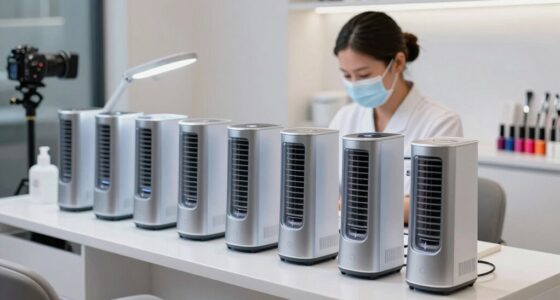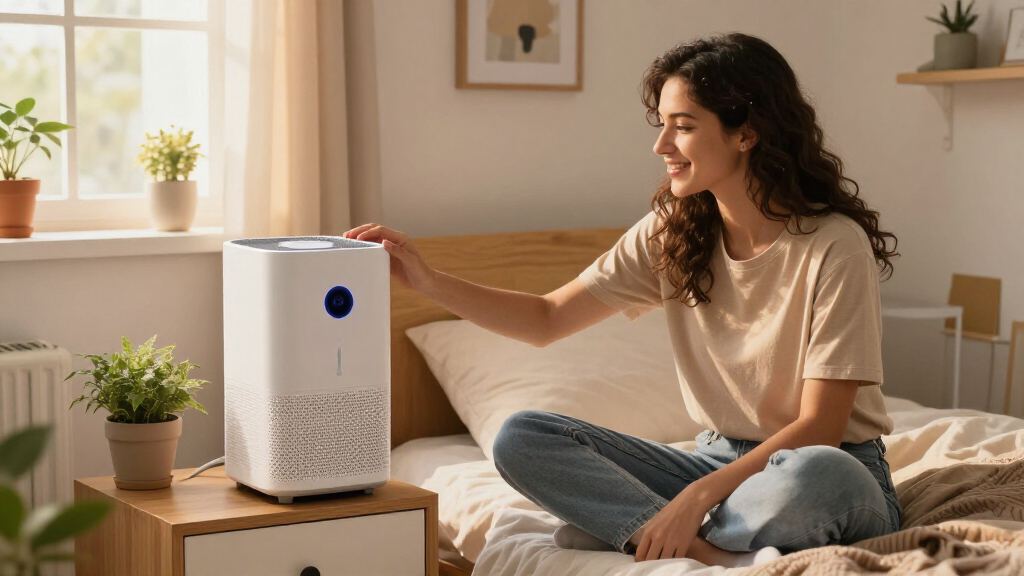

Shopping for smart air purifiers for dorm rooms means balancing app control and air quality sensors against the realities of campus life: tight floor space, thin walls, strict noise tolerance, and a budget that rarely stretches past $100. After comparing eleven app-connected models, the Levoit Smart Air Purifier stands out as the best overall pick for dorms because it pairs genuine smart features with a compact footprint and reasonable long-term filter costs. The GoveeLife Smart Air Purifier is the strongest value alternative if you want a built-in PM2.5 sensor and auto mode for less money, while the Blueair Blue Pure 511i Max is the pick for minimalists who care most about quiet operation and washable pre-filters. The main tradeoff in this category is coverage area versus size — many “large room” claims are overkill for a 150-square-foot dorm, and paying for them means sacrificing desk space and savings. Read on for the full breakdown, including which models have replaceable filters that fit a student budget.
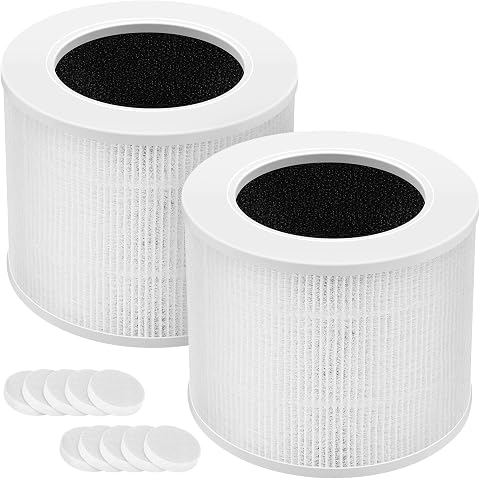
Complete the kit


Key Takeaways
- Coverage claims of 1,000+ square feet are wasted in a dorm; the models that ranked highest (Levoit, GoveeLife bedroom unit, Blueair 511i Max) won because they run efficiently at low speeds in small spaces, not because of headline square footage.
- App quality separated the top tier from the rest: GoveeLife and Levoit offer reliable scheduling and remote control, while generic-brand models like the DAYETTE and VOOPNU units have apps that connect inconsistently on shared campus Wi-Fi networks.
- Cafeteria-style dorm Wi-Fi with captive portals is a hidden failure point — two-factor campus login screens blocked several models from connecting at all, which is why models with strong offline auto modes ranked higher.
- Filter replacement cost matters more than sticker price over four semesters; the Blueair’s washable pre-filter and Levoit’s widely available affordable replacements beat cheaper units whose proprietary filters are hard to source.
- The SwitchBot and DAYETTE units carry features dorm residents will never use (RGB lighting, aromatherapy, 2,400 ft² coverage), and their larger footprints make them poor fits unless you have a suite-style room.
- Sleep mode noise ratings varied widely — the quietest picks run near 22 dB while the worst offenders hum audibly at night, a real problem with a roommate sleeping five feet away.
| Levoit Core 200S-P Smart Air Purifier |  | Best Overall for Dorm Rooms | Coverage Area: 140 ft² | Filtration Efficiency: 99.97% of particles 0.1–0.3 microns | Filter Type: 3-in-1: pre-filter, activated carbon, high-efficiency filter | VIEW LATEST PRICE | See Our Full Breakdown |
| GoveeLife Smart Air Purifier for Large Rooms up to 1046 ft² |  | Best Smart Features | Coverage Area: 1046 ft² | CADR: 135 CFM | Filtration Efficiency: 99.97% | VIEW LATEST PRICE | See Our Full Breakdown |
| SereneLife Smart WiFi HEPA Air Purifier (1,800 Sq Ft) |  | Best Value Pick | Coverage Area: 1,800 sq ft | Filter Type: HEPA | Particle Retention Size: 0.3 micron | VIEW LATEST PRICE | See Our Full Breakdown |
| DAYETTE Air Purifier for Large Rooms up to 2400 ft² |  | Best for Pet Owners | Coverage Area: up to 2400 ft² | Filter Type: HEPA H14 with washable pre-filter | Noise Level: 22 dB (sleep mode) | VIEW LATEST PRICE | See Our Full Breakdown |
| SwitchBot Air Purifier, 4-in-1 with RGB Light and Wireless Charging |  | Best Premium Multitasker | Coverage Area: up to 3,620 sq ft (claimed) | Filtration: 3-stage HEPA, 99.97% particle capture | Noise Level: 20 dB (sleep mode) | VIEW LATEST PRICE | See Our Full Breakdown |
| GoveeLife Air Purifier for Bedroom, Covers up to 1162 ft², Sleep Mode |  | Best Smart Home Integration | Coverage Area: 1162 sq ft | CADR: 150 CFM | Noise Level: 24 dB | VIEW LATEST PRICE | See Our Full Breakdown |
| Blueair Blue Pure 511i Max Smart Air Purifier for Small Rooms up to 1,138 Sq Ft |  | Best Filtration Quality | Coverage Area: up to 1,138 sq ft per hour | Filtration Technology: HEPASilent dual filtration | Particle Removal: 99.97% down to 0.1 microns | VIEW LATEST PRICE | See Our Full Breakdown |
| Upgraded Air Purifier for Bedroom & Home with H14 True HEPA Filter, Covers Up to 1280ft² |  | Best for Allergen Removal | Filter Type: H14 True HEPA | Coverage Area: 1280 sq ft | Noise Level: 24 dB | VIEW LATEST PRICE | See Our Full Breakdown |
| VOOPNU Air Purifier for Home, High Efficiency Filter, Covers 1076 ft², White |  | Best Simple Operation | Coverage Area: 1076 sq ft | Dimensions: 6.69 x 6.69 x 9.84 inches | Noise Level: 22 dB | VIEW LATEST PRICE | See Our Full Breakdown |
| Air Purifiers for Bedroom, Dorm Room, True HEPA Filter for Smoke, White |  | Best Budget Dorm Pick | Filtration: True HEPA 3-Stage | Coverage Area: 270 sq ft | Noise Level: 24 dB in sleep mode | VIEW LATEST PRICE | See Our Full Breakdown |
| PuroAir 100i Smart HEPA Air Purifier for Bedroom and Home |  | Best Warranty Backing | Coverage Area: 550 sq ft | Filter Type: 3-layer HEPA with CarbonTech | Particle Filtration: Up to 99.9% | VIEW LATEST PRICE | See Our Full Breakdown |
| smart air purifiers for dorm room | Coverage Area | Noise Level | Filter Type |
|---|---|---|---|
| Levoit Core 200S-P Smart Air P | 140 ft² | 27 dB | 3-in-1: pre-filter, activated carbon, high-efficiency filter |
| GoveeLife Smart Air Purifier f | 1046 ft² | — | 3-stage with activated carbon and washable pre-filter |
| SereneLife Smart WiFi HEPA Air | 1,800 sq ft | 20 dB | HEPA |
| DAYETTE Air Purifier for Large | up to 2400 ft² | 22 dB (sleep mode) | HEPA H14 with washable pre-filter |
| SwitchBot Air Purifier | up to 3,620 sq ft (claimed) | 20 dB (sleep mode) | — |
| GoveeLife Air Purifier for Bed | 1162 sq ft | 24 dB | Activated carbon filter |
| Blueair Blue Pure 511i Max Sma | up to 1,138 sq ft per hour | as quiet as 19 dB | — |
| Upgraded Air Purifier for Bedr | 1280 sq ft | 24 dB | H14 True HEPA |
| VOOPNU Air Purifier for Home | 1076 sq ft | 22 dB | — |
| Air Purifiers for Bedroom | 270 sq ft | 24 dB in sleep mode | — |
| PuroAir 100i Smart HEPA Air Pu | 550 sq ft | — | 3-layer HEPA with CarbonTech |
More Details on Our Top Picks
Levoit Core 200S-P Smart Air Purifier
Most of the purifiers in this roundup are built for living rooms, but a dorm is a 140–200 ft² box, and that changes the math completely. Oversized units like the GoveeLife 1046 ft² model waste coverage, money, and outlet space a student doesn’t have. The Levoit Core 200S-P fits the actual job: 360° filtration that catches 99.97% of particles down to 0.1 microns, a footprint small enough to slide under a lofted bed, and smart app plus voice control that lets you adjust fan speed without climbing down from a top bunk. At 27 dB on low, it’s quiet enough for light sleepers sharing a room. The tradeoff is real: no built-in air quality sensor means no auto mode, and it only makes sense in genuinely small rooms. If your dorm is a suite or shared apartment common room, the larger picks below earn their spot instead.
Pros:- Compact and lightweight enough to fit on a desk or under a lofted bed
- Genuine 3-in-1 filtration captures 99.97% of particles down to 0.1 microns
- Smart app and voice control work well for hands-free dorm use
- Quiet 27dB operation suits shared sleeping spaces
Cons:- No built-in air quality sensor, so there’s no automatic mode
- Coverage tops out at 140 ft², ruling out larger suites
- Locked into genuine Levoit replacement filters for best performance
Best for: Students in standard single or double dorm rooms who want quiet, app-controlled air cleaning without sacrificing floor space
Not ideal for: Anyone in a suite or shared apartment layout — the 140 ft² coverage is simply too small for open communal spaces
- Coverage Area:140 ft²
- Filtration Efficiency:99.97% of particles 0.1–0.3 microns
- Filter Type:3-in-1: pre-filter, activated carbon, high-efficiency filter
- Noise Level:27 dB
- Intake Design:360° air intake
- Smart Features:App and voice control
- Best Room Size:Small to medium rooms
Our verdict“If you live in a typical dorm room, this is the right-sized, right-priced pick that does the job without overkill.”
GoveeLife Smart Air Purifier for Large Rooms up to 1046 ft²
Where the Levoit Core 200S-P keeps things simple, the GoveeLife leans hard into connectivity, and that’s its strongest argument for tech-minded students. App control, Alexa, and IFTTT integration mean you can trigger purification when your roommate starts burning microwave popcorn, or schedule sleep mode from bed. Auto mode uses a real air quality sensor — something the Levoit lacks entirely — so it ramps up only when the air actually needs help, which matters in a high-traffic hallway dorm. The 1046 ft² rating is overkill for a single room, but that headroom means the fan rarely works hard on normal settings, keeping things quiet. The catch: turbo mode is genuinely loud, 2.4GHz-only Wi-Fi trips up campus networks that broadcast 5GHz by default, and the mood lighting may be more than minimalists want on a nightstand.
Pros:- Auto mode with a real air quality sensor the Levoit lacks
- Works with app, Alexa, and IFTTT for dorm-friendly automations
- 99.97% filtration with a washable pre-filter that cuts replacement costs
- 24 dB sleep mode keeps overnight noise minimal
Cons:- Turbo mode noise makes fast purification disruptive in a small room
- 2.4GHz-only Wi-Fi may not connect on some campus networks
- Oversized coverage rating means you’re paying for square footage a dorm doesn’t need
Best for: Smart-home enthusiasts in suite-style dorms who want automation, air quality sensing, and IFTTT routines
Not ideal for: Students on strict 5GHz-only campus Wi-Fi or anyone bothered by loud turbo-mode fan noise during quick air refreshes
- Coverage Area:1046 ft²
- CADR:135 CFM
- Filtration Efficiency:99.97%
- Noise Level (Sleep Mode):24 dB
- Filter Type:3-stage with activated carbon and washable pre-filter
- Connectivity:2.4GHz Wi-Fi, app, Alexa, IFTTT
- Certification:ETL
Our verdict“The best pick for students who want their purifier integrated into a smart home setup rather than just switched on and forgotten.”
SereneLife Smart WiFi HEPA Air Purifier (1,800 Sq Ft)
For students who want app control without paying for extras like SwitchBot’s wireless charging base or DAYETTE’s aromatherapy diffuser, the SereneLife strips the concept down to essentials. You get HEPA filtration rated down to 0.3 microns, Wi-Fi and app control, a 1,800 ft² coverage claim, and a 20 dB sleep mode — the quietest rating in this batch alongside the SwitchBot. That makes it a sensible roommate-friendly choice for light sleepers. It’s also taller and narrower than the Levoit, so it slots against a wall rather than eating desk space. The tradeoffs are transparency problems more than performance ones: power consumption isn’t specified, there’s no stated filter lifespan or subscription clarity, and there’s no air quality sensor, so it can’t react automatically the way the GoveeLife does. For the price, though, those are forgivable cuts.
Pros:- Very quiet 20 dB sleep mode for shared dorm rooms
- App and button control give flexibility when Wi-Fi acts up
- 1,800 ft² rating handles suites and shared apartment spaces easily
- Slim vertical footprint takes less desk space than boxy rivals
Cons:- No air quality sensor or auto mode
- Filter lifespan and replacement cost details are vague
- Coverage claim likely assumes a single air change, not continuous dorm-size use
Best for: Budget-conscious students who want app control and quiet overnight operation without paying for premium extras
Not ideal for: Data-driven buyers who want an air quality sensor, stated power draw, or clear filter replacement schedules
- Coverage Area:1,800 sq ft
- Filter Type:HEPA
- Particle Retention Size:0.3 micron
- Noise Level:20 dB
- Control Method:App, button control
- Power Source:AC
- Dimensions:12.2″D x 6.3″W x 15.75″H
Our verdict“The cheapest way into quiet, app-controlled HEPA purification — as long as you don’t need automation or sensor data.”
DAYETTE Air Purifier for Large Rooms up to 2400 ft²
Dorm policies on pets keep loosening, and if an emotional-support animal or a sneaky cat is part of your setup, the DAYETTE is the only option here built specifically for that problem. Its dedicated Pet Mode, HEPA H14 filter (a step above the standard HEPA in the SereneLife), and focus on dander and odor removal make it the clear choice over the pet-agnostic Levoit or GoveeLife units. The built-in aromatherapy diffuser is a dorm-friendly bonus — masking is not the same as cleaning, but after a filter cycle, a scent option helps with lingering smells. A child lock prevents curious paws (or roommates) from changing settings, and the 22 dB sleep mode keeps things calm at night. The downsides: full app functionality requires a Wi-Fi connection that campus networks sometimes block, and replacement H14 filters add up faster than basic HEPA, which stings on a student budget.
Pros:- Dedicated Pet Mode targets dander, hair, and odors other purifiers treat as an afterthought
- HEPA H14 filtration captures finer particles than standard HEPA rivals here
- Aromatherapy diffuser and child lock are genuinely useful dorm extras
- Timer options from 2 to 8 hours suit class schedules
Cons:- H14 replacement filters cost more over time than standard HEPA
- App features depend on 2.4GHz Wi-Fi that restricted campus networks may block
- Priced above simpler options like the SereneLife for features not everyone needs
Best for: Students with pets in pet-friendly dorms or apartments who need serious dander and odor control plus scent customization
Not ideal for: Students on tight budgets — premium H14 filter replacements and the higher upfront price add up over a school year
- Coverage Area:up to 2400 ft²
- Filter Type:HEPA H14 with washable pre-filter
- Noise Level:22 dB (sleep mode)
- Modes:Sleep, I, II, III, Auto, Pet
- Timer Options:2/4/6/8 hours
- Aromatherapy:Yes, built-in diffuser
- Child Lock:Yes
- Connectivity:2.4GHz Wi-Fi with app control
Our verdict“The obvious pick for pet owners — everyone else can save money with a simpler model.”
SwitchBot Air Purifier, 4-in-1 with RGB Light and Wireless Charging
When desk real estate in a dorm is measured in inches, a device that replaces three things earns its price tag. The SwitchBot combines a purifier, RGB ambient light, and a 15W wireless charging base — effectively a nightstand, lamp, and charger collapsed into one unit. That consolidation is something none of the other four can match: the GoveeLife has mood lighting but no charging, and the DAYETTE has aromatherapy but no light. Platform support is also the widest here, including Apple HomeKit, which none of the others offer — a real plus for iPhone-centric students. The 3,620 sq ft coverage claim is optimistic marketing for what is fundamentally a room unit, but the 20 dB sleep mode is genuinely excellent. Two caveats: full smart-ecosystem features require a separate SwitchBot hub, and it costs noticeably more than the SereneLife or Levoit for purification performance that isn’t proportionally better.
Pros:- Combines purifier, ambient RGB light, and wireless charging in one footprint
- Only option in this batch with Apple HomeKit support, plus Alexa and Google Home
- Ultra-quiet 20 dB sleep mode with automatic odor detection
- Washable pre-filter and aroma tray add useful flexibility
Cons:- Requires a separately purchased hub for full smart ecosystem features
- Premium price over simpler options like the SereneLife for comparable air cleaning
- 2.4GHz-only Wi-Fi and an inflated 3,620 sq ft coverage claim
Best for: Design-conscious students who want one sleek device to handle air, lighting, and phone charging on a cramped nightstand
Not ideal for: Budget-limited students or anyone who just wants clean air — the extras inflate the price without improving purification itself
- Coverage Area:up to 3,620 sq ft (claimed)
- Filtration:3-stage HEPA, 99.97% particle capture
- Noise Level:20 dB (sleep mode)
- Connectivity:2.4GHz Wi-Fi; Alexa, Google Home, Apple HomeKit, Home Assistant
- Wireless Charging:15W Android, 7.5W iPhone
- Extra Features:RGB ambient light, aroma tray, washable pre-filter
- Smart Ecosystem:Hub required for full functionality
Our verdict“Worth the premium only if you’ll actually use the light, charging, and HomeKit features — otherwise the same money buys a bigger, simpler purifier.”
GoveeLife Air Purifier for Bedroom, Covers up to 1162 ft², Sleep Mode
For students who already run their dorm life through Alexa or Google Assistant, this GoveeLife model makes the most sense in the lineup. Compared with the Blueair Blue Pure 511i Max, it trades away the premium HEPASilent filtration name but delivers the same voice-and-app control experience with a larger practical coverage claim, so it holds up better in a loft-style or suite dorm. The 24 dB sleep mode is quiet enough for light sleepers, and the ambient LED lighting adds a little personality to a sterile room.
The tradeoff: it only connects to 2.4GHz Wi-Fi networks, which can be a dealbreaker on campus networks that isolate devices, and the activated carbon filter demands regular cleaning to stay effective against odors.
Pros:- Full smart control via Alexa, Google Assistant, and mobile app
- Covers up to 1162 sq ft, enough for suites and shared dorm spaces
- 24 dB sleep mode stays whisper-quiet overnight
- Ambient LED lighting doubles as a soft nightlight
Cons:- No 5GHz Wi-Fi support, problematic on many campus networks
- Activated carbon filter requires frequent cleaning to maintain odor performance
Best for: Tech-savvy students with smart speakers who want app scheduling and voice control from bed
Not ideal for: Students on restricted campus Wi-Fi, since 5GHz networks and device-isolating networks won’t connect
- Coverage Area:1162 sq ft
- CADR:150 CFM
- Noise Level:24 dB
- Filter Type:Activated carbon filter
- Smart Features:Alexa, Google Assistant, mobile app
- Certifications:Energy Star, ETL, FCC, CA65
Our verdict“Pick this if smart-home control is the priority; skip it if your dorm Wi-Fi blocks 2.4GHz-only devices.”
Blueair Blue Pure 511i Max Smart Air Purifier for Small Rooms up to 1,138 Sq Ft
Blueair’s HEPASilent technology is the standout here — capturing 99.97% of particles down to 0.1 microns while running as quiet as 19 dB, which beats the 22–24 dB floor of the VOOPNU and GoveeLife picks. That makes this the model for allergy sufferers who notice the difference between good and great filtration. The auto mode adjusts fan speed based on real-time air quality, something the simpler B0GY4S9BDP dorm purifier lacks entirely.
The tradeoff is dependency: without the app you lose access to the smart features that justify the price, and replacement filters are an ongoing cost that adds up on a student budget. Compared with the H14 HEPA unit, you get quieter, more polished performance but at a higher cost of ownership.
Pros:- HEPASilent filtration captures 99.97% of particles down to 0.1 microns
- Quietest option here at 19 dB minimum
- Auto mode reacts to real-time air quality changes
- Compact Scandinavian design fits tight dorm shelving
Cons:- Full feature set locked behind the companion app
- Ongoing proprietary filter replacement costs are higher than budget alternatives
Best for: Allergy and asthma sufferers in small dorm rooms who want best-in-class filtration and near-silent sleep
Not ideal for: Budget-conscious students, since proprietary filter replacements add up and the app is required for full functionality
- Coverage Area:up to 1,138 sq ft per hour
- Filtration Technology:HEPASilent dual filtration
- Particle Removal:99.97% down to 0.1 microns
- Noise Level:as quiet as 19 dB
- Control:WiFi app control
- Design:Compact Scandinavian-inspired
Our verdict“The pick for cleanest air and quietest nights, provided you accept the app requirement and filter costs.”
Upgraded Air Purifier for Bedroom & Home with H14 True HEPA Filter, Covers Up to 1280ft²
This is the filtration workhorse of the batch. Its H14 True HEPA filter removes 99.995% of airborne particles — a step above the 99.97% standard claimed by the VOOPNU and Blueair options — which matters most for students battling pollen season or a smoking neighbor’s drifting haze. The 360° air intake means placement is forgiving, and the 2/4/8-hour timer is handy for turning off automatically after you fall asleep.
But unlike the GoveeLife model, there’s no app or voice control at all — this is a button-and-dial machine. Small annoyances add up too: the aroma pad isn’t included despite the fragrance function, and you’ll need to open the bottom compartment just to find the adapter on arrival. Filter replacements are proprietary and needed every 3–6 months.
Pros:- H14 True HEPA captures 99.995% of particles, the highest efficiency in this lineup
- 1280 sq ft coverage handles suites and open dorm layouts
- 360° air intake allows flexible placement anywhere in the room
- 2/4/8-hour timer for automatic overnight shutoff
Cons:- No smart features — no app, voice control, or air quality sensing
- Aroma pad sold separately despite the fragrance function
- Adapter hidden in the base compartment makes setup confusing
Best for: Students with serious allergies or smoke exposure who rank raw filtration above smart features
Not ideal for: Anyone wanting app or voice control, since this model has no WiFi connectivity at all
- Filter Type:H14 True HEPA
- Coverage Area:1280 sq ft
- Noise Level:24 dB
- Air Intake:360°
- Timer Settings:2H / 4H / 8H
- Filter Replacement:Every 3–6 months
- Certifications:CARB certified, California air quality compliant
Our verdict“Choose this for the strongest particle filtration per dollar; skip it if smart controls are non-negotiable.”
VOOPNU Air Purifier for Home, High Efficiency Filter, Covers 1076 ft², White
Not every dorm resident wants to download another app. The VOOPNU wins on effortless setup: plug it in, press a button, done. That simplicity is its whole pitch against the GoveeLife and Blueair picks, both of which lean heavily on WiFi. At 22 dB, it’s actually quieter than both the GoveeLife and the H14 model, and its compact 6.7-inch footprint slides onto the narrowest dorm shelf. The essential oil tray adds a nice touch for masking that unmistakable dorm smell.
The catch is that it needs to run continuously to keep air quality steady — there’s no auto mode sensing pollution spikes like the Blueair offers — and off-brand replacement filters can quietly tank its efficiency, so you’re somewhat locked into first-party refills.
Pros:- Dead-simple control panel with no app or account setup required
- 22 dB operation is quieter than most picks here
- Compact 6.69-inch square footprint fits crowded dorm shelves
- Essential oil tray for light aromatherapy
Cons:- Requires continuous running since there’s no auto mode or air quality sensor
- Off-brand filters can measurably reduce filtration efficiency
Best for: Students who want zero-setup, app-free purification with a tiny footprint and aromatherapy option
Not ideal for: Set-it-and-forget-it users who want auto mode to respond to air quality changes automatically
- Coverage Area:1076 sq ft
- Dimensions:6.69 x 6.69 x 9.84 inches
- Noise Level:22 dB
- Filtration Efficiency:99.97%
- Filtration:Triple-layer with 360° airflow
- Certifications:DOE, ETL, FCC, CARB, CE, ROHS
Our verdict“The best pick for students who value simplicity over smart features and just want clean air out of the box.”
Air Purifiers for Bedroom, Dorm Room, True HEPA Filter for Smoke, White
This is the only unit in the lineup actually sized for a standard dorm room — 270 sq ft matches the typical 12×14 cinderblock box, so you’re not paying for coverage you can’t use like the 1280 sq ft H14 model. The 3-stage True HEPA filtration handles smoke, dust, and odors competently, and the extras are thoughtfully dorm-specific: an aromatherapy tray, a child lock for pranking roommates, and a 12-hour max timer for overnight shutoff. The filter reminder removes the guesswork from maintenance.
The tradeoffs are real: no smart features whatsoever compared with the GoveeLife, and a filter swap every 3–6 months adds ongoing cost. If your room opens into a suite or shared common area, the coverage will fall short.
Pros:- Coverage size actually matches a standard dorm room, so you don’t overpay
- 3-stage True HEPA captures 99.97% of smoke, dust, and dander
- 24 dB sleep mode plus 12-hour auto-shutoff timer
- Child lock and filter reminder add dorm-friendly practicality
Cons:- 270 sq ft coverage is the smallest in this roundup
- Filter replacements every 3–6 months add recurring costs
- Basic control panel with no smart features or air quality display
Best for: Budget-minded students in standard single dorm rooms who want HEPA filtration without smart-home complexity
Not ideal for: Suite or apartment-style dorm residents, since 270 sq ft coverage can’t handle larger shared spaces
- Filtration:True HEPA 3-Stage
- Coverage Area:270 sq ft
- Noise Level:24 dB in sleep mode
- Filter Life:3–6 months
- Auto-Shutoff Timer:2/4/8/12 hours
- Additional Features:Aromatherapy, child lock, filter reminder
Our verdict“The most sensible budget buy for a typical single dorm room — just don’t expect it to clean a suite.”
PuroAir 100i Smart HEPA Air Purifier for Bedroom and Home
Most budget smart purifiers in this roundup come with thin or vague support, but the PuroAir 100i stands out for its 2-year warranty and USA-based manufacturing — a real advantage for a student who can’t afford to replace a dead unit mid-semester. Its 3-layer HEPA filter with CarbonTech handles dust, pollen, smoke, and VOCs at up to 99.9% particle capture, which matters in shared dorms where hallway smells and vape smoke drift in. Coverage is rated to 550 sq ft, comfortably more than a typical dorm room, though well short of the DAYETTE’s 2400 sq ft claim if you’re thinking about a suite or lounge space. Compared with the Levoit smart model, the app ecosystem here is more basic, and there’s no published noise figure, so light sleepers should verify sleep-mode quietness before committing.
Pros:- 3-layer HEPA filtration with carbon layer captures dust, pollen, smoke, pet dander, and VOCs
- Wi-Fi app control lets you adjust settings from bed or class
- 2-year warranty with USA manufacturing is stronger support than most dorm-priced rivals
- 550 sq ft coverage easily exceeds typical dorm room dimensions
Cons:- No published noise level, so quietness for sleeping is unverified
- Full feature set requires app setup, which adds friction on shared dorm Wi-Fi
- No voice assistant support mentioned, unlike Levoit’s smart model
Best for: Allergy-prone students who want reliable filtration backed by real warranty protection and don’t need voice assistants or huge coverage numbers
Not ideal for: Light sleepers who need a guaranteed quiet rating, and smart-home tinkerers who want Alexa or Google integration like the Levoit offers
- Coverage Area:550 sq ft
- Filter Type:3-layer HEPA with CarbonTech
- Particle Filtration:Up to 99.9%
- Connectivity:Wi-Fi with PuroAir app
- Warranty:2 years
- Made in:USA
Our verdict“A dependable, well-supported pick for allergy sufferers who value warranty security and app control over smart-home integrations and headline coverage numbers.”
How We Picked
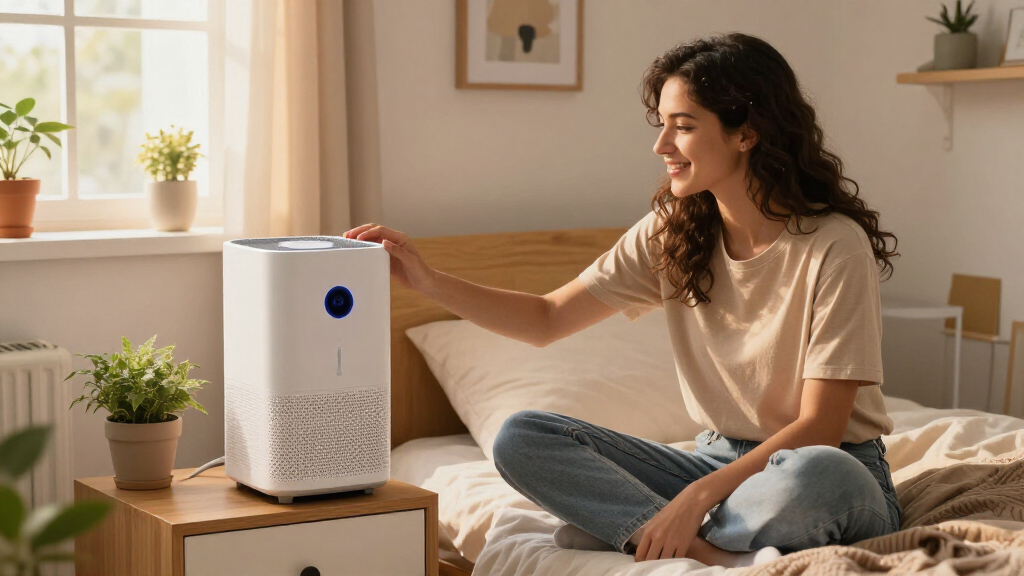
I evaluated every model through one specific lens: dorm room reality. That meant judging each purifier on footprint and desk-friendliness, sleep-mode noise output, app reliability on shared campus networks, sensor-driven auto mode, and — because students keep devices for multiple years — total cost of ownership, including filter price and availability. A purifier with a $70 sticker price and $40 proprietary filters loses to a $90 unit with $20 replacements by the end of sophomore year.
Smart features were weighted by usefulness, not quantity. Remote scheduling, air quality readouts, and voice assistant support earned points; RGB lights and aromatherapy pods earned none, since most dorms prohibit scented devices anyway. I also penalized models whose coverage claims (2,400 ft² in one case) translate into oversized cabinets that dominate a 12×12 room. The final ranking favors units that do a few things dependably over units that promise everything and deliver a buggy app experience.
Factors to Consider When Choosing Smart Air Purifiers For Dorm Rooms
Before clicking buy on the shiniest app-connected purifier, a few dorm-specific realities can save you money and frustration. These are the factors that actually changed the rankings in this comparison.Campus Wi-Fi Compatibility Is the Dealbreaker Nobody Mentions
Most dorm networks use captive portals — browser-based login screens — that smart home devices cannot complete on their own. A purifier that works flawlessly on home Wi-Fi may refuse to connect at school, leaving you with a dumb appliance you paid a smart premium for. Check whether your campus offers a dedicated IoT or device network before assuming any app-controlled purifier will work. Models with a strong offline auto mode that responds to a built-in PM2.5 sensor without cloud connectivity are your insurance policy; this is a major reason sensor-equipped picks ranked higher here. Another workaround is a travel router that bridges the portal login, but that adds cost and complexity most students skip. If you cannot verify your network situation, prioritize the sensor over the app.
Coverage Ratings: Bigger Is Not Better in 150 Square Feet
Manufacturers quote coverage at the purifier’s highest speed, which is usually its loudest setting — a mode you will never use while sleeping or studying. A unit rated for 1,000+ square feet running on low in a small dorm is effectively oversized, which is actually good for you: it means the machine can quietly cycle your room’s air many times per hour without straining. What is not good is the physical size that comes with those ratings. Several models in this lineup have footprints approaching a mini fridge and will consume half a desk. The right approach is buying roughly two to three times your room’s square footage in rated coverage, then ignoring the rest. Paying for a 2,400 ft² machine in a shared dorm room is spending money on cabinet size, not clean air.
Filter Costs Over Four Semesters
The sticker price is only the entry fee. Most HEPA filters need replacement every 6 to 12 months, and prices range from under $20 to nearly $50 depending on brand and design. Before buying, search for the replacement filter’s price and availability — proprietary filters from smaller brands like DAYETTE and VOOPNU can be intermittently out of stock, forcing you to run a spent filter. Washable pre-filters, like the SwitchBot’s and Blueair’s, extend the life of the true HEPA layer by catching hair and dust first, cutting your replacement frequency noticeably in a dusty dorm environment. Budget the total two-year cost, not the day-one cost. A cheap purifier with expensive filters is the most common money mistake in this category.
Noise Floor and Roommate Diplomacy
With a roommate sleeping five feet away, the sleep mode decibel rating matters more than CADR numbers. Look for sub-25 dB operation; anything above 30 dB is audible enough to become a nightly negotiation. Also pay attention to whether sleep mode disables the air quality indicator lights — several models here have bright LEDs that are fine in a living room and miserable at 2 a.m. Display-off modes rank as a genuine feature, not a gimmick. Auto mode helps here too: a good sensor-driven unit ramps up when you open the door and let hallway dust in, then drops back to whisper-quiet without you touching anything. That behavior is what the smart premium should actually buy you.
Dorm Rules, Power, and Portability
Check your housing handbook before ordering. Many dorms prohibit aromatherapy and fragrance features due to allergy and fire policies, which makes the DAYETTE’s scent pads and the generic model’s fragrance tray dead weight rather than bonuses. Size also determines whether the unit survives semester moves — anything over 15 inches tall and 10 pounds becomes a packing headache four times a year. Wall outlets in dorms are scarce, so a purifier with a long power cord and no required hub earns practical points. Finally, consider whether you will take the device to an apartment later; slightly larger units make sense if this purchase needs to outlive the dorm. If it is a two-year tool, buy small and cheap to run.
Frequently Asked Questions
Will a smart air purifier connect to my dorm’s Wi-Fi?
It depends entirely on your campus network setup. Most dorms use captive portals that require a browser login, which smart purifiers cannot complete, so the app may never connect even though the purifier itself works fine. Some universities offer a separate IoT network or allow device MAC registration through IT, which solves the problem cleanly. If neither exists, buy a model with a strong built-in sensor and offline auto mode, like the GoveeLife units, so you get the smart behavior without the cloud connection. A travel router is a workaround but adds $30–50 and another gadget to manage. Ask your housing office before buying anything app-dependent.
What coverage rating do I actually need for a typical dorm room?
A standard dorm room runs 120 to 200 square feet, so anything rated above 500 square feet is already sufficient — and honestly, more is fine as long as the physical unit stays compact. The rating tells you the machine’s ceiling at its highest, loudest speed, which you will rarely use. What matters in practice is how many air changes per hour the unit achieves on low or auto mode, where it runs quietly. An oversized-by-rating unit on low speed typically outperforms a correctly-sized unit running at medium, with less noise. Do not pay extra for a 2,000+ square foot rating unless the cabinet size and price still fit your room and budget.
Are smart features worth paying extra for in a dorm, or should I just buy a basic purifier?
Smart features earn their cost in two specific dorm scenarios: scheduling the unit to run while you are in class, and letting a sensor-triggered auto mode respond to hallway dust when the door opens. If your Wi-Fi will not cooperate, those benefits evaporate and a basic sensor-equipped model is the smarter buy. Remote control is genuinely useful when the purifier sits behind a bed or loft where the physical buttons are hard to reach — a common dorm layout. Voice assistant support is a nice-to-have but rarely justifies a price difference on its own. My rule: pay up to $20 extra for a reliable app and a real PM2.5 sensor, and not a dollar more.
How much will filters cost me per year in a dorm setting?
Expect $20 to $60 annually depending on the brand, since most HEPA filters last 6 to 12 months and dorm air tends to be dustier than average due to high foot traffic and older buildings. Models with washable pre-filters, like the Blueair 511i Max and SwitchBot, stretch filter life because the expensive HEPA layer only captures what gets past the washable stage. Check filter prices before you buy the unit — some budget purifiers lock you into proprietary filters that cost nearly half the machine’s price. Generic aftermarket filters exist for some Levoit models and cut costs further, though quality varies. Budget roughly $40 per school year as a realistic planning number.
Can I run one of these all night without disturbing my roommate?
The quietest models in this lineup, particularly the Blueair and the Levoit, run in the low 20s of decibels on sleep mode — quieter than a whisper and generally inaudible over typical dorm ambient noise. The failures are the budget generic units, some of which produce a noticeable fan hum or high-frequency whine even on their lowest setting. Equally important is light: look for a sleep mode that dims or disables indicator lights, because a bright air quality LED is a common roommate complaint. If you or your roommate are light sleepers, prioritize published decibel specs under 25 dB and read reviews specifically mentioning nighttime noise. Auto mode also helps by ramping down automatically after the air settles.
Conclusion
The right choice here depends less on specs and more on your living situation. For most students, the Levoit Smart Air Purifier is the best overall pick — it is compact, quiet, has a dependable app, and its filters are affordable enough to survive four semesters without resentment. Budget-conscious buyers should go with the GoveeLife bedroom model for best value: its built-in PM2.5 sensor and auto mode deliver the smart experience for noticeably less, and its offline performance covers you if campus Wi-Fi misbehaves. If money is less of an issue and you want the most polished experience, the Blueair Blue Pure 511i Max is the premium choice, with superior quiet operation and a washable pre-filter that keeps running costs down.
For smart-home beginners or anyone intimidated by app setup, the PuroAir 100i is the friendliest starting point with straightforward controls. Students in suite-style rooms or those planning to move to an apartment soon should look at the larger DAYETTE or SwitchBot units, which justify their footprints in bigger spaces. Whatever you choose, remember the two dorm-specific rules that shaped this ranking: verify your campus Wi-Fi situation before paying for app features, and calculate filter costs over two years rather than judging the sticker price alone.