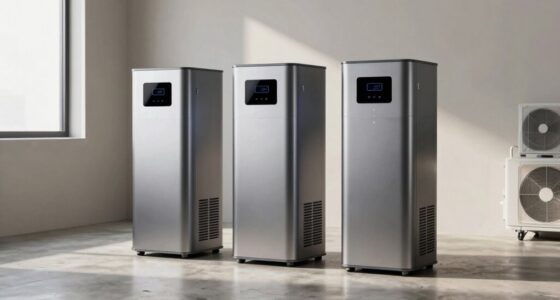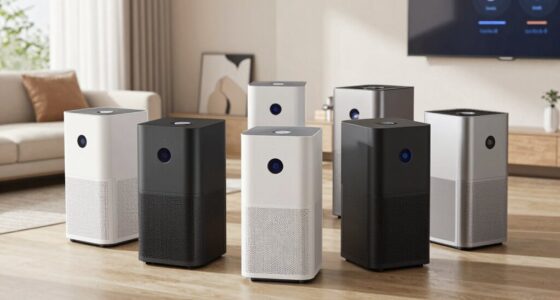
Choosing the best CO2 data logger for office ventilation is key to maintaining healthy indoor air quality. The ideal device should offer reliable measurements, easy data access, and long-term durability. The SwitchBot CO2 Detector stands out as the best overall for its user-friendly interface and portability, while the GZAIR CO2 Air Quality Monitor offers robust features for more detailed tracking. Other options, like the Autopilot Desktop CO2 Monitor, excel in data logging capabilities suited for more data-driven environments. Readers face a common tradeoff between simplicity and advanced functionality, which influences pricing and usability. Continue reading for a full breakdown of the top choices and their standout features.
Key Takeaways
- The best devices balance measurement accuracy with ease of use, especially for non-technical users.
- Data logging capacity and connectivity options are key for long-term ventilation monitoring.
- Many affordable options sacrifice some advanced features for simplicity, but still provide reliable readings.
- Wall-mounted monitors tend to offer more stability and continuous data collection, ideal for office settings.
- Higher-priced picks often include additional sensors, better build quality, and more comprehensive data analysis tools.


More Details on Our Top Picks
SwitchBot CO2 Detector, Air Quality Monitor Indoor, CO2 Monitor for CO2/TEMP/Humidity, Portable Carbon Dioxide Detector for Home/Car/Office/Greenhouse
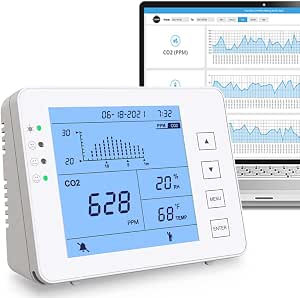
This device stands out for its high-precision Swiss-made NDIR sensors, providing real-time CO2, temperature, and humidity readings on a large, clear display. Unlike bulkier options like the Autopilot Data Logger, this monitor offers a sleek, portable design with wall-mount options, making it suitable for various environments. Its ability to send app notifications and set alarms for air quality thresholds enhances its usability in busy office settings. The tradeoff is that it requires a SwitchBot Hub for app alerts, which adds complexity and cost. Compared to the Autopilot device, it offers more user-friendly features and modern aesthetics, but with a reliance on app connectivity for full alarm functionality.
Pros:- Large, multi-functional display shows CO2, temperature, humidity, time, and comfort level at a glance
- Swiss-made NDIR sensor offers ±50 ppm accuracy with rapid updates every second
- Versatile placement options with wall-mount and adjustable bracket, plus portability
Cons:- Requires SwitchBot Hub for app notifications, adding extra cost and setup complexity
- Limited data logging capabilities without external integrations or app
Best for: Office managers or facility staff who need a reliable, easy-to-read CO2 monitor with smart alerts and flexible placement.
Not ideal for: Large-scale industrial environments requiring extensive data logging without app dependency or long-term storage capabilities.
- Measurement Range:400-9000 ppm
- Accuracy:±50 ppm
- Sensor Type:Swiss-made NDIR
- Display Size:92 mm
- Power:Built-in rechargeable battery with up to 12 months life
- Connectivity:App notifications via SwitchBot Hub
Bottom line: Ideal for office spaces and small environments needing real-time air quality monitoring with visual alerts and easy setup.
Autopilot Desktop CO2 Monitor & Data Logger
Compared with the SwitchBot, the Autopilot monitor excels in long-term data storage and trend visualization, with a clear digital chart that logs CO2, humidity, and temperature over adjustable periods. Its compact, portable design makes it suitable for various rooms, and it attaches easily via hook-and-loop fastener to external power sources like a power bank or laptop. The main tradeoff is the limited built-in data management—while it stores detailed logs, it doesn’t provide real-time alerts or mobile notifications, unlike the SwitchBot. It is better suited for users who want detailed historical data rather than immediate visual alerts, but less ideal for quick spot-checks or environments needing instant notifications.
Pros:- Logs data over 24 hours to 7 days with trend charts for historical analysis
- Compact and portable with multiple hanging options and external power compatibility
- Affordable, with flexible power options including USB and external batteries
Cons:- No real-time alerts or app notifications, limiting immediate response
- Requires external power source, which may be less convenient for some users
Best for: Horticulturists or indoor growers monitoring CO2 and environmental trends over days or weeks with detailed logs.
Not ideal for: Offices or environments requiring immediate alerts or real-time notifications without manual data review.
- Measurement Range:0-3000 ppm
- Accuracy:±50 ppm or ±5%
- Data Storage:Up to 7 days of logs
- Power:USB or external battery pack
- Size:4.7 x 3.6 x 1.1 inches
- Display:Digital trend chart
Bottom line: Best suited for users who prioritize detailed data logs and trend analysis over instant alerts, such as growers or researchers.
A16 Air Quality Monitor Indoor PM1.0 PM2.5 PM10 Dust Meter TVOC HCHO Pollution Tester 6 Sizes Particle Counter AQI Formaldehyde VOC Detector Home with Data Logger
This monitor offers extensive measurement capabilities for PM, TVOC, HCHO, and CO2, with multiple sensors and data logging. However, unlike the other devices, it suffers from significant data inconsistencies—violating basic measurement constraints and showing contradictory results, such as HCHO readings far exceeding TVOC levels or PM measurements that don’t follow logical relationships. These flaws undermine its reliability for precise environmental assessment. Its broad feature set might appeal to budget-conscious users, but the inconsistent data makes it less suitable for office ventilation where accuracy matters. Compared with the more precise SwitchBot or Autopilot, this device’s core issue is its questionable data integrity.
Pros:- Measures multiple pollutants including PM, TVOC, HCHO, and CO2
- Data logging with capacity for over 100,000 records
- Multiple particle size measurements for comprehensive particulate analysis
Cons:- Inconsistent and sometimes contradictory data across measurements
- Violates fundamental measurement constraints, reducing trustworthiness
- Limited to basic display with no real-time alerts or calibration options
Best for: Basic home users or experimenters interested in multiple air quality parameters, willing to accept questionable data accuracy.
Not ideal for: Office managers or professionals needing reliable, consistent CO2 data for ventilation decisions.
- Particle Measurement:PM1.0, PM2.5, PM10
- Pollutants:TVOC, HCHO, CO2
- Data Storage:100,000+ records
- Sensor Type:Laser particle, electrochemical HCHO, semiconductor TVOC
- Size:4.33 x 3.82 x 2.24 inches
- Weight:9.2 ounces
Bottom line: Suitable for casual or experimental use but not recommended for precise office ventilation control due to unreliable data.
Smart Air Quality Meter Indoor 11-in-1 Air Monitor PM1.0 PM2.5 PM10 Dust TVOC VOC HCHO Tester with Data Record for Home Office (126S)
This device offers high-precision laser particle sensors for PM, along with VOC, HCHO, and CO2 measurement, all displayed in real-time and stored on a built-in TF card for extensive data analysis. Its small, portable design makes it suitable for various environments, and it provides continuous monitoring for allergy sufferers or those concerned with indoor pollution. Unlike the problematic data consistency of the BLATN monitor, this model is praised for its reliable readings and practical data logging. The main tradeoff is its reliance on a physical memory card, which adds a step for data retrieval. Overall, it offers a well-rounded approach for comprehensive indoor air quality monitoring, making it ideal for detailed indoor assessments rather than quick spot checks.
Pros:- Laser particle sensors detect PM from 0.3 to 10 microns with high accuracy
- Measures PM, TVOC, HCHO, and CO2 simultaneously
- Data stored locally on a TF card for comprehensive analysis
Cons:- Requires manual data download via card reader, less convenient than cloud-based systems
- Limited to local data storage, no real-time app alerts
- Battery life and power options are not specified, possibly limited for long-term use
Best for: Homeowners or office users needing detailed, multi-parameter air quality data with dependable accuracy.
Not ideal for: Large-scale industrial or commercial environments where integrated cloud or app connectivity is preferred.
- Measurement Parameters:PM1.0, PM2.5, PM10, TVOC, HCHO, CO2
- Sensor Type:Laser particle, electrochemical, VOC sensors
- Data Storage:Up to 10W data records on TF card
- Display:Real-time with data export via card reader
- Size:Small, portable
- Power:Battery or external power
Bottom line: Best suited for users who want reliable multi-parameter indoor air quality data with detailed historical records.
GZAIR CO2 Air Quality Monitor with Data Logger, Wall-Mounted or Tabletop, NDIR Sensor, Temperature & Humidity Tracking, 0–5000 ppm Range (Human/Plant Modes)
This GZAIR model stands out for its high-precision NDIR sensor, providing reliable and fast CO2 readings compared to lower-end options like the Autopilot Desktop CO2 Monitor. Its ability to switch between Human Mode for indoor comfort and Plant Mode makes it highly adaptable for various office and greenhouse settings. Its built-in data logger tracks trends for up to 7 days, offering valuable insights for ventilation management, unlike simpler monitors that only display real-time data. The flexibility of wall-mounting or tabletop placement increases its convenience, though it requires a 5V/2A power supply, which may be less portable. Compared to the CO2 Meter Portable CO2 Detector, this device offers more comprehensive environmental tracking but at a higher cost and size, making it less suitable for very mobile use. Its calibration options, automatic and manual, contribute to long-term accuracy, essential in professional settings. Overall, this pick is best suited for offices needing detailed data and versatile installation options, but it might be overkill for casual home use.
Pros:- High-accuracy NDIR sensor for reliable measurements
- Dual modes for specific human or plant needs
- Built-in 7-day data logging with trend display
- Flexible wall-mount or tabletop installation
Cons:- Requires a stable 5V/2A power adapter, reducing portability
- Relatively higher price point compared to basic models
- Bulkier design may be less suitable for small spaces
Best for: Facility managers and office environments requiring robust, multi-mode CO2 monitoring with trend analysis.
Not ideal for: Home users seeking a portable, simple device without the need for mounting or detailed trend tracking.
- Sensor Type:NDIR
- Range:0–5000 ppm
- Modes:Human and Plant
- Data Logging:7 days
- Placement Options:Wall-mounted or tabletop
- Power Supply:5V/2A
Bottom line: This monitor is ideal for professional office environments that need detailed, adaptable CO2 data with trend insights.
Lascar Electronics Carbon Monoxide Data Logger, 0 to 300 ppm, 32,000+ Readings, 3 Month Battery Life
This Lascar CO logger focuses on carbon monoxide, with a large 32,000+ reading capacity and a three-month battery life, making it a solid choice for extended monitoring. Unlike the GZAIR CO2 Monitor, it specializes in CO rather than CO2, so it’s better suited for detecting potential exhaust leaks or indoor air quality issues related to combustion sources. Its direct USB connection and software for easy configuration and data analysis make it accessible for users unfamiliar with complex devices. However, its limited range of 0-300 ppm means it’s less effective in environments with potentially higher CO levels or in ventilated office spaces where CO might rarely reach that level. Compared to the Smart Air Quality Monitor Indoor 12-in-1, it offers a narrower focus but excels at long-term, detailed CO data collection. This device is best for facilities needing dedicated, long-term CO monitoring but may be less suitable for comprehensive air quality assessments involving multiple pollutants.
Pros:- Large capacity of over 32,000 readings for long-term data
- Battery lasts up to 3 months without recharge
- Simple USB connection for ease of use
- Configurable alarm thresholds
Cons:- Limited to 0-300 ppm CO range, may miss higher concentrations
- Focuses solely on CO, not suitable for comprehensive IAQ
- No real-time display or trend visualization without software
Best for: Industrial or office environments monitoring for CO leaks or exposure over extended periods.
Not ideal for: Home users who need multi-pollutant detection or portable, quick assessments.
- Range:0–300 ppm
- Readings Capacity:32,000+
- Battery Life:3 months
- Connectivity:USB
- Alarm Thresholds:User-programmable
- Focus Pollutant:CO
Bottom line: This logger suits long-term CO monitoring where high data capacity and battery life are priorities, but it’s less effective for broader indoor air quality needs.
Smart Air Quality Monitor Indoor 12-in-1 CO2 Meter Dust PM1.0 PM2.5 PM10 Particles TVOC Detector HCHO Tester with Data Logger for Home AQI Test (128S)
This all-in-one monitor offers extensive pollutant detection, including CO2, PM particles, TVOC, and formaldehyde, with a built-in data logger that stores over 10,000 records. Compared with the GZAIR CO2 Monitor, it provides a broader picture of indoor air quality but with slightly less focus on pure CO2 measurement precision. Its laser particle sensor detects particles from 0.3 to 10 microns, making it ideal for environments where multiple pollutants impact air quality, such as busy offices or homes with chemical exposure. The compact size and portable design allow for easy placement anywhere, but the device’s complexity may be overwhelming for users solely interested in CO2 levels. Its data can be downloaded via TF card for analysis, which is advantageous for detailed trend evaluation. This device is best suited for comprehensive indoor IAQ testing, though it might be less ideal if only CO2 data is needed.
Pros:- Detects multiple pollutants including CO2, PM, TVOC, and HCHO
- Built-in TF memory card stores over 10,000 records
- Portable and easy to operate
- Real-time display of multiple air quality parameters
Cons:- Less focus on CO2 measurement accuracy compared to dedicated monitors
- Complex interface may be confusing for basic users
- No real-time online data access, requires card reading
Best for: Homeowners and office managers seeking multi-pollutant data for comprehensive indoor air quality assessments.
Not ideal for: Users needing a simple, dedicated CO2 monitor without additional pollutant detection.
- Pollutants Detected:CO2, PM1.0, PM2.5, PM10, TVOC, HCHO
- Data Storage:10,000+ records
- Portable:Yes
- Display:Real-time multi-parameter
- Data Download:TF card
- Sensor Type:Laser particle sensor
Bottom line: This device excels in providing a multi-pollutant profile for indoor spaces but is less suited if only CO2 data is required.
CO2 Meter Portable CO2 Detector Digital CO2 Monitor with Alarm Function Carbon Dioxide Temperature and Humidity Meter, NDIR CO2 Sensor Indoor Air Quality Monitor for Home Office Grow Room
This compact CO2 monitor combines high-precision NDIR sensing with an alarm feature and large LCD display, making it ideal for quick assessments in home, office, or grow rooms. Its ability to measure up to 9999 ppm provides a wide range suitable for most indoor environments, and the audible alarm offers instant feedback when levels exceed user-defined thresholds. Unlike the GZAIR model, which offers detailed trend data and multiple modes, this device emphasizes portability and simplicity, lacking long-term data logging but excelling at on-the-spot measurement. Its large backlit display makes it easy to read in dark spaces, yet it’s not designed for extensive data analysis or trend tracking without additional tools. It’s a good choice for users who want a quick, reliable CO2 reading without the need for detailed environmental data over time.
Pros:- High-precision NDIR sensor for accurate readings
- Large LCD with backlight for easy reading
- Alarm function for exceeding thresholds
- Wide measurement range up to 9999 ppm
Cons:- No data logging or trend history features
- Limited to CO2, no other air quality parameters
- Battery-powered only, less stable for continuous long-term use
Best for: Homeowners, small offices, or growers needing portable, immediate CO2 measurements with alarm alerts.
Not ideal for: Facilities requiring detailed trend data or multi-day logging for ventilation planning.
- Range:0–9999 ppm
- Sensor Type:NDIR
- Display:Large LCD with backlight
- Alarm:Yes
- Power:Battery
- Size:Compact
Bottom line: Perfect for portable, real-time CO2 checks where immediate feedback is needed, but less suitable for long-term ventilation analysis.
Data Logger, 100 ft.Range, Continuous
This HOBO data logger offers a 100 ft wireless range and continuous sampling, making it well-suited for monitoring large office spaces or multiple rooms remotely. Its ability to log CO2, temperature, and humidity data, combined with Bluetooth and USB interfaces, provides flexible access to environmental data. Compared to the GZAIR, it doesn’t focus solely on air quality but instead offers a broader environmental picture with long-term storage and remote access, ideal for facilities management. Its accuracy is within ±5%, which is acceptable for most ventilation assessments, but it may lack the real-time display of dedicated handheld monitors. The device’s 6-month battery life is advantageous for ongoing monitoring without frequent maintenance. It is best for organizations needing continuous, remote environmental monitoring over extended periods, not for quick spot checks.
Pros:- Wireless Bluetooth and USB data access
- Long battery life of 6 months
- Continuous environmental data logging
- Range up to 100 feet for remote monitoring
Cons:- No real-time display or trend graph on device itself
- Requires compatible software for data analysis
- Accuracy of ±5% may be less precise than high-end sensors
Best for: Facilities managers and environmental engineers needing long-term, remote, wireless data collection in large or complex spaces.
Not ideal for: Home users or small offices seeking simple, immediate CO2 readings with minimal setup.
- Range:100 ft wireless
- Sampling:Continuous
- Pollutants Monitored:CO2, Temp, Humidity
- Power:6 months battery
- Connectivity:Bluetooth & USB
- Accuracy:+/-5%
Bottom line: This logger is ideal for long-term, remote environmental monitoring in large or multi-room office settings, but not for immediate, in-situ readings.
GZAIR CO2 Air Quality Monitor with Data Logger, Wall-Mounted or Tabletop, NDIR Sensor, Temperature & Humidity Tracking, 0–5000 ppm Range (Human/Plant Modes)
This GZAIR model stands out for its high-precision NDIR sensor that delivers reliable, fast readings with minimal environmental interference, making it ideal for office environments where accurate CO2 levels are critical. Compared with the Autopilot Desktop CO2 Monitor, this device offers dual modes tailored for human comfort and plant care, adding flexibility for diverse indoor settings. Its built-in data logger tracks trends over a week, providing valuable insights into ventilation effectiveness. The ability to mount on a wall or place on a desk enhances its placement options, while automatic and manual calibration options help maintain ongoing accuracy. However, its reliance on a USB power supply means it’s less portable than battery-powered options, and its feature set may be more complex than necessary for simple spot checks. This pick makes the most sense for users who need a flexible, reliable monitor that can serve multiple indoor environments, including offices and greenhouses.
Pros:- High-accuracy NDIR sensor for reliable readings
- Dual modes for human and plant environments
- Built-in data logger for trend tracking
- Flexible placement options (wall or tabletop)
Cons:- Requires a 5V/2A power adapter, limiting portability
- More features than simple spot-checks, which may overwhelm casual users
- No battery operation, reducing convenience for mobile use
Best for: Office managers or greenhouse operators requiring accurate, versatile CO2 monitoring with trend analysis.
Not ideal for: Individuals seeking a portable, battery-powered device for quick, on-the-go measurements, as this model needs a constant power source.
- Sensor Type:NDIR
- Measurement Range:0–5000 ppm
- Data Logging:Yes, tracks trends for up to 7 days
- Placement Options:Wall-mounted or tabletop
- Power Source:5V/2A USB adapter
- Modes:Human and Plant modes
- Calibration:Auto & Manual
- Size & Weight:Lightweight, 0.37 pounds
Bottom line: This device suits those who need a dependable, multi-purpose CO2 monitor with detailed data tracking for indoor environments.
How We Picked
I evaluated these products based on their measurement accuracy, ease of use, build quality, data logging capabilities, and value for office environments. Devices with reliable sensors, straightforward interfaces, and durable designs ranked higher, as these factors directly impact usability in a work setting. I also considered connectivity features, such as data export options and app integration, which are important for comprehensive ventilation management. The ranking reflects a balance between affordability and advanced features, prioritizing products that deliver consistent performance and user-friendly operation for office ventilation needs.Factors to Consider When Choosing Best Co2 Data Logger For Office Ventilation
When selecting the best CO2 data logger for office ventilation, consider several critical factors. Accuracy of measurements ensures you get reliable data to inform ventilation adjustments. Ease of use, including clear displays and simple data access, can make daily monitoring less burdensome. Build quality and durability are essential for long-term deployment in an office setting. Also, evaluate data logging capacity and connectivity options, like Bluetooth or Wi-Fi, to facilitate ongoing tracking and analysis. Finally, consider your budget relative to desired features—more advanced models often come at a higher price but provide greater insights.Measurement Accuracy and Sensor Quality
Accurate CO2 readings are fundamental to effective ventilation management. Look for devices with NDIR sensors, which are generally more precise and stable over time compared to chemical sensors. Inaccurate data can lead to unnecessary or insufficient ventilation adjustments, affecting indoor air quality and energy costs. Devices with auto-calibration features tend to maintain accuracy longer without frequent manual adjustments. Prioritizing sensor quality ensures your monitoring system remains reliable across different office conditions.
Ease of Use and Data Accessibility
For office environments, intuitive interfaces and straightforward data access are vital. Devices with clear digital displays enable quick readings without needing to connect to a computer. Wireless connectivity options, like Bluetooth or Wi-Fi, facilitate easy data export to smartphones or cloud services, simplifying ongoing analysis. User-friendly apps or dashboards can help visualize trends and generate reports, saving time and reducing the likelihood of user error. Avoid overly complicated setups unless you have the technical support to manage them.
Build Quality and Durability
Office monitors should withstand daily use without frequent maintenance. Look for models with sturdy enclosures, splash resistance, and reliable mounting options. Devices with long-lasting batteries or continuous power options are preferable for 24/7 monitoring. Poor build quality can lead to sensor damage or data loss, undermining your ventilation efforts. Investing in a well-constructed device can reduce replacement costs and ensure consistent performance over time.
Data Logging and Connectivity Features
Long-term ventilation monitoring demands robust data logging capabilities. Consider devices that store data locally or upload to cloud services for analysis. The ability to export data in common formats like CSV or PDF simplifies reporting and trend analysis. Connectivity options such as Wi-Fi, Bluetooth, or Ethernet broaden usability, especially in larger or more complex office setups. Be aware that higher data storage capacity and seamless integration often come with increased costs but can significantly enhance monitoring effectiveness.
Price and Value Considerations
While budget options might meet basic needs, investing in higher-end models can offer better accuracy, durability, and advanced features. Evaluate whether additional sensors (e.g., temperature, humidity) justify the extra cost based on your ventilation goals. Consider the total cost of ownership, including maintenance, calibration, and data management tools. Sometimes, spending more upfront results in more reliable long-term performance, especially in environments where accurate ventilation control is critical.
Frequently Asked Questions
Can I use a general air quality monitor as a CO2 data logger for my office?
While some general air quality monitors include CO2 measurement, they often lack the dedicated precision and long-term data logging features needed for effective office ventilation management. Devices specifically designed as CO2 data loggers typically offer better accuracy, calibration, and data export options. Using a dedicated CO2 logger ensures you have reliable records to inform ventilation adjustments without relying on approximations or less precise measurements.
How often should I calibrate my CO2 data logger in an office environment?
Calibration frequency depends on the device and usage conditions, but most experts recommend calibrating at least once every 6 to 12 months. Regular calibration maintains sensor accuracy over time, especially in environments with fluctuating air quality. Some models include auto-calibration features that simplify this process, while others require manual adjustments. Consistent calibration ensures your data remains trustworthy for health and safety decisions.
Is a wall-mounted CO2 monitor better than a portable one for office ventilation?
Wall-mounted monitors offer the advantage of continuous, stable readings at fixed locations, making them suitable for monitoring specific zones within an office. Portable devices are more flexible and useful for spot checks or temporary assessments. The choice depends on your monitoring goals—if you need ongoing data from a central point, a wall-mounted unit makes more sense. For dynamic or multiple locations, portable options allow for wider coverage and quick assessments.
What features should I prioritize if I want a simple CO2 monitor for my small office?
For small offices, simplicity is key. Look for a device with a clear display, basic real-time CO2 readings, and straightforward data export options. Automatic calibration and minimal maintenance features increase usability. You don’t need extensive sensors or complex setups unless your ventilation strategy involves detailed environmental data. Prioritizing ease of use ensures consistent, reliable monitoring without unnecessary complication.
Are more expensive CO2 data loggers worth the investment for office use?
Higher-priced models often deliver greater accuracy, durability, and advanced data management features, which can be worth the extra cost if precise ventilation control is a priority. They may include longer-term data storage, better connectivity, and additional sensors like temperature or humidity, providing a more comprehensive view of indoor air quality. However, if your needs are basic—such as occasional checks—more affordable options may suffice. Evaluate whether the added features align with your ventilation goals to determine if the investment is justified.
Conclusion
For most office environments, the SwitchBot CO2 Detector offers a balanced mix of accuracy, ease of use, and portability, making it the best overall choice. If you’re seeking a robust, long-term solution with comprehensive data features, the GZAIR CO2 Air Quality Monitor is ideal for dedicated monitoring setups. Budget-conscious buyers or those new to air quality monitoring might prefer simpler, more affordable models like the Autopilot Desktop CO2 Monitor. For professionals requiring detailed data analysis and integration, investing in higher-end models provides added value. Ultimately, selecting the right device depends on your specific monitoring needs, budget, and how you plan to manage ventilation improvements.