
To estimate the dehumidifier capacity you need, consider your basement’s size, typical humidity levels, and moisture sources like laundry or groundwater seepage. Calculating moisture load helps you choose a unit that’s neither too small nor too large, ensuring efficient moisture control and preventing mold. Proper sizing saves energy and maintains a healthy environment. Keep exploring how different factors influence your needs and find the best solution for your space.
Key Takeaways
- Gather basement size, target humidity, and moisture sources to input accurate data into the calculator.
- Calculate total moisture contributions from activities like cooking, laundry, and groundwater seepage.
- Use the calculator to determine the required dehumidifier capacity in pints or gallons per day.
- Consider seasonal variations to adjust dehumidifier size for summer or winter conditions.
- Regularly re-evaluate moisture load to ensure optimal humidity control and prevent mold or damage.

A moisture load calculator helps you determine the amount of moisture your space generates, guaranteeing proper ventilation and humidity control. When dealing with a basement, understanding humidity levels is essential because excess moisture can lead to mold, structural damage, and an uncomfortable environment. By accurately calculating your basement’s moisture load, you can make informed decisions about dehumidifier sizing, which is critical to maintaining a healthy and dry space.
To start, you need to factor in the sources of moisture in your basement. Common contributors include breathing, cooking, laundry, and even groundwater seepage through walls and floors. Each of these factors adds to the overall moisture load, which directly impacts the size and capacity of the dehumidifier you’ll need. Your goal is to select a unit that can handle the moisture generated without underperforming or wasting energy on oversized equipment.
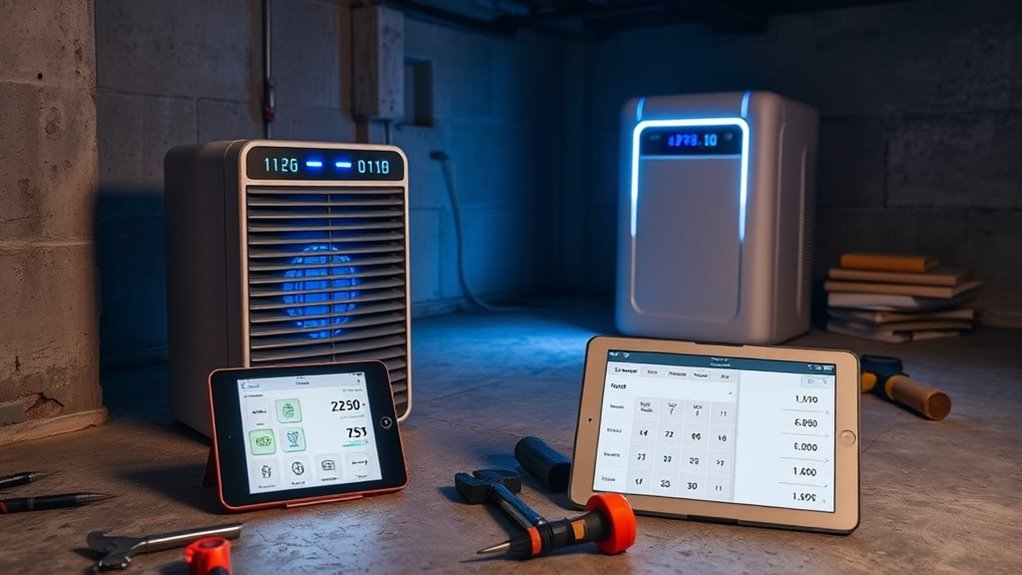
Using a moisture load calculator, you input key data points such as the square footage of your basement, the typical humidity levels you want to maintain, and the estimated moisture sources. For instance, if your basement is prone to dampness, you might aim for a humidity level around 50%, which balances comfort with mold prevention. The calculator then estimates the total moisture removal required daily, expressed in pints or gallons. This figure guides you toward the right dehumidifier size, ensuring it can keep pace with your basement’s moisture production.
Input your basement size, target humidity, and moisture sources to find the ideal dehumidifier capacity.
Proper dehumidifier sizing isn’t just about picking a model with the highest capacity. If your unit is too small, it’ll struggle to maintain the desired humidity levels, leading to persistent dampness and potential health issues. Conversely, an oversized dehumidifier consumes more energy and costs more upfront without offering additional benefits. That’s why an accurate calculation is crucial—it helps you find a unit that matches your basement’s specific needs, maximizing efficiency and effectiveness.
Additionally, the calculator can account for seasonal variations. During humid summer months, your moisture load might increase, requiring a slightly larger or more powerful unit. In dryer winter months, a smaller unit may suffice. Regularly reevaluating your moisture load with the calculator ensures your dehumidifier continues to perform at its best over time, preventing issues caused by inaccurate humidity management. Understanding humidity control is essential for optimizing your basement environment and protecting your home’s structure.
Frequently Asked Questions
Can I Use the Calculator for Above-Ground or Crawl Space Areas?
Yes, you can use the calculator for above-ground and crawl space areas. It helps you estimate the right dehumidifier capacity by considering factors like space size and moisture levels. For above-ground rooms or crawl spaces, input their specific dimensions and conditions to get an accurate recommendation. This way, you’ll guarantee proper humidity control, preventing mold and dampness effectively in these spaces.
How Often Should I Re-Calculate Dehumidifier Needs?
Did you know that humidity levels can change seasonally by up to 10%? You should re-calculate your dehumidifier needs at least once a year, especially if your basement’s usage or environment shifts. This helps extend your dehumidifier’s lifespan and guarantees peak performance. Regular maintenance aligns with this schedule, preventing issues and keeping humidity at healthy levels. Staying proactive guarantees your system works efficiently year-round.
What Factors Influence the Accuracy of the Moisture Load Estimate?
Your moisture load estimate’s accuracy depends on sensor accuracy and calculation assumptions. If sensors are imprecise or outdated, measurements can be off, leading to incorrect capacity needs. Additionally, assumptions about factors like ventilation, occupancy, and weather conditions influence the estimate. Regularly updating these assumptions and ensuring sensors are properly calibrated helps you get a more reliable calculation, so your dehumidifier works efficiently.
Is There a Recommended Dehumidifier Size for Small or Large Basements?
Imagine a tiny fortress or a vast castle—your basement’s size guides the dehumidifier you need. For small basements, a 30-pint unit often suffices, while larger spaces demand 50 to 70 pints or more. Consider basement insulation and moisture sources like leaks or humidity, which impact capacity. Proper sizing guarantees comfort, preventing mold and dampness. When in doubt, opt for a slightly larger unit to handle unexpected moisture surges.
How Does Outdoor Climate Affect the Moisture Load Calculation?
Outdoor climate considerably impacts your moisture load calculation. High outdoor humidity increases the amount of moisture entering your basement, especially during humid seasons, so you’ll need a more powerful dehumidifier. Seasonal variation also plays a role, as humidity levels fluctuate throughout the year. By considering these factors, you can select a dehumidifier that effectively manages moisture year-round, keeping your basement dry and mold-free regardless of outdoor conditions.
Conclusion
By using the moisture load calculator, you can accurately estimate your dehumidifier’s capacity, ensuring your basement stays dry and comfortable. Think of it as a shield against humidity, a barrier that keeps moisture at bay. Trust this tool to guide your choices, to balance the air, to protect your space. With the right size, you’ll breathe easier, sleep better, and enjoy a basement that’s dry, fresh, and inviting—every day.