
TL;DR
A new tool now provides users with real-time data on grid import, export, and consumption. This development aims to improve transparency and empower energy consumers. Details on how it works and its future are still emerging.
A new feature now enables users to access detailed data on grid import, export, and consumption, providing greater transparency for energy consumers and prosumers.

Get home appliances delivered free with Prime
- Fast, free delivery on millions of items
- Prime Video, Amazon Music and more included
- Member-only deals all year
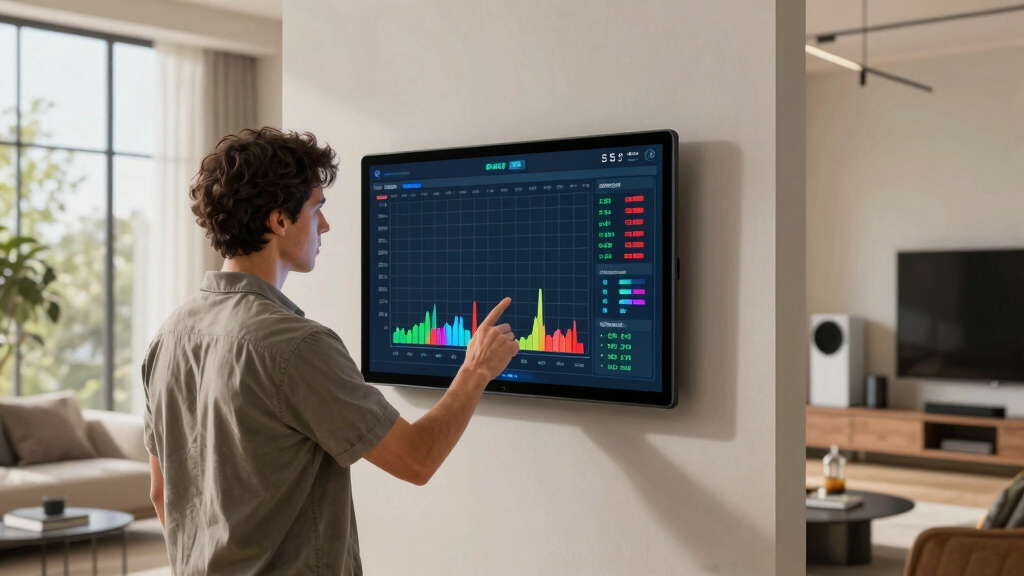
The new tool allows users to view real-time and historical data on how much electricity they import from or export to the grid, as well as their overall consumption. This feature has been introduced through a recent update on certain energy management platforms and smart meters, according to sources on r/solar.
While the exact rollout timeline varies by region and provider, early reports suggest that the feature is now available to a subset of users, with broader access expected in the coming months. The tool aims to give consumers better insight into their energy patterns, potentially aiding in optimizing solar panel use and reducing costs.
Implications for Energy Transparency and Consumer Control
This development matters because it enhances transparency in energy use, allowing consumers to better understand their import, export, and consumption patterns. Such data can support more informed decisions about energy efficiency, solar panel management, and grid interactions, potentially leading to cost savings and increased adoption of renewable energy solutions.
Furthermore, by providing detailed grid data, the tool may influence future grid management practices and policies aimed at integrating distributed energy resources more effectively.
Products Worth Considering

Blueair Blue Pure 311i Max Smart Air Purifier

Samsung 65-Inch M70H Series 4K Mini LED Smart TV (2026)

eufy Security SoloCam S340 3K Dual-Lens Solar Security Camera
As an affiliate, we earn on qualifying purchases.
Recent Advances in Smart Meter Data Accessibility
Over the past few years, there has been a growing push for greater access to detailed energy data, driven by the rise of home solar systems and smart grid technologies. Platforms like r/solar have highlighted community interest in transparent energy metrics, with users advocating for tools that show real-time import/export figures.
This latest feature appears to be part of a broader trend toward democratizing energy data, although it is still in early stages of deployment and not yet universally available.
“This new feature could be a game-changer for solar owners and prosumers, giving them visibility into their grid interactions like never before.”
— an anonymous researcher on r/solar
Extent of Availability and Future Developments
It is not yet clear how widely available this feature will become across different regions and platforms. Details about the timeline for full rollout and integration with various energy providers remain uncertain. Additionally, the extent of data granularity and user interface improvements are still being developed.
Expected Expansion and User Adoption Milestones
Further updates are anticipated as the feature is gradually rolled out to more users. Industry observers expect broader adoption in the next few months, along with potential enhancements based on user feedback. Monitoring announcements from energy platforms will be key to understanding its full impact.
Key Questions
Who can access the new grid data feature?
Currently, access is limited to a subset of users on specific platforms, with broader availability expected in the coming months.
How does this feature work?
It provides real-time and historical data on grid import, export, and consumption, accessible through compatible energy management apps or smart meters.
Will this help reduce energy costs?
By offering better insight into energy use, it may enable users to optimize their consumption and solar generation, potentially leading to cost savings.
Are there privacy concerns with detailed energy data?
As with all data-sharing tools, privacy considerations depend on platform policies. Users should review privacy settings and data policies before use.
What are the limitations of this new feature?
Its availability is currently limited, and the level of detail or user interface improvements are still being developed.
Source: r/solar