To match CADR to your room size quickly, first measure your space accurately, including all open areas. Then, find a purifier with a CADR that’s at least two-thirds of your room’s square footage for peak performance. Avoid choosing units based solely on price or appearance. If you keep these steps in mind, you’ll guarantee you pick a size that cleans effectively and saves energy. Continue to see how you can master this process effortlessly.
Key Takeaways
- Measure your room’s length, width, and height accurately using a tape or laser measure for precise calculations.
- Calculate the room’s square footage or cubic footage to determine the recommended CADR, ideally two-thirds of the room size.
- Match the CADR rating on the air purifier with your room size to ensure effective air cleaning without over- or under-sizing.
- Check for noise levels and airflow to confirm the purifier performs efficiently at the chosen size, avoiding loud operation or poor circulation.
- Regularly maintain filters and monitor device indicators to sustain optimal CADR performance and air quality.
What Is CADR and Why Does It Matter for Your Air Purifier?
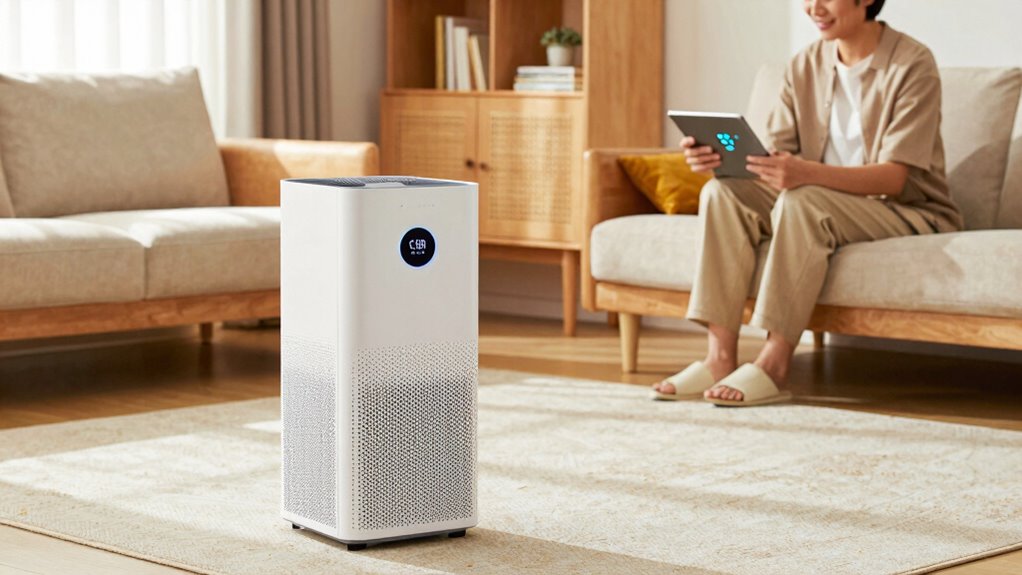
Have you ever wondered how to tell if an air purifier can effectively clean your space? That’s where CADR, or Clean Air Delivery Rate, comes in. CADR measures how quickly an air purifier can filter out smoke, dust, and pollen, directly impacting your air quality. The higher the CADR, the more efficiently your device cleans the air in your room. It’s crucial to match CADR with your room size for peak performance. Additionally, choosing an air purifier with an appropriate electric motor power can enhance its efficiency and effectiveness. Moreover, understanding the performance specifications of your air purifier helps ensure it meets your specific needs. Plus, keep in mind that filter maintenance is essential; a clogged filter reduces CADR and hampers air quality. Regularly replacing or cleaning filters ensures your purifier runs at peak efficiency, maintaining healthy air and preventing the buildup of pollutants that can compromise your comfort and well-being. Proper filter maintenance not only sustains optimal CADR but also prolongs the lifespan of your device. Incorporating features like automatic filter indicators can help remind you when maintenance is due, ensuring your air purifier continues to perform effectively.
How to Measure Your Room Size Accurately
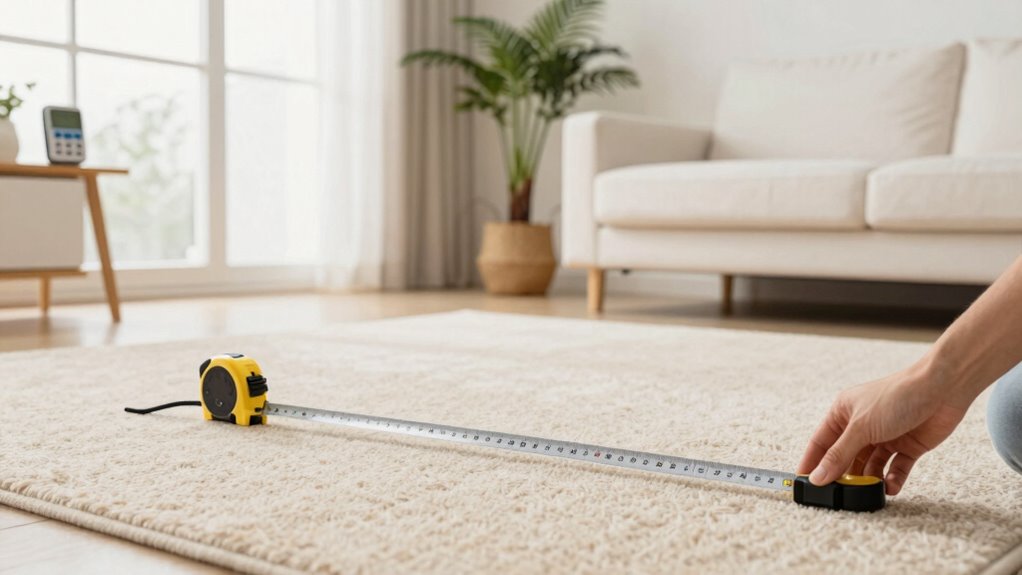
To guarantee your air purifier works effectively, accurately measuring your room size is essential. Start by measuring the length and width of your space in feet or meters, then multiply these numbers to find the total square footage or square meters. Don’t forget to include any alcoves or open areas that impact airflow. When decorating ideas influence your room, make certain furniture and curtains don’t block vents or air circulation, which can affect measurements. For cleaning tips, keep your measuring tools clean and calibrated for accuracy. Use a tape measure or laser distance measurer for precision. Proper room measurement techniques ensure you select the right CADR, which depends on accurate room dimensions, optimizing air quality without overspending. Accurate room sizing is the foundation for effective air purifier performance. Understanding room dimensions helps you choose the appropriate device size for optimal air purification, especially when considering factors like astrological signs that may influence perception of space. Additionally, airflow patterns are crucial to consider for achieving maximum purification efficiency in your space.
How to Calculate the Right CADR for Your Space
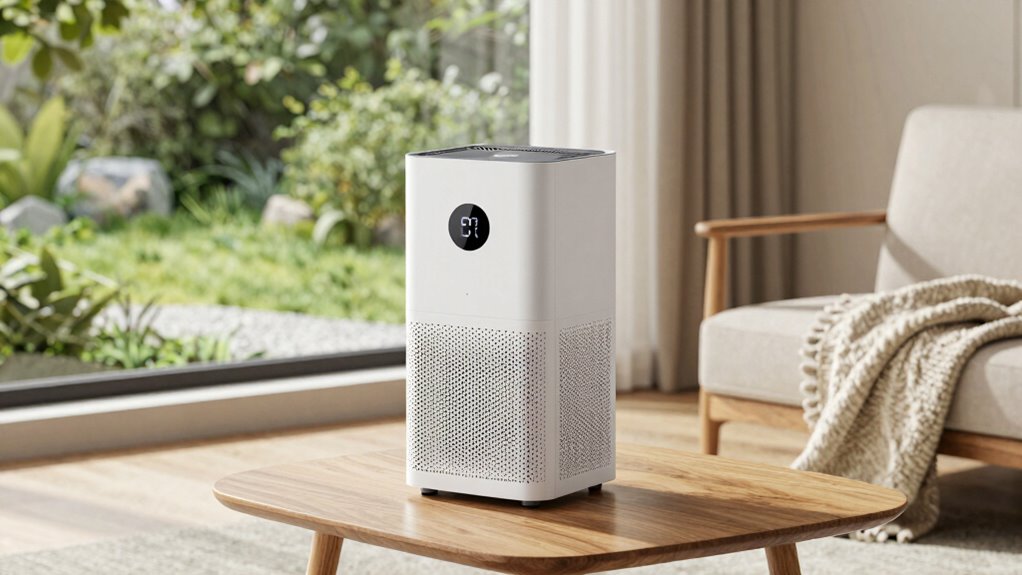
Calculating the right CADR (Clean Air Delivery Rate) for your space guarantees your air purifier effectively cleans the air without wasting energy or overspending. Start by considering the room size and how much air needs filtering to improve air quality. Use the recommended CADR guidelines: a purifier’s CADR should be at least two-thirds of your room’s square footage for ideal filtration efficiency. For example, a 150-square-foot room needs a CADR of around 100. Remember, higher CADR values typically mean better filtration, but also consider your air quality needs—more polluted spaces require higher filtration efficiency. Matching the right CADR ensures your purifier maintains clean air without overworking, saving energy and prolonging the device’s lifespan. Additionally, understanding air purifier safety features can help prevent hazards and ensure safe operation in your space. To make the best choice, consider room-specific factors such as ventilation and existing allergens, which influence the necessary CADR for optimal air quality. Knowing how to accurately calculate CADR can significantly improve your air quality management.
Matching CADR to Room Size: Step-by-Step Guide
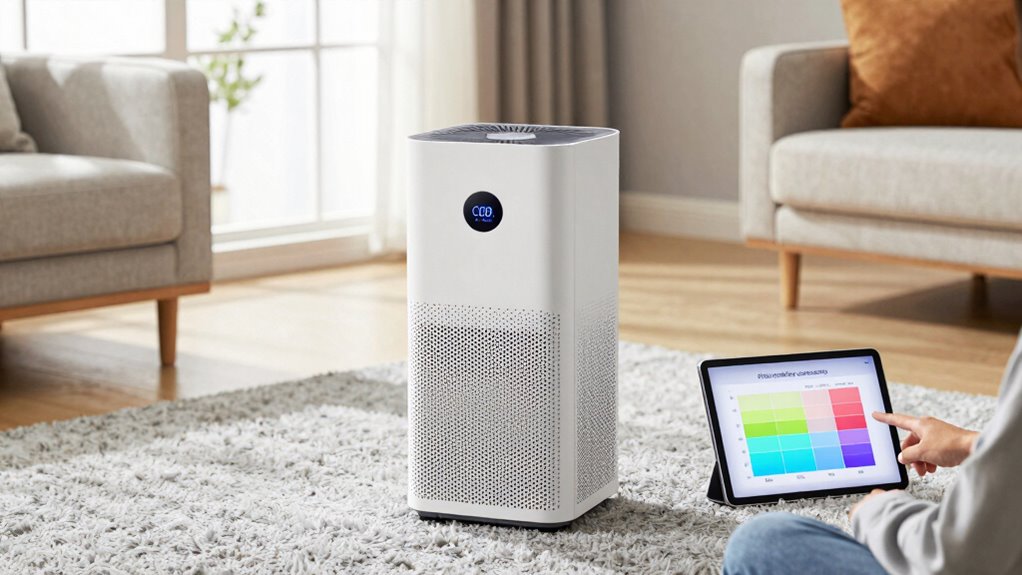
To match your air purifier’s CADR to your room size, start by measuring the space accurately. Then, determine the required CADR based on those measurements to guarantee effective air cleaning. Understanding the air purifier specifications can ensure you choose a device that effectively covers your room’s size and air quality needs. Additionally, considering room airflow patterns can improve the overall efficiency of air purification in your space. Recognizing the importance of air quality standards can help you select the most suitable unit for your environment. Being aware of microplastics in dust highlights the need for proper filtration to maintain healthier indoor air. Incorporating air exchange rates into your assessment can further optimize your air quality management. Following these steps will help you select the right unit for your needs.
Measure Your Room
Wondering how to guarantee your air purifier works effectively? The first step is measuring your room accurately. Grab a tape measure or use a laser distance meter to find the length, width, and height. Knowing these dimensions helps you determine the total cubic footage, which is essential for matching the right CADR. While considering your room’s decorative styles, keep in mind that some designs may influence placement, so measure accordingly. Comparing brands becomes easier when you know your room size, ensuring you pick a model with the appropriate CADR. Accurate measurements prevent overspending on oversized units or settling for underpowered ones. Taking the time to measure carefully ensures your air purifier will perform at its best and fit seamlessly into your space. Additionally, understanding room volume and how it impacts air quality needs can guide your selection process, helping you choose a device that truly matches your environment. Recognizing air purification needs based on your room size can also streamline your decision-making process and improve overall air quality. Considering environmental factors such as airflow patterns and obstructions can further enhance your unit’s effectiveness, making your choice more tailored to your specific space. Moreover, understanding air quality standards and how they influence your device’s specifications can help you select a unit that aligns with your health priorities. Existential themes in design and function can also influence your choice, encouraging you to select an air purifier that aligns with your lifestyle and values.
Calculate Required CADR
When choosing an air purifier, you need to determine the right Clean Air Delivery Rate (CADR) based on your room’s size. To calculate this, multiply your room’s square footage by the recommended air exchange rate—usually 4 to 6 times per hour. For example, a 200 sq ft room needs around 800 to 1200 CFM. Once you know the required CADR, select a purifier that meets or exceeds this rating. Keep in mind, proper air purifier upkeep and timely filter replacement ensure consistent performance. Dirty filters reduce airflow, so regular filter changes are essential for maintaining the right CADR. Matching the correct CADR prevents overworking your air purifier, prolongs its lifespan, and ensures you breathe cleaner air every day.
Signs Your Air Purifier Is Too Small or Too Large
If your air purifier is too small, you might notice it making more noise than expected or struggling to clean the air effectively. On the other hand, a unit that’s too large could waste energy and run unnecessarily when it’s not needed. Paying attention to these signs helps guarantee you choose the right size for your space.
Airflow Noise Levels
Airflow noise levels can be a key indicator that your air purifier is either too small or too large for your room. If the noise is too loud at higher fan speeds, your purifier might be too small, struggling to circulate air effectively without creating excess sound. Conversely, if it’s barely audible even at maximum fan speed, it could be too large, operating quietly but not providing enough airflow for your space. Adjust the fan speed to see if noise levels change appropriately; a well-sized purifier maintains a balance between effective airflow and manageable noise. Excessive noise at low speeds or silence at high speeds signals a mismatch. Proper airflow noise levels help ensure your purifier performs efficiently without disrupting your environment.
Ineffective Air Cleaning
Have you noticed that your air purifier isn’t effectively cleaning the air despite running at high settings? If so, it could be a sign that it’s too small or too large for your room. Here’s what to watch for:
- Poor air quality improvement even after regular air purifier maintenance and filter replacement.
- Lingering odors or visible dust, indicating insufficient purification.
- Excessive noise, which may suggest the unit is struggling or mismatched to the space.
If your purifier is too small, it simply can’t handle the room’s volume. If it’s too large, it might cycle on and off frequently, reducing effectiveness. Match the CADR to your room size for ideal cleaning results.
Excess Energy Consumption
Noticing a spike in your energy bills could be a sign that your air purifier isn’t properly matched to your room size. When it’s too big, it runs at high power consumption constantly, wasting energy and reducing overall energy efficiency. Conversely, a small purifier works harder, consuming more power to clean effectively. This inefficiency drives up costs and strains your device. Here’s a quick look:
| Size Issue | Effect | Result |
|---|---|---|
| Too Large | Excess power consumption | Higher bills, wasted energy |
| Too Small | Overworking, increased power use | Higher costs, inefficiency |
| Proper Match | Ideal energy efficiency | Saves money, effective cleaning |
Top Tips for Choosing the Perfect Size Air Purifier

Choosing the right size air purifier starts with understanding the room it will serve. To meet air quality standards, you need a model with the appropriate Clean Air Delivery Rate (CADR). First, consider whether you need a portable or fixed unit based on your space and mobility needs. Second, determine your room’s size to match it with the purifier’s recommended coverage. Third, check the purifier’s specifications to verify it meets or exceeds the necessary CADR for your room. Remember, a device that’s too small won’t effectively improve air quality, while one that’s too large may waste energy. Matching CADR to room size ensures efficient, effective purification without unnecessary power consumption.
Common Mistakes to Avoid When Picking Your Air Purifier Size
Selecting the wrong air purifier size can undermine your efforts to improve indoor air quality. One common mistake is choosing a unit based solely on price or appearance rather than CADR ratings for your room size. Oversized purifiers waste energy, while undersized ones won’t effectively filter pollutants. Another mistake is neglecting maintenance tips, like regular filter replacement, which is crucial for peak performance. Failing to replace filters on time reduces efficiency and can lead to unpleasant odors or mold growth. Also, don’t forget to check if the purifier is suitable for your specific needs—like allergy or asthma relief. Avoid these pitfalls by matching CADR to your room size and following proper maintenance routines, ensuring your air purifier works effectively and lasts longer.
Frequently Asked Questions
Can Multiple Air Purifiers Be Used Together for Larger Rooms?
Yes, you can use multiple air purifiers for larger rooms to improve air quality. This creates air purifier synergy, ensuring better coverage and faster purification. To maximize multi unit efficiency, place the units strategically around the room, ensuring they don’t block airflow. Using several purifiers helps maintain consistent filtration, especially in spacious areas, allowing you to breathe easier and enjoy cleaner air more quickly.
How Often Should I Replace the Air Purifier Filters?
You should replace your air purifier filters based on the filter lifespan provided by the manufacturer, typically every 6 to 12 months. Regularly check the filter’s condition, especially if you notice decreased airflow or persistent odors. The replacement frequency depends on usage and air quality, so staying attentive guarantees your purifier works effectively. Don’t wait too long; timely filter changes maintain ideal air purification and protect your health.
Do Different Air Purifier Brands Have Different CADR Standards?
Yes, different air purifier brands have varying CADR standards, so brand comparisons are important. Some brands test their purifiers against stricter CADR standards, ensuring better air quality and faster clean-up. When choosing an air purifier, check the CADR ratings across brands, and don’t assume they’re all the same. This helps you select a model that effectively cleans your room size and meets your air quality needs.
How Does Room Furniture Affect Air Purifier Effectiveness?
Imagine you’re a knight defending your castle—furniture obstruction can be your enemy. It blocks airflow, causing airflow disruption and reducing your air purifier’s efficiency. Large or bulky furniture can shield air from circulating properly, so you should position your purifier away from obstructions. Keep pathways clear and ensure unobstructed airflow to maximize effectiveness, especially in rooms with lots of furniture, so you breathe cleaner air faster.
Is It Better to Buy a Higher CADR Than Needed?
It’s better to buy a slightly higher CADR than needed, as it improves air quality and handles fluctuations better. Just remember, higher CADR units require regular air purifier maintenance to keep performance *ideal*. Keep an eye on air quality indicators to *guarantee* your purifier is working efficiently. Overestimating CADR helps, but don’t forget to maintain your device to maximize its effectiveness and *assure* clean, healthy air in your space.
Conclusion
Now that you know how to match CADR to your room size, you’re like a captain steering your air quality ship straight through clear, invigorating waters. Say goodbye to guesswork and hello to breathing easy, knowing your purifier fits perfectly—like a puzzle piece locking into place. With these simple steps, you’ll turn your space into a sanctuary of clean, crisp air, making every breath as revitalizing as a mountain breeze.