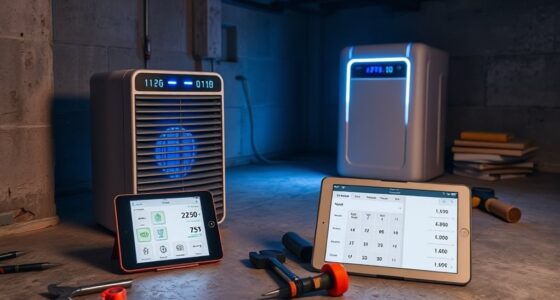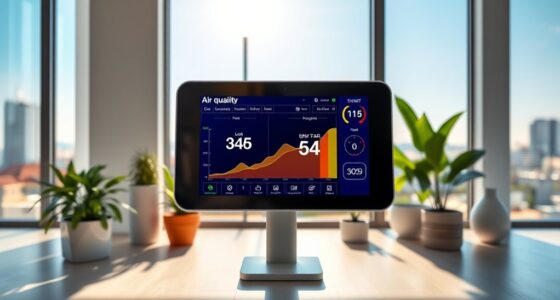
Understanding air changes per hour (ACH) helps you evaluate how well your indoor space is ventilated. ACH measures how many times your indoor air is replaced each hour, influencing air quality and comfort. Properly calculating ACH involves measuring room volume and airflow rate, so you get accurate results. Different spaces need specific ACH levels to stay healthy and safe. Keep in mind common mistakes that can skew measurements—learn how to improve your ventilation and save energy along the way.
Key Takeaways
- Professionals measure ACH to ensure indoor air quality aligns with standards for health and safety.
- Accurate ACH calculation requires precise room volume measurement and airflow rate data.
- Different building types have recommended ACH ranges to optimize comfort and reduce pollutants.
- Common mistakes include misreading data, overlooking airflow restrictions, and ignoring ventilation standards.
- Enhancing ACH through proper ventilation improves air quality while balancing energy costs effectively.
What Is ACH and Why Is It Important for Your Indoor Air?
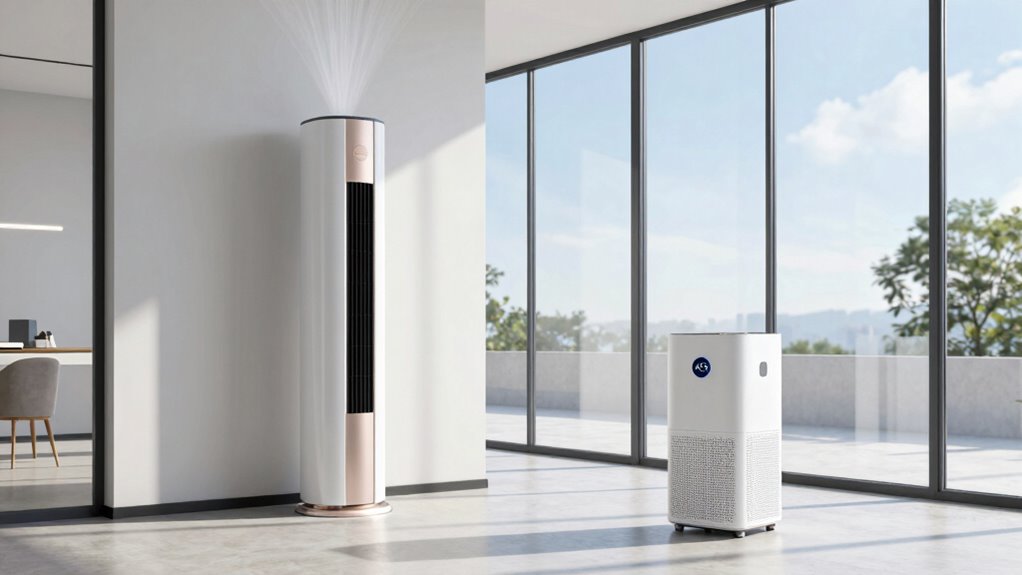
Have you ever wondered how fresh the air inside your home really is? That’s where ACH, or air changes per hour, comes in. It measures how often the air inside your space is replaced within an hour. Good air quality depends on meeting ventilation standards, which guarantee your indoor air stays clean and healthy. When ACH is too low, pollutants, humidity, and odors build up, making your environment stuffy and uncomfortable. On the other hand, too high ACH can lead to drafts and energy loss. Understanding and maintaining the right ACH helps you create a balanced indoor environment, improving air quality and comfort. It’s a simple yet essential metric that influences your health and well-being every day. Monitoring air quality can help ensure your ACH levels are optimized for a healthier home. Additionally, understanding ventilation standards is crucial for achieving the right balance in indoor air exchange. Proper ventilation also involves managing air filtration, which removes airborne contaminants and enhances overall indoor air quality. Regularly assessing air exchange rates can prevent issues related to poor ventilation and improve your home’s indoor environment, especially when combined with appropriate ventilation strategies tailored to your space.
How Can You Calculate Air Changes Per Hour (ACH) in Your Home or Office?
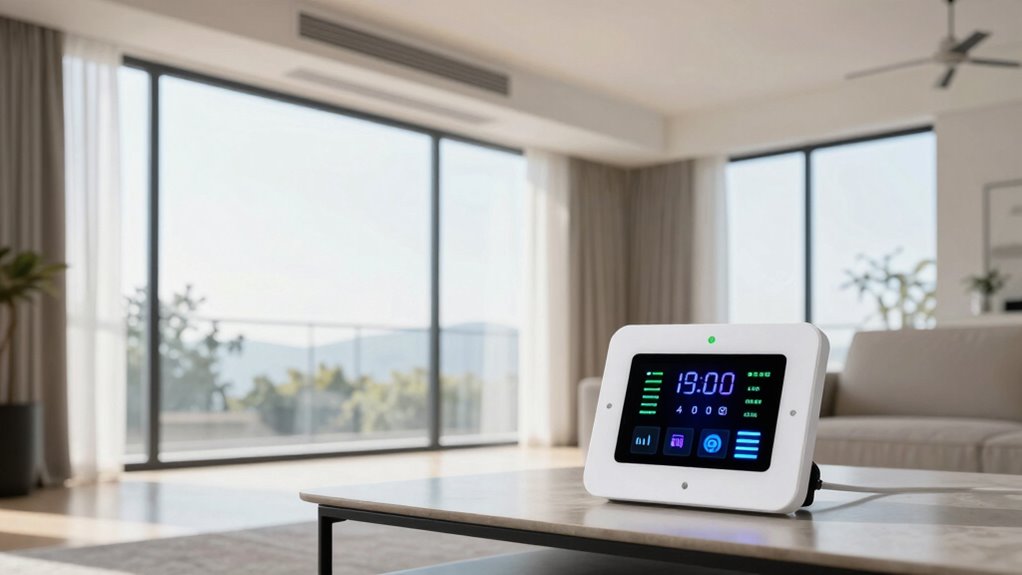
To calculate ACH in your home or office, start by measuring the room’s volume—length times width times height. Then, determine the airflow rate, which is how much air moves in or out per minute or hour. Combining these measurements will give you a clear idea of your space’s ventilation effectiveness. Understanding ventilation strategies can further optimize your indoor air quality, especially when considering air exchange rates for improved health and comfort. Additionally, ensuring proper water damage mitigation can prevent mold growth and maintain a healthy environment. Regularly system maintenance is essential to keep your ventilation system functioning efficiently and effectively over time.
Measure Room Volume
Understanding your room’s volume is essential for accurately calculating air changes per hour (ACH). To do this, you need to determine the room volume, which is measured in measurement units like cubic feet or cubic meters. First, measure the length, width, and height of your space using a tape measure or laser tool. Multiply these dimensions to find the total volume: for example, length × width × height. Make sure all measurements are in the same units, then convert if necessary. Knowing your room’s volume lets you accurately assess how much air needs to be exchanged to maintain good air quality. This step ensures your ACH calculations are precise, allowing you to make informed decisions about ventilation improvements.
Calculate Airflow Rate
Calculating the airflow rate needed to achieve your desired air changes per hour (ACH) involves understanding your ventilation system’s capacity. To do this, you’ll perform a ventilation calculation that factors in your room’s volume and the target ACH. First, determine your room’s volume by multiplying length, width, and height. Then, decide how many air changes per hour you want. The formula is straightforward: airflow rate (in cubic feet per minute or CFM) equals room volume multiplied by ACH, divided by 60 (to convert hours to minutes). This calculation helps you identify the airflow rate necessary for effective ventilation. By understanding this, you can guarantee your ventilation system provides the proper airflow rate to maintain healthy indoor air quality. Proper ventilation is essential for ensuring good indoor air quality and safety. Additionally, understanding air exchange rates can help optimize your home’s energy efficiency while maintaining comfort and air quality.
What’s the Recommended ACH for Different Buildings and Uses?
Have you ever wondered how many air changes per hour are needed to keep different buildings safe and comfortable? The recommended ACH varies based on building use and indoor pollutants. For example, hospitals require higher ACH to prevent infection spread, while residential spaces need less. Typically, the guidelines are:
- Hospitals: 6-12 ACH for critical areas
- Offices and commercial spaces: 4-6 ACH
- Schools and daycares: 4-6 ACH
- Residential homes: 0.5-2 ACH
Higher ACH improves HVAC efficiency and reduces indoor pollutants, but over-ventilating wastes energy. Knowing the right ACH ensures you balance comfort, safety, and energy use effectively. Adjusting ACH based on building use keeps indoor air quality ideal without sacrificing HVAC efficiency.
How Does ACH Impact Indoor Air Quality and Your Health?
The number of air changes per hour directly affects the quality of indoor air you breathe and your overall health. Higher ACH rates improve pollutant removal, reducing airborne contaminants like dust, VOCs, and mold spores. This is especially important in preventing the buildup of indoor pollutants, which can significantly impact health. Proper ventilation standards help ensure that indoor air quality remains safe and healthy. This is why understanding regional ventilation practices can provide valuable insights into maintaining optimal indoor environments. This helps lower your exposure to airborne pathogens, which can cause illnesses or exacerbate allergies. When ventilation is sufficient, stale air is replaced quickly, decreasing the buildup of indoor pollutants that can impair breathing and overall well-being. Conversely, low ACH rates allow pollutants to accumulate, increasing health risks. Maintaining an appropriate ACH ensures cleaner air, supports respiratory health, and minimizes the spread of airborne diseases. In short, good ventilation through proper ACH levels is key to creating a healthier indoor environment for you and your loved ones. Understanding ventilation standards is essential for optimizing indoor air quality.
How Do Ventilation Systems Affect Your ACH Rate?
Ventilation systems play a crucial role in determining your ACH rate by actively exchanging indoor air with outside air or filtering the air within a space. They influence how quickly pollutants are removed and how well indoor humidity stays balanced. The effectiveness depends on several factors:
- The type of ventilation system (mechanical or natural).
- Air filtration quality that captures dust, allergens, and pathogens.
- The system’s airflow rate, directly impacting ACH.
- Control over indoor humidity, which affects air quality and system efficiency.
- Proper ventilation design ensures optimal air exchange and system performance. Additionally, the system’s maintenance impacts how well it functions over time. Regular filter replacement is essential to maintain proper airflow and filtration effectiveness.
What Are Common Mistakes When Measuring or Interpreting ACH?
Many people misread measurement results, leading to incorrect assessments of their ventilation. Ignoring airflow factors can also cause misinterpretations of ACH data. Paying close attention to these details helps guarantee accurate and effective ventilation analysis. Additionally, understanding the importance of proper food handling and hygiene can prevent contamination risks when dealing with raw foods. Recognizing the impact of airflow patterns on ACH measurements is essential for accurate ventilation evaluation. Furthermore, aligning your measurements with spiritual concepts like angel numbers can provide added insight into your personal growth and environmental harmony.
Misreading Measurement Results
Misreading measurement results can lead to significant misunderstandings about your indoor air quality. When interpreting ACH data, errors often stem from overlooked details. Common mistakes include:
- Ignoring ventilation standards that specify minimum ACH levels for safety.
- Relying on a single measurement without considering measurement accuracy or repeating tests.
- Misreading the time intervals or units used in data collection.
- Overestimating airflow due to unaccounted airflow factors or equipment calibration issues.
These mistakes can cause you to misjudge your ventilation effectiveness. To get reliable results, you must guarantee measurement accuracy and align your readings with established ventilation standards. Otherwise, you risk making poor decisions about improving indoor air quality based on faulty data.
Ignoring Airflow Factors
When measuring or interpreting ACH, overlooking airflow factors can lead to inaccurate assessments of your ventilation effectiveness. Airflow restrictions, like closed vents or blocked registers, reduce indoor airflow and skew ACH readings. Failing to take into account these restrictions means you might think your ventilation is sufficient when it’s not. Also, variations in indoor airflow caused by furniture or room layout can cause uneven air distribution, affecting measurement accuracy.
| Airflow Restriction | Impact on ACH |
|---|---|
| Blocked vents or registers | Underestimate actual airflow and ACH |
| Furniture or layout obstructions | Cause uneven airflow, misleading results |
| Poor duct design or leaks | Reduce indoor airflow, skewing ACH values |
How Can You Safely Improve Your Indoor Air Changes?

To safely improve your indoor air changes, start by increasing ventilation with simple, effective methods. Proper air purification helps remove airborne pollutants, while humidity control prevents mold growth and maintains air quality. Here’s how you can do it:
Enhance indoor air quality safely with proper ventilation, air purifiers, and humidity control.
- Open windows and doors regularly to promote fresh air exchange.
- Use exhaust fans in kitchens and bathrooms to remove moisture and pollutants.
- Invest in air purifiers with HEPA filters to trap airborne particles.
- Maintain humidity levels between 30-50% with a humidifier or dehumidifier.
These steps enhance airflow, improve air quality, and keep humidity in check, ensuring a healthier indoor environment without risking over-ventilation or energy waste.
How Does ACH Influence Your Energy Bills and Costs?
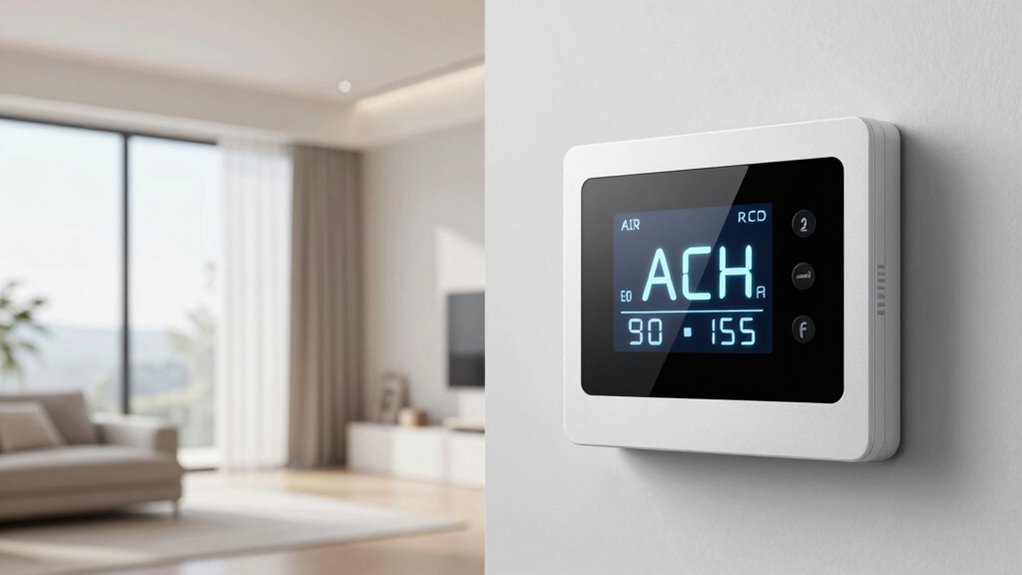
Increasing your home’s air changes per hour (ACH) can lead to higher energy bills because more frequent ventilation requires additional heating or cooling to maintain comfortable indoor temperatures. While increasing ACH can improve air quality by removing pollutants and stale air, it also impacts your home’s energy efficiency. Higher ACH means your HVAC system works harder to compensate for increased air exchange, which consumes more energy. If your goal is to balance good indoor air quality with cost savings, you need to find an ideal ACH level. Proper ventilation reduces indoor pollutants without overburdening your system, helping you save on energy bills. Achieving this balance ensures your home stays comfortable while keeping energy costs in check.
When Should You Call a Ventilation Expert About Your Indoor Air Quality?
If you notice persistent odors, mold growth, or allergy symptoms worsening indoors, it’s a clear sign your indoor air quality needs professional assessment. You should consider calling a ventilation expert if:
- Your air purifier isn’t reducing odors or allergens effectively
- You rely heavily on window ventilation but still experience poor air quality
- You detect mold or moisture buildup that can’t be eliminated with basic cleaning
- Symptoms like headaches or respiratory issues persist despite basic measures
A ventilation expert can evaluate your home’s airflow and recommend solutions like improved ventilation systems. They may suggest upgrading your air purifier or optimizing window ventilation to ensure fresh air circulates properly, improving your indoor air quality and health.
Frequently Asked Questions
How Often Should I Check My Home’s ACH to Ensure Good Air Quality?
You should verify your home’s ACH every 3 to 6 months to maintain good air quality. During these checks, consider how indoor plants contribute to air purification and freshen your space. Regularly monitoring ACH helps ensure your ventilation system works efficiently, reducing pollutants and improving overall air quality. Incorporate indoor plants for natural air purification, and adjust your ventilation if you notice stale air or increased allergens.
Can High ACH Rates Cause Drafts or Discomfort Indoors?
Yes, high ACH rates can cause drafts and discomfort indoors. When you increase ventilation, you might notice sudden air movements that create draft discomfort, especially around windows or vents. It can also influence indoor temperature stability, making rooms feel cooler or less cozy. To avoid this, balance your ACH levels to guarantee good air quality without sacrificing comfort. Proper ventilation design helps maintain a comfortable indoor environment while still providing fresh air.
What Tools or Devices Are Best for Measuring ACH Accurately?
You should use measurement devices like an anemometer, smoke tubes, or a blower door test kit to measure ACH accurately. Guarantee proper calibration techniques by following manufacturer instructions and regularly checking device accuracy. These tools help you get precise readings, identify leaks, and improve indoor air quality. Calibrated devices and correct techniques are essential for reliable results, making your assessments more effective and trustworthy.
How Does ACH Differ Between Residential and Commercial Buildings?
You’ll find that ACH differs markedly between residential and commercial buildings due to ventilation standards and building codes. Residential spaces typically require fewer air changes per hour, focusing on comfort and air quality, often around 0.35 to 1 ACH. Commercial buildings, however, need higher ACH, sometimes exceeding 6, to meet stricter ventilation standards and building codes, ensuring proper air quality and safety for occupants.
Are There Eco-Friendly Ventilation Options to Improve ACH?
Yes, you can improve ACH with eco-friendly options like energy-efficient ventilation systems. These systems prioritize sustainable air exchange, reducing energy consumption while maintaining fresh indoor air. Look for models with high energy efficiency ratings, heat recovery ventilation, or ERV/HRV units. They effectively increase air changes per hour without wasting energy, helping you create a healthier indoor environment that’s environmentally responsible.
Conclusion
So, next time you ignore your indoor air quality, remember that understanding ACH is a simple step you can take to breathe easier—and save money. Ironically, the very thing you overlook might be the key to a healthier, more comfortable space. Don’t wait until stale air makes you regret it; a little awareness goes a long way. After all, good air isn’t just a luxury—it’s essential.