Running a purifier 24/7 can increase your energy bills considerably, depending on its wattage and how you use it. Most models consume between 20-100 watts, so continuous operation might add a few dollars to your monthly costs. Factors like fan speed and maintenance affect energy efficiency. To better understand what it could cost you, consider your device’s specifications and usage habits—keep going to discover simple tips to save money while ensuring clean air.

Get home appliances delivered free with Prime
- Fast, free delivery on millions of items
- Prime Video, Amazon Music and more included
- Member-only deals all year
Key Takeaways
- Typical air purifier energy use ranges from 20 to 100 watts; lower for small units, higher for larger models.
- Continuous 24/7 operation can cost between a few cents to several dollars daily, depending on wattage and local electricity rates.
- Calculating costs involves multiplying wattage by 24 hours, then dividing by 1,000 to get kWh, and applying your energy rate.
- Using energy-efficient models, adjusting fan speeds, and scheduling can significantly reduce ongoing electricity expenses.
- Regular maintenance and smart operation (like timers or sleep modes) help optimize performance and contain energy costs.
As an affiliate, we earn on qualifying purchases.
How Much Electricity Does an Air Purifier Use?

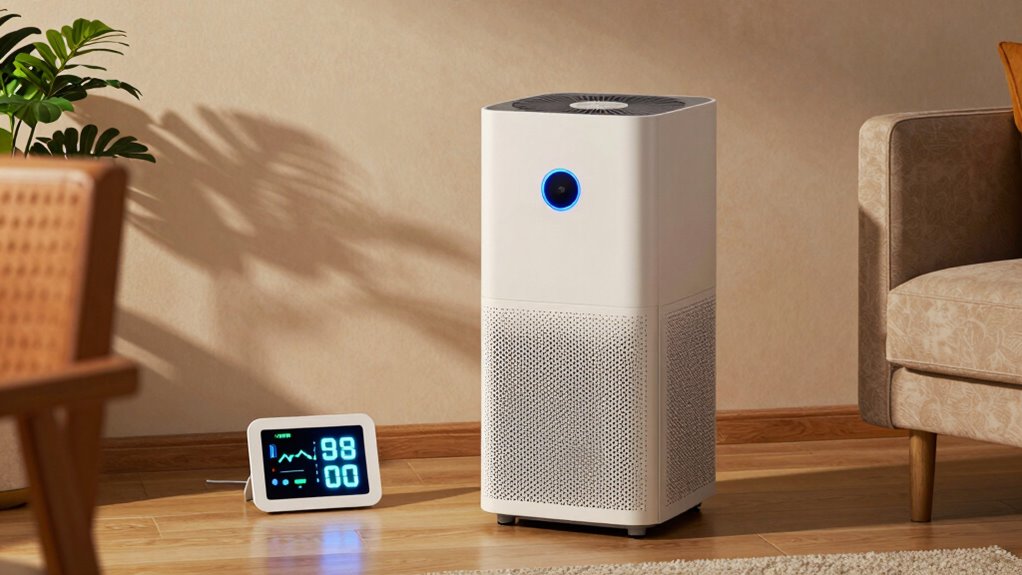
Ever wondered how much electricity your air purifier consumes? The answer varies based on its energy efficiency and power consumption. Generally, modern air purifiers are designed to be energy-efficient, using between 20 to 100 watts during operation. Smaller models tend to consume less power, while larger units with advanced filtration might use more. To get a clearer picture, check the wattage label usually found on the device or in the user manual. Keep in mind, energy-efficient models are crafted to minimize power consumption while maintaining effective air cleaning. If you run your purifier constantly, even small differences in power use can add up over time. Understanding this helps you estimate the ongoing electricity costs and choose a unit that balances performance with efficiency. Additionally, energy consumption patterns can vary depending on how often and how long the purifier runs, impacting your overall electricity bill. Being aware of power consumption can help you make more informed decisions about your air quality management.
As an affiliate, we earn on qualifying purchases.
What Factors Affect Your Air Purifier’s Energy Costs?
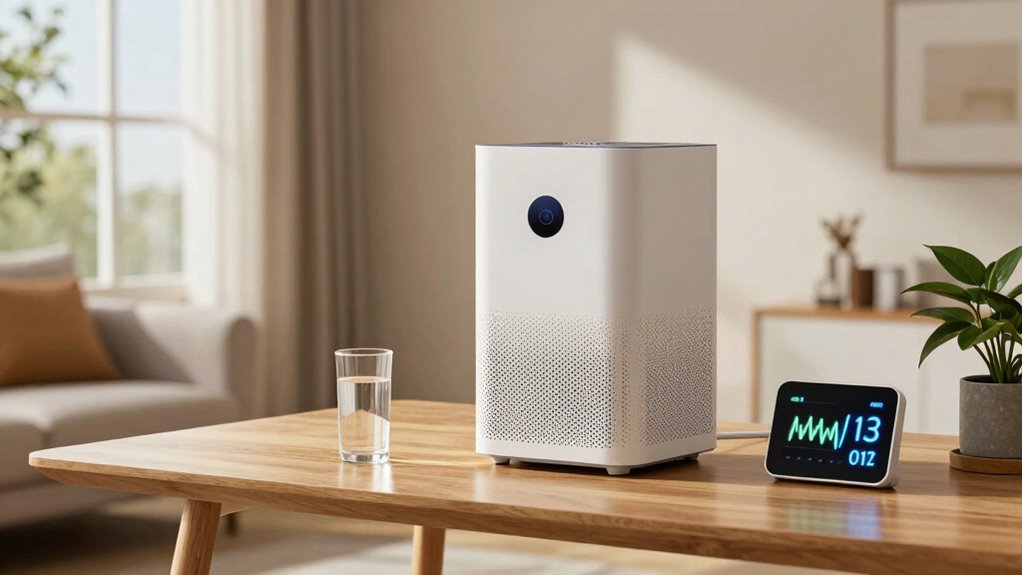
Several factors influence how much electricity your air purifier uses over time. One key element is air purifier maintenance; neglecting filters or components can force the device to work harder, increasing energy consumption. Additionally, air quality sensors play a role—they detect pollutants and adjust the purifier’s operation accordingly. When sensors identify poor air quality, the purifier ramps up, using more power. Conversely, when air is clean, it slows down, saving energy. The purifier’s settings, such as fan speed and mode, also impact costs. Higher speeds consume more electricity. Finally, the device’s overall efficiency, age, and design influence energy use. Staying on top of maintenance and understanding how sensors and settings affect operation can help you manage energy costs effectively. Understanding how sensors operate can further optimize your purifier’s energy efficiency and reduce costs, especially when integrated with energy-saving features. Additionally, being aware of energy consumption patterns can help you make smarter choices about running your purifier continuously, such as utilizing smart scheduling to minimize unnecessary energy use.
As an affiliate, we earn on qualifying purchases.
How Can You Calculate the Cost of Running Your Air Purifier 24/7?
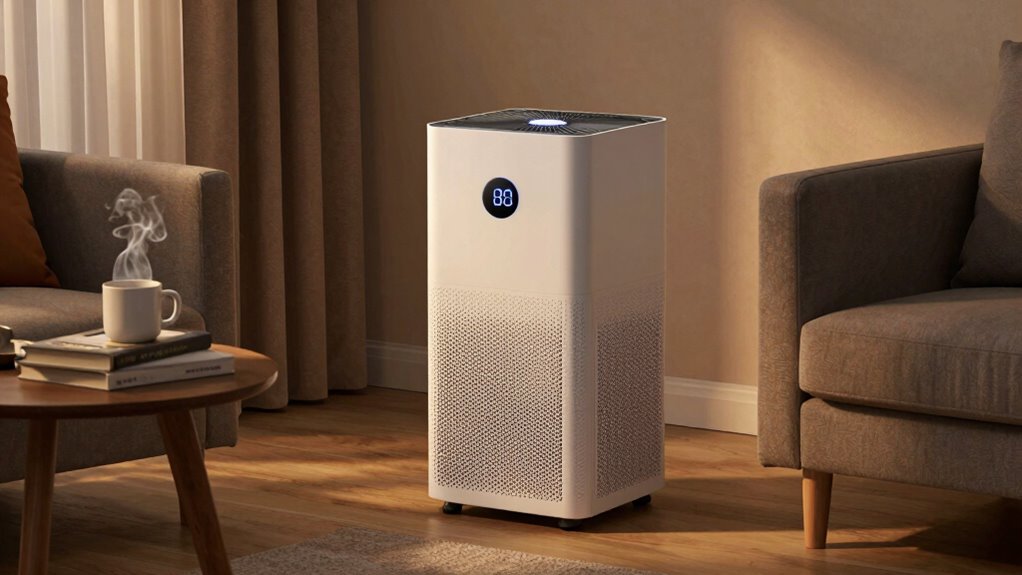
To calculate the cost of running your air purifier 24/7, start by finding out its power consumption in watts, which is usually listed on the device or in the user manual. Knowing this helps you assess its energy efficiency and estimate costs accurately. Next, multiply the power consumption by the hours in a day (24), then by the number of days you plan to run it. Additionally, consider energy efficiency ratings to better understand how your device compares to others on the market. Recognizing energy consumption patterns can assist you in making more informed decisions about device operation and energy savings. Understanding device specifications and their impact on energy use can help optimize your costs. Finally, divide by 1,000 to convert watt-hours to kilowatt-hours (kWh), the unit billed by your utility. To keep it simple: — Check the device’s wattage for precise power consumption. Understanding energy efficiency and the impact it has on your overall electricity costs. Use your local electricity rate to find the cost per kWh, and calculate daily and monthly expenses based on continuous use. This approach guarantees you understand how your air purifier’s energy efficiency impacts your bill.
As an affiliate, we earn on qualifying purchases.
What Are Simple Ways to Save Money on Air Purifier Energy?

You can save money on your air purifier’s energy costs by making simple adjustments to its usage. Consider energy-efficient upgrades like choosing models with ENERGY STAR certification or adjustable fan speeds. These upgrades reduce power consumption without sacrificing air quality. Additionally, explore alternative air cleaning methods such as natural ventilation or houseplants to lessen reliance on continuous purifier operation. To optimize savings, use your purifier only when needed, such as during allergy seasons or high pollution days, instead of running it 24/7. Being aware of energy consumption patterns can help you better manage your device’s operation. Incorporating smart technology features can further enhance energy efficiency by allowing remote control and scheduling. Understanding energy costs can help you make more informed decisions about your appliance usage. For example, monitoring power usage can help identify hidden inefficiencies. Here’s a quick guide:
| Tip | Benefit | Implementation |
|---|---|---|
| Use energy-efficient models | Lower energy consumption | Switch to ENERGY STAR-certified units |
| Adjust fan speed | Reduce power use | Set to low or auto mode |
| Limit run time | Save on electricity | Turn off when air quality improves |
| Combine with alternative air cleaning | Less dependence on purifier | Use natural ventilation or plants |
| Regular maintenance | Maintain efficiency | Clean filters regularly |
A well-maintained purifier not only improves air quality but also ensures you don’t waste energy on inefficient operation which can increase costs.
Is Running Your Air Purifier Continuously Worth the Extra Cost?
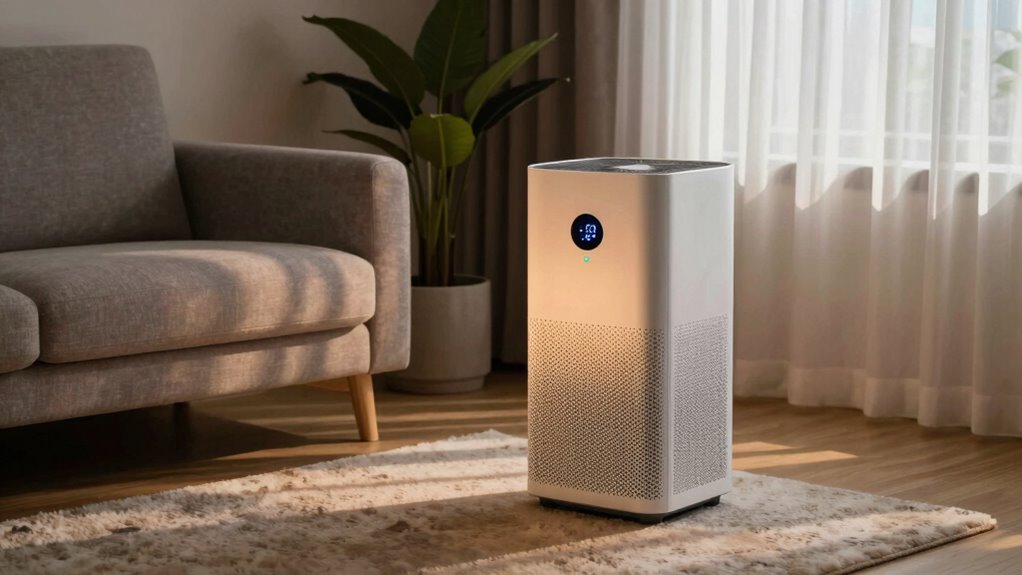
Is running your air purifier 24/7 truly worth the extra energy cost? It depends on your priorities. Continuous operation can improve air quality, especially if you have allergies or pets. However, it may also increase noise levels, which could bother you during rest or work. Consider whether the benefits outweigh the costs. Additionally, understanding your device’s energy consumption patterns can help you make more informed decisions about usage. Monitoring your power usage can help you identify opportunities to optimize energy efficiency and reduce costs over time. Regularly reviewing your energy data can further assist in balancing air quality with energy savings. Implementing energy-efficient settings or timers might be beneficial to minimize expenses while maintaining air quality. For example, enabling sleep mode can reduce power consumption during nighttime hours. You get fresher air and fewer airborne allergens. Noise levels may become noticeable, affecting your comfort. The extra energy costs can add up over time, impacting your budget. Deciding if it’s worth it depends on how much you value cleaner air versus the ongoing expenses and noise. If your air quality needs are high, running it constantly might be justified. Otherwise, intermittent use could save money.
Frequently Asked Questions
How Does the Size of the Room Impact Purifier Energy Consumption?
Your room size directly impacts your purifier’s energy consumption because larger rooms require more powerful units or longer operation times for effective air cleaning. When choosing a purifier, consider its efficiency for the specific room size; a less efficient model may use more energy trying to clean a big space. Smaller rooms need less energy, so matching purifier efficiency to room size helps optimize energy use and reduce costs.
Are Energy-Efficient Air Purifiers More Cost-Effective Long-Term?
Yes, energy-efficient air purifiers are more cost-effective long-term. They help you improve air quality without increasing your energy bills, making them a smart investment. Plus, they typically require less frequent purifier maintenance, saving you time and money. Over time, their lower power consumption and durability guarantee you get better value, especially if you run them constantly, allowing you to maintain a healthier environment without high costs.
What Is the Typical Lifespan of an Air Purifier’s Components?
Your air purifier’s components typically last 3 to 5 years, but this depends on filter replacement and maintenance frequency. While filters may need changing every 6 to 12 months, other parts like fans or motors often endure longer. Regular maintenance extends lifespan, ensuring efficient performance. Keep up with manufacturer recommendations, and you’ll maximize your purifier’s longevity, balancing cost and function over time.
How Do Different Filter Types Influence Energy Use?
Different filter types considerably influence your purifier’s energy use. HEPA filters require more power during filter maintenance due to longer operation times, leading to higher power consumption compared to carbon filters, which often need less energy. Regular maintenance helps optimize efficiency, so check your filter’s specifications. Comparing power consumption across filter types helps you choose a model that balances air quality with energy efficiency, saving you money over time.
Can Smart Features Help Reduce Running Costs?
Yes, smart features can help lower your purifier’s running costs. With smart sensor integration, your device detects air quality changes and adjusts operation accordingly, avoiding unnecessary energy use. Automated fan control further optimizes power consumption by increasing or decreasing fan speed based on real-time needs. By leveraging these smart technologies, you save energy and money while maintaining a healthier indoor environment.
Conclusion
Now, picture your air purifier quietly humming away, its gentle breeze swirling around you like a calming tide. Running it 24/7 may seem small, but those energy costs add up—like tiny droplets filling a bucket. By understanding what drives those expenses, you can make smarter choices. So, weigh the peace of cleaner air against the flicker of your electricity bill, and decide if continuous operation is truly worth the gentle, persistent hum in your home.
Halloween Picks
halloween
As an affiliate, we earn on qualifying purchases.