To keep your wooden instruments in top shape, maintain humidity levels between 40-60%. Use cases with humidifiers or dehumidifiers if needed, and store your instrument in a stable environment away from heat, sunlight, and drafts. Regularly monitor humidity with a hygrometer and adjust your climate controls accordingly. Consistent care prevents warping and cracks, ensuring your instrument sounds great and stays durable. Continue exploring these tips for lasting performance and preservation.

Get home appliances delivered free with Prime
- Fast, free delivery on millions of items
- Prime Video, Amazon Music and more included
- Member-only deals all year
Key Takeaways
- Maintain indoor humidity between 40-60% to prevent wood expansion, contraction, and cracking.
- Store instruments in cases with humidifiers or dehumidifiers to stabilize moisture levels.
- Regularly monitor humidity with a hygrometer and adjust environment accordingly.
- Keep instruments away from direct sunlight, radiators, and air vents to avoid environmental stress.
- Use climate-controlled cases or room conditions for consistent, long-term preservation.
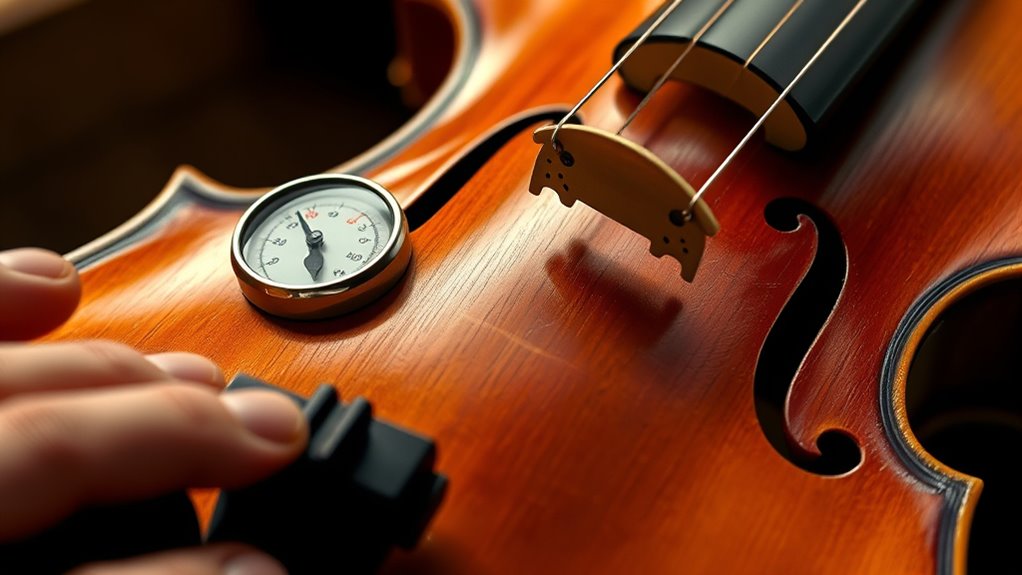
Have you ever wondered how humidity affects your wooden instruments? If you’re serious about keeping your instrument in top shape, understanding the role of humidity is vital. Proper instrument storage is key to preventing damage caused by moisture fluctuations. Wood is a natural material that responds to its environment, expanding when humidity rises and contracting when it drops. When stored improperly, this constant movement can cause cracks, warping, or loose joints, ultimately compromising your instrument’s sound and playability. To avoid these issues, you need to think about seasonal adjustments—adapting your storage habits as the weather changes.
During humid months or in climates with high moisture levels, it’s best to store your instrument in a controlled environment. Use a room with consistent humidity levels, ideally between 40-60%. If you don’t have climate control, consider investing in a case with a humidifier or dehumidifier. These devices help maintain a stable environment, reducing the risk of sudden moisture changes that can damage your instrument. When you’re not playing, keep your instrument in a case when possible, as it offers some insulation from environmental fluctuations. It’s also wise to avoid leaving your instrument near windows, radiators, or air vents, where temperature and humidity can fluctuate dramatically.
Seasonal adjustments are vital because humidity levels tend to shift throughout the year. In winter, indoor heating can dry out the air, leading to wood contraction. In contrast, summer or rainy seasons can introduce excess moisture, causing wood to swell. To combat this, you should regularly monitor the humidity levels in your storage space with a hygrometer. If you notice significant changes, take action—use a humidifier during dry months or a dehumidifier when it’s overly humid. This proactive approach ensures your instrument remains stable regardless of seasonal shifts. Additionally, vetted home theatre projectors can be a good investment if you want to create an ideal environment for your entire living space, including your musical instruments.
Furthermore, consider the type of case you use. Hard-shell cases with climate control features can help buffer against environmental changes. If you have a wooden instrument, avoid leaving it in direct sunlight or near heat sources, as these can accelerate moisture loss or gain. You might also want to periodically loosen or tighten fittings and strings during seasonal adjustments, as wood’s response to humidity can affect the tension and setup of your instrument.
Products Worth Considering

eufy Security E30 4K Indoor Pan and Tilt Camera, 2-Pack

Philips Hue Festavia 130-Foot Indoor/Outdoor Smart String Lights, 500 LEDs

Roborock Robot Vacuum and Mop with LiDAR Navigation and Self-Empty Dock
As an affiliate, we earn on qualifying purchases.
Frequently Asked Questions
Can Artificial Humidifiers Fully Replace Natural Humidity Control?
Artificial humidifiers can’t fully replace natural humidity control because they have limitations, like uneven distribution and maintenance needs. Natural humidity benefits include more consistent moisture levels and a balanced environment, helping your wood instruments stay in top shape. While artificial humidifiers are useful, relying solely on them might lead to issues. Combining both methods ensures ideal humidity, protecting your instruments and maintaining their sound quality effectively.
How Does Humidity Affect the Tuning Stability of Wooden Instruments?
Think of your wooden instrument as a living, breathing entity that responds to its environment. Humidity directly impacts its tuning stability; when humidity levels drop, wood contracts, causing pitch fluctuation. Conversely, high humidity causes wood to expand, making tuning tricky. Maintaining stable humidity prevents wood expansion and contraction, ensuring your instrument stays in tune. Proper humidity control minimizes these issues, helping you enjoy consistent sound and performance.
Are There Specific Humidification Products Recommended for Different Wood Types?
You should choose humidification products based on your wood instrument’s specific wood species and the humidity levels in your environment. For softer woods like spruce, use vaporizers that maintain moderate humidity, while denser woods like ebony may require more precise control. Always monitor your instrument’s response, and adjust humidifiers accordingly to prevent cracking or warping caused by fluctuations in humidity levels. Proper care guarantees your instrument remains in ideal condition.
What Are Signs of Over-Humidification in Wood Instruments?
You might notice over-humidification if your instrument develops cracking problems or shows signs of mold growth. Excess moisture causes the wood to swell, leading to cracks, especially around joints or thin areas. Mold thrives in damp environments, so if you see fuzzy or discolored spots, it indicates too much humidity. Keep an eye out for these signs to prevent lasting damage and maintain your instrument’s sound quality.
How Often Should I Check and Adjust Humidity Levels?
You should check and adjust humidity levels at least once a week, especially during seasonal fluctuations that can impact your storage environments. Regular monitoring helps prevent damage caused by too much or too little moisture. Use a reliable hygrometer to keep an eye on levels, and make adjustments as needed to maintain ideal conditions, ensuring your wood instrument stays in top shape throughout the year.
Conclusion
By maintaining the right humidity, you keep your wooden instrument alive, like a gentle breath guiding it through seasons. Imagine it thriving in a cozy, balanced environment, its fibers resilient and voice rich. When you care for its moisture levels, you’re ensuring your instrument’s melody remains warm and true, no matter the weather. So, nurture your wood friend with consistent humidity, and watch it sing beautifully for years to come.