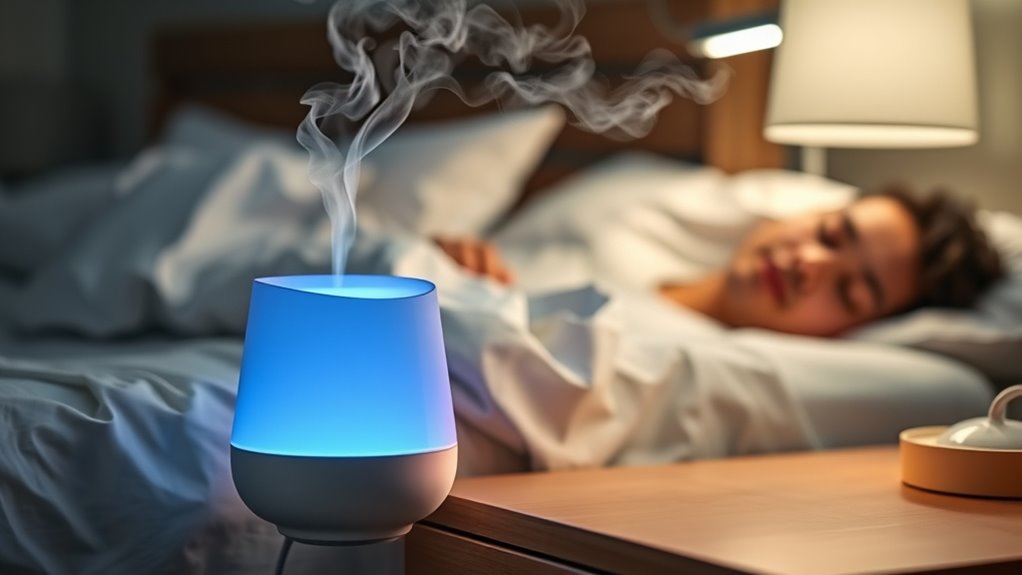
Using a humidifier can help reduce sleep apnea and snoring by moistening your airways, easing airflow, and decreasing irritation. Place it near your bed but avoid direct contact with your face, and maintain humidity between 30-50% using a hygrometer. Regular cleaning and using distilled water prevent mold and bacteria buildup. Properly used, a humidifier can promote better sleep and easier breathing; keep exploring for detailed tips to maximize benefits.
Key Takeaways
- Humidifiers can reduce airway irritation caused by dry air, potentially decreasing snoring and sleep apnea symptoms.
- Proper placement, maintenance, and cleaning of humidifiers are essential for their effectiveness and safety.
- Maintaining humidity levels between 30-50% with a hygrometer prevents excess moisture and mold growth.
- Using distilled or filtered water minimizes mineral buildup and bacterial growth in the device.
- Evidence suggests humidity improvement can support better sleep quality, but humidifiers should complement other sleep apnea treatments.
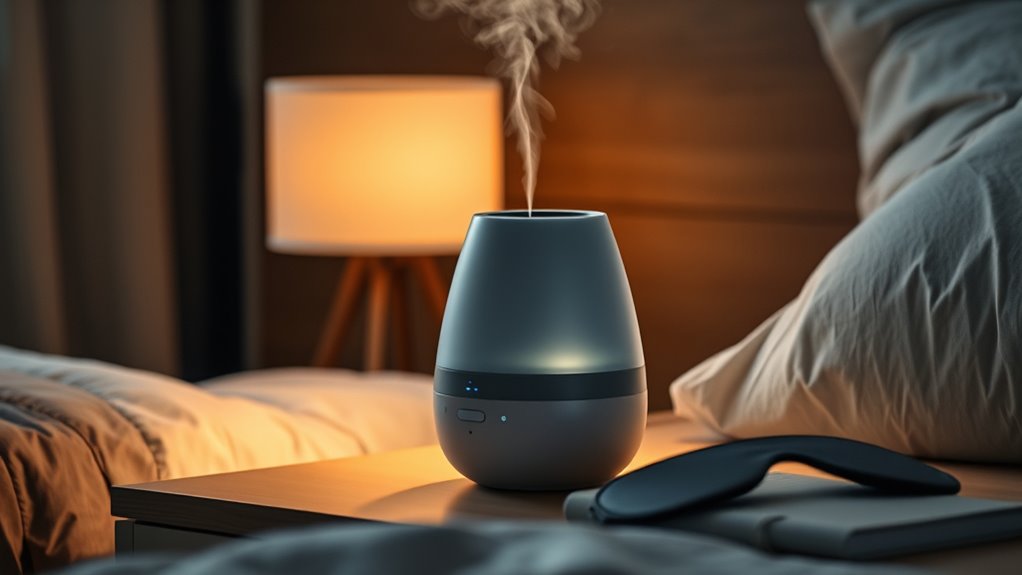
If you suffer from sleep apnea or snoring, adding a humidifier to your nightly routine can make a significant difference. Dry air often worsens airway irritation, leading to increased snoring and disrupted breathing during sleep. By maintaining ideal humidity levels, a humidifier helps keep your throat and nasal passages moist, reducing irritation and promoting easier airflow. To maximize its benefits, paying attention to humidifier placement is essential. Place the device on a flat, stable surface at least a foot above the floor, ideally near your bed but not directly against your face or bedding. This positioning ensures even distribution of moisture without creating excess humidity in one spot, which could lead to mold or bacteria growth.
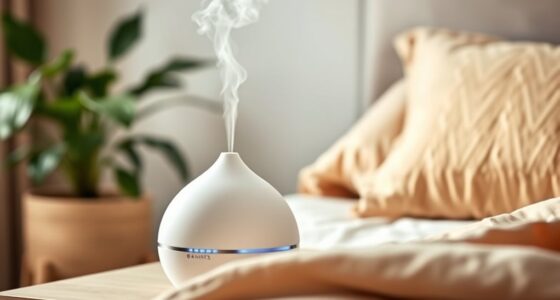
Place your humidifier on a stable surface near your bed, at least a foot above the floor, for optimal moisture distribution.
Proper placement also involves avoiding windows, electrical outlets, or furniture that could be affected by water vapor. Keep the humidifier away from direct contact with walls or bedding to prevent moisture buildup that might cause damage or mold. Experimenting with different locations within your bedroom can help you find the sweet spot where humidity feels most comfortable without causing condensation or discomfort. Remember, the goal is consistent, gentle moisture, not excessive dampness. Maintaining appropriate humidity levels is supported by accurate measurement, such as using a hygrometer, to prevent issues like mold and dust mites.
Maintenance tips are vital to keep your humidifier functioning effectively and safely. Regular cleaning prevents mold, bacteria, and mineral deposits from accumulating inside the device. Empty the water tank daily, rinse it thoroughly, and dry all parts before refilling. Once a week, give your humidifier a more thorough clean using vinegar or a mild disinfectant to eliminate mineral buildup and potential pathogens. Replace any filters or cartridges as recommended by the manufacturer—usually every one to three months—to guarantee ideal performance.
Monitoring humidity levels with a hygrometer can help you maintain the perfect range of 30-50%. Too much humidity can lead to mold growth and dust mites, aggravating sleep issues, while too little can dry out airways. Adjust the humidifier’s settings accordingly and keep an eye on the device’s water level to prevent it from running dry, which can damage the unit. Also, switch to distilled or filtered water if possible, as tap water contains minerals that can clog the machine or promote bacterial growth.
Incorporating these practices boosts the effectiveness of your humidifier for sleep apnea and snoring. Proper placement ensures even, safe moisture distribution, while diligent maintenance keeps the device clean and running efficiently. When used correctly, a humidifier becomes a simple yet powerful tool to improve your sleep quality, helping you breathe easier and wake up feeling more refreshed.
Frequently Asked Questions
Can Humidifiers Completely Eliminate Sleep Apnea Symptoms?
Humidifiers can’t completely eliminate sleep apnea symptoms, but they can improve your overall comfort by increasing humidity levels. This helps reduce airway dryness and irritation, which may lessen snoring and make breathing easier. However, their effectiveness varies for each person and shouldn’t replace medical treatments like CPAP therapy. To see real benefits, use a humidifier consistently and combine it with your prescribed sleep apnea management plan.
Are There Specific Humidifier Types Best Suited for Snoring Relief?
You might think all humidifier types work equally for snoring relief, but that’s not true. Ultrasonic humidifiers are often the best choice because they produce fine, consistent mist that helps maintain a comfortable sleep environment. Warm-mist humidifiers can also soothe airways, reducing snoring caused by dryness. Focus on creating a humidified sleep environment tailored to your needs with these specific humidifier types for better relief.
How Often Should I Clean My Humidifier to Prevent Mold?
You should clean your humidifier at least once a week to prevent mold buildup. Using good water quality, like distilled or demineralized water, helps reduce mineral deposits and mold growth. Follow a regular cleaning schedule, thoroughly scrubbing all parts with mild soap or vinegar, and rinsing well. This routine keeps your humidifier hygienic, ensuring it stays effective and safe for your sleep environment.
Can Humidifiers Cause Nasal Congestion or Other Side Effects?
Think of a humidifier like a garden sprinkler—if it sprays too much or isn’t clean, it can cause issues. You might experience humidifier allergies or nasal irritation, leading to congestion or discomfort. Sometimes, mold or bacteria grow if not cleaned regularly, worsening symptoms. To avoid this, make certain your humidifier is well-maintained, use distilled water, and monitor for side effects like nasal congestion, adjusting usage as needed to keep your airways happy.
Are There Any Risks of Using Humidifiers With Sleep Apnea Devices?
Using a humidifier with your sleep apnea device is generally safe, but you should watch for risks like water spills or mold growth. Make sure to use clean humidifier water to prevent bacteria buildup, and check device compatibility to avoid damage. Always follow the manufacturer’s instructions, and regularly clean both your humidifier and sleep apnea device to reduce potential health risks.
Conclusion
Think of a humidifier as a gentle guardian, softly shielding your nights from dryness and discomfort. It’s like a calming rain nurturing your sleep, turning restless nights into peaceful dawns. With the right humidifier, you’re inviting a steady, soothing breeze into your life—one that clears the fog of snoring and apnea. Embrace this simple symbol of care, and let your nights be a tranquil oasis where restful sleep blossoms anew.