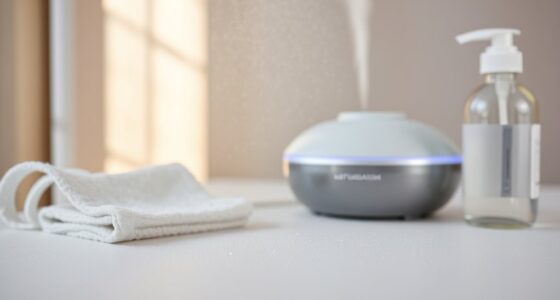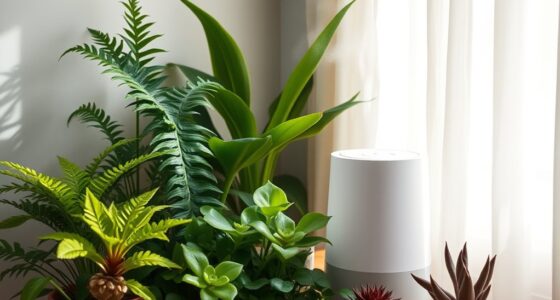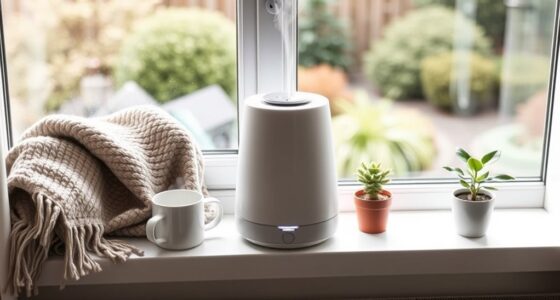
Using a humidifier can help with allergy relief when you keep indoor humidity between 40-50%. Proper moisture levels reduce dust mites, mold spores, and pet dander, which often trigger allergic reactions. Moist air also soothes irritated nasal passages and eases breathing. Maintaining clean devices is essential to prevent bacteria buildup. If you want to discover more about how humidity levels can improve your allergy symptoms, continue exploring the benefits and tips for managing indoor air quality.
Key Takeaways
- Humidifiers maintain indoor humidity at 40-50%, reducing dust mites, mold spores, and pet dander that trigger allergies.
- Proper moisture levels soothe irritated nasal passages and throats, easing allergy symptoms like sneezing and congestion.
- Moist air helps prevent mold growth and damp environments that worsen allergies.
- Using humidifiers alongside air purifiers enhances overall indoor air quality and allergy relief.
- Regular cleaning of humidifiers prevents bacteria and mold buildup, ensuring they support allergy management effectively.
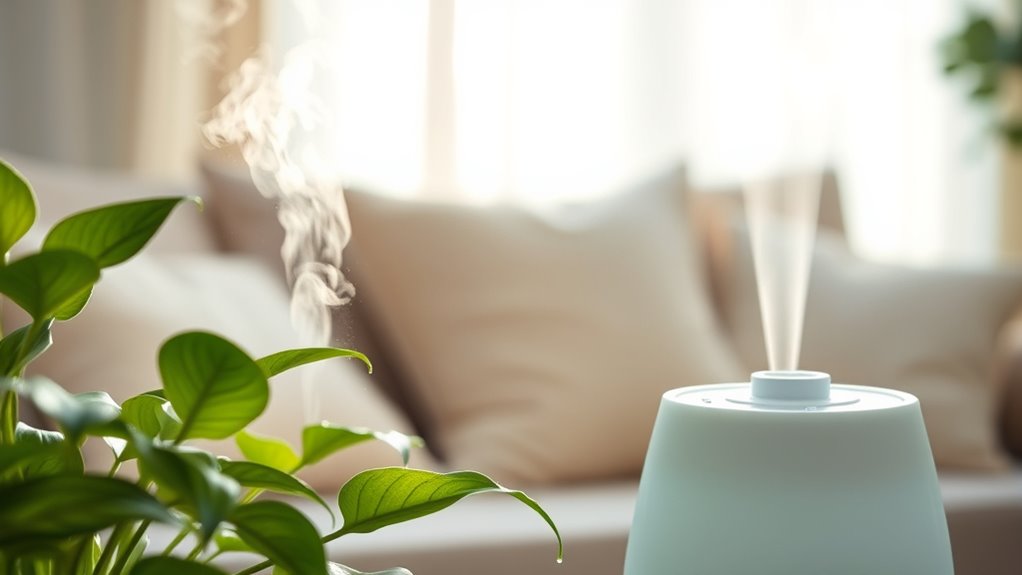
If you suffer from allergies, using a humidifier can be a simple yet effective way to reduce symptoms. When the air in your home is properly humidified, it can lower the presence of airborne allergy symptom triggers like dust mites, mold spores, and pet dander. These common culprits tend to thrive in dry environments, so adding moisture helps keep them in check. While an air purifier benefits your space by filtering out many airborne particles, combining it with a humidifier enhances overall air quality, creating a healthier environment for allergy sufferers.
Moist air can soothe irritated nasal passages and throat, making breathing easier and reducing sneezing and congestion. Dry air often worsens allergy symptoms because it dries out mucus linings, which are your body’s first line of defense against allergens. By maintaining ideal humidity levels—around 40 to 50 percent—you create an environment that lessens the likelihood of airborne allergens sticking around and causing irritation. This balance not only helps clear allergy symptoms more quickly but also prevents new ones from developing.
Maintaining 40-50% humidity soothes nasal passages and reduces allergy irritations.
Many allergy symptom triggers, such as mold spores and dust mites, are moisture-sensitive. Mold, in particular, grows in damp, humid places, but maintaining proper humidity can prevent excessive moisture buildup that encourages mold growth. A humidifier helps you strike that delicate balance—adding enough moisture to ease symptoms without creating a damp environment for mold and mildew to flourish. This way, you’re actively reducing the potential for allergen proliferation in your living space.
Additionally, a humidifier can improve your overall comfort during allergy season. When your nasal passages are moist, they filter out irritants more effectively, reducing the frequency and severity of allergy flare-ups. This can make a noticeable difference in your daily life, especially if you’re prone to sinus issues or respiratory discomfort caused by allergies. Remember, though, it’s important to keep your humidifier clean and well-maintained. Bacteria and mold can grow in a dirty device, which could worsen allergy symptoms rather than alleviate them.
Incorporating a humidifier into your allergy management routine, along with regular cleaning and perhaps an air purifier, helps create a more allergy-friendly environment. You’ll likely notice fewer triggers in the air, less congestion, and easier breathing. Though it’s not a cure-all, using a humidifier smartly can be a powerful tool in controlling allergy symptoms and improving your overall indoor air quality.
Frequently Asked Questions
Can Humidifiers Help With Pet Allergies?
Yes, humidifiers can help with pet allergies by improving humidity control in your home. By maintaining ideal moisture levels, a humidifier can reduce the amount of pet dander that becomes airborne, making it easier for you to breathe. Keep your humidifier clean to prevent mold and bacteria growth, which can worsen allergy symptoms. Proper humidity can make a noticeable difference in allergy relief, especially if pet dander is a trigger.
Are There Specific Humidifier Types Best for Allergy Sufferers?
Think of choosing the right humidifier types as finding a friendly garden gate that keeps pests out but welcomes fresh air. For allergy sufferers, look for models with allergy-friendly features like HEPA filters, antimicrobial materials, and adjustable humidity controls. Ultrasonic humidifiers often produce fine mist without added bacteria, making them ideal. These features help create a cleaner, more comfortable environment where your allergies can breathe easier, just like a gentle breeze on a summer day.
How Often Should I Clean My Humidifier for Allergy Safety?
You should clean your humidifier at least once a week to prevent mold and bacteria buildup. Follow your model’s cleaning schedule and replace filters as recommended, usually every 1-3 months. Regular cleaning involves emptying, disinfecting with vinegar or mild soap, and thoroughly drying all parts. This routine helps make sure that your humidifier remains safe for allergy sufferers and continues to provide clean, moisture-rich air.
Do Humidifiers Reduce Mold Growth in the Home?
Ever wondered if your humidifier can fight mold growth? Yes, it can help with mold prevention when used correctly. By maintaining ideal humidity levels—ideally between 30-50%—it controls excess moisture that fosters mold. Proper cleaning and regular maintenance are essential. When humidity is well-managed, your humidifier creates an environment less conducive to mold, making your home healthier and more comfortable.
Can Humidifiers Worsen Allergies if Not Maintained Properly?
Yes, if you don’t practice proper humidifier maintenance, it can worsen allergies. Mold and bacteria can grow inside, releasing allergens into the air. Regularly cleaning your humidifier and changing the water helps prevent this. If allergies persist, consider adjusting your environment or taking allergy medication. Proper maintenance guarantees your humidifier remains a helpful tool rather than a source of irritation, promoting healthier indoor air quality.
Conclusion
In the end, adding a humidifier can make a real difference in your allergy relief, especially during dry seasons. It’s like having a trusty sidekick, helping you breathe easier and feel more comfortable. Just remember, even in this modern age, sometimes the simplest tools—like moisture—can be your best defense. So, don’t let allergies drain your spirit; embrace the moisture and reclaim your comfort, for it’s as timeless as a knight’s steadfast shield.