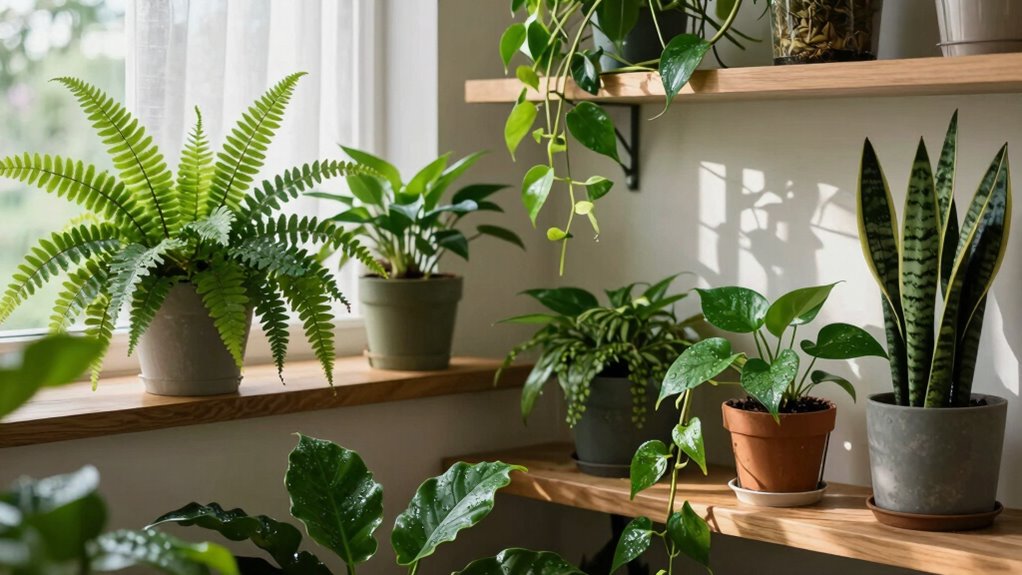

Creating a mini indoor oasis is easy when you balance humidity and plant care. Use a hygrometer to monitor moisture levels and choose plants suited to your home’s environment, like ferns or pothos for higher humidity or succulents for drier air. Boost humidity safely with water trays, grouping plants, or using a humidifier, while avoiding mold by ensuring good airflow and proper soil drainage. Keep your plants healthy and happy—discover more tips to perfect your indoor jungle.
Key Takeaways
- Use hygrometers and soil moisture meters to monitor humidity and soil conditions regularly.
- Group plants together or add water features to naturally boost indoor humidity levels.
- Place plants near indirect sunlight and water trays with pebbles to create a humid microclimate.
- Choose humidity-loving plants like ferns or pothos suited to your home’s moisture levels.
- Maintain proper airflow and avoid overwatering to prevent mold and ensure a healthy, balanced environment.
Why Indoor Plants and Humidity Matter for Your Home
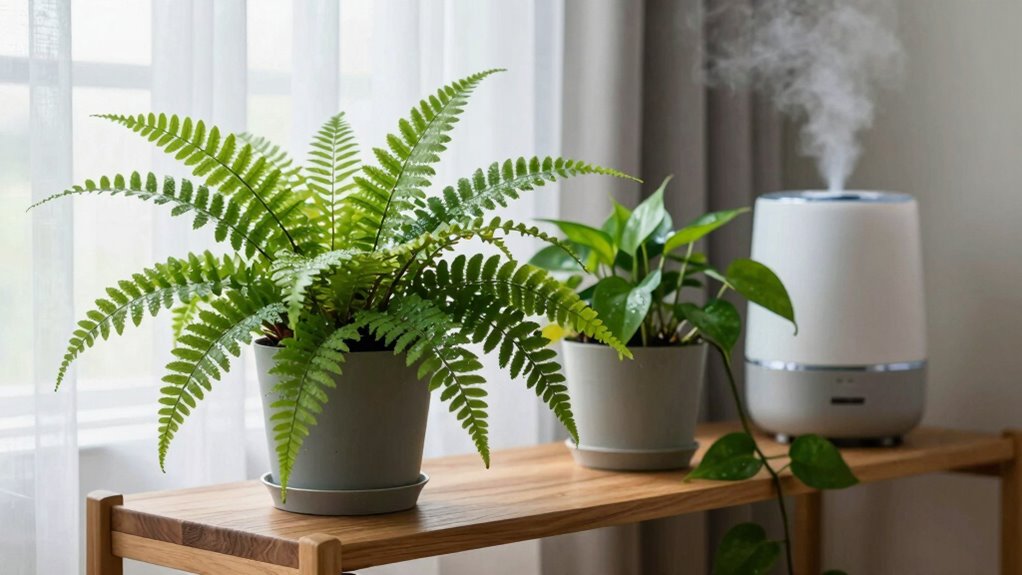
Indoor plants can considerably influence the humidity levels in your home, which is essential for creating a comfortable and healthy environment. As they grow, plants release moisture through transpiration, helping to maintain balanced humidity. This natural process can improve air quality by reducing dust and airborne toxins, contributing to a healthier indoor atmosphere. Plus, having indoor plants adds aesthetic enhancement, making your space more inviting and vibrant. Their lush greenery and natural beauty can uplift your mood and improve overall well-being. Maintaining proper humidity with plants supports respiratory health and can even reduce static electricity. Additionally, understanding indoor plant care, such as proper watering and lighting, ensures your plants thrive and continue to contribute to a healthier home environment. Proper humidity levels can also prevent mold growth, which is important for maintaining a safe and clean living space. Selecting the right indoor plants and practicing effective watering techniques can also prevent overwatering, which is vital for their health and your home’s humidity balance. By choosing appropriate plants and caring for them properly, you actively create a more pleasant, healthier living environment that benefits both your physical health and home’s visual appeal.
How to Check Indoor Humidity Levels at Home
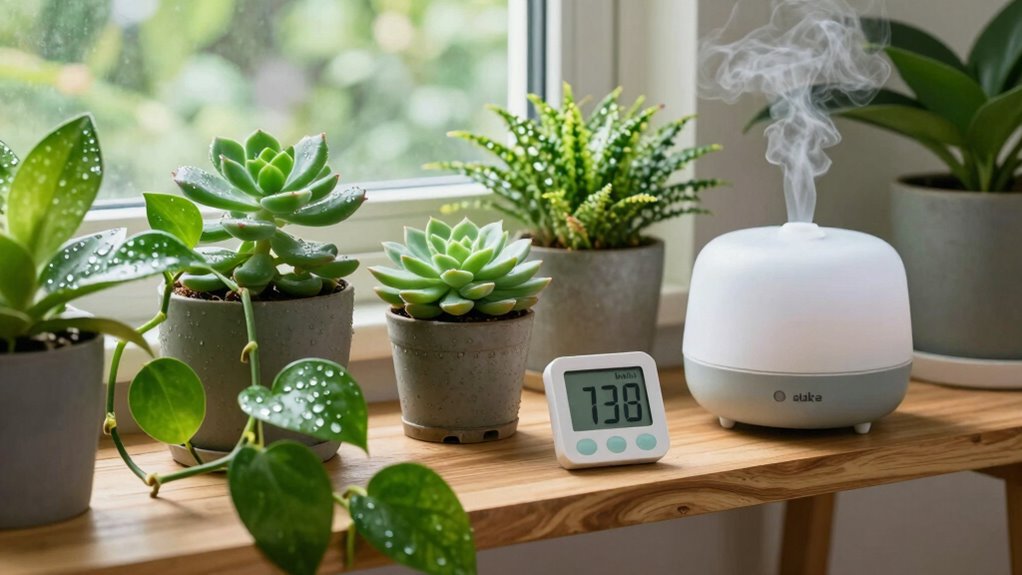
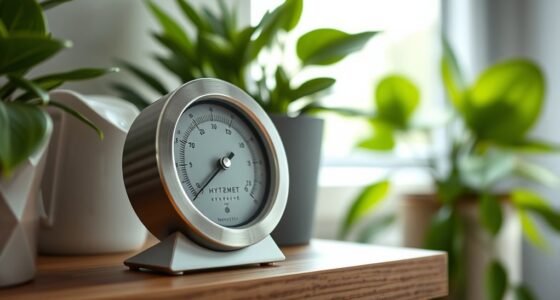
To guarantee your home maintains healthy humidity levels, you’ll need an effective way to measure them accurately. A hygrometer is your best tool for this, providing quick readings of indoor moisture. Regularly check the humidity, especially where you keep your plants, to prevent overwatering or underwatering. Proper plant watering depends on knowing whether the air is too dry or too humid. Additionally, soil drainage plays a role; poorly drained soil can lead to excess moisture, affecting humidity and plant health. Use a moisture meter to assess soil moisture levels and adjust your watering schedule accordingly. Incorporating natural ventilation can help regulate indoor humidity levels more effectively. Understanding how net worth growth hacks can influence your ability to invest in humidity control devices can also be beneficial. Monitoring both the air and soil humidity is essential; accurate measurement ensures you can make informed decisions to create an optimal environment for your plants. By maintaining consistent humidity levels, you also help preserve the color accuracy of your indoor plants’ appearance and overall health. Moreover, integrating water features like small indoor fountains can naturally boost humidity levels in your space.
Signs Your Plants Need More Humidity
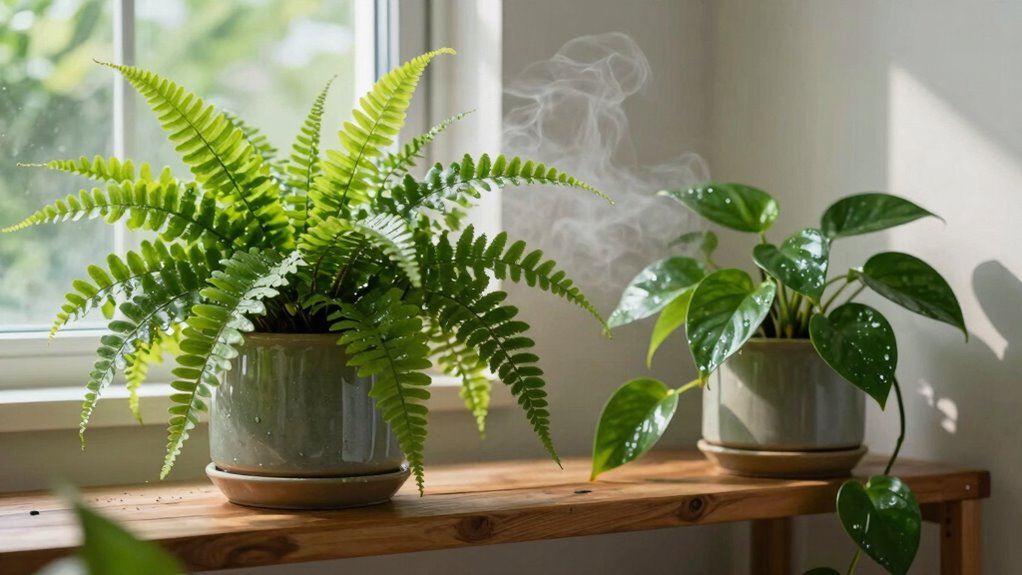
If your plants start showing brown tips on their leaves, it’s a clear sign they need more humidity. Wilting or drooping also indicates they’re struggling to stay hydrated, even if watering seems sufficient. Additionally, slow growth can be a subtle hint that your plants aren’t getting the moisture they require to thrive. Proper indoor climate control can help maintain the right humidity levels for healthy plant growth. Ensuring optimal humidity levels can prevent issues like microplastics in dust, which may settle on plant leaves and affect their health. Maintaining the right air circulation can also help prevent excess dust accumulation and promote healthier plants. Regular maintenance and awareness of survival gear principles can further support your efforts to create a stable indoor environment for your plants.
Brown Leaf Tips
Brown leaf tips are a clear sign that your plants are struggling with low humidity. When the air is too dry, the tips of the leaves often turn brown and crispy, indicating stress. While this can sometimes be caused by plant nutrient deficiencies, low humidity is a common culprit. Dry air damages the leaf edges, preventing proper moisture absorption and leading to these brown tips. If you notice this issue, check your humidity levels and consider increasing them with a humidifier or grouping plants together. Ensuring your plants receive adequate moisture helps prevent brown leaf tips and supports overall health. Proper humidity levels are essential for plant health and keeping indoor plants healthy and thriving. Additionally, maintaining balanced humidity can contribute to household comfort, making your indoor environment more pleasant. Regularly monitoring your indoor humidity can help you catch issues early and create a more comfortable living space for both you and your plants.
Wilting or Drooping
When indoor plants struggle with low humidity, wilting or drooping leaves are common signs that they need more moisture in the air. If your plant’s leaves start to sag, it may be a sign that it’s not getting enough humidity, even if your plant watering routine is adequate. Check if the plant is getting sufficient sunlight exposure; too much direct sunlight can dry out the air around it, worsening the problem. Sometimes, adjusting your plant watering habits isn’t enough, and increasing ambient humidity becomes necessary. Consider placing a humidity tray nearby or grouping plants together to create a microenvironment. Recognizing wilting or drooping early helps you respond promptly, ensuring your plant stays healthy and vibrant. Additionally, using indoor air quality gear such as humidifiers can help maintain consistent humidity levels for your plants. Proper humidity levels are essential for optimal plant health and can be monitored with a hygrometer to prevent issues before they arise. Furthermore, integrating smart home automation can help you maintain ideal conditions effortlessly.
Slow Growth Rate
Plants often show sluggish growth when indoor humidity levels are too low, as dry air hampers their ability to absorb and transport essential nutrients. This results in growth obstacles and slow development, making your plants appear stunted or weak. Watch for signs like small leaves, thin stems, or delayed new growth. To better understand these signs, check the table below:
| Indicator | Possible Cause |
|---|---|
| Small leaf size | Low humidity |
| Thin, weak stems | Dry air |
| Delayed new growth | Growth obstacles |
| Leaf edges browning | Insufficient moisture |
| Overall slow development | Need for increased humidity |
If you notice these signs, boosting humidity can help your plants recover and thrive with healthier, faster growth.
Simple Ways to Raise Indoor Humidity Safely
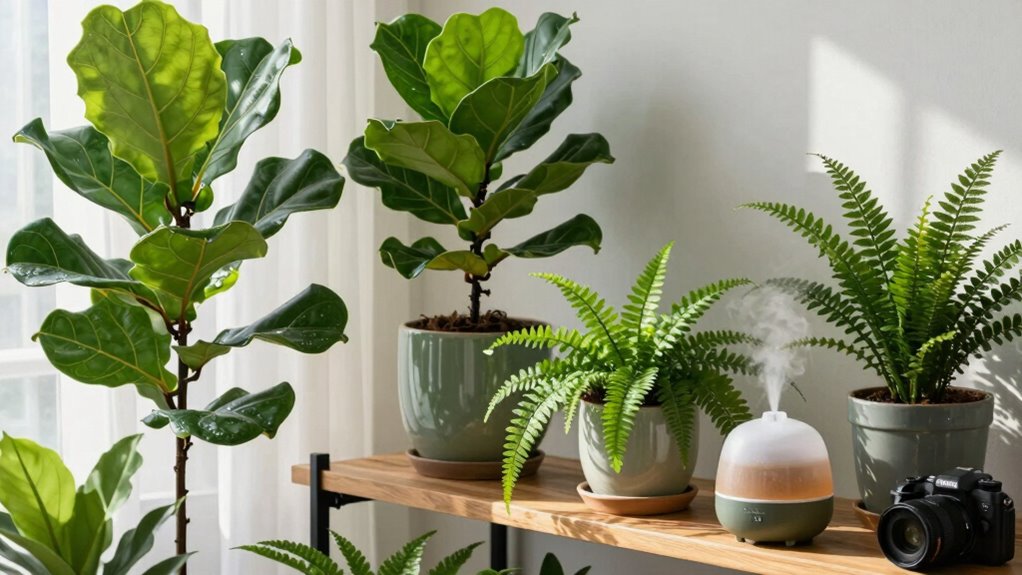
Raising indoor humidity safely doesn’t have to be complicated. Small adjustments can make a big difference, creating a cozy environment for your plants. Focus on consistent plant watering—keeping soil moist without overdoing it. Enhance sunlight exposure by placing plants near windows, which helps regulate moisture levels naturally. You can also increase humidity with simple methods that don’t risk mold or damage.
Create a cozy indoor environment with simple, safe humidity-boosting tips for your plants.
- Place a shallow tray of water and pebbles beneath your plants to boost moisture without overwatering.
- Group your plants together; their collective transpiration creates a humid microclimate.
- Use a humidifier at a safe distance, ensuring it maintains ideal levels without excess.
These tips help you nurture your indoor oasis with confidence and care.
How to Prevent Mold When Increasing Humidity
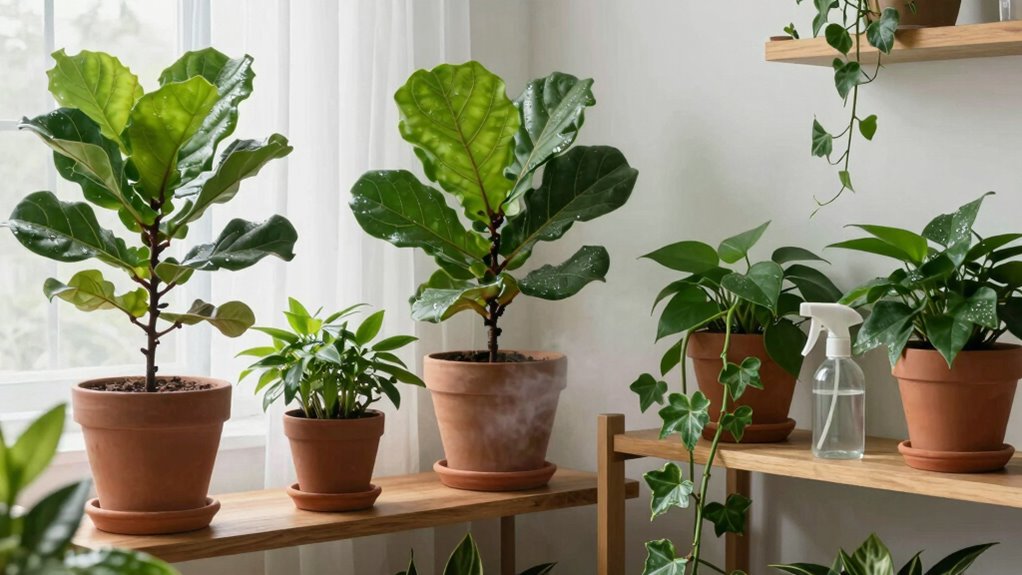
While increasing indoor humidity benefits your plants, it also raises the risk of mold growth if not managed carefully. To prevent mold, focus on effective humidity control by avoiding excessive moisture buildup. Guarantee good air circulation around your plants, using fans or open windows when possible. Regularly check for signs of mold, such as fuzzy spots or musty odors, and remove affected plant material immediately. Keep humidity levels consistent and within recommended ranges—generally between 40-60%. Avoid overwatering, which can create damp conditions conducive to mold. Using a dehumidifier in high-humidity areas helps maintain balance. Proper mold prevention ensures your plants thrive without risking mold-related issues, allowing you to enjoy a healthy, vibrant indoor oasis.
Best Practices for Creating a Healthy, Humid Environment
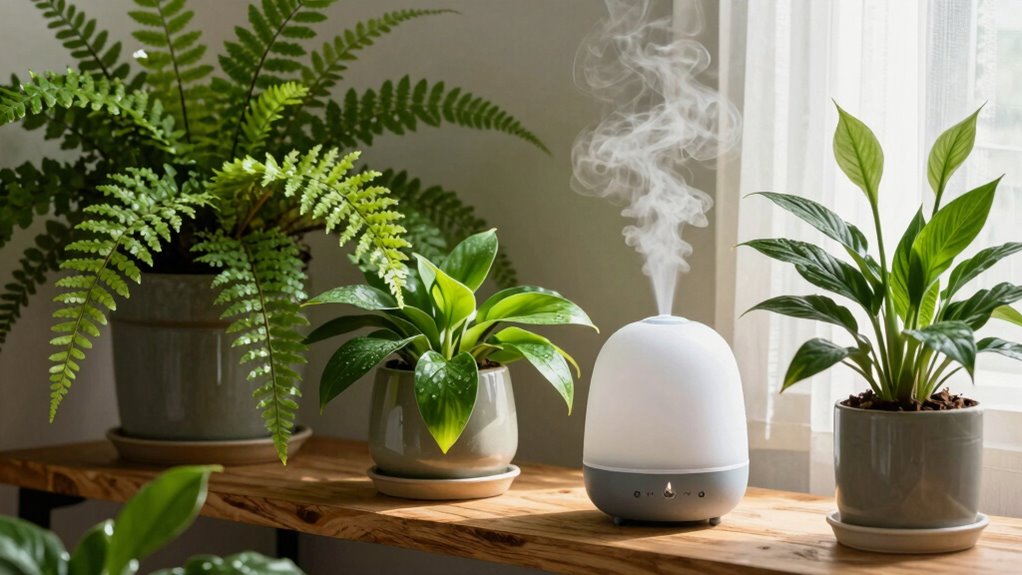
Creating a healthy, humid environment requires careful planning and ongoing attention. To guarantee your indoor space thrives, focus on proper soil drainage—avoid waterlogged roots that can cause decay—and give your plants adequate sunlight exposure. Balancing humidity levels with these factors promotes healthy growth and prevents issues like mold or plant stress.
Creating a thriving, humid indoor environment depends on proper drainage, sunlight, and balanced humidity.
Remember these best practices:
- Use well-draining soil to keep roots healthy and minimize excess moisture.
- Position plants where they receive consistent, indirect sunlight to support growth without overheating.
- Regularly monitor humidity levels to prevent over-saturation, adjusting as needed to maintain a lush, balanced environment.
Choosing the Right Indoor Plants for Your Humidity Level
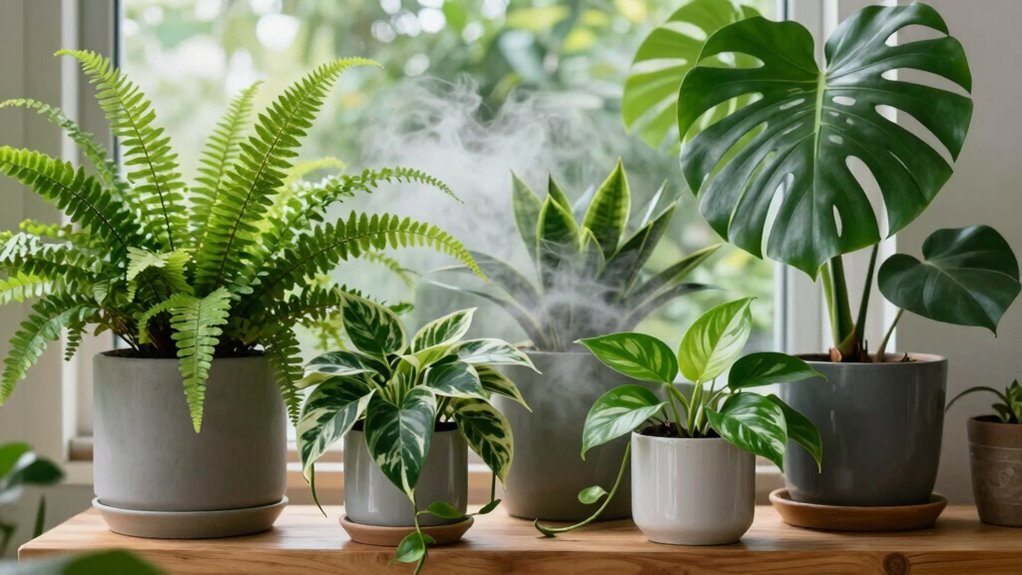
To select the best indoor plants, you need to understand your home’s humidity level. Some plants thrive in low humidity, while others prefer high moisture environments. Evaluating your space helps you choose the right plants that will flourish comfortably.
Ideal Plant Selection
Are you unsure which indoor plants thrive best in your home’s humidity? Choosing the right plants starts with understanding their ideal environment. For higher humidity, opt for plants like ferns, peace lilies, or pothos that love moist soil and consistent plant placement. These plants flourish when soil moisture stays steady and they’re placed in spots with indirect light. Conversely, if your home is drier, select succulents or snake plants that prefer well-drained soil and drier air. Pay attention to how your plants respond—wilting or browning leaves indicate mismatched humidity. By matching your plant selection to your home’s humidity level, you create a lush, healthy oasis. Feel confident in your choices, knowing you’re providing the perfect environment for your indoor garden to thrive.
Low vs. High Humidity
Understanding the humidity level in your home is essential when choosing indoor plants, as some thrive in moist environments while others prefer dryness. Plants with good humidity regulation skills can adapt better to their surroundings, but selecting species suited to your environment makes care easier. For low-humidity areas, opt for drought-tolerant plants like succulents or snake plants, which have adapted to dry conditions. In high-humidity spaces, choose plants that thrive in moisture, such as ferns or peace lilies, which excel at humidity regulation through their plant adaptation. Knowing whether your space leans toward high or low humidity helps you select the right plants, ensuring they flourish without extra effort. Proper matching minimizes stress on your plants and creates a healthy indoor oasis.
Assessing Your Environment
Evaluating your environment is a crucial step in choosing the right indoor plants, as it helps you determine whether your space favors moisture or dryness. Pay attention to air circulation and sunlight exposure, which directly impact plant health and humidity needs. If your room has good airflow and bright, indirect sunlight, you can opt for plants that thrive in moderate to high humidity. Conversely, if your space is dry or poorly ventilated, select drought-tolerant species. To connect emotionally with your environment, consider:
- The gentle breeze that makes your space feel alive
- The warm sunlight that invites growth and vitality
- The cozy corners yearning for lush greenery
Understanding these factors ensures your plants flourish while creating a balanced, inviting atmosphere.
Tools and Devices to Help Maintain Perfect Humidity
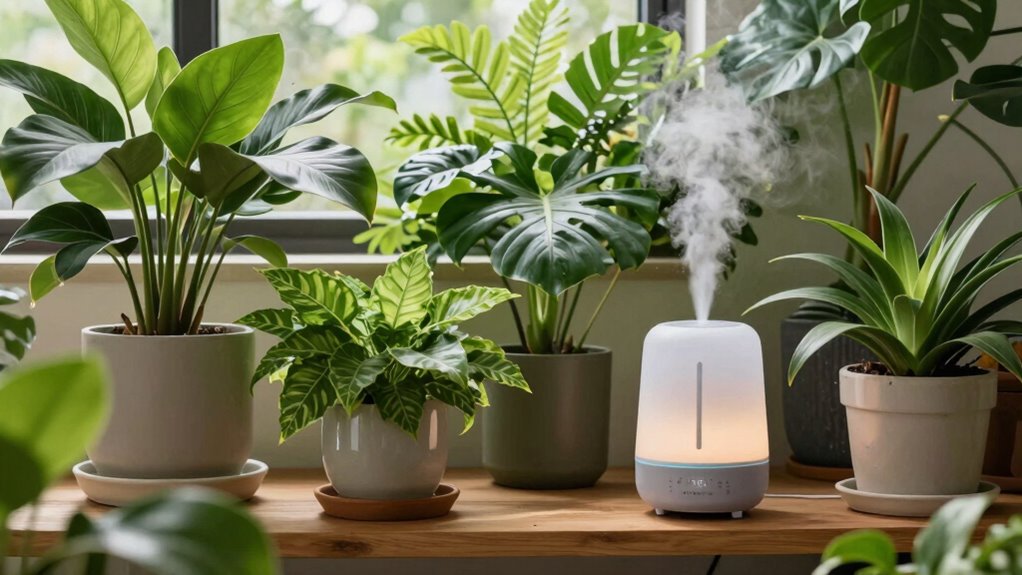
Maintaining ideal humidity levels for your indoor plants becomes much easier when you have the right tools and devices on hand. Smart humidifiers automatically adjust moisture levels, ensuring consistent humidity without constant monitoring. These devices often connect to your smartphone, allowing you to set and track humidity levels easily. To get accurate readings, pay attention to hygrometer placement; keep it at plant level away from direct airflow or heat sources. Using a hygrometer helps you identify when humidity needs adjusting, whether manually or through your smart humidifier. Combining these tools makes maintaining a stable environment simple, preventing over- or under-humidification. With the right devices, you’ll create a thriving, humidity-balanced oasis for your indoor plants.
Frequently Asked Questions
Can Certain Plants Tolerate Very High or Low Humidity Levels?
Some plants can tolerate very high or low humidity levels, but their plant humidity tolerance varies. You’ll find that tropical plants prefer higher humidity, while succulents thrive in drier air. To keep your plants healthy, aim for their ideal humidity levels, usually around 40-60%. Adjust your environment accordingly—use a humidifier or dehumidifier if needed—to match their specific needs and guarantee they flourish indoors.
How Often Should I Water My Indoor Plants to Maintain Humidity?
Think of your indoor plants as tiny rainforests needing just the right rainfall. You should water them when the top inch of soil feels dry, usually once a week, to maintain proper watering frequency. This helps keep humidity balance steady, preventing overwatering or dehydration. Keep an eye on your plants’ leaves and soil, adjusting watering as needed to create a lush, balanced oasis indoors.
What Are Common Mistakes When Increasing Indoor Humidity?
A common mistake pitfalls when increasing indoor humidity is falling for humidity myths, like over-watering or using too much mist. You might think more mist equals better humidity, but it can cause mold or root rot. Avoid these pitfalls by monitoring humidity levels carefully with a gauge and adjusting gradually. Overdoing it can harm your plants, so aim for balance instead of excess.
Do Air Purifiers Affect Indoor Humidity Levels?
Air purifier effects on indoor humidity are minimal, but they can influence humidity control slightly. While most purifiers focus on filtering pollutants, some models with humidifying or dehumidifying features help maintain ideal moisture levels. You might notice a subtle change in humidity, especially with devices equipped for both filtration and moisture regulation. Overall, air purifiers support a balanced environment without considerably impacting your indoor humidity, making your mini oasis more comfortable.
How Does Seasonal Weather Change Impact Indoor Humidity Needs?
Seasonal weather changes considerably impact your indoor humidity needs, as seasonal moisture levels fluctuate. During winter, you might need to add humidity because the air tends to be dry, while in summer, humidity often increases naturally. You should monitor humidity fluctuations regularly, adjusting your indoor environment with humidifiers or dehumidifiers accordingly. This way, you keep your indoor plants healthy and create a comfortable, balanced oasis year-round.
Conclusion
Did you know that about 50% of indoor environments have low humidity levels, which can harm your plants and your health? By monitoring and adjusting humidity, you create a lush, comfortable oasis right inside your home. With simple tools and mindful practices, you can prevent mold and keep your plants thriving. Start small, stay consistent, and enjoy the benefits of a healthier, greener space that feels just right. Your indoor jungle awaits!