Using homemade distilled water in your humidifier is a smart choice, as it provides pure, contaminant-free moisture that helps prevent mineral buildup, mold, and bacteria growth. It also extends the lifespan of your device and reduces maintenance. While it’s an affordable and effective method, it’s important to follow proper procedures to guarantee purity. To learn more about making and safely using this water, keep exploring the details below.
Key Takeaways
- Homemade distilled water effectively removes minerals and contaminants, reducing mineral buildup and bacteria growth in humidifiers.
- Using DIY distilled water can prolong your humidifier’s lifespan and improve air quality.
- Properly made homemade distilled water is generally safe, but imperfect processes may leave some impurities.
- The distillation process requires time, energy, and clean equipment to ensure water purity and safety.
- Regular maintenance of your distillation setup and cautious use makes homemade distilled water a cost-effective option for humidifiers.
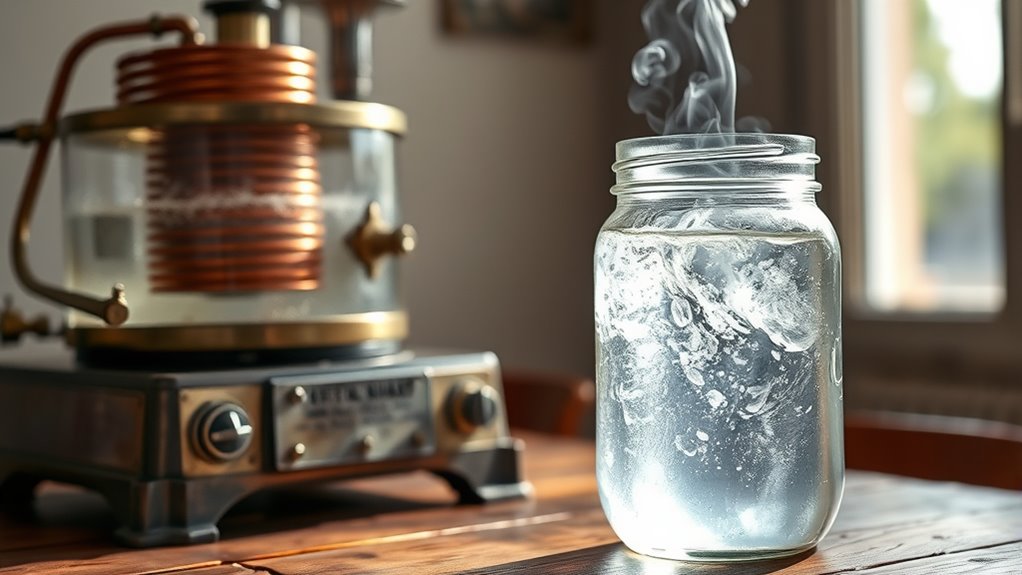
Making your own distilled water at home is a simple and cost-effective way to guarantee you have pure water for your needs. If you’re considering whether homemade distilled water is suitable for use in your humidifier, it’s important to understand the basics of water purification and the DIY methods you can employ to produce high-quality water. Distillation is one of the most effective forms of water purification because it removes impurities, minerals, bacteria, and most chemicals, leaving you with nearly pure H2O. By creating distilled water yourself, you avoid the additives and contaminants often found in tap water, which can accumulate in your humidifier and potentially disperse into the air you breathe.
Making distilled water at home ensures pure, contaminant-free moisture for your humidifier.
Using DIY methods to make distilled water involves boiling water and collecting the vapor, which then condenses back into liquid form. You can do this with household items like a large pot, a heat-resistant bowl, and a lid. Fill the large pot with tap water, place a smaller bowl inside, and invert the lid so that the handle is facing down. As the water boils, vapor rises, hits the lid, and condenses into pure water that drips into the bowl. This method effectively separates impurities, ensuring you get purified water. It’s a straightforward process, but it requires attention to detail to prevent contamination and maximize efficiency.
Employing water purification through DIY distillation is particularly beneficial because it minimizes the risk of mineral buildup or chemical residues that can clog or damage your humidifier. Regular use of distilled water in your humidifier can help prolong the device’s lifespan and improve air quality. It also reduces the risk of mold or bacteria growth within the device, since impurities and contaminants are removed during the distillation process. While some may worry about the energy consumption or time involved, making distilled water at home is a worthwhile investment if you prioritize clean, pure moisture output.
Additionally, using distilled water can help prevent mineral deposits that are common with tap water, thereby reducing maintenance needs for your humidifier. It’s vital to note that homemade distilled water may not be entirely free of every impurity, especially if the process isn’t perfectly executed. However, for most household purposes, it’s sufficiently pure and safe for use in humidifiers. Always ensure your equipment is clean and used solely for water distillation, so you don’t reintroduce contaminants. To conclude, DIY methods of water purification through distillation offer an accessible, economical way to produce high-quality water, making it an excellent choice for humidifiers. Just follow proper procedures, and you’ll have a reliable source of pure water right at home.
Frequently Asked Questions
Can Homemade Distilled Water Contain Harmful Bacteria?
Yes, homemade distilled water can contain harmful bacteria if not prepared or stored properly. Bacterial contamination can occur during the distillation process or through microbial growth if the water is left standing for too long. To minimize risks, guarantee your homemade distilled water is boiled thoroughly, cooled quickly, and stored in clean, airtight containers. Regularly check and replace stored water to prevent microbial growth and ensure safe use in your humidifier.
How Long Does Homemade Distilled Water Stay Pure?
Homemade distilled water stays pure for about 24 to 48 hours if stored properly in a clean, sealed container. However, contamination risks increase the longer it sits, especially if exposed to dust, bacteria, or other impurities. To guarantee safety and purity, it’s best to make fresh distilled water regularly and store it in a sanitized container, checking for any signs of contamination before using it in your humidifier.
Is Homemade Distilled Water Suitable for All Humidifier Types?
You might worry about homemade distilled water‘s compatibility with all humidifiers, but it generally works well. Unlike tap water, it minimizes impurities and prevents mineral buildup, making it ideal for most types. However, some models with specific filtration needs might still benefit from manufacturer-recommended water. Using homemade distilled water keeps your humidifier cleaner, reduces maintenance, and guarantees healthier air without the risks of tap water impurities.
Does the Boiling Process Remove All Contaminants Effectively?
Boiling water is effective for contaminant removal, as it kills bacteria and viruses, but it isn’t foolproof for all impurities. Boiling efficiency decreases with certain contaminants like minerals, heavy metals, or chemicals, which may not evaporate or get removed completely. So, while boiling improves water safety, it might not guarantee pure distilled water. For the best results, consider using proper distillation equipment or filtered water.
Are There Any Health Risks Using Homemade Distilled Water?
Using DIY purification methods for distilled water might seem clever, but it could pose health risks. Homemade distilled water often lacks proper mineral content removal, risking contaminants and impurities. Relying on your own process might introduce bacteria or other harmful substances into your humidifier, which you then breathe in. So, unless you want to be the star of your own health horror story, stick to professionally distilled water for safe, contaminant-free humidity.
Conclusion
If you make your own distilled water at home, remember it’s pure enough for your humidifier, just like a homeowner in Ohio who started distilling water to avoid mineral buildup. Imagine your humidifier running smoothly, producing clean, healthy mist that keeps your home comfortable. Using homemade distilled water can save you money and reduce mineral deposits, but always verify your process is thorough. With proper care, your humidifier will work efficiently, keeping your indoor air fresh and safe.