In your home library, maintaining stable humidity is more vital than just adding extra moisture. Fluctuations can cause pages to warp, bindings to weaken, or mold to grow, all damaging your collection. Too dry, and materials become fragile and crack; too damp, and mold risks increase. Keeping humidity steady between 40-60% helps preserve your books and avoids long-term damage. To learn essential tips for proper humidity control, continue exploring how to protect your library effectively.

Get home appliances delivered free with Prime
- Fast, free delivery on millions of items
- Prime Video, Amazon Music and more included
- Member-only deals all year
Key Takeaways
- Stable humidity prevents book warping, fading, and binding damage caused by expansion and contraction.
- Excess moisture promotes mold growth, which damages books and poses health risks.
- Maintaining consistent humidity levels protects adhesives and preserves overall book integrity.
- Low humidity causes materials to become brittle and crack faster, accelerating deterioration.
- Regular monitoring ensures humidity stays within the ideal 40-60% range for optimal preservation.
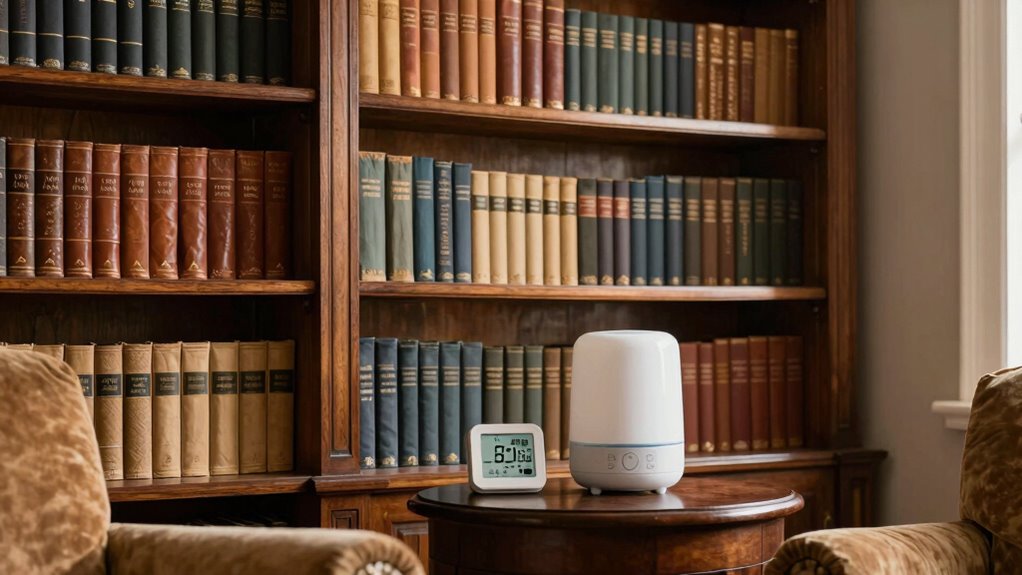
Have you ever noticed how fluctuating humidity levels can damage your treasured books and valuable library collection? It’s a common issue many home library owners overlook, but maintaining proper humidity isn’t just about avoiding dryness or dampness. It’s about creating a stable environment that promotes book preservation and mold prevention. When humidity swings wildly, the materials in your books—paper, leather, and glue—expand and contract. Over time, this stress causes pages to warp, ink to fade, and bindings to weaken. Keeping humidity levels steady helps protect your collection from these damages, ensuring your books stay in prime condition for years to come.
Fluctuating humidity can warp, fade, and weaken your books—keeping levels steady is essential for preservation.
Too much moisture invites mold, which is a serious threat to both your books and your health. Mold spores thrive in humid environments above 60%, especially when combined with poor airflow or warmth. Once mold takes hold, it can quickly spread, damaging pages, covers, and even the shelving itself. Mold not only ruins your books’ appearance and integrity but also poses health risks, like allergies and respiratory issues. By controlling humidity, you create an inhospitable environment for mold growth. This is essential for effective mold prevention and preserving the overall health of your library space. Proper environment control is crucial for maintaining a safe and healthy home library. Maintaining consistent humidity levels also reduces the risk of material deterioration caused by expansion and contraction cycles, further protecting your collection. Proper climate management can help prevent unnecessary stress on your books’ materials, extending their lifespan. Additionally, maintaining a consistent humidity level helps prevent material deterioration caused by expansion and contraction cycles. On the flip side, excessively low humidity levels—below 30%—can cause paper and leather to become brittle and fragile. When materials become too dry, they crack, peel, or deteriorate faster. Proper humidity regulation is vital for preventing these issues and ensuring your collection remains intact. Maintaining a balanced humidity level, ideally between 40% and 60%, keeps your books in optimal condition. It slows down the aging process, prevents cracking, and helps maintain the integrity of adhesives used in binding. A stable environment minimizes expansion and contraction cycles, which can lead to pages falling out or bindings loosening over time. Regular monitoring with a hygrometer ensures you stay within this ideal range, helping to extend your collection’s longevity.
As an affiliate, we earn on qualifying purchases.
Frequently Asked Questions
How Does Humidity Fluctuation Affect Book Preservation Long-Term?
Humidity fluctuation directly impacts your book preservation by causing expansion and contraction of paper and bindings, leading to warping, cracking, or mold growth. Climate control helps maintain consistent humidity levels, preventing long-term damage. When humidity levels swing, your books become more vulnerable to deterioration. To protect your collection, focus on stabilizing the environment, ensuring your books stay in good condition for years to come.
What Are the Signs of Humidity Damage in Home Libraries?
You’ll notice humidity damage in your home library through signs like dust accumulation on book surfaces, which indicates poor air quality. Mold growth is another clear sign, appearing as fuzzy or discolored patches on pages or covers. You might also see warped or buckled pages, and a musty odor. These issues signal that humidity levels are fluctuating, and addressing this helps preserve your books and prevent further deterioration.
Can Dehumidifiers or Humidifiers Cause More Harm Than Good?
Dehumidifiers and humidifiers can cause more harm than good if not used properly, especially in your home library. Overusing them can disrupt air quality and lead to mold growth, which damages books and furniture. To prevent this, maintain a stable humidity level and monitor conditions regularly. Proper use guarantees mold prevention and preserves your collection, rather than risking air quality issues or excessive moisture that can harm your library.
How Often Should I Monitor Humidity Levels in My Library?
How often should you monitor humidity levels in your library? Regular checks, at least weekly, are essential to maintain stability. You need to take into account bookcase ventilation and ambient temperature, which influence humidity fluctuations. Use a reliable hygrometer to track conditions and adjust humidifiers or dehumidifiers accordingly. Consistent monitoring helps prevent mold and warping, ensuring your collection stays in perfect condition. Wouldn’t you want your books to be as well-preserved as when you first acquired them?
Are There Specific Humidity Levels Ideal for Different Book Genres?
You should aim for a humidity level around 40-50% for most books, but rare books benefit from slightly lower humidity to prevent mold. Digital storage doesn’t need humidity control, so keep it separate. For different genres, maintain consistent levels to prevent damage; leather-bound or antique books require more stable, lower humidity. Regular monitoring helps guarantee your library stays in ideal condition, protecting all your collections effectively.
As an affiliate, we earn on qualifying purchases.
Conclusion
Maintaining stable humidity in your home library isn’t just about avoiding excess moisture—it’s about protecting your treasured collection from the inside out. When you keep the environment balanced, you’re giving your books the best chance to thrive, not just survive. Remember, a stitch in time saves nine; addressing humidity issues early keeps your library in top shape for years to come. Stay vigilant, and your collection will thank you for it.
digital hygrometer for indoor humidity
As an affiliate, we earn on qualifying purchases.
As an affiliate, we earn on qualifying purchases.
climate control device for books
As an affiliate, we earn on qualifying purchases.
As an affiliate, we earn on qualifying purchases.
Halloween Picks
halloween
As an affiliate, we earn on qualifying purchases.