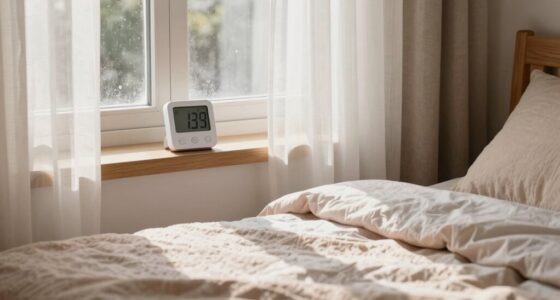
During allergy season, you should adjust your humidifier use to prevent worsening symptoms. Keep humidity levels between 30% and 50%, using a hygrometer to monitor. Regularly clean the device to avoid mold and bacteria buildup, and use distilled water to reduce mineral deposits. Avoid over-humidifying, which can encourage mold and dust mites. Proper adjustments make a big difference in managing allergens indoors. If you want to learn more tips, continue exploring how to optimize your humidifier for allergy relief.

Get home appliances delivered free with Prime
- Fast, free delivery on millions of items
- Prime Video, Amazon Music and more included
- Member-only deals all year
Key Takeaways
- Adjust humidity levels seasonally to prevent excess moisture during high pollen seasons.
- Use a hygrometer to monitor indoor humidity, maintaining 30-50% for allergy symptom relief.
- Increase cleaning frequency of the humidifier during allergy season to prevent mold and allergen buildup.
- Keep windows closed during peak pollen times to minimize outdoor allergen ingress.
- Combine humidifier use with regular dusting and HEPA filtering to reduce indoor allergens effectively.
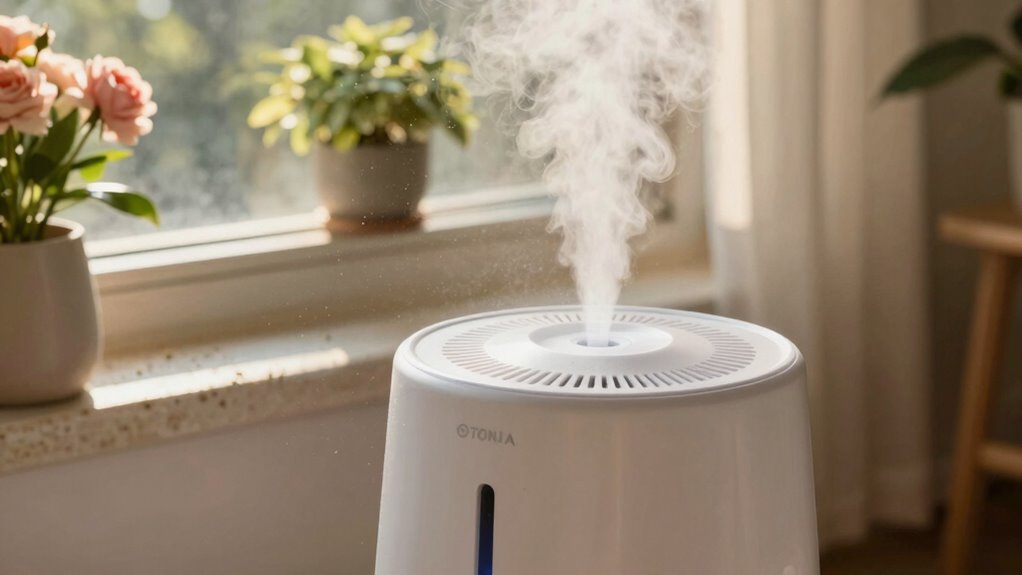
As allergy season arrives, many people turn to humidifiers to help manage dry nasal passages and irritated sinuses. While humidifiers can offer relief, it’s important to adjust how you use them during this time to avoid worsening allergy symptoms. Proper humidifier maintenance becomes even more essential now because mold, bacteria, and dust mites thrive in moist environments if not cleaned regularly. You should clean your device thoroughly at least once a week, using vinegar or a manufacturer-approved cleaner, to prevent the buildup of allergens that can circulate into the air. Neglecting this can turn your humidifier into a source of airborne irritants, defeating its purpose.
Proper humidifier cleaning prevents mold, bacteria, and allergens from worsening allergy symptoms.
In terms of allergen control, maintaining ideal humidity levels is key. Experts recommend keeping indoor humidity between 30% and 50%. During allergy season, you might be tempted to run your humidifier constantly, but doing so can lead to excess moisture that fosters mold growth and dust mite proliferation. Using a hygrometer helps you monitor humidity levels, ensuring they stay within the perfect range. If the air becomes too moist, you risk increasing allergen presence rather than reducing it. Conversely, if the air is too dry, your nasal passages may still become irritated. Balancing humidity is essential to help your body cope with allergens without creating a breeding ground for new ones. Additionally, being aware of the moist environment within your home can help you prevent conditions that promote mold and bacteria growth. Regularly checking your home’s indoor air quality can also aid in identifying potential allergen hotspots. Maintaining proper humidity levels is crucial for preventing an environment conducive to allergens, especially during sensitive seasons.
You should also consider the type of water you add to your humidifier. Using distilled or demineralized water reduces mineral deposits and the release of potential irritants like white dust, which can aggravate allergy symptoms. Regularly replacing the water in your device prevents bacterial growth and keeps the air cleaner. Keep an eye out for signs of mold or mildew on the unit itself—any musty smell or visible growth indicates you need to clean it immediately. Proper humidifier maintenance not only keeps your device functioning efficiently but also plays an important role in allergen control, reducing the risk of airborne allergens circulating in your home. Additionally, understanding the biodiversity within your environment can help you identify and address specific allergen sources more effectively.
During allergy season, it’s wise to combine humidifier use with other allergen-reducing strategies, like frequent dusting, vacuuming with HEPA filters, and keeping windows closed during peak pollen times. By paying close attention to humidifier maintenance and maintaining suitable humidity levels, you can enjoy the benefits of a moist environment without unintentionally increasing your allergy symptoms. Adjusting your humidifier practices during this season allows you to breathe easier, stay comfortable, and keep allergies under control.
As an affiliate, we earn on qualifying purchases.
Frequently Asked Questions
Can Humidifiers Worsen Allergy Symptoms?
Yes, humidifiers can worsen allergy symptoms if not used properly. If you don’t clean your humidifier regularly, it can promote airborne mold and dust mite proliferation, which aggravates allergies. The moisture creates a perfect environment for these allergens to thrive. To avoid this, clean your humidifier often, use distilled water, and maintain ideal humidity levels to prevent the growth of mold and dust mites.
How Often Should I Clean My Humidifier During Allergy Season?
Think of your humidifier as a garden that needs daily tending. During allergy season, you should clean it at least every 2-3 days to prevent mold and bacteria buildup. Regularly check water quality and change the water frequently. Don’t forget to maintain the filter—clean or replace it as recommended by the manufacturer—to keep the air pure and allergy symptoms at bay. This keeps your indoor air fresh and healthy.
Are Certain Humidifier Types Better for Allergy Sufferers?
Certain humidifier types, like ultrasonic models, are better for allergy sufferers because they produce less noise and can be compatible with air purifiers for added allergen removal. When choosing, consider air purifier compatibility and proper humidifier placement—avoid placing it near bedding or vents to prevent mold growth and guarantee effective humidification. Regular cleaning during allergy season is essential to keep airborne allergens at bay.
Should I Use Antibacterial Additives in My Humidifier?
Think antibacterial additives are the magic potion for humidifier safety? Think again. Using them might seem like a quick fix, but they can introduce harmful chemicals into your indoor air. Instead, focus on regular cleaning and maintenance. Proper hygiene keeps your humidifier safe and effective, without risking respiratory irritation. Save the additives for soap operas, not your humidifier—your lungs will thank you for avoiding unnecessary chemicals.
How Does Humidity Level Affect Allergy Flare-Ups?
Humidity levels directly impact your allergy flare-ups by affecting indoor air quality and mold growth. When humidity is too high, it encourages mold and dust mites, which can worsen allergies. Keep humidity between 30-50% to reduce mold growth and improve air quality. Using a humidifier carefully during allergy season helps maintain ideal moisture levels, but over-humidifying can increase allergy triggers, so monitor humidity regularly for relief.
As an affiliate, we earn on qualifying purchases.
Conclusion
As allergy season approaches, remember that your humidifier isn’t just a device—it’s a shield against airborne irritants. Adjust its settings carefully, keeping the air moist but not too damp, and change the water regularly to prevent mold. Think of your humidifier as a silent guardian, quietly working behind the scenes to keep your air clean. With mindful use, you can breathe easier and navigate allergy season with confidence—because every breath should be a breath of relief.
As an affiliate, we earn on qualifying purchases.
As an affiliate, we earn on qualifying purchases.
Cold & flu season Picks
humidifiers
As an affiliate, we earn on qualifying purchases.