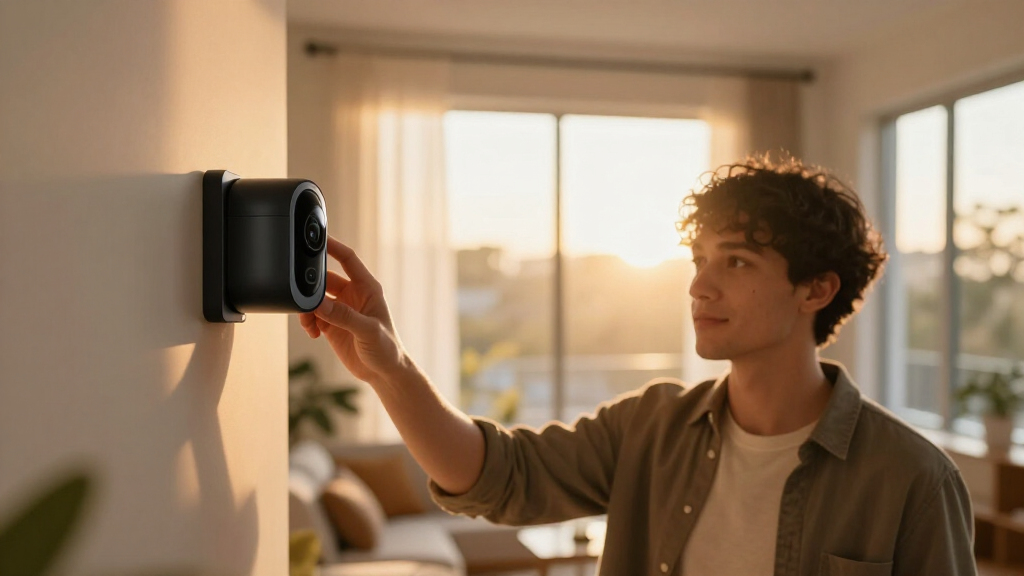

Smart home security cameras are increasingly popular for protecting homes and enhancing convenience. Two prominent options are the Ring Video Doorbell 4 and the Arlo Pro 4. While both serve as security devices, they cater to different priorities. The Ring Video Doorbell 4, often chosen by budget-conscious homeowners, combines a doorbell with a camera, offering an affordable, easy-to-install solution. The Arlo Pro 4, positioned at a higher price point, emphasizes superior video quality, advanced features, and broader coverage. This comparison highlights their key differences, helping buyers decide which aligns best with their security needs and budget.

Get home appliances delivered free with Prime
- Fast, free delivery on millions of items
- Prime Video, Amazon Music and more included
- Member-only deals all year

Blink Outdoor 4 Wireless Smart Security Camera System (3 Cameras, Sync Module Core)
- ✔ Battery Life: Up to 2 years
- ✔ Video Resolution: 1080p HD
- ✔ Night Vision: Infrared
Blink Outdoor 4 Wireless Smart Security Camera System (5 Cameras, 2-Year Battery Life)
- ✔ Field of view: 143° diagonal
- ✔ Camera resolution: 1080p HD
- ✔ Night Vision: Infrared
Blink Outdoor 4 Wireless Smart Security Camera System (2 Cameras, Sync Module Core)
- ✔ Battery Life: Up to 2 years
- ✔ Video Resolution: 1080p HD
- ✔ Night Vision: Infrared
At a Glance
| Criteria | Ring Video Doorbell 4 | Arlo Pro 4 | Winner |
|---|---|---|---|
| Video Quality | 2K HD video, 1536p | 4K HD video, 2160p | B |
| Field of View | 160° wide-angle lens | 160° wide-angle lens | B |
| Installation & Setup | Easy DIY installation, doorbell style | Wireless, easy setup, versatile mounting | A |
| Smart Home Integration | Works with Alexa, Google Assistant, Ring ecosystem | Works with Alexa, Google, Apple HomeKit (via integrations) | B |
| Subscription Costs | Optional cloud storage subscription | Optional cloud & local storage | A |
| Design & Build Quality | Plastic body, weather-resistant | Weather-resistant, metal and plastic build | B |
| Advanced Features | Motion zones, two-way talk | Enhanced motion detection, person detection, siren | B |
| Price | Lower price, around $100 | Higher price, around $200 | A |
Blink Outdoor 4 Wireless Smart Security Camera System (3 Cameras, Sync Module Core)
This 3-camera system stands out for its affordability and long-lasting batteries, which can last up to two years without replacement. It’s ideal for users seeking a straightforward, wireless setup that covers multiple angles. The 1080p HD video quality and infrared night vision enhance visibility, while two-way audio allows for real-time interaction. However, local storage is not included with the Sync Module Core, and advanced features like person detection require an optional subscription, making it less suitable for those who want a fully autonomous system without ongoing costs. Compared to larger setups, this model sacrifices coverage for simplicity and economy.
Pros:
- Long battery life of up to two years
- High-definition 1080p video quality
- Easy wireless setup and control via app
- Infrared night vision for low-light conditions
Cons:
- Local storage not included, limiting recording options
- Person detection features require a subscription
- Additional storage options sold separately
Best for: Budget-conscious homeowners or renters looking for reliable outdoor security without ongoing costs.
Not ideal for: Those needing extensive coverage or advanced detection features without subscriptions.
Bottom line: A cost-effective, easy-to-install system ideal for basic outdoor security needs with minimal maintenance.
“A cost-effective, easy-to-install system ideal for basic outdoor security needs with minimal maintenance.”
Blink Outdoor 4 Wireless Smart Security Camera System (5 Cameras, 2-Year Battery Life)
Compared with the smaller system, this 5-camera package offers broader outdoor coverage, making it suitable for larger yards or multi-zone monitoring. The cameras share the same impressive battery life—up to two years—and deliver 1080p HD live view with infrared night vision. Enhanced motion detection and person alerts (subscription required) add a layer of security, but the need for a subscription to access advanced features and cloud storage can add ongoing costs. The system is straightforward to set up, with included mounting kits and batteries, but environmental factors can influence battery longevity, especially in extreme weather conditions. This pick is a stronger investment for those needing extensive, reliable coverage over multiple areas.
Pros:
- Up to two years of battery life across five cameras
- 1080p HD video with night vision
- Easy installation and setup
- Supports two-way audio and enhanced motion detection
Cons:
- Requires a subscription for cloud storage and advanced features
- Person detection features are subscription-dependent
- Battery life may vary with environmental conditions
Best for: Homeowners with larger properties or those wanting comprehensive outdoor surveillance.
Not ideal for: Users seeking a budget-friendly or minimal setup without ongoing subscription costs.
Bottom line: Ideal for large properties needing extensive outdoor coverage, though subscription costs are a consideration.
“Ideal for large properties needing extensive outdoor coverage, though subscription costs are a consideration.”
Blink Outdoor 4 Wireless Smart Security Camera System (2 Cameras, Sync Module Core)
This 2-camera system is perfect for smaller spaces or those new to smart security. It provides reliable 1080p HD video, infrared night vision, and two-way audio, all in a compact package that’s quick to install. The long battery life of up to two years minimizes maintenance, and integration with Alexa makes voice control straightforward. However, with only two cameras, coverage is limited, and local storage options are absent—plus, person detection and other advanced features require a subscription. This pick is best for individuals who want a simple, no-fuss security upgrade for a smaller area but are okay with ongoing costs for enhanced features.
Pros:
- Long battery life of up to two years
- High-quality 1080p HD video with night vision
- Easy to set up and manage with Alexa compatibility
- Compact design fits small spaces
Cons:
- Limited to two cameras, less coverage
- No local storage options included
- Subscription required for person detection and extended features
Best for: Small apartments, entry-level security, or as a starter system for smart home newcomers.
Not ideal for: Those needing wide coverage or advanced detection without additional subscriptions.
Bottom line: A compact, reliable starter kit suitable for small areas, but limited in scope and feature set without subscriptions.
“A compact, reliable starter kit suitable for small areas, but limited in scope and feature set without subscriptions.”
As an Amazon Associate we earn from qualifying purchases.
Key Differences
The core difference between the Ring Video Doorbell 4 and the Arlo Pro 4 centers on video quality, features, and price. The Arlo Pro 4 provides 4K resolution, offering clearer, more detailed footage ideal for identifying faces or license plates from a distance. It also boasts advanced detection capabilities like person detection and customizable motion zones, making it suitable for users seeking comprehensive security coverage. In contrast, the Ring Video Doorbell 4’s 2K resolution is sufficient for most doorbell functions and general monitoring, but less detailed for distant or high-precision needs.
Installation ease is another differentiator: the Ring is designed as a doorbell, requiring a wired connection (or battery power), making it straightforward if existing wiring is present. The Arlo Pro 4 is wireless, offering flexible placement options without wiring, which benefits users who want a versatile, easy-to-move setup. Cost-wise, the Ring is more budget-friendly, appealing to those prioritizing affordability, while the Arlo’s higher price reflects its advanced features and higher-quality build. Ultimately, the choice hinges on whether the user prefers a more affordable, simple solution with integrated doorbell functions or a premium, high-resolution, feature-rich system for broader security coverage.
Detailed Comparison
Video Quality (Arlo Pro 4 wins — major)
The Arlo Pro 4’s 4K resolution delivers sharper, more detailed images, making it easier to identify faces and license plates. The Ring Video Doorbell 4’s 2K resolution, while still high-definition, doesn’t match the clarity of Arlo’s footage. For users needing precise identification from a distance or in low-light conditions, Arlo offers a clear advantage. The difference is major, impacting the effectiveness of security monitoring in real-world scenarios.
Field of View (minor difference)
Both cameras feature a 160° wide-angle lens, capturing broad areas. This makes them suitable for monitoring entrances or specific zones around the home. Since the field of view is identical, neither option outperforms the other on this criterion. The practical impact is minimal, but a wide angle remains essential for comprehensive coverage.
Installation & Setup (Arlo Pro 4 wins — moderate)
The Ring Video Doorbell 4 relies on existing doorbell wiring or battery power, making it straightforward for homeowners with wired doorbells. Its doorbell form factor means installation is mainly about mounting and connecting the doorbell wiring, which most users find manageable. The Arlo Pro 4 is wireless, requiring no wiring, offering flexible placement options and quick setup. However, mounting in certain locations might require additional accessories. Both are designed for DIY installation, but Arlo’s wireless design offers greater versatility and fewer wiring concerns. The gap is moderate, with Arlo slightly more flexible in placement and easier for renters or those avoiding wiring.
Smart Home Integration (Arlo Pro 4 wins — moderate)
The Ring integrates seamlessly with Alexa and Google Assistant, and with other Ring devices, creating a cohesive security ecosystem. Its compatibility is straightforward for users within the Ring ecosystem. The Arlo Pro 4 also supports Alexa and Google Assistant, with added support for Apple HomeKit via newer firmware updates, making it more versatile for users invested in multiple smart home platforms. The integration depth of Arlo can be richer, especially if users want control via Apple HomeKit. The difference is moderate, but Arlo’s wider compatibility appeals to users with diverse smart home setups.
Subscription Costs (Ring Video Doorbell 4 wins — minor)
Both cameras offer optional cloud storage subscriptions for recorded footage. Ring’s cloud plans tend to be more affordable, starting around $3/month per device, with basic features. Arlo’s subscription costs are slightly higher but include more advanced features like person detection, activity zones, and local storage options. For users primarily interested in basic recordings, Ring offers better value; for those wanting advanced detection and storage flexibility, Arlo’s subscription may be justified. The gap is minor to moderate, depending on feature needs and budget.
Design & Build Quality (Arlo Pro 4 wins — major)
The Ring Video Doorbell 4 has a plastic body designed to withstand weather conditions, but feels less premium. The Arlo Pro 4 features a metal and plastic build, with a more sturdy and premium feel, suitable for outdoor use in various climates. For durability and aesthetic appeal, Arlo leads, especially for users wanting a more premium look and feel. The gap is major in perceived quality, impacting long-term durability and visual integration into home exteriors.
Advanced Features (Arlo Pro 4 wins — major)
The Arlo Pro 4 offers advanced detection options like person detection, customizable activity zones, and a built-in siren, providing comprehensive security management. The Ring Video Doorbell 4 has motion zones and two-way talk but lacks some of the advanced detection features. For users wanting detailed alerts and comprehensive control, Arlo provides a clear advantage. The difference is major in functionality, affecting the effectiveness of security alerts and response capabilities.
Price (Ring Video Doorbell 4 wins — major)
The Ring Video Doorbell 4 is priced around $100, making it accessible for most budgets. The Arlo Pro 4 costs approximately $200, reflecting its higher-end features and build quality. For budget-conscious buyers, Ring offers excellent value with solid features. For those willing to invest in higher quality and advanced features, Arlo’s premium price is justifiable. The gap is significant, and the choice depends heavily on budget and desired feature set.
Ring Video Doorbell 4: Pros and Cons
Pros:
- Affordable pricing and good value for basic security needs
- Easy to install with existing doorbell wiring
- Integrated doorbell function, reducing device clutter
- Decent video quality suitable for most users
- Good smart home compatibility with Alexa and Google
Cons:
- Lower resolution limits detail recognition
- Less advanced detection features
- Plastic build may look less premium
- Limited local storage options
- Basic motion detection and alerting
Arlo Pro 4: Pros and Cons
Pros:
- Superior 4K video quality for detailed surveillance
- Wireless setup offers versatile placement
- Premium build quality with weather-resistant materials
- Advanced detection features like person detection and siren
- Broader smart home platform support including Apple HomeKit
Cons:
- Higher price point may be a barrier for some
- Subscription costs are somewhat higher for full feature access
- Potential complexity in managing advanced features
- Slightly larger size may be more conspicuous
Who Should Choose What
Choose Ring Video Doorbell 4 if:
- You want an affordable, easy-to-install doorbell camera with basic security features
- Budget is a primary concern and you prefer a device with integrated doorbell functionality
- You are okay with lower resolution and fewer advanced detection options
Choose Arlo Pro 4 if:
- You need high-resolution footage for detailed monitoring
- Flexibility in placement and advanced security features are priorities
- You own a smart home setup that benefits from broader platform support
- Durability and premium design are important
Value for Money
For users prioritizing basic doorbell security at an affordable price, Ring offers excellent value with decent video quality and straightforward setup. Those seeking a more comprehensive, high-resolution security system should consider the Arlo Pro 4, where the extra cost is justified by superior image clarity and advanced features. Paying more makes sense for users with higher security demands or integration needs, while budget buyers can find sufficient coverage with Ring.Final Verdict
Choose the Ring Video Doorbell 4 if you want an affordable, easy-to-install doorbell camera with decent video quality and integrated functions. Opt for the Arlo Pro 4 if you need high-resolution footage, advanced detection, and a more durable, versatile setup. The biggest decision factor is whether you prioritize budget-friendly simplicity or premium features and image clarity. For most homeowners seeking basic security, Ring is sufficient; for serious security enthusiasts or larger property coverage, Arlo provides a clear upgrade.
Frequently Asked Questions
Which camera offers better video quality?
The Arlo Pro 4 provides 4K resolution, delivering sharper images than the Ring Video Doorbell 4’s 2K, making it better for detailed surveillance.
Can I install these cameras without professional help?
Yes, both are designed for DIY setup. Ring’s wired installation is straightforward if existing wiring is available, while Arlo’s wireless setup offers flexible placement without wiring concerns.
Are subscription plans necessary?
Basic recording features are available without subscriptions, but advanced detection and storage options require paid plans. Arlo’s plans tend to be more feature-rich but also more expensive.
Which device is more weather-resistant?
Both devices are weather-resistant, but the Arlo Pro 4’s metal and plastic build offers a more premium, durable feel suited for harsh conditions.
Is the higher price of Arlo justified?
Yes, if you need higher-resolution footage, advanced detection, and a more durable design, the extra investment is worthwhile. For basic needs, Ring offers good value at a lower cost.
Fall Picks
fall essentials
As an affiliate, we earn on qualifying purchases.