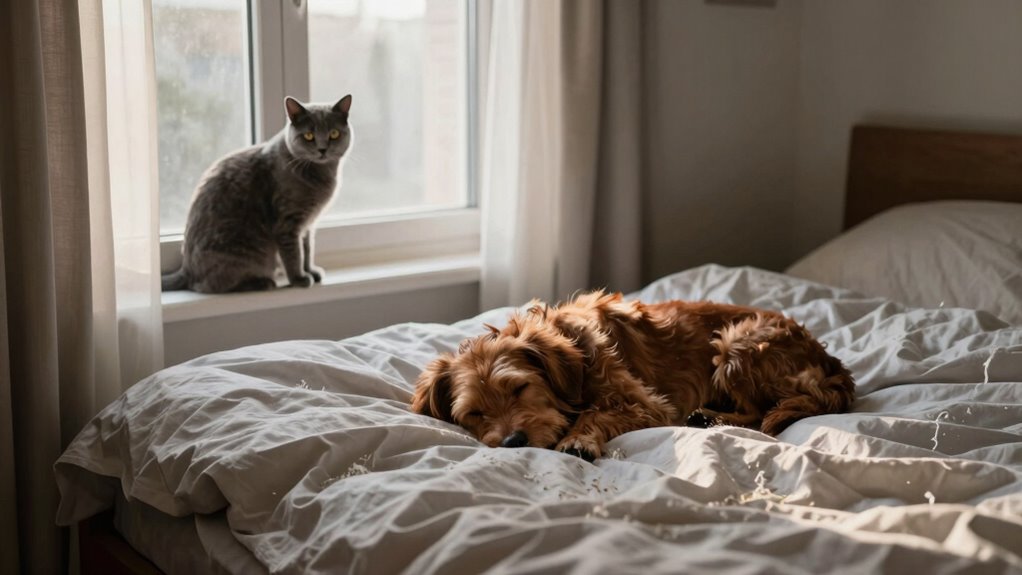

Having pets in your bedroom can considerably increase airborne allergens and dust that you might not notice. Their shedding, activity at night, and disturbance of settled particles spread fur, dander, and skin cells into the air, which can worsen allergies and disrupt your sleep. Poor ventilation and infrequent cleaning make it worse. If you want to understand how your pet’s presence impacts your sleep and air quality, keep exploring the details below.

Get home appliances delivered free — and shop member deals
- Fast, free delivery on millions of items
- Access to Prime Big Deal Days deals on October 6–7
- Prime Video, Amazon Music and more included
Key Takeaways
- Pet shedding releases fur, dander, and skin cells into the air, increasing allergen levels overnight.
- Nocturnal pet activity disturbs settled dust and dander, elevating airborne particles during sleep hours.
- Pet movements and grooming at night cause additional dust and dander to become airborne, affecting air quality.
- Poor ventilation and filtration allow allergens to accumulate, worsening indoor air quality overnight.
- Regular cleaning and air filtration help reduce allergen buildup and improve air quality for better sleep.
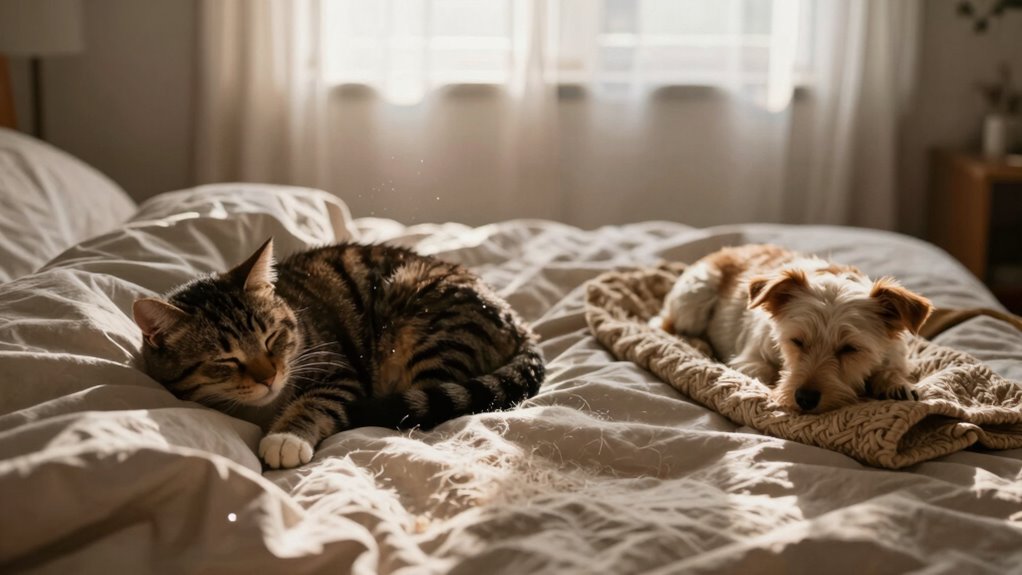
Having pets in your bedroom can bring comfort and companionship, but it also raises important considerations for sleep quality and hygiene. One of the most overlooked issues is how pets influence the air you breathe overnight. Pets shed fur, dander, and skin cells, which can accumulate in your sleeping environment. These particles can trigger pet allergies, especially if you’re sensitive or allergic to pet dander. Even if you don’t notice immediate symptoms, the continuous presence of allergens can subtly impact your breathing and overall sleep quality over time.
Furthermore, many pets, particularly cats and dogs, are nocturnal or crepuscular, meaning they’re most active during the night or around dusk and dawn. This nocturnal behavior can disturb your sleep cycle, especially if your pet moves around, scratches, or seeks attention during the night. Their activity can cause interruptions, making it harder for you to achieve deep, restorative sleep. If your pet is prone to wandering or playing at night, their movements can increase airborne dust and dander as they shed or groom themselves, further exacerbating allergy symptoms and reducing your sleep comfort. Additionally, understanding how air quality can be affected by pet-related particles emphasizes the importance of proper ventilation and filtration. Proper air exchange in your bedroom can help dilute and remove airborne allergens and improve overall sleep conditions.
The combination of pet allergies and nocturnal activity creates a cycle that many owners don’t fully realize. You might wake up feeling tired or congested, attributing it to stress or fatigue, but the real culprit could be the air quality in your bedroom. Pet dander and hair trapped in bedding, carpets, and furniture release particles into the air with each movement, especially when disturbed at night. These particles settle on your pillows, sheets, and skin, increasing exposure while you sleep. Over time, this can lead to allergic reactions such as sneezing, nasal congestion, or itchy eyes, all of which interfere with restful sleep. Regularly replacing or cleaning bedding and maintaining cleanliness can help reduce the buildup of allergens. Proper air filtration systems can significantly reduce airborne particles, helping to improve sleep quality for pet owners. Regularly maintaining these systems and ensuring they are suited for your space can make a notable difference in indoor air purity.
As an affiliate, we earn on qualifying purchases.
Frequently Asked Questions
Do Different Types of Pets Affect Air Quality Differently?
Yes, different pets affect air quality differently. For example, cats and dogs shed fur and dander, which can trigger pet allergies and contribute to airborne allergens. Small pets like birds or rodents produce dust and dander, impacting air quality even more. To reduce these effects, use air filtration systems that capture pet allergens. Regular cleaning and grooming help, but understanding each pet’s impact helps you better manage indoor air quality.
How Quickly Can Pet-Related Air Changes Impact Health?
Pet-related air changes can impact your health within hours, especially if pet dander accumulates. Poor air circulation traps allergens, making symptoms worse quickly. If you have allergies or asthma, you might notice symptoms shortly after your pet is in the room. Regularly improving air circulation, like using air purifiers and ventilating your space, helps reduce pet dander buildup, minimizing health risks and creating a safer environment overnight.
Are There Specific Times When Pet Air Pollution Peaks Overnight?
Yes, pet odor and air pollution often peak overnight when air circulation slows. You might notice stronger pet odors in the early morning, as allergens and pet dander accumulate without fresh air flow. Poor air circulation traps pollutants, making the air feel stuffy and increasing exposure. To reduce this, guarantee good ventilation overnight, open windows when possible, and regularly clean bedding and carpets to improve overall air quality.
Can Air Purifiers Fully Eliminate Pet-Related Airborne Particles?
Air purifiers can greatly reduce pet-related airborne particles, but they can’t fully eliminate all allergens. Effective air filtration helps trap pet dander, hair, and other pollutants, improving indoor air quality. However, some particles may still linger, especially if the purifier isn’t rated for your room size or lacks HEPA filters. To maximize allergen reduction, combine air filtration with regular cleaning and pet grooming.
What Are the Best Ways to Reduce Pet Allergens in the Bedroom?
Did you know that pet dander can stay airborne for hours? To reduce pet allergens in your bedroom, you should frequently clean surfaces, wash bedding weekly, and vacuum with a HEPA filter. Keeping pets out of the bedroom helps limit allergen buildup. Using air purifiers can also help, but combining these steps effectively minimizes pet dander, reducing allergic reactions and helping you breathe easier overnight.
pet hair and dander remover vacuum
As an affiliate, we earn on qualifying purchases.
As an affiliate, we earn on qualifying purchases.
Conclusion
Having pets in your bedroom is like inviting a whispering breeze into your sanctuary—subtle, comforting, yet capable of stirring unseen currents. As the night unfolds, their presence becomes an invisible brushstroke, painting your air with changes you might not notice at first glance. Remember, even the quietest paws leave footprints on your environment. Embrace their companionship, but stay mindful of how their nightly dance can transform your air, turning your peaceful sleep into a delicate symphony of unseen shifts.
As an affiliate, we earn on qualifying purchases.
HEPA filter air purifier for allergies
As an affiliate, we earn on qualifying purchases.
As an affiliate, we earn on qualifying purchases.
Cold & flu season Picks
humidifiers
As an affiliate, we earn on qualifying purchases.