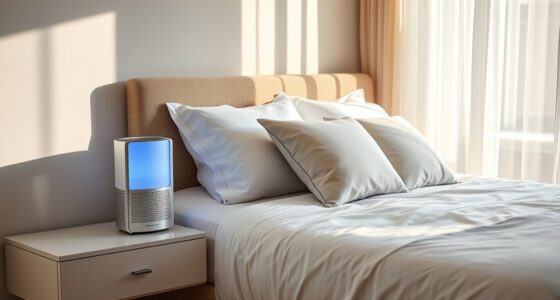
Indoor fragrances from perfumes, candles, and cleaning products can unknowingly trigger migraines by impacting your air quality. Overpowering scents often go unnoticed but create environments that increase your risk. Creating fragrance-free zones, choosing unscented products, and ensuring good ventilation can help reduce these triggers. Small adjustments to your indoor environment might be the key to fewer migraines. If you want to discover more about how your air quality affects your migraines, keep exploring the connection.

Get home appliances delivered free with Prime
- Fast, free delivery on millions of items
- Prime Video, Amazon Music and more included
- Member-only deals all year
Key Takeaways
- Fragrance exposure from perfumes, candles, and cleaning products can trigger migraines indoors.
- Creating fragrance-free zones at home and work reduces scent-related migraine risks.
- Using unscented or naturally lightly scented products minimizes indoor chemical irritants.
- Improving indoor air quality through ventilation and air purifiers helps prevent scent-induced migraines.
- Managing environmental triggers is essential for reducing migraine frequency linked to indoor scent exposure.

Have you ever noticed how certain scents can suddenly trigger a migraine? It’s a common experience for many, and it often feels like your environment conspires against you. Fragrances from perfumes, scented candles, or cleaning products can set off intense headaches that ruin your day. What you might not realize is that indoor air quality and exposure to these fragrances play a significant role in migraine frequency and severity. Many places, like offices or homes, aren’t always aware of how pervasive these scents are, making it easy for triggers to lurk unnoticed.
One way to reduce your risk is by creating fragrance-free zones in your living and working spaces. These zones serve as safe havens, where you can escape from overpowering scents that might otherwise send you into a migraine spiral. By establishing specific areas where no fragrances are allowed—like bedrooms or workstations—you give yourself a better chance to breathe freely and stay symptom-free. It’s a simple yet effective strategy to manage your environment, especially if you’re sensitive to scent exposure. Additionally, being mindful of indoor air quality and the products you select can further reduce potential triggers. Improving ventilation and reducing indoor VOCs can significantly lower airborne irritants that contribute to migraine symptoms.
Create fragrance-free zones at home and work to help prevent migraines and breathe easier.
If you’re looking for alternatives to scented products, consider using essential oil alternatives that are unscented or have mild, natural aromas that won’t trigger headaches. Many essential oils, while popular for their fragrance and therapeutic benefits, can also be potent migraine triggers when used excessively or in strong concentrations. Instead, opt for unscented or lightly scented natural remedies, or better yet, avoid essential oils altogether if you’re prone to migraines. When you need a scent, stick to fragrance-free products that don’t emit volatile organic compounds (VOCs) or overpowering fragrances, which are often found in air fresheners or cleaning supplies. Being aware of chemical emissions and how they contribute to indoor air quality can also help you make more informed choices.
The key is to be conscious of indoor air quality and the products you bring into your environment. Regularly ventilate your space and choose products labeled as hypoallergenic or free from synthetic fragrances. These choices help minimize the risk of triggering a migraine. Many commercial cleaning products and personal care items are loaded with chemicals and fragrances that can linger in the air long after use, so switching to fragrance-free alternatives can make a noticeable difference. You might also consider investing in air purifiers that filter out airborne irritants, further protecting your indoor air.
In the end, managing indoor air exposure is a crucial step in migraine prevention. By establishing fragrance-free zones, opting for essential oil alternatives that are gentle or unscented, and maintaining good ventilation, you can create a safer environment. This proactive approach helps you regain control over your surroundings and lessen the chances of your environment triggering a migraine. Being aware of the impact of indoor air quality and taking steps to improve it can significantly reduce your migraine risk. Your head, and your overall well-being, will thank you for making these simple yet impactful changes. Additionally, understanding the role of volatile organic compounds (VOCs) in indoor air can help you make more informed choices for a healthier space.
As an affiliate, we earn on qualifying purchases.
Frequently Asked Questions
Can Fragrance Exposure Trigger Migraines in People Without Sensitivities?
Yes, fragrance exposure can trigger migraines even if you don’t have sensitivities. Often, strong scents in air fresheners or scented products can cause headaches. To minimize this, try fragrance alternatives like unscented or natural products. Additionally, improving indoor air quality with air purification systems can help reduce airborne irritants, making your environment safer and more comfortable, especially if you’re prone to migraines caused by scent exposure.
Are There Specific Fragrances More Likely to Cause Migraines?
Certain fragrances are more likely to trigger migraines, especially those with strong, synthetic scent compositions or complex scent layering. You should watch out for perfumes with high concentrations of artificial fragrances, as they can be more irritating. Fragrance composition plays a vital role, so opt for simpler, natural scents. Avoid layered scents with multiple notes that might intensify your sensitivity, and choose products that are fragrance-free or have minimal additives.
How Quickly Can Fragrance Exposure Impact Migraine Onset?
You might be surprised how quickly fragrance exposure can trigger a migraine—sometimes within minutes, catching your fragrance tolerance off guard. Ironically, what’s meant to keep things fresh can rapidly become a migraine enemy. To prioritize migraine prevention, pay close attention to your body’s reactions and limit exposure, especially if you’re sensitive. Adjusting your environment can make a big difference in managing these sudden, unwelcome migraine attacks.
Do Fragrance Sensitivities Develop Over Time or Are They Innate?
Fragrance sensitivities can develop over time rather than being entirely innate. Your genetic predisposition influences how likely you are to develop sensitivity, but exposure plays a significant role. Sensitivity progression often occurs after repeated exposure, making you more prone to migraines and reactions. While some individuals are born with heightened sensitivity, many experience increased reactions as they continue to encounter certain fragrances, emphasizing the importance of monitoring exposure early.
Are There Lasting Effects of Fragrance Exposure Beyond Migraine Episodes?
You might think fragrance exposure only triggers migraines, but chronic exposure can cause lasting effects like fragrance habituation, which dulls your sensitivity over time. However, prolonged contact can also lead to persistent respiratory issues, skin irritations, or hormonal disruptions. These effects may continue even when you’re not experiencing an episode, emphasizing the importance of minimizing indoor fragrance use to protect your overall health and well-being.
fragrance-free cleaning products
As an affiliate, we earn on qualifying purchases.
As an affiliate, we earn on qualifying purchases.
Conclusion
You might not realize it, but exposure to certain fragrances could be triggering your migraines. Studies show that nearly 30% of migraine sufferers report fragrance sensitivity as a significant trigger. By paying attention to the scents in your indoor environment, you can take control of your symptoms and potentially reduce the frequency and intensity of your migraines. Don’t overlook the air you breathe indoors—small changes can make a big difference in your relief.
air quality monitor for indoor air
As an affiliate, we earn on qualifying purchases.
As an affiliate, we earn on qualifying purchases.
As an affiliate, we earn on qualifying purchases.
Halloween Picks
halloween
As an affiliate, we earn on qualifying purchases.