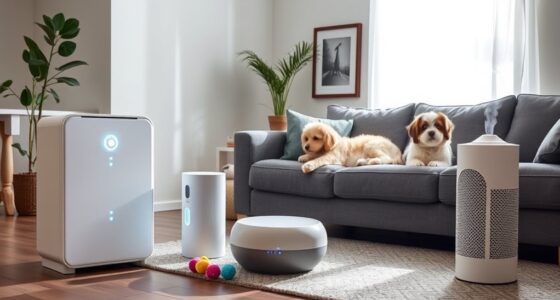

To manage indoor air quality for allergy-prone pets, it’s best to use HEPA air purifiers in common areas where your pets spend time. Regular cleaning, vacuuming with HEPA filters, and washing bedding help reduce allergens like dander and dust mites. Keeping the environment well-ventilated and controlling humidity also help. Small changes make a big difference, and if you want to learn more, you’ll find simple strategies to create a healthier space for your pets.
Key Takeaways
- Use HEPA air purifiers in common areas to reduce airborne allergens like pet dander, dust, and mold spores.
- Regularly clean and vacuum with HEPA-filter vacuums, and wash pet bedding frequently to minimize allergen buildup.
- Limit pet access to bedrooms and other sensitive areas to reduce allergen exposure for allergy-prone pets.
- Maintain low indoor humidity and ensure proper ventilation to discourage mold growth and dust mites.
- Regularly maintain and replace filters in air purifiers and cleaning equipment to ensure optimal allergen removal.

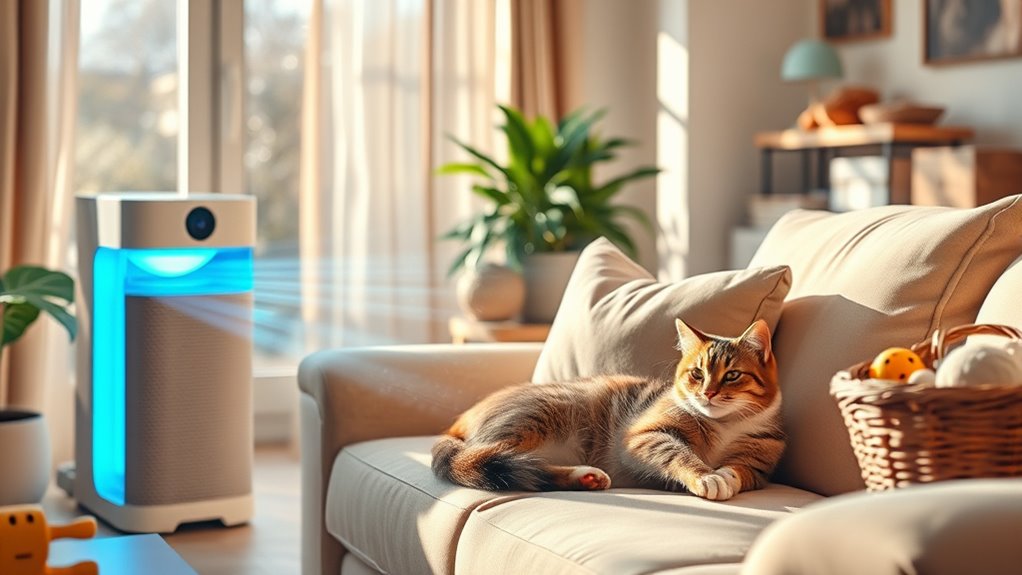
Have you ever considered how the air inside your home affects your pets’ health? If your pet is prone to allergies, this question becomes even more critical. Indoor air quality can markedly influence your pet’s comfort and well-being, especially if they react to airborne allergens like dust, pollen, pet dander, or mold spores. One effective way to improve air quality is by using air purifiers designed specifically for allergen control. These devices help filter out microscopic particles that trigger allergic reactions, creating a cleaner, safer environment for your furry friend.
Air purifiers equipped with HEPA filters are particularly advantageous. They trap tiny particles that traditional filters often miss, reducing airborne allergens that can cause sneezing, itching, or respiratory issues. By running an air purifier in common areas or your pet’s favorite spots, you actively reduce the concentration of irritants in the air. This not only alleviates your pet’s allergy symptoms but also enhances the overall indoor air quality for everyone in your household. Keep in mind that consistent use is key—changing filters regularly and maintaining the device ensures peak performance.
Using HEPA air purifiers in common areas reduces airborne allergens, helping pets breathe easier and stay healthier.
Controlling allergens in your home isn’t just about air purifiers. Regular cleaning plays a crucial role in allergen control. Vacuuming with a HEPA filter vacuum cleaner, washing your pet’s bedding frequently, and dusting surfaces reduce the amount of dander and other allergens that settle around your home. Also, consider using hypoallergenic pet products and maintaining low humidity levels, which can discourage mold growth and dust mites. These small adjustments, combined with air purifiers, create a more holistic approach to managing indoor allergens effectively.
It’s important to identify and minimize sources of indoor allergens as much as possible. For example, keeping pets out of bedrooms or restricting access to certain areas can limit allergen exposure. Ensuring good ventilation and opening windows when weather permits helps circulate fresh air and dilute indoor pollutants. If you notice your pet frequently scratching, sneezing, or coughing, these measures can make a noticeable difference over time. The goal is to create an environment where your pet can breathe easier and stay healthier.
Furthermore, understanding the Paint Sprayer Maintenance and Troubleshooting process can help ensure your equipment performs optimally, preventing issues like clogging or air leaks that could affect your painting project.
Frequently Asked Questions
How Do Air Purifiers Specifically Benefit Allergy-Prone Pets Indoors?
Air purifiers with HEPA filtration help allergy-prone pets by effectively removing allergens like pet dander, dust mites, and pollen from the air. You’ll notice fewer allergy symptoms and a healthier environment for your pets. By continuously filtering the air, you reduce allergen buildup, making your indoor space safer and more comfortable. Regular use of these purifiers can markedly improve your pets’ breathing and overall well-being.
What Natural Remedies Help Reduce Indoor Allergens for Pets?
Imagine your home as a gentle garden, where herbal remedies like chamomile and eucalyptus act as calming rain, soothing your pet’s allergies. Dietary adjustments, such as adding omega-3s or hypoallergenic foods, act like nourishing sunlight, strengthening their immune defenses. These natural remedies help reduce indoor allergens, making your pet’s environment healthier and more comfortable. Embrace these gentle solutions, and watch your furry friend thrive in a cleaner, happier space.
How Often Should I Replace Air Filters to Maintain Optimal Air Quality?
You should replace your air filters every 30 to 60 days to guarantee ideal air quality. Regular filter maintenance is vital, especially with allergy-prone pets, as it prevents dust, pet dander, and allergens from circulating. If you have pets that shed heavily or live in a dusty environment, consider replacing filters closer to the 30-day mark. This consistent replacement frequency helps maintain a healthier indoor environment for both you and your pets.
Are There Specific Houseplants That Improve Indoor Air for Pets?
You can improve indoor air quality with pet-safe plant options like spider plants, Boston ferns, and areca palms. Place these plants in well-lit, ventilated areas but avoid overwatering to prevent mold. Proper indoor plant placement guarantees they boost air quality without posing risks to your pets. Regularly clean the leaves and monitor plant health to maximize their benefits and create a healthier environment for both you and your pets.
Can Humidity Levels Affect My Pet’s Allergy Symptoms Indoors?
Humidity levels can definitely drive your pet’s allergy symptoms indoors. When humidity is high, mold and dust mites thrive, becoming major pet allergy triggers. Conversely, too low humidity can dry out your pet’s skin and respiratory passages. To keep symptoms in check, focus on humidity control—aim for 30-50%—to reduce allergy triggers and create a comfortable, healthy home environment for your furry friends.
Conclusion
Think of your home as a garden and your pets as delicate flowers. Just as you water and care for plants to keep them healthy, you must also nurture your indoor air quality. By controlling allergens and ensuring proper ventilation, you’re creating a safe haven where your allergy-prone pets can thrive. When you actively manage your home’s air, you’re planting the seeds for happier, healthier pets and a more comfortable living space for everyone.