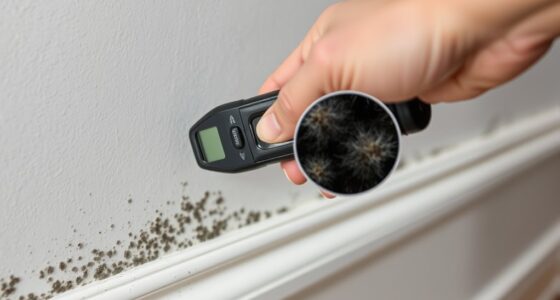
Keeping regular humidity logs is a simple habit that can stop mold before it starts. By tracking indoor moisture levels with a reliable sensor and recording the data consistently, you catch high or low humidity early. Maintaining a range of 40-50% minimizes mold risks and improves air quality. If you stay on top of your logs and make small adjustments, you’ll create a healthier home environment. Continue here to discover how to make this routine work for you.
Key Takeaways
- Regular humidity logging helps detect rising moisture levels early, preventing mold before visible growth occurs.
- Consistently measuring at the same time daily creates reliable data to identify humidity trends.
- Maintaining indoor humidity within the 40-50% range reduces mold spore settlement and growth risk.
- Calibrating sensors regularly ensures accurate readings for effective moisture control.
- Analyzing logs allows for proactive adjustments to ventilation, humidifiers, or dehumidifiers, preventing mold surprises.

TempPro TP50 Digital Hygrometer Indoor Thermometer Room Thermometer
- Wellness Indicator: Displays air condition levels
- High Accuracy & Fast Updates: Measures with ±2-3%RH and ±1°F, updates every 10 seconds
- Record Tracking: Displays high and low temperature and humidity
As an affiliate, we earn on qualifying purchases.
As an affiliate, we earn on qualifying purchases.
Why Monitoring Indoor Humidity Is Essential for Mold Prevention

Monitoring indoor humidity is crucial because mold thrives in damp environments. When humidity levels are too high, moisture builds up, compromising your home’s air quality and creating ideal conditions for mold growth. By keeping an eye on your indoor humidity, you actively control moisture and prevent it from reaching problematic levels. Proper moisture control not only inhibits mold but also enhances overall air quality, making your living space healthier. High humidity can cause condensation on walls and windows, leading to hidden mold spores that are hard to detect. Regularly tracking humidity helps you identify problem areas early, allowing you to take action before mold becomes a serious issue. Staying vigilant with humidity levels is a simple yet effective way to protect your home’s health. Using a hygrometer can help you monitor humidity precisely and maintain optimal levels. Additionally, understanding the signs of mold can help you recognize issues early and act promptly, especially since air quality can be compromised by unseen mold growth. Managing indoor environmental conditions effectively further reduces the risk of mold development. Being aware of humidity levels and mold prevention strategies empowers you to maintain a healthier living environment.
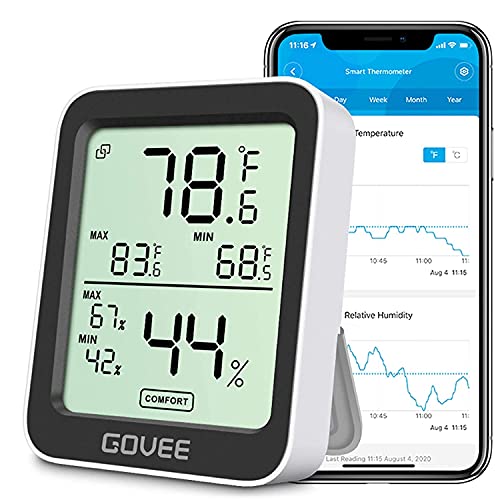
Govee Indoor Hygrometer Thermometer H5075 with Bluetooth App Control
- Smart Remote Monitoring: Supports Bluetooth remote monitoring and graphs
- High Accuracy Sensor: Temperature ±0.54°F, Humidity ±3%RH
- Fast Refresh Rate: Updates every 2 seconds for latest data
As an affiliate, we earn on qualifying purchases.
As an affiliate, we earn on qualifying purchases.
Tools and Methods for Tracking Your Home’s Humidity Levels

To effectively track your home’s humidity levels, you need reliable tools and straightforward methods. Start with a digital hygrometer or smart sensor, ensuring proper sensor calibration for accurate readings. Regular calibration helps maintain measurement precision over time. Once you have consistent data, use data visualization techniques—like graphs or charts—to spot trends and fluctuations easily. Many smart devices offer built-in apps displaying humidity levels graphically, making it simple to interpret changes at a glance. Manual methods, like recording readings in a logbook, work as well but lack instant visualization. Consistent monitoring with calibrated sensors and clear data visualization empowers you to identify potential issues early and take timely action to prevent mold growth. Additionally, understanding the horsepower of electric dirt bikes can help you relate the energy efficiency of your monitoring devices to their performance and power consumption. Maintaining proper sensor placement is crucial for accurate readings, as environmental factors can influence the data collected. Using humidity logs can also improve your tracking accuracy by providing a detailed history of environmental conditions over time. Incorporating regular maintenance of your sensors ensures continued accuracy and reliable data collection. Moreover, implementing smart home integration can streamline your humidity monitoring and alert system for enhanced preventative measures.
TempPro TP50 Digital Hygrometer Indoor Thermometer Room Thermometer
- Wellness Indicator: Displays air condition levels
- High Accuracy & Fast Updates: Measures with ±2-3%RH and ±1°F, updates every 10 seconds
- Record Tracking: Displays high and low temperature and humidity
As an affiliate, we earn on qualifying purchases.
As an affiliate, we earn on qualifying purchases.
How to Set Up and Keep a Humidity Log Effectively

Start by choosing a reliable device to track your humidity levels consistently. Establish a routine for recording the data so you can easily spot patterns over time. Regularly analyze your logs to make informed adjustments and maintain ideal humidity in your space. Incorporate traditional techniques and materials into your environment if noise reduction is also a concern, as proper humidity control can complement these efforts. Additionally, understanding environmental factors can help you better interpret your logs and optimize your humidity management. Recognizing climate variability can further improve your ability to maintain stable humidity levels throughout different seasons. Being aware of seasonal changes can help you anticipate and adapt to fluctuations more effectively.
Choosing the Right Device
Choosing the right device is essential for accurately tracking humidity levels and maintaining a reliable log. You want a device that offers precise readings and fits your lifestyle. Smart sensors are ideal because they provide real-time data and can often sync with your phone or cloud storage, making monitoring easier. Portable devices are also a good choice if you need to move them between rooms or want flexibility. Look for features like adjustable alerts, long battery life, and easy setup. Confirm the device’s accuracy is verified, and consider user reviews for reliability. Additionally, humidity monitoring devices with automated data collection can further streamline the process, especially in diverse urban environments where monitoring needs can vary greatly. By selecting a device tailored to your needs, you’ll make it simple to keep consistent humidity logs and catch issues before mold can develop. Incorporating reliable sensors ensures your data remains accurate over time, providing peace of mind in maintaining optimal humidity levels. Choosing a device with consistent performance is also important to ensure your logs are dependable and help prevent mold surprises.
Establishing a Routine
How can you guarantee your humidity logging becomes a consistent part of your routine? Set a specific time each day—like morning or evening—to check and record your device readings. Keep your log in a visible spot to reinforce the habit, making it easier to stay committed. Regular logging helps you monitor air quality and thermal comfort, ensuring your home stays mold-free. Use reminders or alarms if needed to stay on track. Incorporating environmental awareness about tissue paper and craft materials can also motivate you to maintain your routine, knowing how proper humidity levels protect your belongings. Understanding power storage and safety principles can help you ensure your devices are functioning reliably, preventing errors in your readings. Over time, this routine becomes second nature, giving you peace of mind and better control over your environment. The key is to make humidity logging an effortless, integrated part of your daily schedule.
Analyzing and Acting
Once you’ve established a routine for logging humidity, the next step is to analyze your data effectively. Review your logs regularly to spot trends and identify problem areas. If humidity levels exceed 60%, consider improving your ventilation system or adding an air purifier to reduce moisture. Conversely, if levels fall below 30%, you might need to increase humidity with a humidifier. Use this simple table to guide your actions:
| Humidity Level | Action |
|---|---|
| Above 60% | Increase ventilation or use air purifier |
| 40-60% | Ideal, maintain current habits |
| Below 30% | Use humidifier, check for leaks |
Consistent analysis helps you maintain suitable, humidity, preventing mold and moisture issues.

Traceable NIST Calibrated Monitoring Hygrometer
- Product Type: Thermometer
- Temperature Range: 32°F to 120°F (0°C to 50°C)
- Max Temperature: 50°C
As an affiliate, we earn on qualifying purchases.
As an affiliate, we earn on qualifying purchases.
What Are the Ideal Humidity Ranges to Prevent Mold?

Maintaining the right humidity levels is essential for preventing mold growth in your home. Ideally, keep indoor humidity between 30% and 50%. This range is effective because it minimizes the risk of mold spores settling and thriving. Seasonal variations can influence humidity levels, with higher moisture in winter and summer, so you’ll need to adjust accordingly. Humidity fluctuations outside the recommended range create opportunities for mold to develop, especially in areas prone to moisture, like bathrooms and basements. By consistently monitoring and controlling humidity within this ideal range, you reduce mold risks and protect your home’s indoor air quality. Regularly checking your humidity logs helps you stay on top of these fluctuations and maintain a mold-free environment.
Reading Your Humidity Logs to Detect Early Mold Risks

Reading your humidity logs regularly allows you to identify early signs of mold risk before it becomes a problem. With DIY sensors, you can easily monitor moisture levels in different areas of your home. Log analysis helps you spot patterns, such as consistently high readings or sudden spikes, that may indicate a developing issue. By reviewing your logs frequently, you can catch potential problems early, even before visible mold appears. Focus on trends rather than isolated readings, and compare data over days or weeks. This proactive approach allows you to take quick action, like improving ventilation or adjusting humidity levels, to prevent mold growth. Staying vigilant with log analysis empowers you to maintain a healthier, mold-free environment.
How to Adjust Indoor Humidity Based on Your Log Data

You can fine-tune your indoor humidity by using your log data to stay within the ideal range. Regularly check trends to see if adjustments are needed, and make changes gradually to avoid overshooting. Properly setting your humidifier or dehumidifier helps keep your environment comfortable and prevents mold growth.
Identify Ideal Humidity Range
Analyzing your humidity logs reveals the range where indoor air feels most comfortable and healthy. Typically, this is between 40-60%. To fine-tune your environment, use the table below to identify your ideal range:
| Humidity Level | Action |
|---|---|
| Below 40% | Use a humidifier, check dehumidifier maintenance |
| 40-50% | Maintain current settings, consider mold resistant paints if needed |
| 50-60% | Slightly reduce moisture, ensure proper ventilation |
| Above 60% | Increase dehumidifier use, prevent mold growth |
Maintaining this range prevents mold, especially when combined with proper dehumidifier maintenance and mold resistant paints. Adjust your devices accordingly to keep indoor humidity balanced and healthy.
Monitor Log Trends Regularly
Monitoring your humidity logs regularly helps you spot patterns and make timely adjustments to maintain a healthy indoor environment. Consistent review allows you to identify trends, such as spikes or drops, and respond accordingly. To do this effectively:
- Check your data visualization charts to spot fluctuations at a glance.
- Confirm your sensor calibration is accurate for reliable readings.
- Note recurring times or conditions when humidity levels change.
- Use trends to decide if you need to adjust your humidifier or dehumidifier settings.
Adjust Humidity Settings Properly
When your humidity logs reveal consistent patterns or deviations, adjusting your indoor humidity settings becomes vital. First, verify your sensor calibration is accurate; improperly calibrated sensors can give false readings, leading to incorrect adjustments. If your logs show high humidity during summer months, consider increasing ventilation or using dehumidifiers, and lower settings accordingly. Conversely, in winter, you might need to raise humidity levels slightly to prevent dryness. Seasonal adjustments are essential—what works in summer might not be suitable in winter. Use your logs to fine-tune your humidifier or dehumidifier settings, maintaining ideal levels between 40-50%. Regularly calibrate your sensors and adapt your settings seasonally, guaranteeing consistent comfort and mold prevention.
Common Mistakes to Avoid When Tracking Humidity

One common mistake to avoid when tracking humidity is neglecting to calibrate your hygrometers regularly. Without proper calibration, you risk encountering common pitfalls like inaccurate readings, which can lead you to make false assumptions about your home’s moisture levels. To ensure accurate tracking, keep these points in mind:
- Don’t ignore calibration instructions—use the correct method for your device.
- Avoid relying solely on digital hygrometers without cross-checking with a known humidity source.
- Keep sensors away from direct sunlight or moisture, which can skew readings.
- Record readings consistently at the same time each day to identify trends accurately.
Making Humidity Logging a Routine to Keep Your Home Mold-Free

Incorporating humidity logging into your daily routine helps you maintain ideal moisture levels and prevents mold growth. To do this effectively, guarantee your sensors are properly calibrated; inaccurate readings can lead to incorrect adjustments. Regular calibration checks, especially after seasonal changes, help account for seasonal variations that impact indoor humidity. By logging humidity consistently, you develop a clear picture of fluctuations throughout the year, making it easier to spot trends and address issues early. Set a specific time each day to record your readings, whether morning or evening, so it becomes an automatic habit. Over time, this routine becomes second nature, giving you peace of mind knowing you’re actively managing moisture levels and keeping your home mold-free.
Simple Tips to Maintain Consistent Humidity Levels
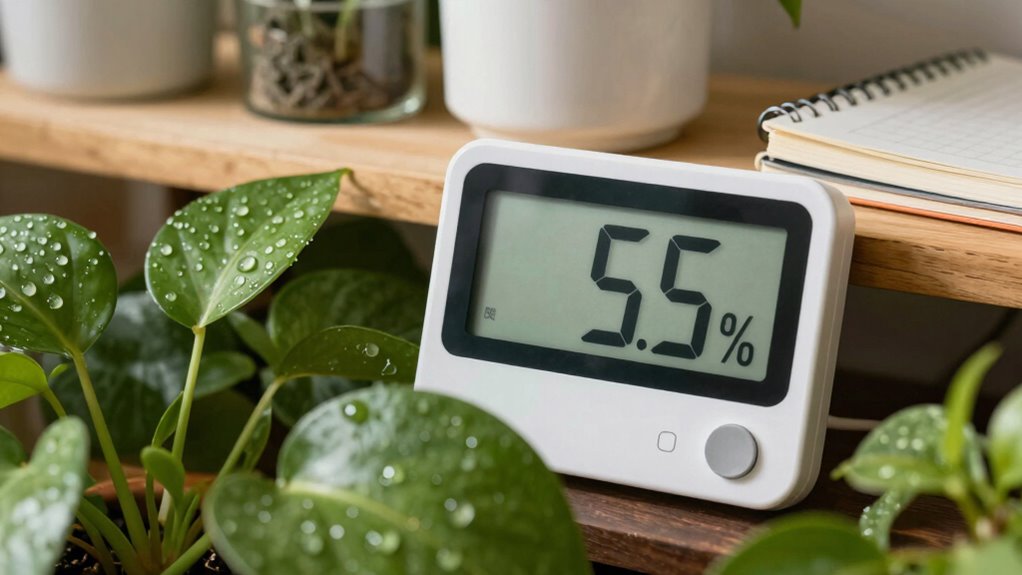
Maintaining consistent humidity levels requires simple, proactive strategies. To prevent mold surprises, you can implement a few easy tips. First, perform seasonal adjustments by using humidifiers or dehumidifiers as needed, especially during dry winters or humid summers. Second, incorporate DIY projects like sealing leaks or vents to improve air circulation and control moisture. Third, set a reminder to check your humidity logs weekly, ensuring your levels stay within the ideal range. Fourth, monitor weather forecasts to anticipate changes and adjust your equipment accordingly. These small steps help you stay ahead of fluctuations, making it easier to keep your home mold-free. Consistent attention to humidity levels is key to a healthier, more comfortable environment.
Frequently Asked Questions
Can Humidity Logs Detect Mold Growth Before Visible Signs Appear?
Humidity logs can’t directly detect mold growth before visible signs appear, but they play a crucial role in mold prevention and moisture control. By consistently monitoring indoor humidity levels, you can identify when moisture remains too high, creating ideal conditions for mold to develop. This proactive approach helps you take early action, reducing the risk of mold growth before it becomes visible and safeguarding your home’s health.
What Are the Best Devices for Accurate Humidity Measurement?
You should choose a digital hygrometer or a smart humidity monitor for accurate measurements. Look for devices with reliable calibration techniques, ensuring consistent readings over time. Proper device placement is essential—place it in central, unaffected areas away from direct sunlight or vents. Regularly calibrate your device following the manufacturer’s instructions to maintain precision, helping you monitor humidity levels effectively and prevent mold growth before it becomes a problem.
How Often Should I Record Humidity Levels for Effective Tracking?
You should record humidity levels at least three times a day—morning, afternoon, and evening—to track fluctuations effectively. Regularly reviewing your logger calibration helps verify accuracy, catching any deviations early. By maintaining consistent records, you’ll visualize humidity fluctuations clearly, making it easier to spot trends and prevent mold. Stay vigilant, keep logs updated, and calibrate your device periodically for reliable data that keeps your environment safe.
Are There Seasonal Changes That Affect Indoor Humidity Stability?
Yes, seasonal fluctuations can impact your indoor climate‘s humidity levels. During winter, colder air holds less moisture, often leading to drier indoor conditions, while summer can bring higher humidity from increased outdoor moisture. To keep your indoor climate stable, you should adjust your humidity monitoring habits accordingly, recording more frequently during seasonal changes to catch fluctuations early and prevent mold growth or other moisture problems.
How Does Outdoor Weather Influence Indoor Humidity and Mold Risk?
Outdoor weather influences your indoor humidity through outdoor temperature and wind patterns. Higher outdoor temperatures can increase indoor humidity, especially if your home isn’t well-insulated. Wind patterns can carry moist air inside through vents or open windows, raising mold risk. To keep mold at bay, monitor outdoor conditions and adjust your ventilation or dehumidifiers accordingly, maintaining a consistent indoor humidity level and preventing mold growth.
Conclusion
By consistently tracking your home’s humidity, you gain control over unseen risks, turning a simple habit into your strongest defense against mold. While the logs reveal patterns and prompt action, neglecting them invites surprises that can damage your space and health. It’s a quiet act—yet one that holds power. Embrace this routine, and you’ll find that prevention is often as straightforward as reading a chart, balancing comfort and safety with every logged measurement.