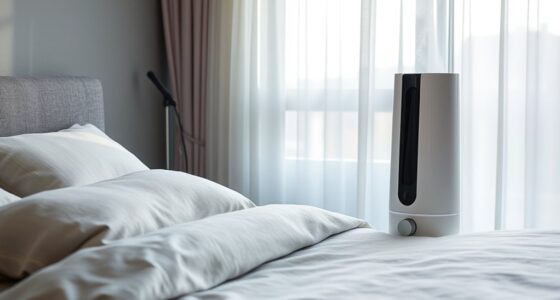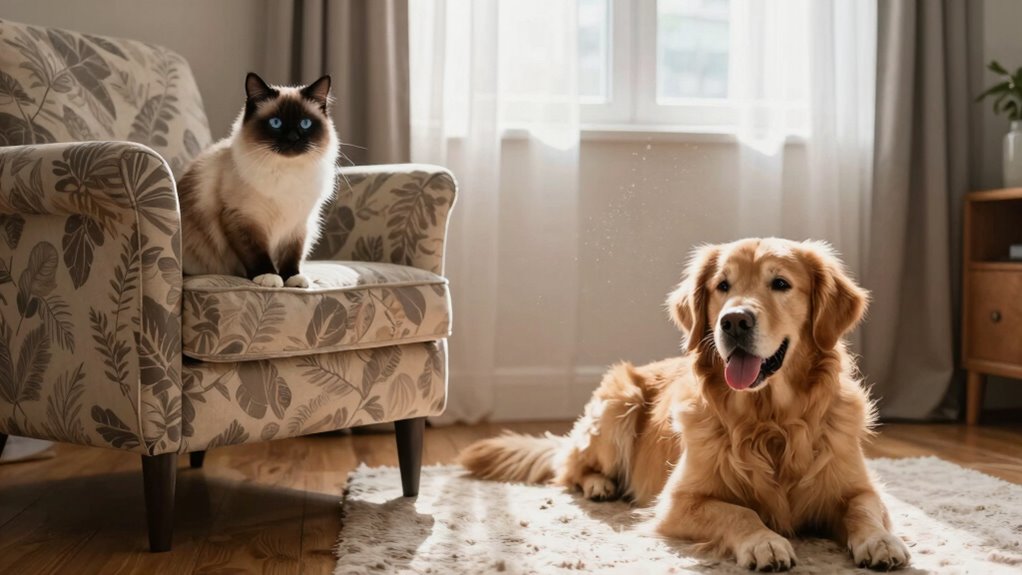

Your pets breathe in indoor air pollutants that can harm their lungs and cause allergies or long-term health issues. Dust, pet dander, pollen, household cleaners, scented candles, and VOCs from furniture or air fresheners all contribute to poor air quality. These toxins can irritate their respiratory systems and lower their overall well-being. To protect them, it’s important to improve air quality with proper ventilation, regular cleaning, and air purifiers. Explore more tips to keep your pets safe indoors.
Key Takeaways
- Indoor pollutants like pet dander, dust, pollen, and VOCs can cause respiratory issues in dogs and cats.
- Household cleaning products with harsh chemicals release fumes that can irritate pets’ respiratory systems.
- Air fresheners, scented candles, and furniture treatments emit VOCs harmful to pets’ lung health.
- Continuous use of air purifiers helps filter airborne toxins and improve indoor air quality for pets.
- Proper ventilation and regular cleaning reduce indoor pollutants, supporting healthier breathing environments for pets.

Indoor air quality can considerably impact your dogs and cats’ health, especially since they spend most of their time indoors. As a pet owner, you might not realize how many airborne pollutants are lingering in your home, and these can directly affect your furry friends. Poor indoor air can cause respiratory issues, allergies, and even long-term health problems for your pets. One effective way to improve air quality is by using an air purifier, which offers clear benefits. Air purifiers can reduce airborne particles like pet dander, dust, pollen, and other allergens, making the environment safer for your pets to breathe. They also help eliminate odors that often come from pets themselves or from household activities, creating a fresher, healthier atmosphere.
Using an air purifier can significantly improve your pets’ indoor air quality and overall health.
Many common household cleaning products, especially toxic household cleaners, contribute notably to indoor air pollution. These cleaners often contain harsh chemicals like ammonia, bleach, and synthetic fragrances, which release fumes that can irritate your pets’ respiratory systems or even cause poisoning if ingested or inhaled in large quantities. When you’re cleaning, it’s best to opt for natural or pet-safe alternatives. Not only do these reduce the number of toxic airborne chemicals, but they also create a safer environment for your animals. Additionally, choosing toxic household cleaners that are free from harmful chemicals can significantly decrease indoor pollutants.
Beyond cleaning products, other household items like air fresheners, scented candles, and certain furniture treatments can emit volatile organic compounds (VOCs). These compounds can irritate your pets’ noses and lungs, especially if they have pre-existing respiratory conditions. Using an air purifier can help filter out many of these airborne toxins, providing relief for your pets and reducing their exposure to harmful chemicals. It’s a proactive step that supports their overall health and well-being. Regularly opening windows and promoting good ventilation practices can also dilute indoor pollutants and improve air quality over time. Incorporating proper ventilation techniques is also beneficial in maintaining a healthier indoor environment for your pets. Additionally, ensuring proper air circulation can help prevent the buildup of stagnant pollutants indoors.
Additionally, maintaining good ventilation and regularly cleaning your home can lessen the concentration of indoor pollutants. But the most effective way to continuously improve indoor air quality is by investing in a quality air purifier. This device works around the clock to pull in contaminants and trap them, allowing your pets to breathe cleaner, fresher air. When combined with avoiding toxic household cleaners and choosing safer cleaning practices, you appreciably reduce your pets’ exposure to indoor pollutants. Ultimately, your efforts not only protect their respiratory health but also contribute to a more comfortable, safe home environment where your pets can thrive. Regularly checking and maintaining your home’s indoor air quality can further ensure a healthier space for everyone.

MOOKA Air Purifiers for Home Large Room up to 1076ft², H13 True HEPA Air Filter Cleaner, Odor Eliminator, Remove Smoke Dust Pollen Pet Dander, Night Light, B-D02L White
- Large Coverage Area: Covers up to 1076 ft² with 6 air changes/hr
- Effective Filtration System: Captures pet dander, smoke, odors, dust, pollen
- H13 True HEPA Filter: Removes airborne particles as small as 0.3 microns
As an affiliate, we earn on qualifying purchases.
As an affiliate, we earn on qualifying purchases.
Frequently Asked Questions
Can Indoor Plants Harm My Pets’ Air Quality?
Indoor plants can harm your pets’ air quality if you choose toxic plant varieties or use harmful soil. Some plants release fumes or contain toxins that pets might ingest, leading to health issues. Always research the specific plants you’re considering, avoid toxic varieties, and opt for pet-safe options. Using non-toxic soil helps prevent any chemical risks that could affect your pets’ breathing and overall health.
Are Air Purifiers Safe for Dogs and Cats?
Air purifier safety is generally high for dogs and cats, especially models with HEPA filters, which effectively reduce pet allergens. You should choose an air purifier designed for pet allergen reduction, ensuring it’s free of harmful chemicals or ozone. Always keep it out of your pets’ reach, and monitor their reactions. Properly maintained, an air purifier can improve indoor air quality and create a safer environment for your furry friends.
How Often Should I Clean My Pet’s Bedding?
Your pet’s bedding is a magnet for dirt, allergens, and pet odor, making regular cleaning essential. You should wash their bedding at least once a week to maintain bedding hygiene and keep your home smelling fresh. If your pet has allergies or gets dirty often, consider cleaning more frequently. Regular cleaning helps prevent bacteria buildup, reduces odors, and keeps your furry friend comfortable and healthy.
Do Scented Candles Affect Pet Respiratory Health?
Scented candles can negatively affect your pet’s respiratory health, especially if they have allergies or sensitivities. The fragrances and chemicals released can irritate their airways and worsen pet allergies. To keep your pets safe, it’s best to avoid burning scented candles indoors. Instead, opt for natural alternatives like beeswax or unscented candles, and guarantee proper ventilation to maintain good indoor air quality for both you and your pets.
Can Pet Dander Worsen Indoor Air Pollution?
Yes, pet dander can worsen indoor air pollution by adding to allergy triggers and airborne allergens floating in your home. When pets shed, their dander releases tiny particles that stay suspended in the air, making it harder to breathe for allergy sufferers. Regular cleaning, air purifiers, and grooming can help reduce these airborne allergens, improving overall air quality and creating a safer environment for both you and your pets.

Puracy All Purpose Cleaner Concentrate – Plant-Powered Multi-Surface Cleaner – Surface Cleaner Solution As Seen on TikTok (Green Tea + Lime, 16 fl oz, 1 Pack)
- Multi-Surface Cleaning: Cleans various surfaces effortlessly
- Plant-Powered Formula: Safe, effective, and eco-friendly ingredients
- Fresh Scent: Infused with green tea and lime aroma
As an affiliate, we earn on qualifying purchases.
As an affiliate, we earn on qualifying purchases.
Conclusion
Just like you breathe in the fresh air outside, your pets rely on the air inside your home too. By being aware of common indoor pollutants and taking simple steps to improve air quality, you can create a healthier environment for your furry friends. Think of it as giving them a gust of invigorating mountain air every day—something they truly deserve. Keep their air clean, and they’ll thank you with wagging tails and purring contentment.

Pet Air Purifier for Home Large Room 2500 Sq Ft, H13 HEPA Double-Sided Filter with Washable Pre-filter, Adsorbs Pet Hair Dander Odor Allergies Smoke Dust,PM2.5 Air Quality Monitor,Auto Mode,P358 Grey
- U-Shaped Air Inlet: Prevents pet hair clogging
- Pet Odor Reduction: Activated carbon and HEPA filter
- Large Coverage Area: Cleans 2500 sq ft efficiently
As an affiliate, we earn on qualifying purchases.
As an affiliate, we earn on qualifying purchases.

LEVOIT Smart Air Purifier for Home Large Room up to 1875 ft Vital 200S-P
- AHAM Verified for Performance: Independently tested for air quality and safety
- Trusted by Experts: Certified with high CADR ratings for smoke, dust, pollen
- Designed for Allergies: Effective against pollen, pet hair, dander, and dust
As an affiliate, we earn on qualifying purchases.
As an affiliate, we earn on qualifying purchases.