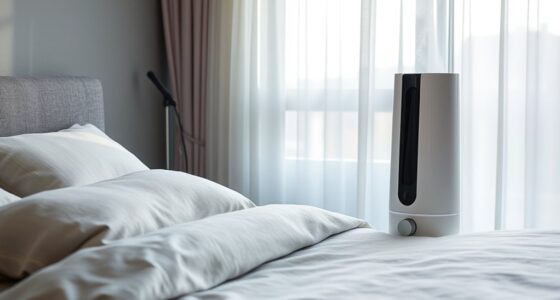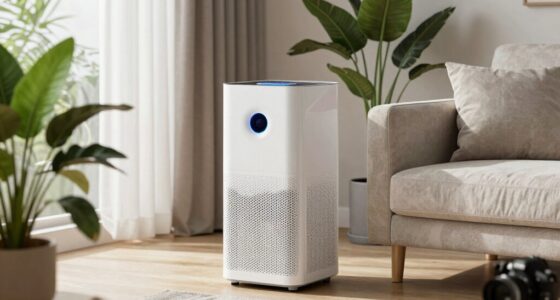
To support your immune system, focus on improving indoor air quality by ensuring proper ventilation, regularly changing filters, and maintaining cleanliness. Open windows to introduce fresh air, use air purifiers with HEPA filters, and control indoor humidity to prevent mold and dust mites. These habits help reduce airborne pathogens and pollutants that weaken immunity. Keep exploring ways to create a healthier environment and keep your defenses strong.
Key Takeaways
- Proper ventilation replaces indoor air with fresh outdoor air, reducing airborne pathogens that can weaken immunity.
- Regularly replacing filters in HVAC systems traps microbes and pollutants, preventing their re-circulation and supporting immune health.
- Opening windows naturally introduces clean air, diluting indoor pollutants and reducing the immune system’s workload.
- Using HEPA air purifiers captures airborne viruses, bacteria, and allergens, decreasing immune system stress.
- Controlling indoor humidity levels prevents mold growth and dust mites, which can impair immune defenses.
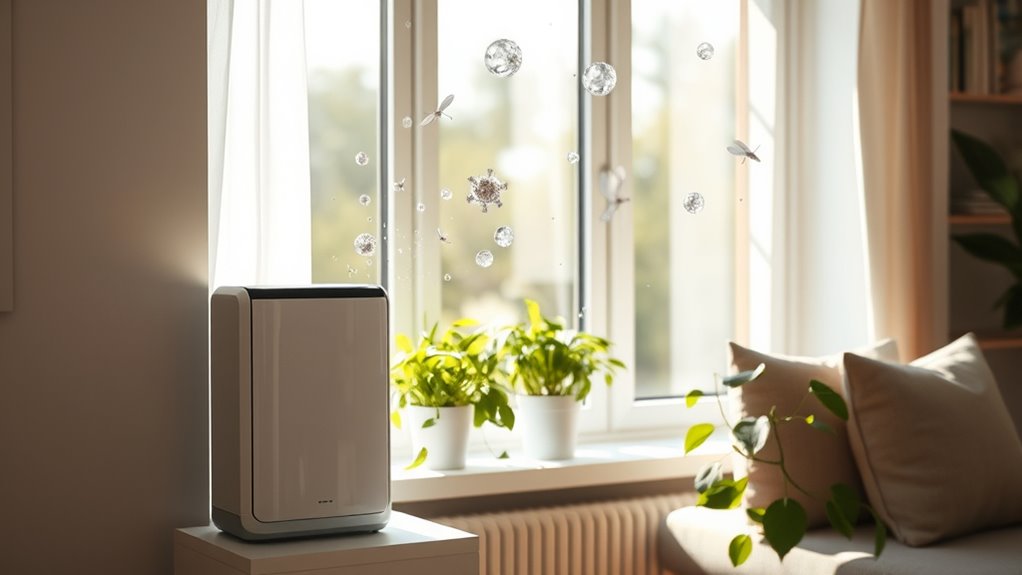
Indoor air quality directly impacts your immune system’s ability to fight off illnesses. When the air you breathe contains airborne pathogens, your body must work harder to defend itself, increasing the risk of getting sick. Poor indoor air can harbor bacteria, viruses, mold spores, and other pollutants that weaken your immune response over time. That’s why maintaining clean, fresh air indoors is essential for supporting your health and keeping your immune system strong.
Clean indoor air supports your immune system by reducing pathogens and pollutants that cause illness.
One of the most effective ways to improve indoor air quality is by optimizing your ventilation systems. Proper ventilation helps remove airborne pathogens and other contaminants from your indoor environment. When your ventilation system functions well, it continuously replaces stale indoor air with fresh outdoor air, diluting the concentration of harmful particles. This process reduces the chances of airborne pathogens lingering in your living or working space, decreasing your exposure and the strain on your immune defenses.
Many modern ventilation systems come equipped with filters designed to trap pollutants, dust, and microbes, further enhancing air cleanliness. Regular maintenance and filter replacement are fundamental to guarantee these systems operate efficiently. When filters are dirty or outdated, they can become breeding grounds for bacteria and mold, releasing these harmful agents back into your indoor air. By keeping your ventilation system in top condition, you actively reduce the presence of airborne pathogens that could otherwise compromise your immune system.
In addition to mechanical ventilation, simple habits can improve indoor air quality. Opening windows regularly allows fresh air to circulate, reducing indoor pollutant levels naturally. Using air purifiers with HEPA filters can also trap airborne pathogens and allergens, providing an extra layer of protection. Controlling humidity levels with dehumidifiers prevents mold growth and dust mites, which can trigger immune responses or infections.
Remember, the goal is to minimize exposure to harmful airborne particles while guaranteeing a steady flow of clean air. Good ventilation not only helps clear out pathogens but also lowers indoor concentrations of volatile organic compounds (VOCs) from household products and furnishings. This all-encompassing approach makes it easier for your immune system to focus on fighting genuine threats rather than battling constant indoor pollutants.
Ultimately, paying attention to your ventilation systems and indoor air quality isn’t just about comfort — it’s a critical step in supporting your immune health. When you breathe cleaner air, your immune system faces fewer challenges, allowing it to operate at its best. Regular maintenance, combined with good habits like natural ventilation and air purification, creates an environment where your body can stay resilient against illnesses and airborne threats.
Frequently Asked Questions
How Do Indoor Plants Improve Air Quality?
Indoor plants improve air quality by filtering out toxins and increasing humidity, which enhances the overall environment. Their benefits include absorbing harmful pollutants and releasing oxygen, making the air fresher and healthier to breathe. You can enjoy these plant benefits daily, as they naturally purify your indoor space. Incorporating plants into your home or office creates a healthier atmosphere, supports your immune system, and boosts your well-being.
Can Air Purifiers Eliminate All Indoor Allergens?
Air purifiers can’t eliminate all indoor allergens, no matter how promising they seem. They have limitations in removing tiny particles like pollen, pet dander, or mold spores, so you shouldn’t expect perfection. While they improve allergen removal effectiveness, some allergens might still linger. Think of it like a brush that cleans most but not every speck—using an air purifier helps, but it’s not a magic wand.
What Is the Best Humidity Level for Immune Health?
You should aim for a humidity balance between 40% and 60% to support your immune function. Maintaining this level helps prevent mold, dust mites, and bacteria from thriving, which can weaken your immune system. Too dry or too humid environments can compromise your defenses, making you more susceptible to illnesses. Use a humidifier or dehumidifier as needed to keep your indoor air at an ideal humidity for overall immune health.
Do Essential Oils Help Purify Indoor Air?
Essential oils can assist with air purification by adding antimicrobial properties to your indoor environment. When diffused, oils like tea tree, eucalyptus, and lemon can help reduce airborne bacteria and viruses, making the air cleaner and potentially supporting your immune health. However, they shouldn’t replace proper ventilation or cleaning routines. Using essential oils thoughtfully can enhance your air quality, but they work best alongside other air purification methods.
How Often Should I Change Air Filters for Optimal Support?
Imagine your child sneezing constantly due to poor air quality—regular filter maintenance prevents this. You should change your air filters every 1-3 months, depending on usage and air quality monitoring results. Staying vigilant with filter maintenance guarantees cleaner indoor air, supporting your immune system. Regularly check and replace filters to reduce allergens and pollutants, creating a healthier space for you and your family.
Conclusion
By keeping your indoor air clean, you can boost your immune system and reduce illness risk. Did you know that poor indoor air quality can increase respiratory issues by up to 50%? Simple actions like using air purifiers, ventilating rooms, and minimizing pollutants make a big difference. Take control of your environment—you’ll breathe easier and stay healthier. Clean indoor air isn’t just comfort; it’s an essential step toward stronger immunity and overall well-being.