In comfortable homes, your dry eyes can worsen because tightly sealed spaces limit air circulation and reduce indoor humidity. Heating, cooling, and sealing drafts make the air drier, which strips your eyes of natural lubrication. This environment also heightens your sensitivity to irritants like dust or artificial light. If you want to discover simple ways to protect your eyes and maintain comfort, there’s more to learn about managing indoor conditions effectively.
Key Takeaways
- Low indoor humidity from heating and air conditioning dries out tear film, worsening dry eye symptoms.
- Sealing drafts for energy efficiency reduces air exchange, decreasing moisture and aggravating dryness.
- Environmental triggers like dust, pet dander, and artificial lighting become more irritating in dry indoor air.
- Excessively dry or humid conditions disrupt the balance needed for healthy tear film stability.
- Poorly managed indoor environments, even in comfortable homes, can increase susceptibility to dry eye discomfort.
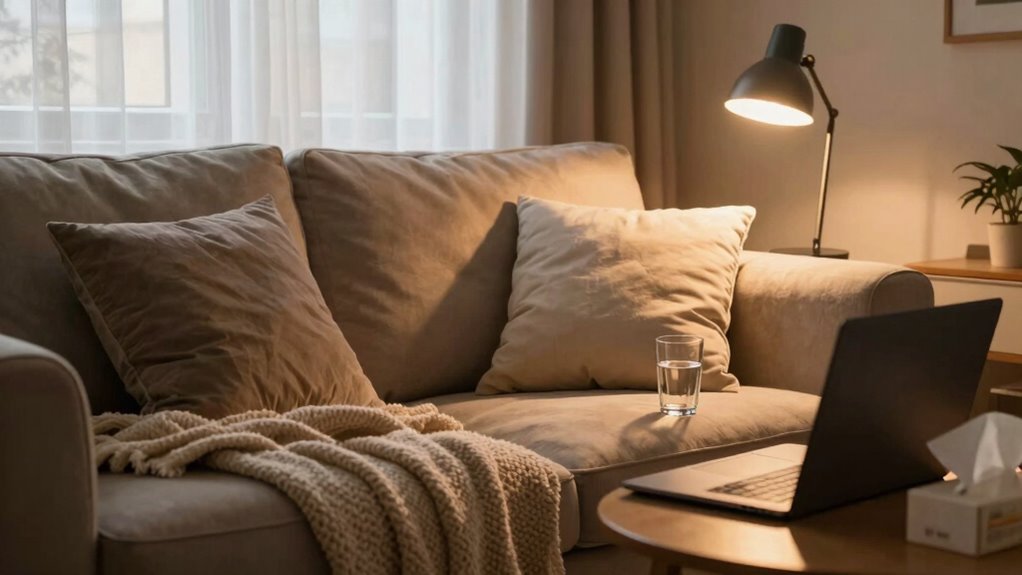
Even in the most cozy and well-maintained homes, dry eyes can become a surprising problem. You might think that comfort and cleanliness protect you from discomfort, but environmental triggers inside your home can actually make dry eyes worse. One of the main culprits is low humidity, which often results from heating systems or air conditioning that run frequently to keep your space warm and cool. When the air lacks moisture, your eyes lose their natural lubrication, leading to irritation, redness, and a gritty sensation.
You may not realize how much humidity control impacts your eye health. Modern homes are designed for energy efficiency, which often involves sealing drafts and reducing air exchange. While that keeps your home cozy and cuts down on energy bills, it also lowers the overall humidity level. When the air becomes too dry, your tear film struggles to stay intact, and your eyes become more vulnerable to environmental triggers. These triggers include dust, pet dander, and indoor pollutants, all of which can irritate eyes further when moisture levels are inadequate.
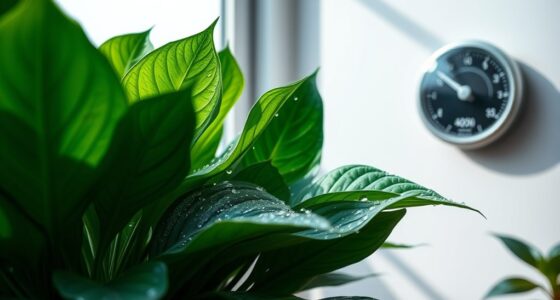
Maintaining ideal humidity is key to preventing dry eyes from worsening. You might consider using a humidifier in rooms where you spend a lot of time, especially during winter or in air-conditioned spaces. This helps restore moisture to the air and supports your eyes in maintaining a healthy tear film. Be mindful that too much humidity can also cause issues, such as mold or dust mites, which can contribute to eye irritation or allergies. Striking a balance is essential.
Additionally, environmental triggers can be subtle but impactful. For example, sitting near a heater or vent that blows dry air directly into your face can exacerbate dryness. Even bright screens and artificial lighting can contribute to eye strain, making your eyes feel drier and more uncomfortable. Managing these factors involves simple adjustments—like positioning your seating away from direct vents, taking regular breaks from screens, and ensuring your home’s air quality is well-maintained. Recognizing the importance of indoor air quality can significantly influence your eye comfort. An understanding of indoor environmental factors helps you identify and reduce potential irritants effectively. Being aware of air quality is also crucial in creating an optimal environment for your eyes.
In essence, your home’s environment plays a bigger role in dry eye issues than you might think. By paying attention to humidity control and minimizing environmental triggers, you can create a more eye-friendly space. This proactive approach helps keep your eyes comfortable, well-lubricated, and healthy, even when your home is as cozy and well-maintained as you want it to be.

Levoit Top Fill Humidifiers for Bedroom, 2.5L Tank for Large Room, 28dB
- Long-lasting operation: Up to 25 hours on low setting
- Easy top-fill design: No spills, simple one-step refill
- Large 2.5L capacity: Provides continuous humidification
As an affiliate, we earn on qualifying purchases.
As an affiliate, we earn on qualifying purchases.
Frequently Asked Questions
Can Dry Eyes Improve Without Changing Home Environment?
Dry eyes can improve without changing your home environment by focusing on eye hydration and using artificial tears regularly. You should blink more often, especially during screen time, and stay well-hydrated throughout the day. Applying artificial tears helps maintain moisture and relieves discomfort. However, if dryness persists, consulting an eye specialist is essential, as they can recommend additional treatments to support your eye health effectively.
Are Certain Home Materials Worse for Dry Eyes?
Certain home materials can be gentle hazards for your dry eyes, especially if they trap indoor allergen triggers or release irritants. Items like synthetic carpets, unvented fireplaces, or heavily treated wood may silently worsen your discomfort. By recognizing these home material hazards, you can make mindful choices, creating a cozy space that supports your eye health and reduces irritation, bringing more comfort and clarity to your daily life.
How Does Humidity Level Affect Dry Eye Severity?
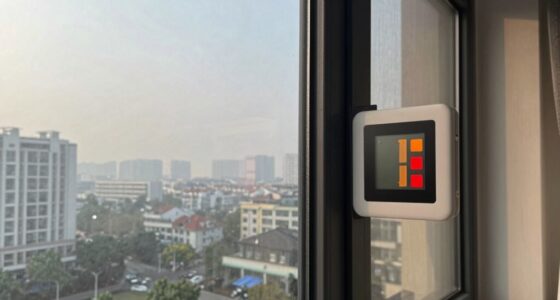
Humidity levels directly impact your dry eyes by causing fluctuations that can worsen symptoms. When humidity drops too low, your tears evaporate faster, leading to irritation. Conversely, high humidity can promote indoor allergens like mold and dust mites, triggering inflammation. Maintaining consistent humidity—ideally around 40-50%—helps stabilize tear production, reduces allergen buildup, and alleviates dryness. Regularly monitoring and adjusting humidity can substantially improve your eye comfort.
Do Air Purifiers Help With Dry Eyes at Home?
Think of an air purifier as a gentle rain that clears away irritants from your home’s atmosphere. Its effectiveness in dry eye relief hinges on removing dust, pollen, and pollutants that worsen your symptoms. When used properly, air purifiers can considerably reduce dryness and irritation, making your environment more comfortable. So, yes, they can be a helpful tool in easing your dry eyes and creating a more soothing, healthful space.
Can Specific Home Cleaning Products Worsen Dry Eye Symptoms?
Yes, specific home cleaning products can worsen your dry eye symptoms. Chemical irritants in some cleaners can inflame your eyes, making dryness worse. Additionally, these products may trigger allergic reactions, leading to increased irritation and discomfort. To protect your eyes, opt for gentle, fragrance-free cleaners, and guarantee good ventilation during cleaning. Avoid harsh chemicals to reduce inflammation and keep your eyes more comfortable.

MOOKA Air Purifier for Home Bedroom Large Room 2200 Ft², True HEPA Filter
- Large Coverage Area: Cleans up to 2200 ft² per hour
- Enhanced Pet Hair Intake: Wider dual-side air inlets
- Smart Air Quality Monitoring: Real-time PM2.5 display and auto mode
As an affiliate, we earn on qualifying purchases.
As an affiliate, we earn on qualifying purchases.
Conclusion
So, next time your eyes feel dry in that cozy home, remember—comfort can be a double-edged sword. Like a wolf in sheep’s clothing, a comfortable environment might hide the silent culprit: inadequate humidity. Keep your home’s air balanced, take breaks from screens, and stay hydrated. After all, isn’t it worth fighting to see clearly through the fog of dryness, turning your sanctuary into a true haven for your eyes? Your future self will thank you.

Honeywell TurboForce Air Circulator, Small Tabletop Fan, Quiet Personal Fan for Home or Office, 3 Speeds, 90 Degree Pivoting Head, Black, HT900
- Quiet Operation: 25% quieter than comparable fans
- Compact Design: Suitable for table, desk, or wall mounting
- Powerful Airflow: Aerodynamic turbo design for intense cooling
As an affiliate, we earn on qualifying purchases.
As an affiliate, we earn on qualifying purchases.

4 Pcs Light Dimming Stickers Light Cover Filters 5 × 6.7 Inch Adhesive LED Blocking Sheets Electronics Screen Diffuser Film Number Readable for Cable Box Monitor Alarm Clock Radio
- Enhanced Sleep Environment: Blocks light for better sleep
- Reduces Glare, Maintains Visibility: Minimizes glare while keeping LED readable
- Customizable and Easy to Apply: Cut to fit and peel-and-stick design
As an affiliate, we earn on qualifying purchases.
As an affiliate, we earn on qualifying purchases.