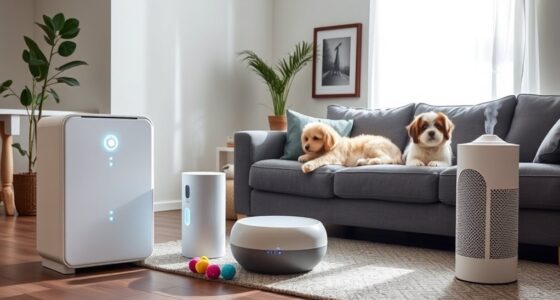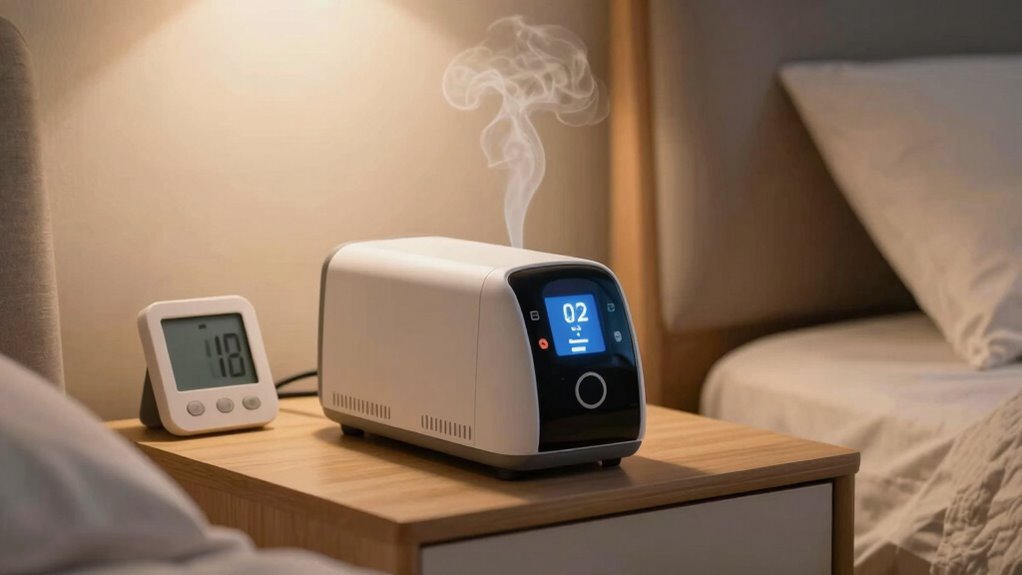

Even small changes in your room’s humidity can considerably affect your CPAP comfort and therapy effectiveness. If the air is too dry, your nasal passages and throat may become irritated, making it harder to sleep well. Excess humidity can cause condensation in your mask or tubing, disrupting your treatment. Maintaining a balanced humidity level is key, especially with seasonal changes. Keep exploring to learn more about optimizing your sleep environment for better comfort and results.

Get home appliances delivered free with Prime
- Fast, free delivery on millions of items
- Prime Video, Amazon Music and more included
- Member-only deals all year
Key Takeaways
- Small changes in room humidity can significantly impact CPAP comfort by affecting moisture levels and nasal or throat dryness.
- Proper humidity balance prevents condensation (“rainout”) inside the mask and tubing, ensuring uninterrupted therapy.
- Seasonal fluctuations require adjusting device settings to maintain consistent humidity and comfort.
- Dry environments hinder moisture retention, leading to discomfort like sore throat and nasal congestion.
- Monitoring and managing room humidity improves CPAP effectiveness and overall sleep quality.
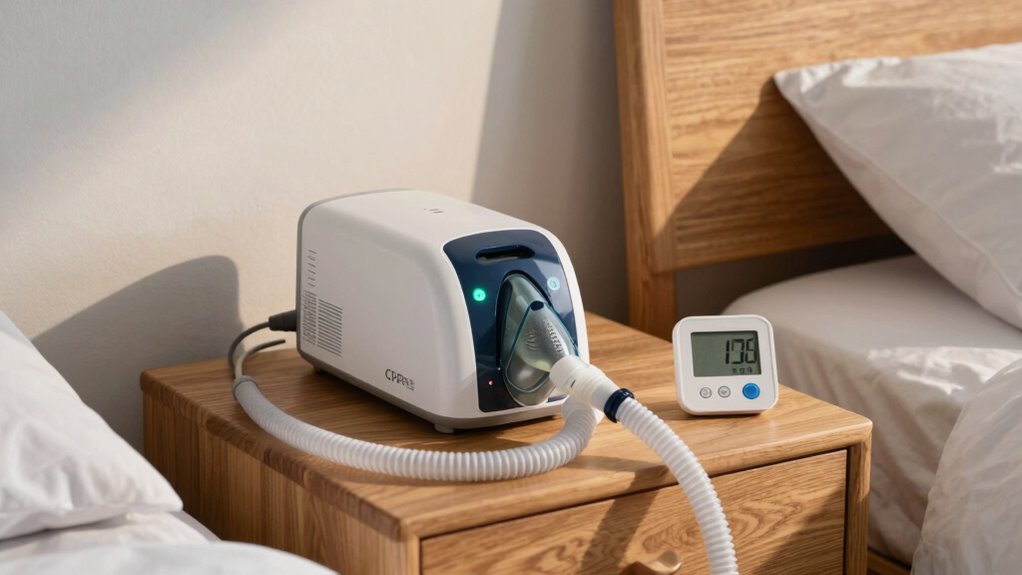
Have you ever wondered how room humidity affects your CPAP therapy? Even small changes in the air around you can considerably influence your comfort during sleep. When the room’s humidity level shifts, it can impact the humidification efficiency of your CPAP machine and how well it retains moisture. If the air is too dry, your nasal passages and throat might become dry and irritated, making it harder to breathe comfortably throughout the night. Conversely, overly humid environments can lead to condensation inside your mask or tubing, which can cause discomfort or even disrupt your sleep.
Room humidity levels significantly impact CPAP comfort, affecting moisture retention and causing dryness or condensation.
Understanding humidification efficiency is key to maintaining a comfortable sleep environment. Your CPAP machine works best when it can effectively add moisture to the air you breathe. If the room is excessively dry, your device may struggle to retain enough moisture, resulting in a dry mouth, sore throat, or nasal congestion. On the other hand, if the room is too humid, the device’s moisture retention capabilities might be overwhelmed, leading to excess condensation, often called “rainout,” which can cause discomfort and interfere with your therapy. Striking the right balance requires paying attention to your room’s humidity levels and adjusting your settings accordingly. Additionally, monitoring the indoor air quality can help you optimize your environment for better sleep comfort.
Room humidity can fluctuate due to seasonal changes, weather patterns, or even indoor heating and cooling systems. During winter, for example, indoor air tends to be drier because heaters remove moisture from the air, making humidification efficiency a concern. You might notice that your usual settings aren’t keeping your nasal passages comfortable, prompting you to increase the humidifier level. In summer, high outdoor humidity can make your room feel damp, which may lead to condensation inside your CPAP tubing. Using a humidifier with adjustable settings allows you to fine-tune moisture retention, ensuring your therapy remains comfortable regardless of external conditions. Proper humidity control is essential for preventing discomfort and maintaining effective therapy.
Small air changes in your environment can have a big impact on your sleep quality. Maintaining a steady, ideal humidity level helps your CPAP machine deliver consistent moisture, preventing dryness or excess condensation. Keep an eye on your room’s humidity and consider using a humidifier or dehumidifier if necessary. Even minor fluctuations in air humidity can significantly influence your overall comfort and treatment success. Proper management of these small air changes can make a noticeable difference in your comfort, helping you wake up feeling more refreshed and less congested. Ultimately, understanding how room humidity influences your therapy allows you to create a sleep environment that supports both effective treatment and restful nights.
Products Worth Considering

Dyson V8 Cyclone Cordless Vacuum

TCL T7 Series 85-Inch 4K 144Hz QLED Smart Google TV

Shark Rocket Corded Stick Vacuum for Carpet and Hard Floors, Gray/Orange, HV301
As an affiliate, we earn on qualifying purchases.
Frequently Asked Questions
How Does Room Humidity Affect CPAP Machine Performance?
Room humidity directly impacts your CPAP machine’s performance by influencing airflow sensitivity and humidifier calibration. Too dry air can cause your airway to dry out, leading to discomfort, while overly humid air might cause condensation and disrupt airflow. Maintaining proper humidity levels helps keep your machine running smoothly, reduces irritation, and guarantees consistent comfort. Adjust your humidifier settings accordingly to optimize performance based on your room’s humidity for the best sleep experience.
Can Increasing Room Humidity Improve CPAP Comfort?
Yes, increasing room humidity can dramatically boost your CPAP comfort, like turning a dry desert into an oasis. When you optimize your sleep environment with proper humidifier maintenance, you prevent dryness and irritation, making each breath feel like a gentle, invigorating breeze. Small adjustments in humidity levels can transform your sleep experience, reducing discomfort and helping you wake up revitalized and ready to conquer the day.
What Are Signs of Low Humidity Affecting CPAP Users?
You might notice your sleep quality drops or you experience skin irritation, signaling low humidity affecting your CPAP use. Dryness can make your throat feel sore, cause nasal congestion, or lead to cracked lips. If you wake up feeling unrefreshed or notice skin discomfort, it’s a sign that your room humidity isn’t enough. Adjusting your humidifier or increasing room moisture levels can help improve comfort and sleep quality.
Is There an Optimal Room Humidity Level for CPAP Users?
You should aim for a room humidity level around 40-60% for ideal comfort. Adjust your humidifier settings to maintain this range, which helps improve air quality and prevent dryness or irritation. Too low humidity can cause nasal congestion and dry mouth, while too high may promote mold growth. Keeping the room within this range balances comfort and air quality, ensuring your CPAP therapy remains effective and comfortable throughout the night.
How Do Seasonal Changes Impact Room Humidity and CPAP Use?
Seasonal changes can considerably impact your room humidity and, in turn, your CPAP use. For example, during winter, dry air may cause discomfort, affecting your sleep quality and air quality. You might find yourself adjusting your humidifier settings or adding a humidifier to maintain ideal moisture levels. Staying aware of these changes helps you keep your environment comfortable, ensuring better sleep quality and consistent CPAP effectiveness year-round.
Conclusion
As you navigate your nights, think of room humidity as the gentle breeze guiding a sailboat. Small adjustments in air changes can steer your comfort toward calm waters or turbulent waves. Embrace these subtle shifts, for they symbolize your control over a smoother sleep journey. In the quiet dance of humidity and airflow, find your rhythm—letting each breath become a steady heartbeat, steering you toward restful, peaceful nights.