
TL;DR

Get home appliances delivered free with Prime
- Fast, free delivery on millions of items
- Prime Video, Amazon Music and more included
- Member-only deals all year
House Beautiful reported several designer-recommended ways to refresh a living room for $100 or less, including rearranging furniture, moving decor from other rooms, and changing pillow covers or light bulbs. The suggestions are expert advice, not a tested comparison of costs or results; actual prices vary by room and retailer.
Interior designers have outlined several ways to refresh a living room for $100 or less, ranging from rearranging furniture and restyling existing shelves at no cost to adding plants, new pillow covers, artwork, or warmer light bulbs. The advice, reported by House Beautiful, offers readers budget-conscious changes that can alter a room’s appearance without a full renovation, though costs depend on what a household already owns and what it chooses to buy.
Blair Burton of Austin-based Blair Burton Interiors recommends starting with the layout before spending money. Moving furniture away from the walls and arranging seats to support conversation can change how the room functions, she said. Burton also suggests “shopping your home” by relocating pieces people already own and value. Both approaches can cost nothing, depending on whether the new arrangement calls for any additional items.
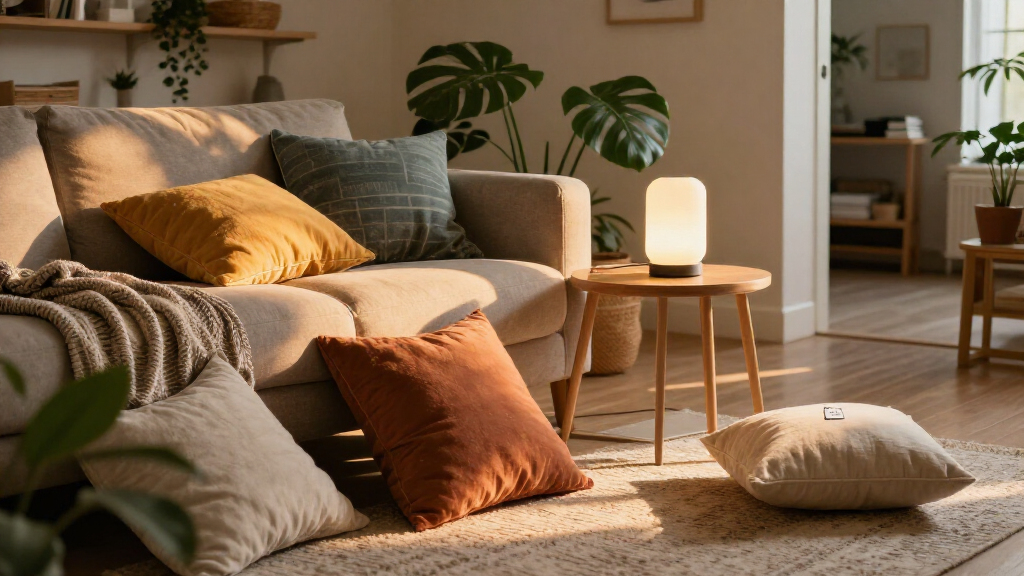
Other suggestions focus on smaller purchases. Barbra Fordyce of Ginger Lemon Indigo recommends plants as an affordable way to add greenery, with the size of the plant matched to the room and its ceiling height. She also advises choosing a planter that suits the room’s style. Natalie Kaelin, an interior designer in Raleigh, North Carolina, suggests refreshing a sofa with new covers for existing throw pillows rather than replacing the cushions.
Lighting and decorative details offer further options. Elizabeth Cross-Beard of Baltimore firm Palm Henri recommends warmer bulbs, saying a switch can cost as little as $50 depending on the number of lights. She advises a color temperature of 2700K and says to avoid bulbs above 4000K. Molly Torres Portnof of New York’s DATE Interiors suggests adding artwork, including prints or reframed photographs already at home. Tennessee designer Katie Kiser recommends restyling shelves into deliberate groupings, potentially using existing objects or a few secondhand finds.
Small Changes, Lower Refresh Costs
The designers’ ideas matter to renters and homeowners who want a visible change without committing to a major purchase or construction project. Several recommendations begin with using what is already at home, so readers can try a different layout or shelf arrangement before deciding whether to spend anything. For people with a modest budget, the advice also breaks a refresh into choices—such as pillow covers, one plant, or replacement bulbs—instead of treating a room update as an all-or-nothing expense.
The suggestions are not a guarantee that every room can be transformed for under $100. Plant size, bulb count, art, and materials affect the total, and the source does not provide a consistent price list for all options. The budget is best understood as a limit for selected small changes, not a fixed quote for a complete redesign.
Products Worth Considering

Philips Hue White and Color Ambiance A19 Smart Bulb Starter Kit, 2-Pack

LG 75-Inch QNED73B Mini LED 4K Smart TV (2026)

Philips Hue Bridge Pro Smart Lighting Hub
As an affiliate, we earn on qualifying purchases.
Seven Routes to a Room Refresh
The House Beautiful report gathers advice from designers rather than describing one home makeover with a documented before-and-after budget. Its ideas cover seven approaches: add plants, change pillow covers, replace light bulbs, rearrange furniture, move objects from elsewhere in the home, add artwork, and restyle shelves.
Some of those options require no purchase, while others can be scaled to fit a budget. The report mentions prints from retailers including Minted and Society6, as well as secondhand finds such as art books, jars, and small trays. It does not give exact prices for those items. That distinction matters: the under-$100 framing is a set of designer suggestions, not evidence that each option always costs less than that amount.
“Sometimes simply pulling furniture away from the walls and creating a more comfortable conversation area can completely change how a room feels.”
— Blair Burton, Blair Burton Interiors
Costs Depend on the Room
The report does not specify its publication date, provide a full item-by-item price breakdown, or document a single makeover with receipts and measured results. Cross-Beard’s estimate that bulb changes can cost as little as $50 depends on how many lights a home has; it is not a universal price. Costs for plants, planters, pillow covers, prints, and shelf decor likewise depend on size, materials, store, and what is already available.
The designers describe likely visual or mood effects, but the report does not include independent testing or measurements of how much each change alters a room. Readers may need to check bulb compatibility, dimensions, and local prices before buying.
Try a No-Cost Rearrangement First
The source does not identify a scheduled follow-up or a single next milestone. For readers applying the advice, the designers’ recommendations suggest starting with the free options: move furniture to improve conversation, test a different place for a chair, and regroup objects already on shelves. After seeing what those changes accomplish, a household can decide whether to use the remaining budget on bulbs, pillow covers, plants, or artwork.
Any purchases should be checked against the room’s needs and actual prices rather than assumed to fit the $100 ceiling. The report’s central guidance is to make selective changes, not to buy every suggested item.
Key Questions
What is the fastest living room update that costs nothing?
Rearranging furniture or moving decor from another room can cost nothing. Blair Burton recommends pulling furniture away from the walls and arranging seating to make conversation easier.
How much can changing living room light bulbs cost?
Elizabeth Cross-Beard said a bulb change can cost as little as $50, depending on the number of lights. The report does not give a universal total, so costs will vary by room and bulb choice.
What bulb color temperature does the designer recommend?
Cross-Beard recommends bulbs at 2700K for warmer light and advises avoiding bulbs above 4000K. Readers should check that replacement bulbs fit their fixtures and lighting needs.
Do the ideas all stay under $100?
Not necessarily. The report presents suggestions for updates that can be made for $100 or less, but it does not give prices for every item. Final costs depend on what a household already owns and the products it selects.
Source: housebeautiful.com