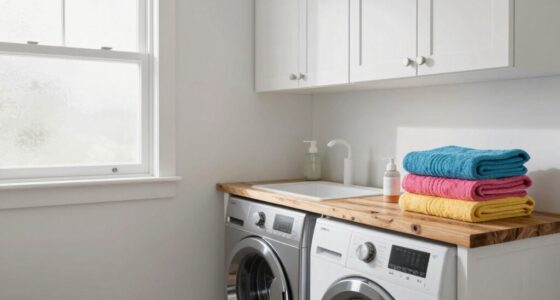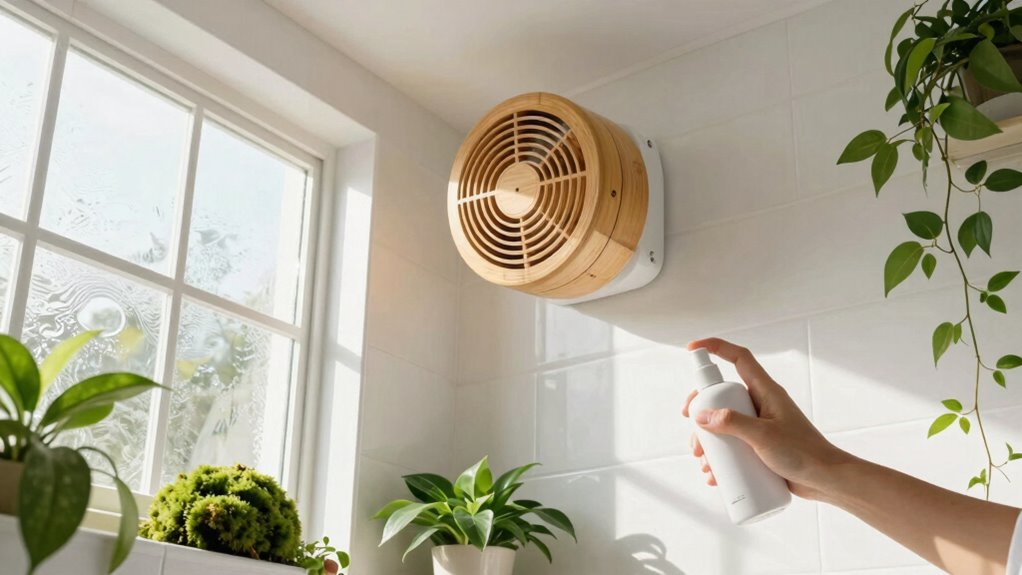

A simple, non-toxic bathroom ventilation routine outperforms fancy products by focusing on consistent habits that improve air quality and prevent mold. You should turn on the exhaust fan or open windows during and after showers, and leave the fan running for 15-20 minutes. Wiping down surfaces and using natural cleaners like vinegar help reduce moisture and mold spores. Keep this routine in mind—there’s more you can do to create a healthier bathroom space.

Get home appliances delivered free with Prime
- Fast, free delivery on millions of items
- Prime Video, Amazon Music and more included
- Member-only deals all year
Key Takeaways
- Consistent natural ventilation and surface moisture management effectively reduce humidity and mold without relying on chemical-based products.
- Routine practices like wiping surfaces and leaving doors open improve airflow and air quality naturally.
- Using non-toxic, mold-resistant materials enhances long-term bathroom health without expensive or harsh products.
- Properly maintained exhaust fans and natural airflow prevent moisture buildup, eliminating the need for chemical dehumidifiers.
- Developing mindful habits ensures sustained air quality and mold prevention through simple, chemical-free routines.
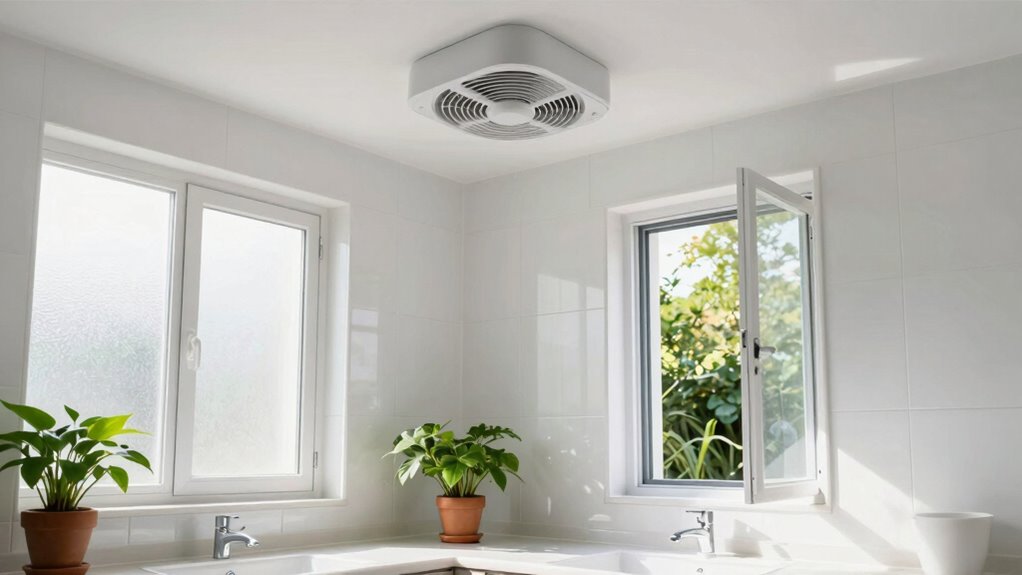
Have you ever wondered why proper bathroom ventilation is crucial? It’s not just about reducing odors; it plays a critical role in maintaining good air quality and preventing mold growth. When you shower or bathe, a lot of moisture gets released into the air. Without proper ventilation, this humidity lingers, creating an environment perfect for mold and mildew to thrive. Mold can cause health issues, like allergies and respiratory problems, so keeping it at bay is essential for your well-being. A well-ventilated bathroom ensures the air stays fresh and dry, making your space healthier and more comfortable.
Proper bathroom ventilation keeps the air fresh, dry, and mold-free for your health and comfort.
You don’t need fancy products or expensive systems to achieve effective bathroom ventilation. A simple, routine approach can make a big difference. Start by turning on your exhaust fan or opening a window whenever you take a shower or bath. This quick step pulls moist air out of the room, replacing it with drier air from outside. If you don’t have an exhaust fan, consider installing one—it’s a small investment that pays off by improving air quality and preventing mold. When you’re done, leave the fan running for about 15-20 minutes to clear out residual moisture. This habit helps keep humidity levels low and reduces the risk of mold spores settling and growing.
Another effective routine involves wiping down wet surfaces after use. Use a squeegee or a towel to remove excess water from shower walls, doors, and sinks. This simple act reduces the moisture lingering on surfaces, further lowering humidity in the room. Regular cleaning with non-toxic, mold-inhibiting solutions also supports mold prevention. Avoid harsh chemicals that can irritate your skin or the environment—opt for natural alternatives like vinegar or baking soda. These are safe for you and won’t compromise indoor air quality. Additionally, ensuring proper ventilation and air exchange can greatly enhance overall air quality in your bathroom. Incorporating mold-resistant materials in your bathroom design can further reduce the chances of mold growth over time. To maximize airflow, consider the placement of vents and the use of natural air circulation techniques, which can often be overlooked but are highly effective.
Maintaining good airflow is also about being mindful of your habits. Keep bathroom doors open after showering to allow air circulation. Consider adding a small, non-toxic dehumidifier if moisture remains an issue. Using proper ventilation techniques can help ensure consistent airflow and prevent moisture buildup more effectively. Over time, these small steps create a routine that keeps your bathroom’s air quality high and mold risks low. You don’t need gimmicky products—just consistent, mindful practices. By doing so, you promote a healthier space for yourself and your family, all while avoiding unnecessary chemicals and expenses. Your bathroom’s air quality and mold prevention depend on these simple, effective routines that anyone can implement daily.
Products Worth Considering

Dyson Cyclone V10 Origin Cordless Vacuum

Dyson V9 Motorbar Cordless Vacuum

eufy C28 Robot Vacuum and Mop with 15,000 Pa Suction
As an affiliate, we earn on qualifying purchases.
Frequently Asked Questions
How Often Should I Check My Bathroom Vent for Blockages?
You should check your bathroom vent for blockages at least once every three to six months. Regular airflow maintenance guarantees it functions properly, preventing mold and odors. Clear any dust, debris, or lint that might clog the vent, which helps extend its ventilation lifespan. Keeping an eye on your vent’s condition allows you to catch issues early, ensuring consistent airflow and a healthier bathroom environment.
Are There Eco-Friendly Alternatives to Traditional Bathroom Fans?
Think of eco-friendly solutions as the gentle breeze of sustainability. You can opt for sustainable options like solar-powered bathroom fans or manually operated vents that reduce energy use. These alternatives are eco-friendly, energy-efficient, and cost-effective in the long run. By choosing these sustainable options, you help lower your carbon footprint and promote greener living, all while maintaining a fresh and healthy bathroom environment.
Can Natural Ventilation Replace Mechanical Exhaust Systems?
Natural ventilation can replace mechanical exhaust systems in some cases, but it depends on your home’s airflow efficiency and ventilation design. If your space has good airflow paths, like strategically placed windows and vents, natural methods can work well, reducing energy use and chemical exposure. However, in areas with limited airflow or high humidity, mechanical exhaust systems provide more consistent and effective ventilation, ensuring mold and moisture issues stay under control.
What Are Signs My Bathroom Ventilation Isn’t Working Properly?
If your bathroom feels damp, has persistent odors, or mold spots, your ventilation might not be working well. Don’t fall for ventilation myths that mechanical is always better—sometimes DIY maintenance like cleaning vents and making sure windows open properly helps. Check if the exhaust fan runs smoothly, and listen for strange noises. Regularly inspecting and maintaining your ventilation system guarantees it functions effectively, preventing moisture buildup and improving air quality.
How Does Humidity Affect Bathroom Ventilation Effectiveness?
High humidity can substantially reduce your bathroom ventilation efficiency. For example, when humidity levels stay elevated after a shower, moisture lingers, making it harder for vents to clear the air. Proper humidity management ensures moisture doesn’t build up, allowing ventilation to work effectively. When humidity is controlled, your bathroom dries faster, preventing mold and mildew, and maintaining a healthier environment.
Conclusion
By embracing this simple, non-toxic bathroom ventilation routine, you’re opening a window to fresher air and a healthier home. Think of it as tending a quiet garden—your efforts keep the air flowing, fighting off mold and toxins like weeds. It’s not about fancy products, but consistent care that lets your space breathe freely. When you prioritize this routine, you’re nurturing a sanctuary where health blossoms, and your peace of mind flourishes like a well-tended bloom.