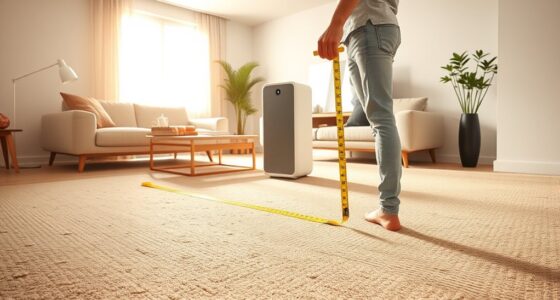
To save on maintenance, always choose high-quality HEPA filters that last longer and trap more particles. Handle filters carefully—wear gloves and install them snugly to prevent air bypass and damage. Regularly clean exterior surfaces and pre-filters to reduce strain on the HEPA filter. Keep an eye on indicators or airflow; replacing filters at the right time prevents costly issues. Stick to these tips, and you’ll discover simple hacks to extend your purifier’s lifespan effectively.
Key Takeaways
- Use high-quality, compatible filters to extend replacement intervals and ensure optimal air purification.
- Handle filters with gloves and install snugly to prevent gaps that reduce efficiency.
- Regularly clean exterior and pre-filters to lessen load on the HEPA filter and prolong its lifespan.
- Monitor air quality and airflow to identify the best timing for filter replacement, avoiding unnecessary changes.
- Opt for durable, cost-effective filter materials to save money long-term and maintain high air cleaning standards.

Replacing a HEPA filter might seem intimidating, but with a few simple hacks, you can do it yourself quickly and cost-effectively. One of the most important factors to contemplate is maintaining your air purifier’s longevity. When you replace the filter properly and choose the right materials, your device continues to perform at its best, saving you money in the long run. First, always consult your air purifier’s manual to understand the recommended replacement schedule and compatible filter types. Ignoring these guidelines can lead to reduced efficiency or damage, ultimately costing you more.
Replacing HEPA filters properly extends your air purifier’s life and maintains optimal performance.
When selecting a new filter, pay close attention to filter material choices. Not all filters are created equal, and opting for high-quality, compatible materials ensures better filtration and longer-lasting performance. HEPA filters are made from densely woven fibers designed to trap tiny particles, but the quality of those fibers varies. Some cheaper filters may use lower-grade materials that clog quickly or let smaller pollutants slip through, forcing you to replace them more often. Investing in filters with premium filter material choices, even if slightly more expensive upfront, can extend the interval between replacements and improve overall air quality.
Another hack is to carefully handle your filters during installation. Always wear gloves to prevent oils and dirt from contaminating the new filter. When inserting the filter, ensure it fits snugly without gaps. Any air bypasses the filter, reducing efficiency and potentially damaging the unit over time. Proper installation maximizes air purifier longevity by keeping the internal components clean and functioning smoothly. Additionally, consider cleaning the exterior and pre-filters regularly. These pre-filters catch larger particles, easing the load on the HEPA filter and extending its lifespan. Regular maintenance is also vital, as monitoring your air quality can help you determine when a filter needs replacing, rather than sticking to a rigid schedule. Some air purifiers come with indicator lights, but if yours doesn’t, a quick visual check for dust buildup or decreased airflow can be a good indicator. Using high-quality filters with durable material choices reduces the frequency of replacements, saving you money and effort. Remember, a well-maintained filter with the right material choices improves air purifier performance, preserves its longevity, and keeps your indoor air cleaner.
Frequently Asked Questions
Can I Use Non-Hepa Filters Temporarily?
Yes, you can use non-HEPA filters temporarily, but keep in mind they won’t provide the same level of air quality or filter lifespan. Non-HEPA filters may improve airflow briefly, but they don’t trap small particles effectively. If you’re concerned about air quality, especially during allergy seasons or pollution spikes, switch back to a HEPA filter as soon as possible. This guarantees ideal filtration and maintains good indoor air standards.
How Often Should I Replace My HEPA Filter?
You should replace your HEPA filter every 12 to 18 months, depending on its filter lifespan and your usage. Regularly check for signs of dirt buildup or reduced airflow, which indicate it’s time for a replacement. Following a consistent replacement schedule guarantees your air purifier functions efficiently and maintains good air quality. Keep track of your filter’s age to avoid unnecessary delays and optimize its performance.
Are There Safety Risks With DIY Filter Replacements?
Like walking a tightrope, DIY filter installation carries some safety risks. You should be cautious during filter replacement, ensuring you disconnect the unit from power and wear gloves to avoid dust inhalation. Follow safety precautions closely, such as handling filters carefully and avoiding damage. Properly installing the filter prevents dust or allergens from escaping, keeping you safe and maintaining your air purifier’s effectiveness.
What Tools Are Necessary for Filter Replacement?
To replace your HEPA filter, you’ll need a tools checklist that includes a screwdriver, gloves, and a clean cloth. These tools help you open the unit safely, handle the filter without contamination, and clean the surrounding area. During the replacement process, make sure to follow the manufacturer’s instructions carefully. This guarantees you’re using the right tools, maintaining safety, and efficiently completing the filter change without damage.
Can I Upgrade to a More Efficient Filter?
Sure, upgrade to a more efficient filter—if your current filter material isn’t already a superhero. Just check if it fits your unit and consider the replacement frequency; a better filter might need more frequent swaps. Remember, the goal isn’t just higher efficiency but also maintaining proper airflow. So, don’t get carried away chasing perfection—sometimes, the simple, effective filter gets the job done best.
Conclusion
Think of your HEPA filter as the lungs of your air purifier—keeping your home new and healthy. With these DIY hacks, you’re the mechanic, tuning up your filter to breathe new life into your space without breaking the bank. Regular maintenance is like watering a plant; it keeps everything thriving. So, roll up your sleeves, follow these simple tips, and enjoy cleaner air—your home’s fresh air is in your hands.