TL;DR

Get home appliances delivered free with Prime
- Fast, free delivery on millions of items
- Prime Video, Amazon Music and more included
- Member-only deals all year
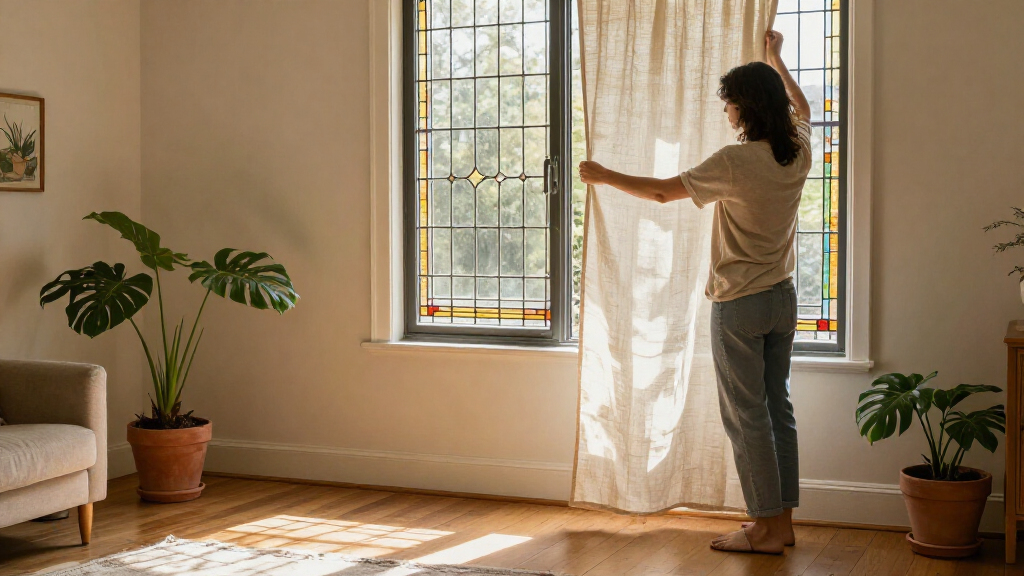
A Hunker report highlights a DIY method from YouTube creators Your Home, Renewed: automotive pinstriping tape applied to both sides of a window can imitate the lines of vintage leaded glass. The creators said their project cost about $40, compared with several hundred dollars for decorative window film; the tape can be peeled off, though its durability and suitability for different windows are not established.
A DIY project featured by Hunker shows how automotive striping tape can create a faux-leaded-glass pattern on a window for about $40, according to the homeowners who tried it. The method offers a lower-cost, removable alternative to curtains or decorative window film, but it does not replace damaged glazing or establish how long the tape will last.
The project came from YouTube creators Your Home, Renewed, who wanted to disguise a problem with the gas between the panes of their bay window while they saved for a replacement. They said decorative window film would cost them a few hundred dollars, so they used automotive pinstriping tape instead, spending about $40. Hunker notes that vintage leaded-glass windows can cost from several hundred to several thousand dollars per window, though prices vary.
The design starts with laying out a grid. The creators used masking tape to test the spacing; a ruler and dry-erase marker are other options for trying a pattern before applying the permanent-looking lines. Different tape widths, including products available in widths starting at a quarter inch, can create different effects. Metallic-finish tape is another option, according to the report.
To make the pattern look more like leaded glass, the report recommends applying tape to both sides of the pane. At intersections, cut the strips with a sharp utility knife so their ends meet neatly rather than overlap. Avoid stretching the tape while applying it, Hunker advises, because tension can contribute to peeling. For removal, loosen a corner with a plastic scraper and peel the strip back at an angle.
A Lower-Cost Alternative to Window Film
The idea gives homeowners and renters a way to change a window’s appearance without buying custom leaded glass or installing curtains. The reported $40 project cost is notably below the few-hundred-dollar film estimate the creators received, although it is their project-specific comparison—not a universal price quote. The tape’s removability may also suit renters or people who want to test a design before committing to a permanent renovation.
The method is decorative, not a repair. The creators used it to camouflage a failing seal while budgeting for a replacement window; the tape does not restore the gas between panes or address any underlying damage. Readers considering the approach should treat it as a temporary visual treatment and check that the tape is suitable for the glass and conditions in their home.
Products Worth Considering

TCL T7 Series 85-Inch 4K 144Hz QLED Smart Google TV

TCL QM64L 85-Inch QD-Mini LED 4K Smart Fire TV

Sony BRAVIA 5 85-Inch Mini LED 4K HDR Smart TV (K-85XR50)
As an affiliate, we earn on qualifying purchases.
From Bay-Window Fix to Design Idea
The original project was prompted by a specific problem: the gas between the panes of the creators’ bay window was failing. Rather than immediately pay for a replacement, they looked for a way to make the window less noticeable until they could afford one. Hunker says decorative film was priced at a few hundred dollars for their project, leading them to try automotive striping tape.
The resulting design borrows the visual structure of leaded glass. Traditional leaded windows use strips called cames between sections of glass; tape applied on the surfaces can imitate those lines, but it is not the same construction or material. The report presents the approach as a DIY styling choice, not as a substitute for professionally made leaded glass or a window repair.
“The project cost about $40.”
— Your Home, Renewed, as described in Hunker’s report
Durability and Window Suitability
The source does not specify how long the tape stayed attached, whether it was tested through seasonal temperature changes, or whether the method works equally well on every window type. It also does not provide independent testing of adhesive residue, effects on finishes, or performance in direct sunlight. The $40 cost refers to the creators’ project; tape quantities and prices can differ by window size, product and location.
The window’s underlying condition also remains relevant. The report describes a failing seal but does not say whether the glass was later replaced or whether the tape affected visibility, cleaning or any warranty. The decorative treatment should not be taken as evidence that a failed insulated-glass unit has been fixed.
Test the Pattern Before Applying Tape
Anyone considering the project can first sketch a layout with masking tape or a dry-erase marker, then check the spacing from inside and outside before committing. The report recommends cutting intersecting strips cleanly and avoiding tension during application. A small test area may help reveal whether the tape adheres and removes cleanly from the specific window.
No further update on the creators’ window or a follow-up test is included in the source. Readers should distinguish the tape’s decorative purpose from repairs: if a window is damaged or its seal has failed, the project does not resolve that condition.
Key Questions
What is the DIY window design made from?
It uses automotive striping tape arranged in a grid or other pattern to imitate the lines of leaded glass.
How much did the creators say it cost?
Your Home, Renewed reported spending about $40 on its project. That figure may not match the cost for other window sizes or tape products.
Can the tape be removed?
Hunker says to loosen a corner with a plastic scraper and peel the tape back at an angle. The source does not report testing residue or removal on every kind of glass or finish.
Does the tape repair a failed window seal?
No. The project was used to camouflage a failing seal while the creators saved for a replacement; it does not repair the glazing or restore the gas between panes.
How can the pattern be made to look more like leaded glass?
The report recommends placing tape on both sides of the glass and cutting intersecting strips so they meet flush rather than overlap. It also advises not stretching the tape during application.
Source: hunker.com