TL;DR
Buying a prebuilt AI workstation is faster and often more reliable, with validated thermals and support. Building offers full customization but demands more time, expertise, and risk. Today, the decision hinges on workload needs and total ownership costs, not just initial price.
Imagine this: you’re ready to jump into AI development or training, but the options feel overwhelming. Do you spend months sourcing parts, tuning the system, and troubleshooting, or do you just buy a ready-made machine that works out of the box? The answer isn’t as clear-cut as it used to be. In 2026, the old rule — ‘build cheaper, buy faster’ — no longer holds. The AI boom, supply chain hiccups, and bulk purchasing have flipped the script. Now, it’s about weighing speed, control, support, and total cost of ownership. This article reveals what really matters when choosing between building your own AI workstation or buying a prebuilt one.
You’ll learn how market shifts affect prices, why thermal tuning is a key factor, and when each approach makes sense. Let’s cut through the noise and find out which path will get you up and running fastest, with the least hassle, and the best bang for your buck.
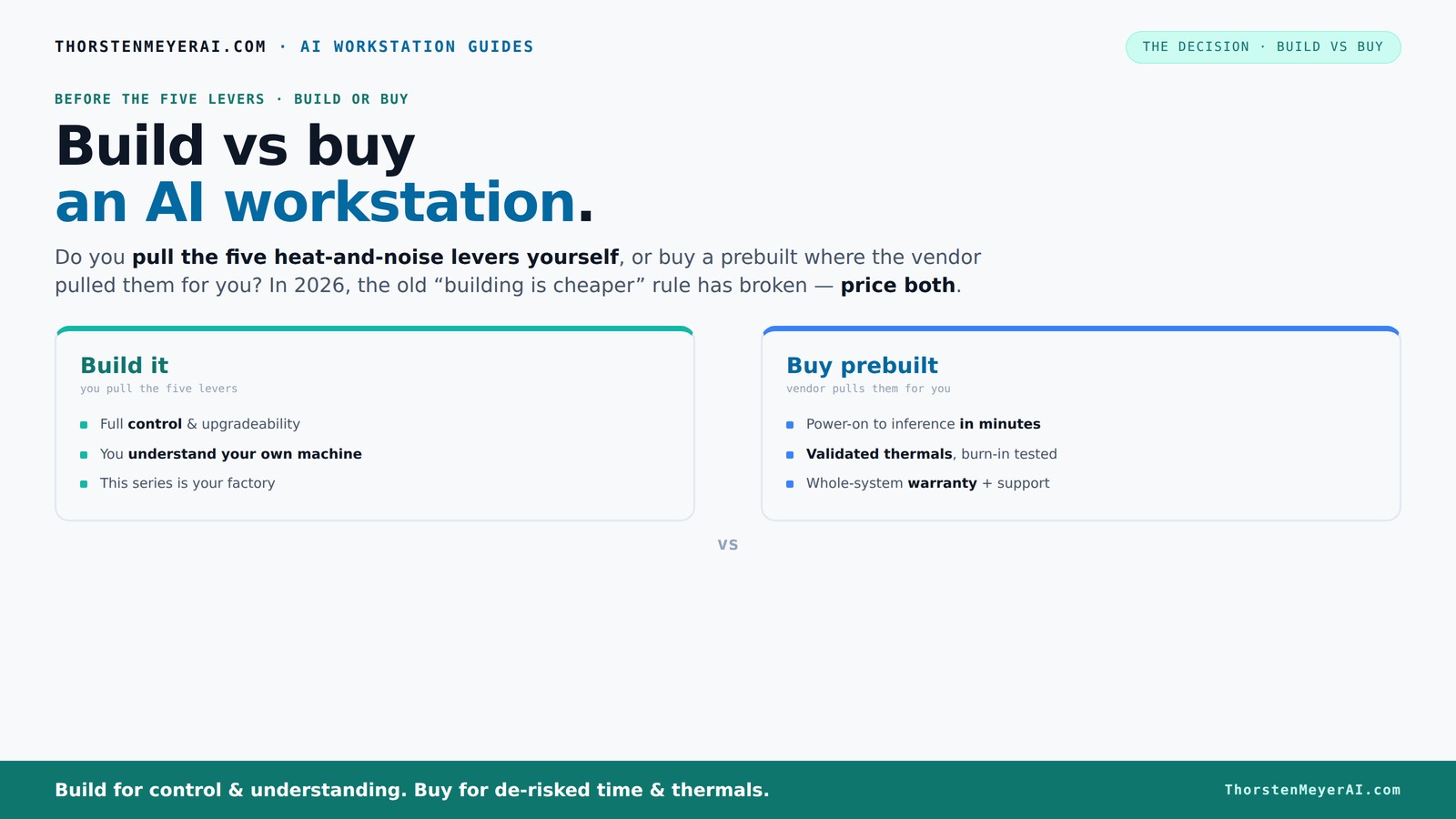
Build vs buy
an AI workstation.
The real question behind this whole series: do you pull the five heat-and-noise levers yourself, or buy a prebuilt where the vendor pulled them for you? And in 2026, the old “building is cheaper” rule has broken. Match your situation in Part 3.
Key Takeaways
- In 2026, component shortages and bulk buying have made prebuilt AI workstations often cost-competitive or cheaper than DIY builds.
- Speed to deployment favors buying — vendors promise ready-to-run systems in weeks, not months.
- Thermal management is a major factor; prebuilt vendors validate cooling and noise levels, saving you time and effort.
- Total cost of ownership over 3 years includes support, downtime, and upgrades — building isn’t always cheaper long-term.
- Hybrid approaches offer a balanced path, combining quick deployment with custom upgrades and control.

Corsair AI Workstation 300 Desktop PC – AMD Ryzen AI Max 385 CPU – AMD Radeon 8050S iGPU (Up to 48GBs vRAM) – 64GB LPDDR5X 8000MHz Memory – 1TB M.2 SSD – Black
AI-Optimized Compact Workstation: Experience AI performance out of the box with the compact 4.4L form factor, built for...
As an affiliate, we earn on qualifying purchases.
As an affiliate, we earn on qualifying purchases.
Why 2026 Changes Everything in Building vs Buying
Building your own AI workstation used to be the clear winner on cost. But in 2026, supply chain issues and component shortages have turned that upside down. Prices for GPUs, DDR5 RAM, and SSDs have shot up by 20-30% compared to just two years ago. A build that cost $1,000 in 2024 now costs closer to $1,250 or more. Meanwhile, big vendors like Lambda or Puget bought in bulk before prices spiked, allowing them to offer systems at prices that are tough to beat with a DIY.
According to recent data, some prebuilt systems now cost just as much as, or even less than, sourcing parts and assembling yourself. This shift makes the decision more about speed and support than just dollars. The old "build is cheaper" mantra is now a myth, replaced by a more nuanced reality where total ownership costs matter more than upfront expenses.

Adamant Custom 3-Year Warranty 24-Core Editing Modelling AI Learning Workstation Computer PC Intel 285K 3.7GHz Z890 TUF 192GB DDR5 RAM 4TB NVMe M.2 Gen4 SSD 10TB HDD WIFI7 2.5GbE 1200W RTX 5090
For SALES TO CALIFORNIA — Please write to us. Our certified laboratory tests and registers all computers in...
As an affiliate, we earn on qualifying purchases.
As an affiliate, we earn on qualifying purchases.
The Real Heat and Noise Battle: Who Controls the Levers?
Cooling and noise are the unsung heroes of a high-performance AI workstation. Building your own means you pull all five levers: undervolting the GPU, choosing the right cooler, tuning case airflow, setting fan profiles, and placing the system for optimal heat dissipation. You get a machine that’s precisely tuned to your needs — quieter, cooler, and more efficient.
Buying prebuilt? The vendor handles all this. They validate thermals, run stress tests, and often include water-cooling or advanced airflow solutions that cut noise and temperature by up to 30%. For example, BIZON advertises systems engineered specifically for “no thermal throttling” under sustained load, with noise levels that won’t keep you awake at night.
This isn’t just about comfort — thermal management impacts performance, longevity, and your sanity. Do you enjoy tinkering and tuning? Or do you prefer a machine that’s ready to go, with support if things go sideways? That’s the core question.
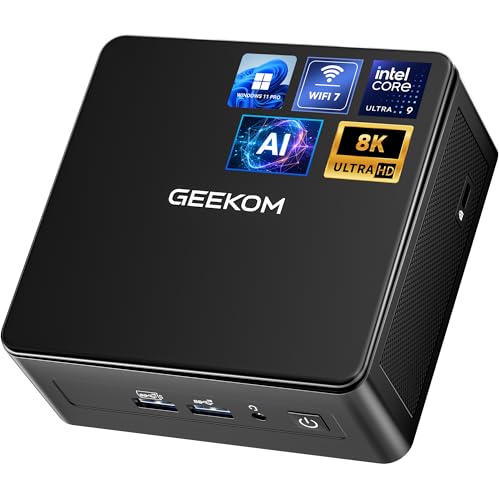
GEEKOM IT15, The Most Powerful AI Mini PC with Intel Ultra 9 285H(15th Gen) 99 Tops | 32GB DDR5, 1TB SSD | Arc 140T GPU | WiFi 7, 8K Quad Display, Win11 Pro, Video Editing, Coding, and Multitasking
[GEEKOM IT15 For Video Editing, Coding & AI Tasks] Need to edit 4K/8K video, compile code, or run...
As an affiliate, we earn on qualifying purchases.
As an affiliate, we earn on qualifying purchases.
Speed to Deployment: Why Buying Wins Big
If you need to get your AI project running yesterday, buying a prebuilt is the clear choice. Vendors promise delivery in as little as 3–9 weeks, sometimes even faster if you have straightforward specs. Building your own? Expect 3 to 6 months or more, especially if you’re sourcing rare components or navigating supply delays.
For instance, a startup wanting to test a new model can’t afford to wait half a year. Buying prebuilt gets you up and running in a fraction of that time, with everything preconfigured, tested, and ready to deploy. It’s the difference between launching today or waiting until next year.
Remember, the faster you deploy, the sooner you can start earning revenue or gaining insights. That’s often worth paying a premium for.

NOVATECH AI Workstation Desktop PC – Intel Core i9-14900K, Liquid Cooling – Machine Learning, Data Science, 3D Rendering, Video Editing, Simulation (RTX 5080 | 64GB RAM | 2TB)
Extreme AI & Machine Learning Performance Powered by the Intel Core i9-14900K and RTX 5080 with 16GB VRAM,...
As an affiliate, we earn on qualifying purchases.
As an affiliate, we earn on qualifying purchases.
Cost Breakdown: Building vs Buying Over 3 Years
| Factor | Build Your Own | Buy Prebuilt |
|---|---|---|
| Initial Cost | Typically $1,250+ for parts (GPU, CPU, RAM, storage) | Often $2,000–$4,000 for ready-to-run systems |
| Time Investment | Many months of sourcing, assembling, tuning | Few days to weeks, depending on vendor lead times |
| Support & Warranty | Self-managed; support via forums, DIY troubleshooting | Support included; warranty often 3–5 years |
| Operational Costs | Higher risk of downtime, troubleshooting, and upgrades | Lower risk; vendor handles thermal issues, repairs |
| Upgrade Flexibility | Full control; replace parts as needed | Limited; depends on vendor upgrade options |
Over three years, the total cost of ownership for a prebuilt can be lower once you factor in time, support, and downtime. Building can seem cheaper upfront but often incurs hidden costs in maintenance and troubleshooting.
Which Workload Fits Which Approach?
Choosing build or buy depends heavily on your specific workload. For simple inference or experimentation with small models, a high-quality prebuilt may suffice. But if you’re training large models, customizing hardware, or running ultra-specific workflows, building your own allows for precise tailoring.
For example, a research team training large language models needs massive VRAM and custom cooling. They often prefer building, enabling niche configurations that prebuilt vendors might not offer.
Conversely, a content creator doing AI-assisted editing might prioritize quick setup and support, making a prebuilt more appealing.
Upgradeability and Future-Proofing: Can Your System Grow?
Future-proofing matters more than ever. Building your own system means you control the motherboard, case, and power supply, making upgrades straightforward when new GPUs or faster storage arrive. You can swap out components as needed.
Prebuilt systems? They often limit upgrade options to keep costs down. Some vendors offer upgrade paths, but they’re usually limited and depend on proprietary parts or chassis design.
For example, Lambda’s workstations are designed with expansion in mind, but even then, you might hit a wall after a few upgrades. If you expect rapid growth, DIY provides more flexibility.
Support, Warranty, and Peace of Mind
Support isn’t just a nice-to-have — it’s critical when your work depends on uptime. Prebuilt vendors usually include extensive warranties, on-site repairs, and dedicated support teams. This reduces downtime and stress.
DIY builds mean you troubleshoot everything yourself, which can be a deep rabbit hole. If you’re comfortable with hardware and diagnostics, this isn’t a problem. But for most, the risk of downtime outweighs the initial savings.
For example, a small startup running AI inference in production benefits from vendor support that guarantees quick fixes. A hobbyist experimenting at home might prefer DIY, accepting the risk.
Hybrid Strategies: The Best of Both Worlds
In 2026, many teams are choosing hybrid approaches. Buy a solid base system and customize key parts — like adding extra RAM, a faster SSD, or specialized cooling. It’s a way to balance speed, control, and cost.
For example, a research lab might buy a preconfigured system from Lambda, then replace the GPU with a custom water-cooled model for quieter operation. This approach reduces time-to-value while giving some control over thermal performance.
Hybrid strategies often deliver the best ROI, especially when projects evolve or hardware needs shift rapidly.
Frequently Asked Questions
Is it cheaper to build or buy an AI workstation?
It used to be, but in 2026, component shortages and bulk buying have made prebuilt systems often as affordable or even cheaper. The real savings come from faster deployment and support, not just initial costs.
What hidden costs come with building my own workstation?
Expect to spend extra on troubleshooting, thermal tuning, and potential upgrades. Time investment and the risk of compatibility issues can also add to the total cost of ownership. These hidden costs can erode the perceived savings and extend project timelines, especially if troubleshooting drags on or upgrades require significant disassembly. Moreover, the complexity of diagnosing hardware conflicts or thermal issues can lead to delays, increased frustration, and unexpected expenses, making the DIY approach less predictable and potentially more costly in the long run.
How much performance do I lose by buying prebuilt?
Most prebuilt systems are tuned for balanced performance and quiet operation. While some custom tuning can improve thermal performance, the difference is often marginal, especially with high-end vendors optimizing for heat and noise. The key is that prebuilt systems are designed for stability and reliability, which can sometimes mean sacrificing a small degree of raw performance compared to a finely tuned DIY setup. However, for most users, this performance gap is negligible, and the benefits of guaranteed stability and support outweigh the slight gains from custom tuning.
Which is better for training large models or local LLMs?
Building your own offers more control over GPU VRAM, cooling, and power, making it ideal for large models. You can customize cooling solutions, power delivery, and hardware configurations to optimize training stability and efficiency. However, some vendors now offer high-performance multi-GPU systems ready-made, which can be a viable alternative if you prefer convenience. The choice hinges on workload specifics: if maximum customization and control are priorities, DIY is preferable; if rapid deployment and guaranteed reliability are more critical, a prebuilt might suffice.
When should I consider hybrid strategies?
If you want quick deployment but also need customization or future upgrades, buying a base system and upgrading key parts offers a smart middle ground. This approach allows you to rapidly get started while maintaining some control over hardware evolution, making it especially suitable for evolving projects or hardware that quickly becomes obsolete. Hybrid strategies are particularly valuable when initial budget constraints exist but there's an anticipation of hardware needs changing over time, enabling incremental upgrades without starting from scratch each time.
Conclusion
If your goal is to start AI work fast, a prebuilt system often makes the most sense. It reduces risk, cuts setup time, and offers support when things go wrong. But if you need specific configurations, future upgrades, or enjoy the tuning process, building your own remains a rewarding challenge.
Remember, the best choice depends on your workload, patience, and how much control you want. In 2026, the smart move is to weigh speed against flexibility — and choose the path that gets you working, not just shopping.