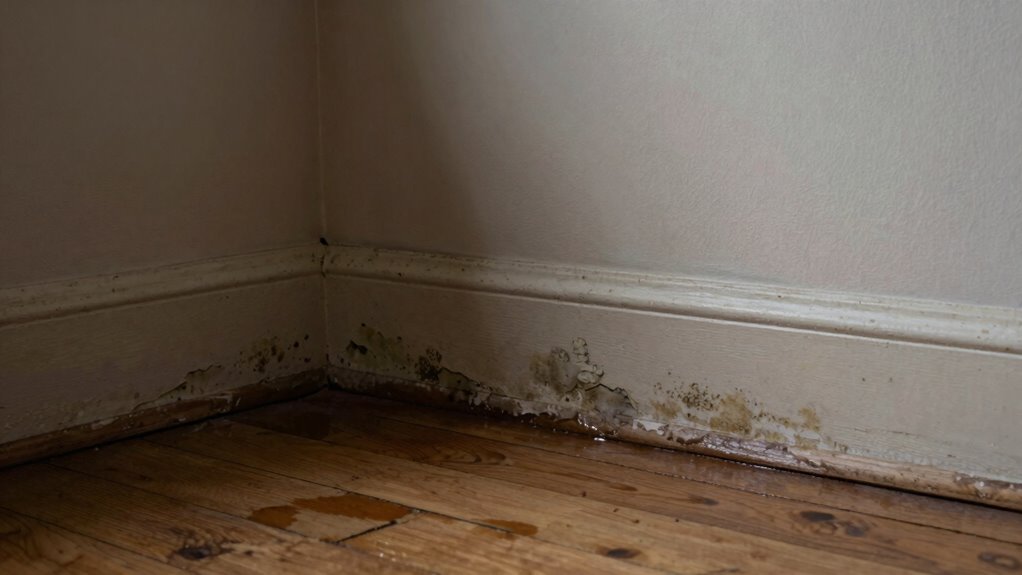

If your room corners stay damp even when the center feels dry, it’s often due to poor ventilation and temperature differences. Cold corners create cold surfaces where humidity condenses into moisture. Inadequate airflow traps this moisture, allowing mold to grow and damage walls. Improving ventilation with exhaust fans or opening windows can help, but understanding more about insulation and air circulation can offer even better solutions. Keep going to discover effective ways to prevent this persistent dampness.

Get home appliances delivered free with Prime
- Fast, free delivery on millions of items
- Prime Video, Amazon Music and more included
- Member-only deals all year
Key Takeaways
- Corners often have cooler surfaces, promoting condensation despite overall room dryness.
- Poor ventilation causes stagnant humid air to settle in corners, leading to moisture buildup.
- Insufficient insulation creates cold spots in corners, increasing the likelihood of dampness.
- Limited airflow prevents moisture from dispersing, allowing dampness to persist in corners.
- Hidden leaks or plumbing issues near corners can introduce localized moisture.

If your room corners remain damp despite regular cleaning, it’s often due to moisture buildup in those areas. This moisture is typically caused by poor ventilation, which prevents air from circulating properly and allows humidity to accumulate. This inadequate airflow causes the moist air to linger in the corners, leading to persistent dampness. Even if the rest of your room feels dry and comfortable, these spots can trap moisture because they lack proper ventilation pathways. This buildup not only makes the corners feel damp but can also promote mold growth and damage your walls over time.
Ventilation issues are a primary culprit behind moisture buildup in room corners. Many rooms lack sufficient vents or exhaust fans, especially in older buildings or spaces with small windows that don’t open easily. Without enough fresh air exchange, humidity from daily activities like cooking, showering, or even breathing remains trapped in the space. Over time, this stagnant, humid air settles into the corners, where it condenses on cooler surfaces, creating damp patches. The problem worsens if you use humidifiers or have plants indoors, as these increase humidity levels without improving airflow. When moisture lingers, it fosters mold and mildew, which not only damages surfaces but also impacts your health. Additionally, proper insulation can help reduce temperature differences that lead to condensation, keeping surfaces warmer and less prone to moisture accumulation. Proper insulation also minimizes thermal bridging, which is another factor contributing to cold spots where moisture can condense.
Poor ventilation traps humidity, causing damp corners and promoting mold growth over time.
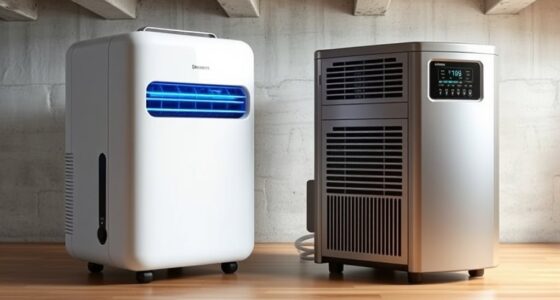
Addressing moisture buildup requires improving your room’s ventilation. You can start by opening windows regularly to let fresh air in and push out humid air. Installing exhaust fans in areas prone to moisture, like bathrooms or kitchens, can greatly reduce indoor humidity. If your room lacks windows or proper vents, consider adding a portable dehumidifier. These devices help extract excess moisture from the air, preventing it from settling into the corners. Ensuring that your furniture isn’t blocking vents or airflow pathways is also essential. Items placed directly against walls or in corners can restrict circulation further, trapping humid air in those spots. air circulation fans can further improve airflow and reduce stagnant humid pockets. Regularly checking for leaks or plumbing issues that introduce moisture into your walls can also prevent excessive dampness. Moreover, maintaining proper ventilation is crucial for a healthy indoor environment, as it continuously helps to control humidity levels and prevent moisture buildup.
portable dehumidifier for damp corners
As an affiliate, we earn on qualifying purchases.
As an affiliate, we earn on qualifying purchases.
Frequently Asked Questions
Can Ventilation Systems Help Dry Out Damp Room Corners?
Yes, ventilation systems can help dry out damp room corners. They improve airflow circulation, which reduces moisture buildup in those hard-to-reach areas. By controlling humidity levels, ventilation prevents excess dampness that causes mold and damage. Regularly running exhaust fans or installing air purifiers with humidity control features guarantees moisture is removed efficiently. This keeps your room dry, fresh, and comfortable, especially in corners prone to dampness.
Do Certain Building Materials Contribute to Moisture Retention in Corners?
Like a sponge soaking up water, certain building materials contribute to moisture retention in corners. Materials like drywall, plaster, or unsealed concrete tend to trap moisture, making corners prone to dampness. These materials absorb and hold moisture longer than others, creating a damp environment even when the rest of the room feels dry. Choosing breathable, moisture-resistant materials can help minimize this issue and promote better drying in problem areas.
How Does Insulation Affect Moisture Buildup in Room Corners?
Insulation affects moisture buildup in room corners by impacting insulation effectiveness, which can trap moisture if not installed properly. Poor insulation allows humidity to accumulate, especially in corners, leading to dampness. Wall cavity ventilation plays a vital role by allowing moist air to escape, reducing condensation. Ensuring proper insulation and ventilation helps prevent dampness, keeping your room corners dry and mold-free.
Are There Specific Cleaning Products That Prevent Dampness?
You should use cleaning agents that are specifically formulated for mold prevention, such as those containing bleach or mold-killing solutions. These products help eliminate existing mold and reduce moisture, preventing future dampness. Regular cleaning with these agents, especially in corners and less-ventilated areas, keeps moisture levels in check and discourages mold growth. Be sure to follow product instructions for safe and effective results.
Can Indoor Plants Increase or Decrease Moisture Levels in Corners?
Indoor plants can both increase and decrease humidity levels in corners, depending on the plant varieties you choose. If you pick plants that release moisture, like ferns or peace lilies, they can raise humidity and possibly worsen dampness. Conversely, plants that absorb moisture, such as succulents or certain air plants, help lower humidity levels. To manage dampness, select plant varieties suited for your environment and monitor your room’s humidity regularly.
As an affiliate, we earn on qualifying purchases.
Conclusion
So, next time your corners cling to dampness, remember they’re like stubborn secrets hiding in the shadows. Addressing poor ventilation, fixing leaks, and using dehumidifiers can help dry out those sneaky spots. Think of your room as a dance floor—when moisture is kept in check, everything moves smoothly. Don’t let damp corners turn your space into a soggy story; take action, and let fresh air be your guiding breeze.
As an affiliate, we earn on qualifying purchases.
As an affiliate, we earn on qualifying purchases.
Cold & flu season Picks
humidifiers
As an affiliate, we earn on qualifying purchases.