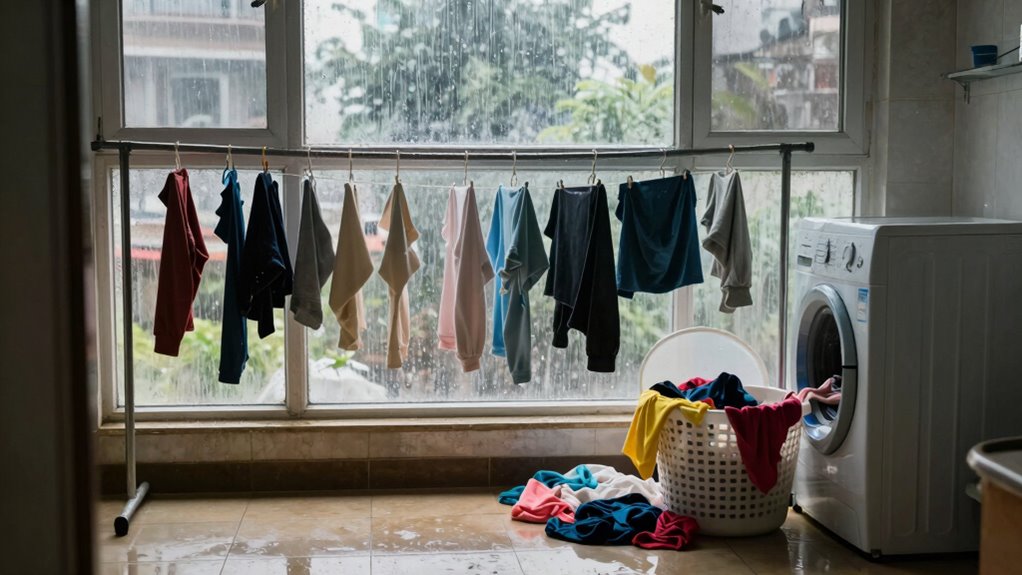

Drying laundry indoors during rainy weeks can tip your house off balance by raising humidity and disrupting air circulation. Heavy moisture from clothes makes the air damp, which can lead to mold or unpleasant odors. To maintain a healthy home, it’s important to use good airflow, dehumidifiers, and strategic drying methods. If you keep these tips in mind, you’ll learn how to balance moisture levels while keeping your laundry fresh.

Get home appliances delivered free — and shop member deals
- Fast, free delivery on millions of items
- Access to Prime Big Deal Days deals on October 6–7
- Prime Video, Amazon Music and more included
Key Takeaways
- Excess indoor drying increases humidity, risking mold growth and household discomfort.
- Poor ventilation from damp laundry can disrupt indoor air quality and circulation.
- Overloading drying areas may cause uneven moisture levels, affecting overall home balance.
- Increased moisture from drying hampers heating efficiency and can lead to condensation issues.
- Maintaining proper airflow and humidity control is essential to prevent indoor imbalance during rainy weeks.
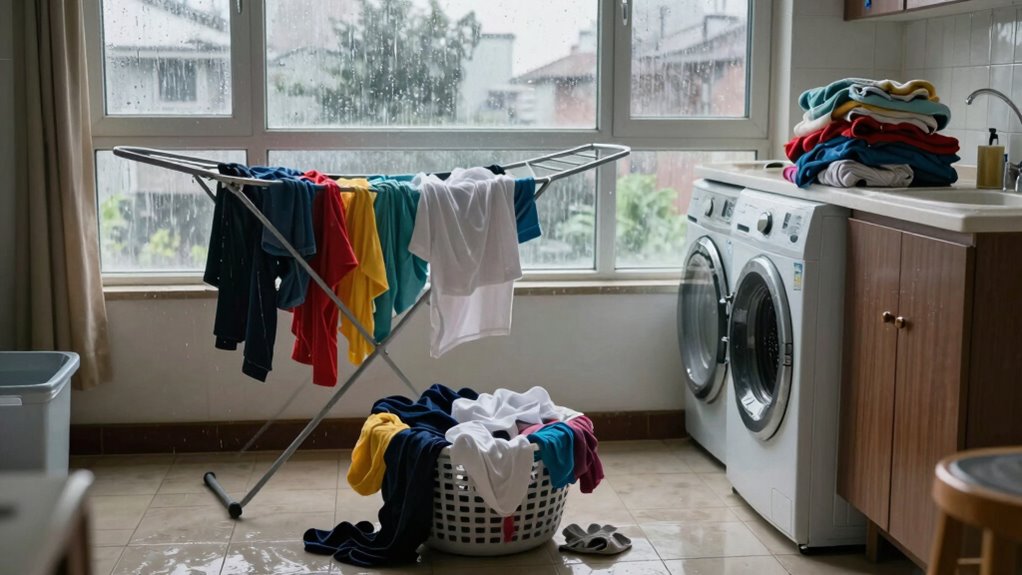
When the rainy weeks keep you indoors, drying laundry can become a real challenge. You might find yourself struggling to keep up with wet clothes piling up, especially when outdoor drying isn’t an option. The key to managing this situation is understanding how different clothing materials respond to indoor drying and adopting effective drying techniques. Some fabrics, like cotton and linen, absorb more moisture and take longer to dry, while synthetics such as polyester or nylon tend to dry faster. Knowing this helps you plan your laundry schedule better, avoiding the frustration of damp clothes lingering in your space.
Your choice of drying techniques plays a crucial role in maintaining a balanced household during rainy days. Using a well-ventilated room or setting up a dedicated drying area with good airflow can speed up the process. A dehumidifier can be a game-changer, pulling excess moisture from the air and helping your clothes dry more efficiently. Hanging clothes individually rather than in bunches allows air to circulate around each piece, reducing drying time and preventing musty odors. You might also consider using a fan directed toward your hanging laundry or placing a small space heater nearby, but be cautious to avoid overheating or damaging delicate fabrics.
In addition, understanding the impact of clothing materials on drying times enables you to optimize your laundry routine. For example, heavier materials like towels or jeans require more patience, so you might want to dry these first and save quicker-drying items like underwear or activewear for later. When hanging clothes, ensure they’re spread out and not overlapping, as overlapping fabric traps moisture and prolongs drying. If possible, flip or reposition clothes midway through drying to promote even moisture evaporation. These small adjustments can significantly cut down your drying time, keeping your laundry room more organized and your household more comfortable.
Furthermore, the moisture content of your laundry environment can influence drying efficiency, so maintaining proper humidity levels is essential during rainy weather. During rainy weeks, it’s also helpful to be strategic about your laundry load. Don’t overload your drying space; overstuffed hanging racks or lines reduce airflow and slow down drying. Instead, do smaller, more frequent loads, and rotate the clothes as they dry. This method prevents damp spots and encourages more consistent drying. Additionally, monitoring the air circulation in your laundry area can help you identify if your drying setup needs improvement, ensuring optimal airflow for faster drying. Keeping an eye on the humidity levels can also help you better control the environment, making indoor drying more effective. Proper ventilation is another critical factor, as stagnant air can hinder moisture escape and prolong drying times. Overall, managing indoor laundry during rainy days requires a bit of planning and knowledge about clothing materials and drying techniques. Being aware of moisture management strategies can help you optimize the drying process and maintain a comfortable household atmosphere. By tailoring your approach accordingly, you can keep your house balanced, your clothes fresh, and your sanity intact, even when the weather keeps you inside.
best dehumidifier for indoor laundry drying
As an affiliate, we earn on qualifying purchases.
As an affiliate, we earn on qualifying purchases.
Frequently Asked Questions
How Does Indoor Laundry Affect Indoor Humidity Levels?
Indoor laundry increases humidity levels because drying clothes releases moisture into the air. This added humidity can make your home feel damp and uncomfortable. To counteract this, you need good air circulation—use fans or open windows when possible. Proper ventilation helps remove excess moisture, maintaining a comfortable humidity balance and preventing issues like mold or musty odors caused by high indoor humidity.
Can Indoor Laundry Cause Mold Growth in the House?
Think of your home as a delicate garden; indoor laundry can introduce excess moisture that feeds mold growth if you’re not careful. Yes, it can cause mold if humidity stays high. To prevent this, focus on mold prevention by using proper ventilation techniques like exhaust fans or open windows. Keep humidity levels low, ideally between 30-50%, to protect your house from unseen mold threats.
What Are the Best Drying Methods During Rainy Weeks?
During rainy weeks, the best drying methods include using energy-efficient dryers and air drying techniques. Opt for an energy-efficient dryer to save electricity while effectively drying your clothes. When possible, hang clothes indoors using a drying rack or clothesline, ensuring good ventilation. To speed up air drying, place clothes near a fan or open windows. Combining these methods helps you stay dry, save energy, and prevent mold growth inside your home.
How Can I Prevent My House From Becoming Unbalanced?
You can prevent your house from becoming unbalanced by implementing effective ventilation strategies and scheduling regular structural assessments. Think of your home as a delicate ship; proper airflow keeps it steady. Use exhaust fans and open windows to regulate humidity, and have professionals check your foundation and walls for any signs of stress or shifting. These steps help maintain your home’s equilibrium, even during rainy weeks.
Are There Health Risks Associated With Indoor Laundry During Rain?
Yes, there are health risks like airborne mold and chemical exposure from indoor laundry during rainy weeks. When you dry clothes indoors, moisture can promote mold growth, which may cause respiratory issues. Additionally, you might be exposed to chemicals from detergents or fabric softeners, which can irritate your skin or lungs. To stay safe, guarantee good ventilation and use natural or fragrance-free products to minimize these risks.
indoor clothes drying rack with good airflow
As an affiliate, we earn on qualifying purchases.
As an affiliate, we earn on qualifying purchases.
Conclusion
So, next time rain keeps you indoors, remember that doing laundry inside can turn your house into an unbalanced circus. It’s like trying to juggle fire—dangerous and chaotic! Keep an eye on humidity levels, and don’t let laundry overwhelm your space. A little awareness goes a long way in maintaining harmony. Stay mindful, and your home will stay steady, even when the skies are crying. Balance is key—don’t let laundry tip the house over the edge!
small space heater for drying clothes
As an affiliate, we earn on qualifying purchases.
As an affiliate, we earn on qualifying purchases.
As an affiliate, we earn on qualifying purchases.
NFL season / tailgating Picks
team gear
As an affiliate, we earn on qualifying purchases.