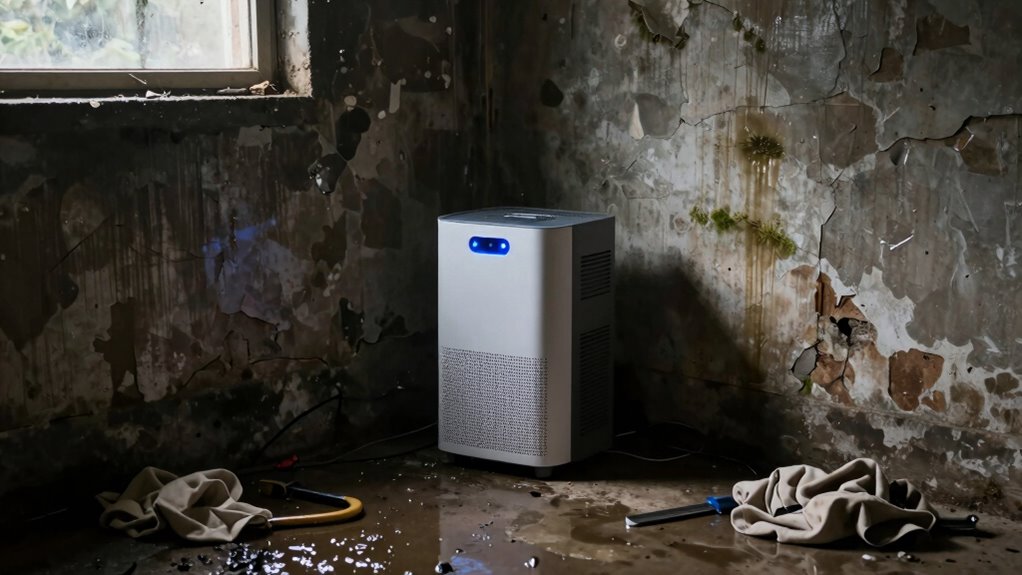

If your cold basement has persistent moisture, mold, or a damp smell, a traditional dehumidifier may struggle to keep humidity in check. Desiccant dehumidifiers work better in cold environments because they absorb moisture directly from the air, regardless of temperature, preventing frost buildup and freezing issues. If you notice condensation, musty odors, or dampness despite ventilation, a desiccant unit could be the solution. Continue exploring to discover how this technology transforms moisture control in cold spaces.
Key Takeaways
- Traditional refrigerant dehumidifiers lose efficiency and risk freezing coils at low basement temperatures.
- Desiccant dehumidifiers operate effectively in cold environments, removing moisture without condensation.
- Signs include persistent dampness, mold growth, musty odors, and condensation on surfaces.
- Proper insulation and ventilation help reduce moisture buildup in cold basements.
- Regular maintenance and humidity monitoring ensure optimal performance of desiccant dehumidifiers in low temperatures.
Why Cold Basements Are Prone to Moisture Problems

Cold basements are more prone to moisture problems because low temperatures cause the air to hold less humidity, leading to condensation on walls and floors. To combat this, proper basement insulation is essential; it helps keep walls warmer and reduces temperature differences that cause moisture buildup. Adequate ventilation is equally important, as it exchanges humid air with drier outside air, preventing excess moisture from lingering. When your basement isn’t well-insulated or ventilated, moisture can accumulate, creating a damp environment that fosters mold and mildew. Proper air circulation is vital to prevent stagnant, humid air from settling in and exacerbating moisture issues. Ensuring that your ventilation systems are properly maintained can significantly improve moisture control. Additionally, understanding the temperature and humidity balance can help you better manage moisture levels in cold spaces. By focusing on insulating your basement properly and ensuring good ventilation, you can minimize condensation and moisture issues, making your space healthier and more comfortable. Choosing the right dehumidifier, such as a desiccant dehumidifier, is also crucial in maintaining a dry, stable environment in cold conditions. Additionally, using ventilation fans or dehumidifiers can further enhance moisture control efforts.
Why Traditional Dehumidifiers May Not Work Well in Cold Conditions
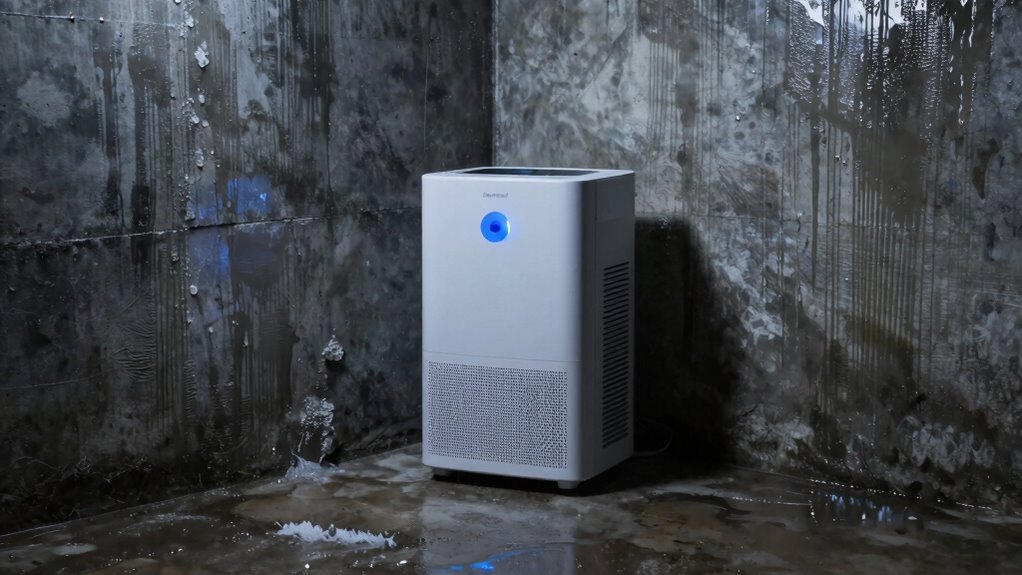
Traditional dehumidifiers often struggle in cold basements because their efficiency drops as the air gets colder. When temperatures fall, the dew point decreases, making it harder for these units to remove moisture effectively. Plus, there’s a risk of the unit’s coils freezing, which can damage the device and worsen moisture problems. To combat these issues, essential home tips recommend using a desiccant dehumidifier, which can operate efficiently in low temperatures. Additionally, understanding the dew point helps in selecting the right dehumidification method for cold environments. Recognizing the performance limitations of conventional units in cold settings is crucial for effective moisture control. Regular maintenance can also prevent issues such as white appliances yellowing or developing problems during power outages, ensuring the dehumidifier’s optimal functioning.
Reduced Dew Point Efficiency
When the temperature drops, dehumidifiers often struggle to remove moisture effectively because their ability to condense water depends on reaching a certain dew point. In cold conditions, the dew point is lower, making moisture extraction harder. Traditional refrigerant dehumidifiers rely on warm air to condense water, so in colder basements, they may operate inefficiently or shut off altogether. Additionally, the presence of solar/power safety considerations can influence the selection of dehumidification methods in such environments. To address these issues, desiccant dehumidifiers that operate effectively at lower temperatures are often recommended. Here’s a quick comparison:
| Dehumidifier Type | Dew Point Range | Moisture Extraction Efficiency |
|---|---|---|
| Refrigerant | 50°F and above | High in warm conditions |
| Desiccant | Below 50°F | Consistent across temperatures |
| Hybrid | Varies | Moderate, depends on conditions |
Freezing Moisture Risks
Have you ever noticed your dehumidifier shutting off unexpectedly in a chilly basement? This happens because cold temperatures cause moisture to freeze on the unit’s coils, risking humidity buildup and reducing condensation prevention. When moisture freezes, the dehumidifier can’t extract humidity efficiently, leading to decreased performance or shutdowns. If your basement stays cold, traditional dehumidifiers struggle to operate properly, as they rely on warmer air to condense moisture effectively. This is particularly true in cold environments, where low temperatures inhibit optimal functioning. Cold temperatures can also cause freezing moisture, which can damage the equipment over time. To combat this, consider using a desiccant dehumidifier designed for cold environments, which can absorb moisture without freezing, ensuring consistent humidity management and protecting your basement from excess moisture issues. Additionally, understanding the effect of temperature on dehumidifier operation can help you choose the right equipment for cold spaces. Moreover, selecting the appropriate moisture control technology is crucial for maintaining a healthy basement environment in low temperatures. Choosing the right method can also help prevent equipment damage caused by freezing conditions.
How Desiccant Dehumidifiers Remove Moisture Differently

Desiccant dehumidifiers remove moisture by absorbing it directly into their special materials, making them effective even in cold conditions. They operate efficiently at low temperatures because their desiccant can attract moisture without relying on condensation. Once saturated, you can easily regenerate the desiccant material to keep the dehumidifier working effectively. This process relies on the desiccant’s unique properties, which allow it to function in environments where traditional dehumidifiers struggle. Additionally, desiccant technology enables these units to perform well in areas with fluctuating or low temperatures, and their minimal noise output makes them suitable for quiet indoor spaces. Understanding how dehumidification methods work can help you choose the right equipment for your needs. Boost your fitness game by understanding how these dehumidifiers enhance indoor air quality in challenging environments.
Absorbing Moisture Effectively
Unlike refrigerant-based dehumidifiers, desiccant dehumidifiers remove moisture through a different process that’s highly effective in cold environments. They use a moisture-absorbing material, typically silica gel or a similar desiccant, to attract and hold water vapor from the air. As the air passes over or through the desiccant, moisture is quickly absorbed, reducing humidity levels efficiently. This method provides superior humidity control in colder spaces where refrigerant dehumidifiers struggle to work effectively. You’ll notice the instant impact as the air feels drier and more comfortable. Because desiccants don’t rely on condensation, they maintain consistent moisture absorption regardless of low temperatures. Additionally, their ability to absorb moisture in varying climates makes them especially suitable for keeping your basement dry and preventing issues caused by excess moisture.
Operating in Low Temperatures
Ever wonder how desiccant dehumidifiers keep working in freezing temperatures? Unlike compressor-based units, they don’t rely on refrigeration, so low temperatures don’t hinder their performance. Desiccant materials absorb moisture directly from the air, maintaining consistent humidity levels even when it’s cold outside. Because they don’t depend on cooling coils, they’re less affected by thermal insulation issues in your basement. This means you can control moisture effectively without worrying about frost buildup or reduced efficiency. Their ability to operate in low temperatures makes them ideal for unheated or poorly insulated spaces. You’ll notice stable humidity levels regardless of the cold, helping prevent mold and dampness without the need for costly heating upgrades. This resilience makes desiccant dehumidifiers a smart choice for cold, damp environments.
Regenerating Desiccant Material
While desiccant dehumidifiers excel at removing moisture without relying on refrigeration, they need a way to maintain their effectiveness over time. This is where desiccant regeneration comes into play. During the moisture absorption process, the desiccant material captures water vapor from the air, becoming saturated. To keep the dehumidifier working efficiently, you must rejuvenate the desiccant. Regeneration involves drying out the material, often through heated air or other methods, which releases the absorbed moisture. Once dry, the desiccant is ready to continue absorbing moisture. Proper regeneration ensures the dehumidifier maintains its capacity to control humidity, especially in cold environments where moisture removal is critical. Without it, the desiccant would quickly become ineffective.
Signs Your Basement Needs a Desiccant Dehumidifier
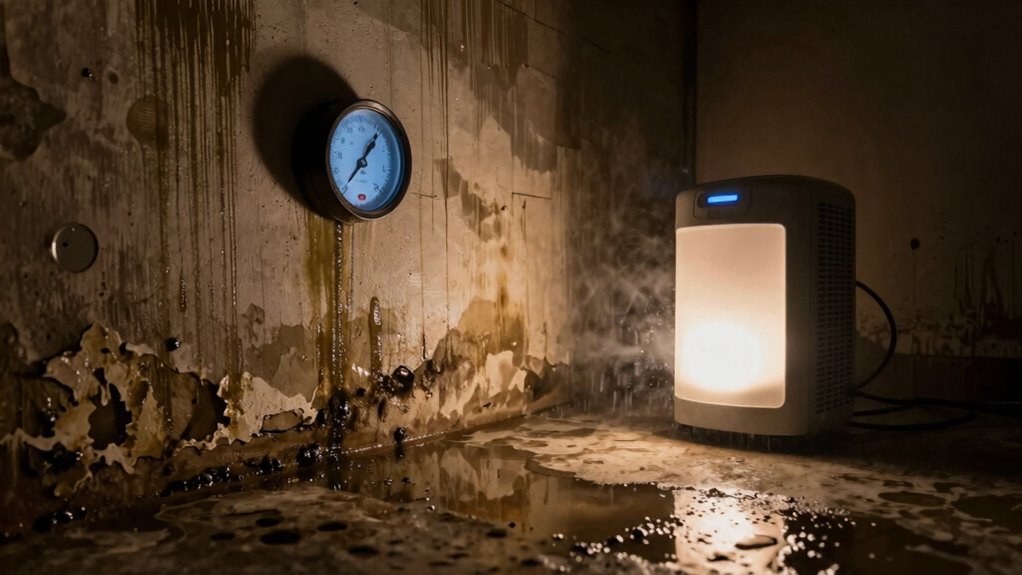
If your basement frequently feels damp or musty despite good ventilation, it might be a sign you need a desiccant dehumidifier. Elevated humidity levels create conditions perfect for mold growth and damage. Watch for these signs:
- Visible mold or mildew on walls, floors, or belongings.
- A persistent musty odor that won’t go away.
- Condensation on windows or pipes, especially in colder months.
These indicators suggest humidity levels are too high, risking mold prevention issues. A desiccant dehumidifier helps maintain ideal moisture balance, protecting your basement from dampness and mold. Recognizing these signs early ensures you can address the problem before extensive damage occurs.
What Factors Should You Consider When Choosing a Desiccant Dehumidifier?
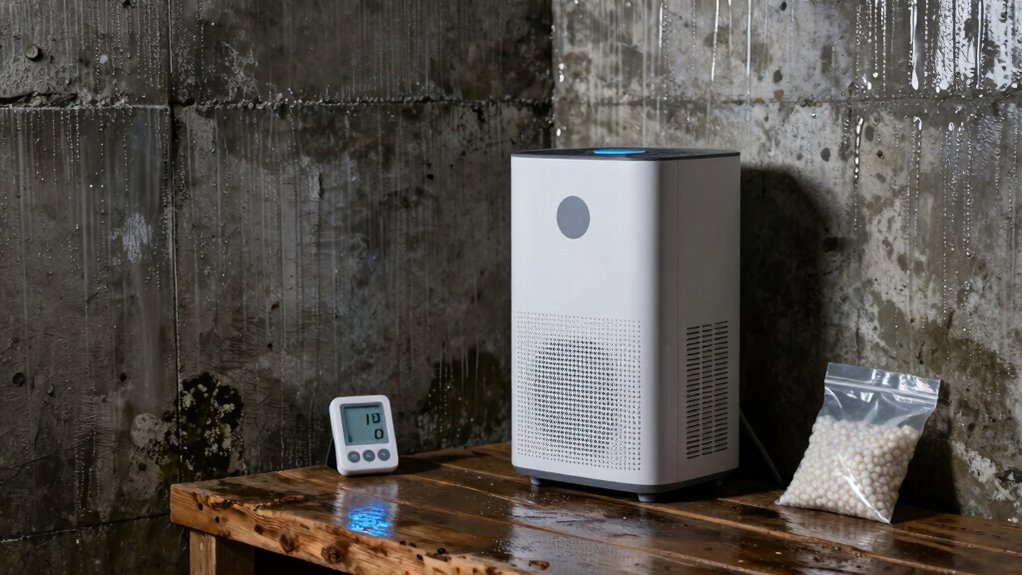
Choosing the right desiccant dehumidifier involves considering several key factors to guarantee it effectively addresses your basement’s needs. First, assess energy efficiency, as a more efficient model saves you money over time. Noise levels are also important, especially if your basement is used as a living space. Lower noise units make operation less disruptive. Additionally, consider the capacity to handle your space’s humidity load. The table below highlights how these factors impact performance:
| Factor | Importance | Your Priority |
|---|---|---|
| Energy Efficiency | Reduces long-term operating costs | High |
| Noise Levels | Ensures comfortable operation | Moderate to High |
| Capacity | Matches size of your basement | Depends on space size |
How to Install and Use a Desiccant Dehumidifier in Your Basement

Installing a desiccant dehumidifier in your basement is straightforward if you follow a few key steps. First, choose a dry, well-ventilated spot away from walls and obstructions. Second, verify the power outlet is compatible and easily accessible. Third, position the unit on a level surface to prevent vibrations and noise.
For proper operation, keep these in mind:
- Regularly check and clean the air filters to maintain efficiency.
- Empty or replace the desiccant material as recommended in your maintenance checklist.
- Monitor the humidity levels using a hygrometer to avoid over-drying the space.
Following these installation tips and maintenance steps helps your dehumidifier run smoothly and prolongs its lifespan.
Desiccant vs. Refrigerant Dehumidifiers: Which Is Better for Cold Spaces?

When selecting a dehumidifier for cold spaces like basements, understanding the differences between desiccant and refrigerant models is essential. Desiccant dehumidifiers excel in low temperatures, providing reliable humidity control without losing efficiency. They use absorbent materials that work well in cold conditions, making them ideal for unheated areas. Refrigerant dehumidifiers, however, struggle in cold environments, as their coils can freeze, reducing effectiveness and energy efficiency. Here’s a quick comparison:
| Feature | Desiccant Dehumidifier | Refrigerant Dehumidifier |
|---|---|---|
| Performance in cold | Excellent | Poor |
| Energy efficiency | Moderate | High at warmer temps |
| Humidity control | Precise | Less effective in cold |
| Cost | Slightly higher | Lower |
| Ideal for | Cold, unheated spaces | Warm, heated spaces |
Choose based on temperature and humidity needs for ideal results.
Tips to Maximize Moisture Control and Prevent Mold

To effectively prevent mold and keep your basement dry, controlling moisture levels is essential. Start by using humidity sensors to monitor real-time moisture levels, ensuring they stay below 60%. Next, implement ventilation strategies like exhaust fans or vents to circulate air and reduce humidity buildup. Finally, consider these tips:
- Regularly check humidity sensors to catch rising moisture early.
- Use exhaust fans during humid days or after activities like laundry.
- Maintain proper airflow by opening windows or installing vents, especially in poorly ventilated areas.
These steps help you keep moisture in check, making mold growth less likely. Consistent monitoring and ventilation create an environment where mold struggles to thrive, protecting your basement’s integrity.
Troubleshooting Common Issues With Desiccant Dehumidifiers

Desiccant dehumidifiers can be highly effective at reducing moisture, but like any appliance, they can encounter common issues that hinder their performance. In a humid climate, poor air circulation can cause the unit to work inefficiently or freeze up. If you notice it’s not removing moisture as expected, check for obstructions around air intake and exhaust vents. Ensure the air flow isn’t blocked, and consider improving air circulation in the room. Cold temperatures can also affect performance, causing the desiccant material to become less effective. Regular maintenance, such as cleaning filters and inspecting the unit, helps prevent issues. If problems persist, consult the manufacturer’s troubleshooting guide or consider professional servicing to keep your dehumidifier functioning at its best.
Frequently Asked Questions
How Often Should I Run My Desiccant Dehumidifier in Winter?
You should run your desiccant dehumidifier in winter whenever humidity levels exceed 50%, especially if your basement feels damp or musty. Check your dehumidifier’s capacity; smaller units may need more frequent operation, while larger ones can run less often. Aim for consistent dryness, running it daily or as needed to maintain ideal humidity. Regularly monitor humidity levels with a hygrometer to prevent excess moisture buildup.
Can a Desiccant Dehumidifier Handle Large Basement Spaces?
Yes, a desiccant dehumidifier can handle large basement spaces if it has sufficient capacity. Look for models with higher capacity ratings, usually measured in pints per day, that are designed for large areas. You should also consider the size of your basement and the humidity levels. Properly selecting a dehumidifier with the right capacity guarantees efficient moisture removal and helps maintain a dry, comfortable environment.
What Maintenance Is Required for a Desiccant Dehumidifier?
You need to regularly maintain your desiccant dehumidifier by replacing filters as recommended by the manufacturer, usually every few months. Additionally, you should check the moisture levels periodically to guarantee peak performance. Keep the unit clean and free of dust, and inspect for any signs of wear. Proper maintenance helps your dehumidifier operate efficiently, reducing humidity and preventing mold in your basement.
Are Desiccant Dehumidifiers Energy-Efficient for Long-Term Use?
While desiccant dehumidifiers may seem like a gentle solution, they actually offer good energy consumption for long-term use. They tend to be more cost-efficient, especially in colder environments, because they don’t rely heavily on compressors. You’ll find them practical and reliable over time, helping you maintain your space without excessive energy bills. So, they’re a smart choice if you’re looking to balance performance with ongoing savings.
How Do I Prevent Mold Growth in Cold, Damp Basements?
To prevent mold growth in your cold, damp basement, you should apply mold-resistant coatings on walls and floors, which inhibit mold spores. Additionally, install moisture barriers to prevent ground moisture from seeping in. Use a dehumidifier, preferably a desiccant type for colder temperatures, to keep humidity levels low. Proper ventilation also helps reduce dampness, creating an environment less conducive to mold growth and protecting your basement’s integrity.
Conclusion
Ultimately, choosing the right dehumidifier is like finding a trusted ally in your basement’s battle against moisture. When cold temps threaten to turn your space into a mold haven, a desiccant dehumidifier stands ready to defy the odds. By understanding your needs and acting decisively, you’ll not only safeguard your home but also turn your basement from a hidden foe into a haven of dryness—proving that moisture doesn’t stand a chance when you’re prepared.