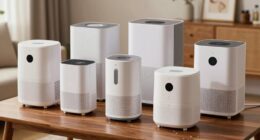
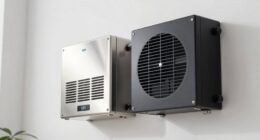
Using a dehumidifier can help you dry laundry indoors faster by actively removing excess moisture from the air. When humidity levels are lower, fabrics dry more quickly, and mold growth is prevented. Dehumidifiers also improve air circulation around your clothes, reducing the time they stay damp. By maintaining a controlled environment, you’ll find that laundry dries in hours instead of days. Keep going to discover more tips for efficient indoor drying.
Key Takeaways
- Dehumidifiers reduce indoor humidity, speeding up the evaporation process for faster laundry drying.
- They create optimal conditions for drying clothes indoors by actively removing excess moisture from the air.
- Consistent humidity control from dehumidifiers prevents mold growth on clothes and walls.
- Using dehumidifiers decreases overall drying time, saving energy and reducing indoor moisture issues.
- Modern units with adjustable settings and air filters enhance drying efficiency and improve indoor air quality.

Drying laundry indoors can be a challenge, especially in humid environments where excess moisture lingers in the air. When you hang clothes inside, the moisture from the wet fabrics adds to the indoor humidity, which can slow down the drying process and create a damp environment. To combat this, using a dehumidifier can make a significant difference. It actively removes moisture from the air, helping clothes dry faster and more efficiently. By maintaining a lower humidity level, you prevent the air from becoming overly saturated, which is vital for quick drying.
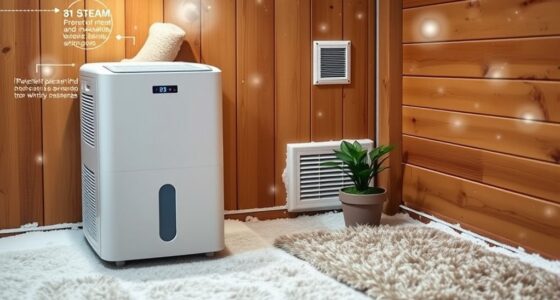
Using a dehumidifier speeds up indoor laundry drying by reducing excess moisture and preventing damp, mold-prone environments.
One of the key benefits of using a dehumidifier is improving air circulation. When the air is drier, it circulates more freely around your laundry, aiding in evaporation. Better air movement helps moisture escape from your clothes and disperse into the room, speeding up the drying process. Instead of relying solely on natural airflow, which can be inconsistent, a dehumidifier ensures a steady reduction of humidity levels, creating ideal conditions for drying. Plus, it reduces the need to move clothes around constantly or use fans, since the device continuously maintains the right environment.
Another advantage of employing a dehumidifier is mold prevention. Excess moisture in the air fosters mold growth on walls, ceilings, and even your clothes, which can be a health hazard and cause unpleasant odors. By keeping humidity levels in check, you inhibit mold spores from settling and growing. This not only protects your health but also preserves the integrity of your home and clothing. Maintaining a dry, mold-free environment is especially important in poorly ventilated spaces or during colder months when windows stay closed, and natural drying is less effective.
Using a dehumidifier also helps in reducing the overall drying time of your laundry. Instead of waiting hours or even days for clothes to dry completely, you notice significant improvements—you can have damp clothes dry within a few hours, saving you time and energy. It’s a simple, effective solution that complements other drying methods, like airing clothes near open windows or using a drying rack. Furthermore, many modern dehumidifiers come with adjustable settings, so you can customize humidity levels to suit your specific needs and room conditions. This control ensures that your indoor environment remains comfortable and dry, without the risk of over-drying or damaging your fabrics. Additionally, using a dehumidifier with HEPA filters can further improve air quality by reducing allergens and airborne particles, creating a healthier environment for your home.
Frequently Asked Questions
Can Dehumidifiers Prevent Mold Growth During Indoor Laundry Drying?
Yes, dehumidifiers help prevent mold growth during indoor laundry drying by reducing excess moisture in the air. This improves air quality and creates an environment less conducive to mold development. When you use a dehumidifier, you actively control humidity levels, keeping them below the threshold where mold thrives. This not only keeps your space healthier but also protects your belongings from mold damage, making your indoor laundry routine safer and more effective.
What Is the Ideal Humidity Level for Drying Clothes Indoors?
The ideal humidity level for drying clothes indoors is around 50%. You should focus on humidity control to maintain a moisture balance that speeds up drying without creating excess dampness. Using a dehumidifier helps, but keep the humidity steady and not too low, which can cause static and damage fabrics. Regularly monitoring humidity levels guarantees your laundry dries efficiently while preventing mold and mildew growth.
How Long Should I Run a Dehumidifier for Effective Laundry Drying?
You should run your dehumidifier for about 4 to 6 hours, depending on its capacity and the amount of laundry. A larger capacity dehumidifier dries clothes faster, reducing overall drying time. Keep it running until the humidity level reaches around 50%, then turn it off to prevent over-drying. Monitoring the humidity helps you optimize drying time and guarantees your clothes dry efficiently indoors.
Are There Specific Dehumidifier Features Best Suited for Laundry Drying?
Imagine drying clothes indoors efficiently during winter; a dehumidifier with adjustable humidity control is ideal. Features like a built-in hygrometer help you maintain *best* moisture removal, preventing excess humidity that can prolong drying. Look for models with a timer and auto shut-off, so you can set it and forget it. These features *guarantee* you control moisture levels precisely, speeding up laundry drying while avoiding mold and dampness.
Can Using a Dehumidifier Reduce Energy Consumption When Drying Clothes Indoors?
Yes, using a dehumidifier can reduce your energy consumption when drying clothes indoors. Its energy efficiency means it uses less power compared to traditional methods like electric dryers, leading to cost savings over time. By effectively removing excess moisture from the air, it speeds up the drying process without needing high energy input. This way, you save money while keeping your laundry dry and your indoor air comfortable.
Conclusion
Now that you know how dehumidifiers can speed up your indoor laundry drying, imagine what other hidden benefits they might offer. Could they improve your home’s comfort or even save you money on energy bills? The potential is exciting, but there’s more to discover. Stay tuned—there’s a world of surprises waiting just around the corner, and your laundry routine might be the first step toward revealing them. Are you ready to find out what’s next?