Condensation on pipes happens when warm, humid air touches cold surfaces, like your pipes, causing moisture droplets to form. Factors such as high humidity, cold pipe surfaces, and materials like copper increase this risk. To fix it, insulate your pipes with foam sleeves or other insulation materials, which keeps surfaces warm and prevents moisture buildup. Proper ventilation and reducing indoor humidity also help. Keep going to discover more effective ways to prevent pipe condensation and protect your home.
Key Takeaways
- Condensation occurs when warm, humid air contacts cold pipe surfaces, causing moisture to form droplets.
- High humidity levels and metal pipes with high thermal conductivity increase condensation risk.
- Insulating pipes with foam sleeves helps maintain surface temperature and prevents moisture buildup.
- Using plastic pipes reduces condensation due to lower thermal conductivity compared to metal pipes.
- Controlling indoor humidity through ventilation and dehumidifiers minimizes condensation on pipes.

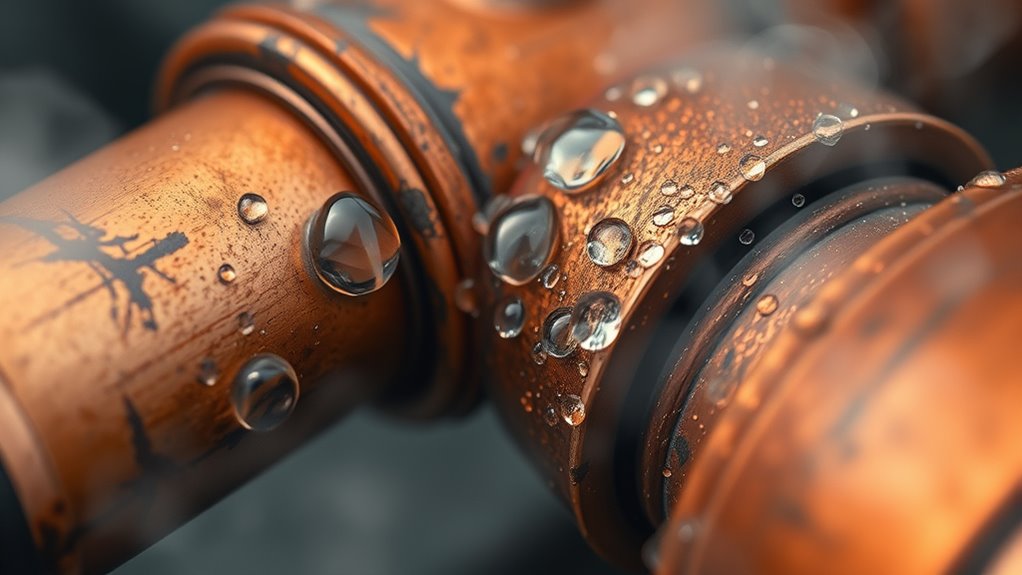
Have you ever noticed water droplets forming on your pipes? This common phenomenon, known as condensation, often worries homeowners because it can lead to water damage or mold growth. Understanding why it happens is the first step toward solving the problem. Condensation occurs when warm, humid air comes into contact with cooler surfaces, like your pipes. As the air cools, it releases moisture, which then forms droplets on the pipe surface. The key factors influencing this process include the pipe material and the surrounding environment.
Different pipe materials react differently to temperature changes. Copper pipes, for instance, are excellent conductors of heat, which means they cool down quickly and are more prone to condensation if the surrounding air is humid. PVC or plastic pipes, on the other hand, are less conductive and tend to resist temperature fluctuations better, reducing the chances of condensation. However, regardless of the material, if the ambient humidity is high and the pipes are cold, droplets will form. To address this, you can employ insulation techniques that help maintain a more consistent temperature on the pipe surface. Insulating your pipes prevents the cold surface from coming into direct contact with humid air, profoundly reducing condensation. Foam pipe insulation sleeves are a popular choice because they are easy to install and effective at keeping the pipe temperature steady.
Choosing the right pipe material can also be a preventive measure. If you’re installing new pipes or replacing old ones, consider materials that are less prone to condensation. Plastic pipes, for example, tend to have a lower thermal conductivity than metal pipes, making them a smarter choice for humid environments. Additionally, combining insulation with proper ventilation can make a big difference. Running a dehumidifier or ensuring good airflow in your space reduces overall humidity, making it less likely for condensation to form.
In essence, understanding the interaction between pipe material and insulation techniques is crucial for preventing condensation. If your pipes are already sweating, insulating them and reducing humidity levels can quickly make a difference. Keep in mind that addressing the root causes—like high indoor humidity or inadequate insulation—pays off in the long run. By choosing suitable pipe materials and adding effective insulation, you can keep moisture off your pipes, protecting your home from potential water damage and mold growth. With a proactive approach, those water droplets can become a thing of the past.
Frequently Asked Questions
How Does Pipe Insulation Prevent Condensation?
Pipe insulation prevents condensation by creating a barrier that insulates the pipe’s surface from the cool air around it. When you install pipe insulation, it reduces the temperature difference between the pipe and the air, preventing moisture from condensing on the pipe’s surface. This condensation prevention keeps your pipes dry, stops water damage, and reduces the risk of mold growth, making your plumbing system more efficient and longer-lasting.
Can Condensation Cause Pipe Corrosion Over Time?
Yes, condensation can cause pipe corrosion over time, especially if you have metal pipes. When moisture from condensation stays on the pipe surface, it promotes rust and deterioration. To prevent this, you should use proper insulation methods like foam or rubber insulation, which reduce moisture buildup. Choosing the right pipe material, such as PVC or plastic, also helps minimize corrosion risks caused by persistent condensation.
Are Certain Pipe Materials More Prone to Condensation?
Certain pipe materials are more prone to condensation due to their insulation properties and thermal conductivity. For example, metal pipes, especially copper and steel, have higher condensation susceptibility because they transfer heat more readily, causing moisture to form. To minimize this, you should focus on proper pipe material selection, choosing materials with better insulation qualities, or adding insulation to reduce the risk of condensation and related issues like corrosion.
How Can I Detect Hidden Condensation Behind Walls?
Detecting hidden condensation behind walls is like peeling back an unseen onion; you might find more than you bargained for. Look for signs of dampness, such as musty odors or peeling paint, and check for wall moisture with a moisture meter. Also, inspect for hidden leaks around pipes and fixtures. If you notice these clues, consider professional help for thorough assessment and proper remedy to prevent mold and structural damage.
What Maintenance Routines Reduce Pipe Condensation Risks?
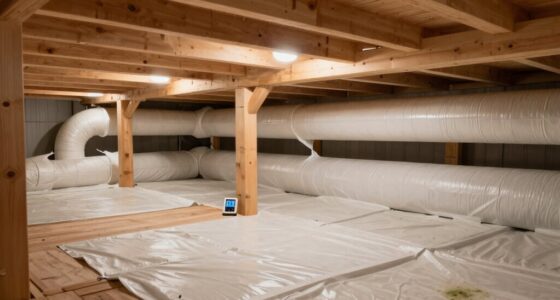
To reduce pipe condensation risks, you should regularly inspect and maintain insulation techniques around your pipes. Make certain they’re properly insulated with foam or fiberglass to prevent temperature differences. Additionally, install moisture barriers like vapor barriers or plastic sheeting to stop humidity from reaching cold surfaces. Keep indoor humidity levels low with dehumidifiers or ventilation, especially during humid months. Consistent maintenance helps prevent condensation, protecting your pipes and surrounding areas from damage.
Conclusion
Now that you understand what causes condensation on pipes, imagine the unexpected moment you might notice it seeping through, risking water damage or mold. Will you catch it early and prevent costly repairs? The key is staying vigilant and acting swiftly. Don’t let hidden moisture catch you off guard—your pipes could hold surprises that challenge your home’s safety. Stay alert, and keep your pipes dry; the next step could make all the difference.