PM2.5 particles are tiny pollutants smaller than 2.5 micrometers, which can easily enter your lungs and bloodstream, impacting your health. They come from sources like cooking, smoking, and outdoor pollution that infiltrate your home. Air purifiers with HEPA filters are effective tools that capture these microscopic particles, reducing indoor pollution levels and improving air quality. To learn more about protecting yourself from PM2.5, explore how these devices work and best practices for cleaner indoor air.
Key Takeaways
- PM2.5 particles are tiny pollutants measuring 2.5 micrometers or smaller that can penetrate deep into lungs and bloodstream.
- Indoor PM2.5 levels originate from cooking, smoking, heating, and outdoor pollution, especially with poor ventilation.
- Exposure to PM2.5 can cause respiratory issues, allergies, and long-term health problems like chronic respiratory diseases.
- Air purifiers with HEPA filters effectively capture PM2.5 particles, reducing indoor pollution and improving air quality.
- Regular use and maintenance of air purifiers, combined with good ventilation, help keep indoor PM2.5 levels low and protect health.
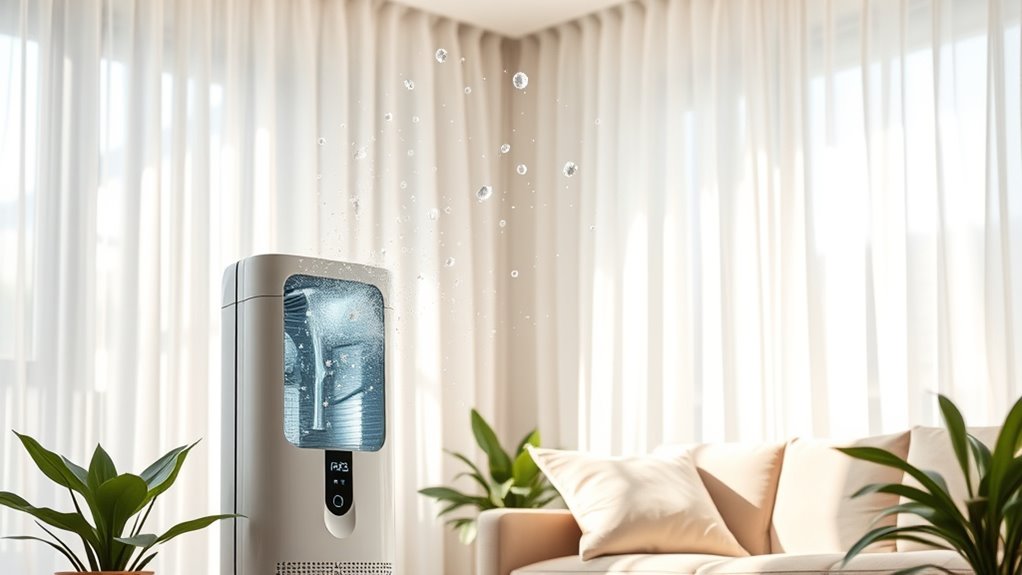
Have you ever wondered what PM2.5 particles are and why they matter for your health? PM2.5 refers to tiny particulate matter measuring 2.5 micrometers or smaller, about 30 times thinner than a human hair. These particles are so small that they can easily penetrate deep into your lungs and even enter your bloodstream. Because of their minuscule size, PM2.5 particles profoundly impact indoor air quality, which directly influences your respiratory health. Poor indoor air quality, often worsened by these tiny pollutants, can lead to a range of health problems, especially if you already have respiratory issues or are exposed over long periods.
When PM2.5 levels are high indoors, it’s usually due to sources like cooking, smoking, heating, or outdoor pollution infiltrating your home. These particles can linger in the air, making it difficult to breathe comfortably or safely. Poor indoor air quality doesn’t just cause immediate discomfort; it can trigger asthma attacks, worsen allergies, and increase the risk of respiratory infections. That’s why understanding and controlling indoor air quality is vital for protecting your respiratory health. Clean air isn’t just a luxury; it’s a necessity for maintaining overall well-being.
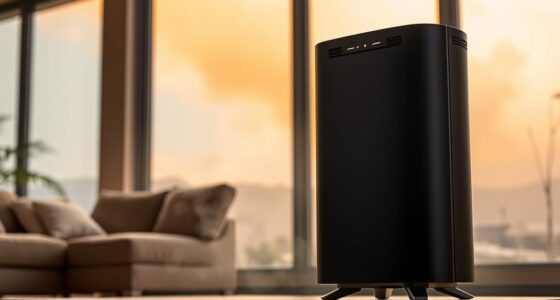
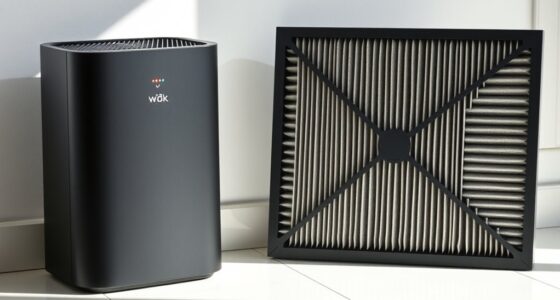
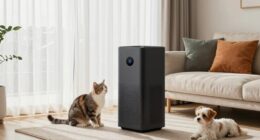
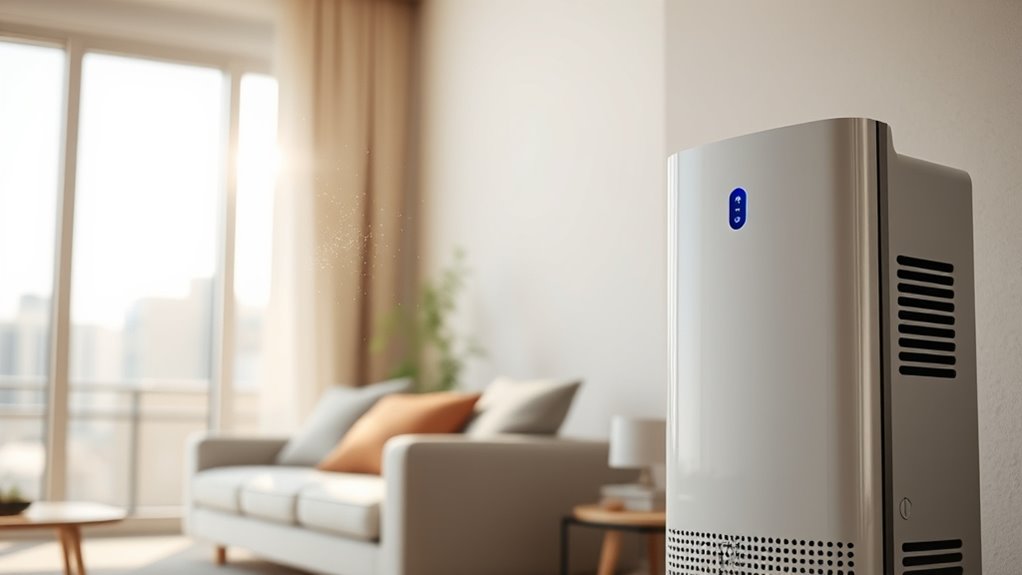
This is where air purifiers come into play. They’re designed specifically to remove PM2.5 particles from the air you breathe. Many modern air purifiers use HEPA filters, which are highly effective at capturing particles as small as 0.3 microns, including PM2.5. When you turn on an air purifier, it continuously pulls in indoor air, traps harmful particles, and releases cleaner air back into your space. This process greatly reduces indoor pollutant levels, making your environment safer and more comfortable.
Using an air purifier can make a noticeable difference in your indoor air quality, especially if you live in an urban area or near busy roads where outdoor pollution easily seeps inside. By reducing PM2.5 levels, you lower the risk of respiratory problems and create a healthier home environment for yourself and your family. Regular maintenance of your purifier, like changing filters as recommended, guarantees it performs effectively. Remember, while air purifiers are powerful tools, they work best when combined with good ventilation, reducing indoor pollution sources, and maintaining a clean home. Additionally, data analytics can help you monitor indoor air quality levels more precisely, enabling better health decisions.
In short, understanding PM2.5 and their impact on indoor air quality empowers you to take steps toward better respiratory health. Investing in a quality air purifier is a proactive way to breathe easier and protect yourself from the hidden dangers lurking in the air inside your home.
Frequently Asked Questions
Can Air Purifiers Remove All Types of Air Pollutants?
Air purifiers can’t remove all types of air pollutants because of their limitations and pollutant specificity. They effectively target particles like dust, pollen, and PM2.5, but may struggle with gases, odors, and volatile organic compounds (VOCs). For all-encompassing air cleaning, you might need specialized filters or additional filtration systems. So, while air purifiers help markedly, they don’t eliminate every pollutant in your environment.
How Often Should I Replace the Filters in My Air Purifier?
You should replace your air purifier’s filters based on the filter lifespan and the replacement frequency suggested by the manufacturer. Typically, HEPA filters last around 6 to 12 months, while carbon filters might need replacement every 3 to 6 months. Check your device’s manual regularly, and monitor air quality indicators if available. Doing so guarantees your air purifier continues to effectively remove PM2.5 and other pollutants.
Do Air Purifiers Effectively Reduce Outdoor PM2.5 Levels?
While air purifiers are great for indoor air quality, they can’t fully tackle outdoor pollution like PM2.5. You might see a noticeable improvement inside, but outdoor levels remain unaffected because purifiers only filter what’s indoors. If outdoor pollution spikes, your air purifier’s effectiveness diminishes. So, yes, they reduce indoor PM2.5, but for outdoor air quality, you’ll need broader measures like community clean air initiatives.
Are There Specific Air Purifier Features Better for Allergy Sufferers?
If you’re an allergy sufferer, look for air purifiers with HEPA filters and activated carbon. HEPA filters trap tiny allergens like pollen, pet dander, and dust mites effectively, while activated carbon absorbs odors and airborne chemicals. These features work together to create a cleaner, healthier environment, reducing allergy symptoms. Choose an air purifier with both options for ideal relief and improved indoor air quality.
How Do I Know if My Air Purifier Is Effectively Reducing PM2.5?
Think of your air purifier like a vigilant guard dog, constantly on alert. To know if it’s effectively reducing PM2.5, perform periodic air quality testing with a reliable monitor. Check the filter efficiency—if your filter captures small particles consistently and your readings show improved air quality, you’re on the right track. Regular maintenance and monitoring guarantee your purifier continues to shield you from harmful airborne particles.
Conclusion
By now, you see how PM2.5 particles are like tiny invaders sneaking into your lungs. Air purifiers act as your shield, catching these harmful particles before they can do damage. Think of them as gentle gatekeepers, standing guard in your home. With the right purifier, you create a safe haven, clearing the air and protecting your health. Breathe easier knowing you’re turning your space into a fortress against invisible threats.