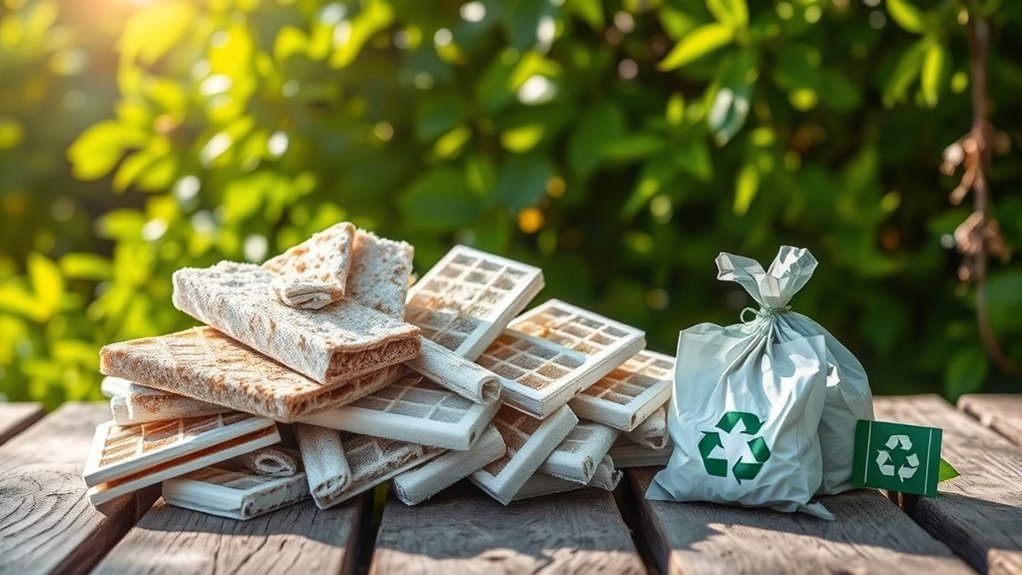

When you dispose of air purifier filters, it’s important to handle them carefully to prevent releasing trapped pollutants into the environment. Sealing used filters in plastic bags and following local disposal regulations helps reduce waste and pollution. Recycling options may exist with manufacturers or recycling centers, which conserve resources and prevent landfilling. Choosing eco-friendly or recyclable filters from the start can further lessen your environmental impact. Keep learning how responsible disposal can make a difference for our planet.
Key Takeaways
- Proper disposal of filters prevents environmental pollution from non-biodegradable materials and trapped pollutants.
- Sealing filters in plastic bags contains dust and hazardous substances, reducing airborne contamination during disposal.
- Recycling filters through manufacturer programs or local centers conserves resources and minimizes landfill waste.
- Choosing eco-friendly filters made from biodegradable or recyclable materials lowers environmental impact from the start.
- Following local regulations and hazardous waste guidelines ensures responsible disposal and reduces ecological harm.
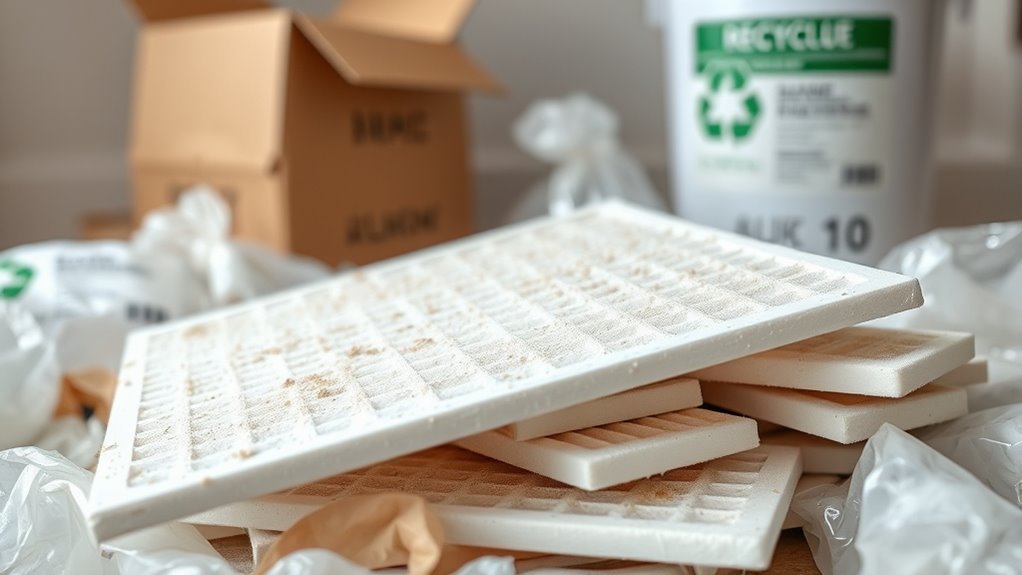
Air purifier filters play a crucial role in improving indoor air quality, but their environmental impact is often overlooked. When it’s time to replace your filters, many people simply toss them in the trash without considering their long-term effects. Unfortunately, these used filters can contain synthetic fibers, activated carbon, and other materials that don’t biodegrade easily, contributing to landfill waste and environmental pollution. To minimize this impact, you should look into options for filter recycling and eco-friendly disposal.
Recycling your filters is a responsible step toward reducing waste. Some manufacturers and recycling programs accept used filters for proper processing, breaking them down into raw materials that can be reused in manufacturing. This not only prevents them from ending up in landfills but also conserves resources by giving new life to old filter components. Before you dispose of your filters, check whether your local recycling centers or the manufacturer offers a filter recycling program. If available, follow their guidelines carefully to ensure your filters are processed correctly. If recycling isn’t an option in your area, consider eco-friendly disposal methods.
Recycling filters prevents waste and conserves resources—check local programs or manufacturer guidelines for proper disposal methods.
When disposing of filters, it’s important to handle them with care to prevent the release of trapped pollutants. Seal used filters in a plastic bag to contain any dust or particles that could be harmful if released into the environment. This simple step helps prevent airborne contaminants and keeps waste handling safe. Ideally, you should dispose of filters in accordance with local regulations, which may specify special collection points or procedures for hazardous waste. Doing so helps ensure that filters are handled responsibly and that harmful substances don’t leak into soil or water sources. Additionally, choosing filters made from environmentally friendly materials can also reduce your ecological footprint from the start. Some manufacturers now produce filters with biodegradable components or recyclable materials, making it easier for you to dispose of them responsibly. When replacing filters, opt for those that offer eco-friendly disposal options or are designed to be easily recycled. By making conscious choices and following proper disposal procedures, you actively contribute to reducing waste and limiting environmental harm. Incorporating cultural awareness into your environmental practices can also promote community engagement and broader sustainability efforts.
Frequently Asked Questions
Can Air Purifier Filters Be Recycled Instead of Disposed Of?
Yes, you can consider filter recycling as an eco-friendly disposal alternative. Not all air purifier filters are recyclable, but some brands offer take-back programs or specific recycling options. Check your filter’s packaging or manufacturer’s website for details. By opting for filter recycling, you reduce waste and environmental impact, making it a responsible choice over disposal. Always follow local guidelines to ensure proper recycling practices.
How Long Do Air Purifier Filters Typically Last Before Disposal?
You might wonder how long your air purifier filter lasts before needing a disposal. Typically, the filter lifespan varies, but most require replacement every 3 to 6 months. Keep an eye on your device’s indicator or monitor air quality to know when it’s time. Ignoring replacement frequency can reduce efficiency and impact the environment. Stay vigilant—timely filter changes keep your air clean and reduce waste.
Are There Eco-Friendly Options for Replacing Air Purifier Filters?
Yes, you can choose biodegradable filters and other sustainable alternatives for your air purifier. These eco-friendly options break down naturally, reducing landfill waste and environmental harm. Look for brands that prioritize sustainability and offer biodegradable or reusable filters. By switching to these alternatives, you help lower your carbon footprint and support environmentally responsible practices, making your air purification more eco-conscious and beneficial for the planet.
What Are the Health Risks of Improper Filter Disposal?
Think of improper filter disposal like releasing toxins into your own home. You risk chemical leaching from filters, which can degrade indoor air quality and cause respiratory issues. If you don’t dispose of filters properly, you might unknowingly expose yourself and others to harmful substances. Always follow disposal guidelines to prevent health risks like allergies, asthma, or chemical exposure, ensuring your indoor environment stays safe and healthy.
Do Filter Disposal Methods Vary by Material or Brand?
Yes, filter disposal methods vary by material and brand. You need to contemplate filter material differences, like whether it’s HEPA, activated carbon, or UV filters, as each requires different disposal procedures. Additionally, brand-specific disposal instructions may exist, so always check the manufacturer’s guidelines. Proper disposal helps prevent environmental harm and health risks, so adapt your approach based on the filter’s composition and brand recommendations for safe and eco-friendly disposal.
Conclusion
By properly disposing of your air purifier filters, you can prevent them from becoming environmental villains lurking in landfills. Think of your actions as a ripple in a pond—small steps can create waves of positive change. Recycling or safely discarding filters reduces pollution and conserves resources. So, take charge of your filter’s end-of-life journey and turn what could be waste into a force for good, helping to keep our planet healthy and thriving.