Electrostatic precipitators are highly effective for removing fine particles from industrial exhaust, helping you meet environmental standards and improve air quality. They operate by charging particles with high voltages and collecting them on plates, which means efficient removal of dust, smoke, and aerosols. However, they require regular maintenance to prevent buildup, and high humidity or corrosive gases can reduce their efficiency and damage components. If you want to learn how to maximize their benefits and address their limitations, keep exploring these systems further.
Key Takeaways
- Highly effective at removing fine particles like dust and smoke, ensuring cleaner emissions.
- Require regular maintenance and cleaning to prevent buildup and maintain efficiency.
- Sensitive to high humidity and corrosive gases, which can impair functionality and damage components.
- Modern units feature self-cleaning and durable materials, reducing long-term operational costs.
- Overall, they provide reliable, large-scale pollution control despite maintenance and environmental sensitivities.
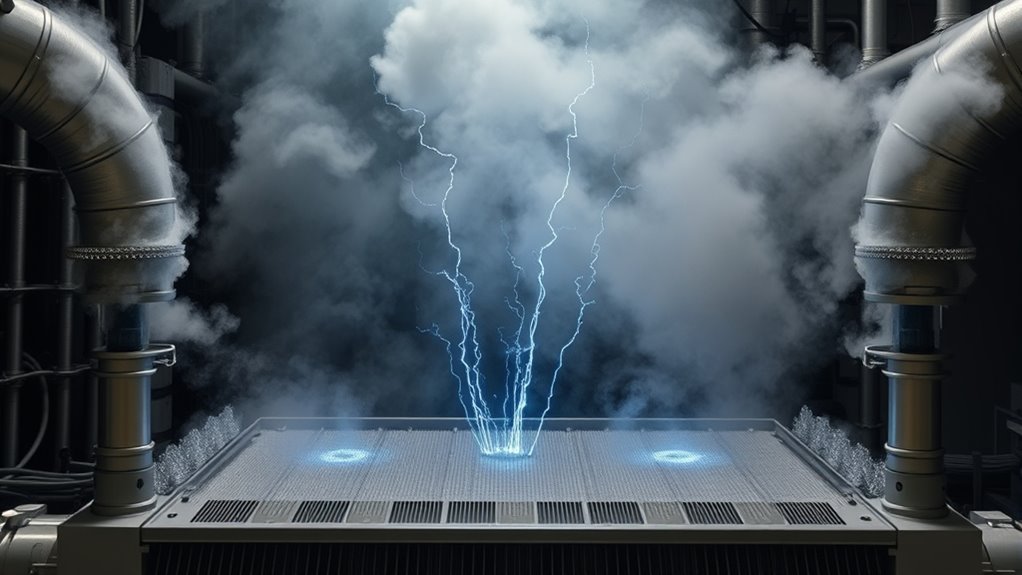
Have you ever wondered how industrial facilities and power plants efficiently remove airborne pollutants? One effective method is using electrostatic precipitator purifiers, which play a vital role in air quality improvement. These devices are designed to remove fine particles, such as dust, smoke, and other aerosols, from exhaust gases before they’re released into the atmosphere. They work by charging particles with a high-voltage electrical field and then collecting them on oppositely charged plates, effectively reducing emissions and helping facilities meet environmental regulations. This process is particularly valued because it can handle large volumes of gases continuously, making it suitable for heavy-duty industrial operations.
Electrostatic precipitators efficiently remove airborne pollutants from industrial exhaust gases, ensuring cleaner air and regulatory compliance.
However, despite their effectiveness, electrostatic precipitators come with certain maintenance challenges. Over time, the collection plates and other components can become coated with accumulated ash and dust, which impairs their ability to maintain a consistent electrical charge. This buildup can lead to a drop in collection efficiency, requiring regular cleaning and maintenance to guarantee peak performance. Maintaining these systems can be labor-intensive and costly, especially because the electrical components need to be carefully inspected for wear and tear. If not properly maintained, the precipitator may experience electrical faults, decreased air quality improvement, and increased operational costs.
Another challenge is that electrostatic precipitators are sensitive to the composition of the gases they treat. High humidity, for example, can cause electrical arcing and reduce the effectiveness of particle collection. Likewise, the presence of certain gases or corrosive substances can damage the collector plates or reduce their lifespan, necessitating frequent replacements or repairs. These maintenance challenges mean that operators must stay vigilant, performing routine inspections and cleaning to keep the system functioning efficiently. Failure to do so can lead to increased downtime and higher costs, which offset some of the benefits these systems offer.
Additionally, advancements in projector technology have shown that modern systems incorporate features to mitigate some of these maintenance issues, such as self-cleaning mechanisms and improved materials for collector plates. Despite these challenges, electrostatic precipitator purifiers remain a popular choice because of their ability to markedly improve air quality in industrial settings. They can remove a high percentage of airborne particles, helping facilities meet environmental standards and protect public health. Their relatively low operational costs and high capacity make them attractive, especially in large-scale operations. Still, the key to maximizing their benefits lies in diligent maintenance and understanding their limitations. When properly cared for, electrostatic precipitators are a reliable, efficient tool for air pollution control, but neglecting maintenance can undermine their effectiveness and lead to increased operational hurdles.
Frequently Asked Questions
Are Electrostatic Precipitators Effective Against All Types of Airborne Particles?
Electrostatic precipitators are effective against many airborne particles, especially larger ones, but they may struggle with very tiny particles like some aerosols and airborne viruses. Particle size plays a vital role, as smaller particles can bypass the electric charges or be less attracted to the collection plates. So, while they help improve air quality, they might not fully eliminate all airborne viruses or microscopic particles.
How Energy-Efficient Are Electrostatic Precipitator Purifiers Over Extended Use?
Think of electrostatic precipitator purifiers as a well-tuned engine that runs efficiently over time. They’re quite energy-efficient, especially with low energy consumption during extended use. This means your operational costs stay manageable because they don’t demand excessive power. As long as you maintain them properly, they can keep working effectively without draining your energy resources, making them a smart choice for long-term air purification.
What Maintenance Is Required to Keep an Electrostatic Precipitator Functioning Optimally?
To keep your electrostatic precipitator functioning ideally, you should perform regular filter replacements and electrical inspections. Check and replace filters as needed to prevent buildup that can impair efficiency. Additionally, conduct electrical inspections to ensure all components are working correctly and safely. Keeping up with these maintenance tasks helps improve performance, extend the lifespan of your unit, and maintain excellent air purification.
Can Electrostatic Precipitators Be Integrated Into Existing HVAC Systems?
Yes, you can integrate electrostatic precipitators into existing HVAC systems. To guarantee effective HVAC integration, you need to check system compatibility first. This involves evaluating your current ductwork, airflow capacity, and power supply. Once compatibility is confirmed, professional installation is essential to optimize performance and prevent issues. Proper integration can improve air quality considerably without disrupting your system’s operation, making it a valuable upgrade.
Do Electrostatic Precipitator Purifiers Produce Any Harmful Byproducts or Ozone?
Imagine you’re using an electrostatic precipitator purifier in your home; it doesn’t produce harmful emissions like ozone generation, so it’s safe for indoor air quality. However, under certain conditions, it can generate small amounts of ozone, a harmful byproduct. While generally safe, improper maintenance or malfunction might lead to increased ozone levels. Regular checks help minimize ozone risks, ensuring your air stays clean and safe.
Conclusion
In the end, electrostatic precipitator purifiers can be a great choice if you’re looking for efficient air cleaning, especially for industrial settings. They effectively remove pollutants and can save energy in the long run. But remember, every coin has two sides—regular maintenance is key to keeping them working well. As the saying goes, “An ounce of prevention is worth a pound of cure,” so weigh the pros and cons carefully before investing.