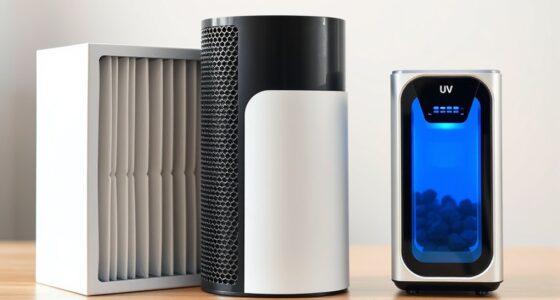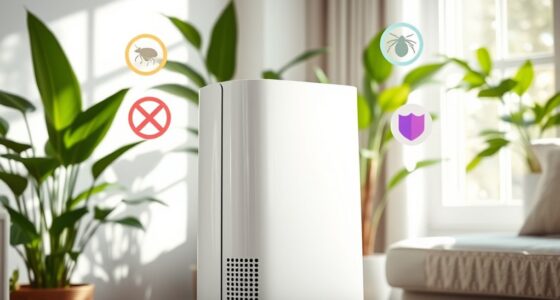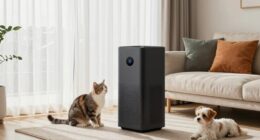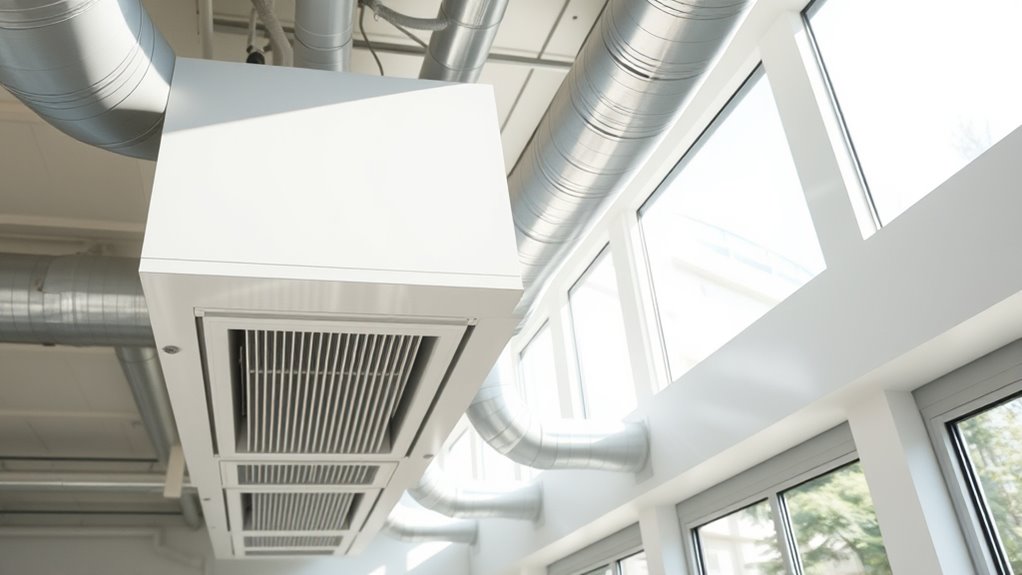

Combining air purifiers with your HVAC system can greatly improve your indoor air quality by removing allergens, pollutants, and odors. It can boost energy efficiency and support better health, especially if someone has allergies or asthma. However, compatibility issues, added maintenance, potential noise, and higher upfront costs are important to contemplate. Proper installation and choosing compatible units are key. To find out how to maximize these benefits and avoid common pitfalls, explore the full details below.
Key Takeaways
- Enhances indoor air quality by removing pollutants, allergens, and odors through system integration.
- Proper installation and compatibility are crucial to ensure efficiency and prevent system issues.
- May increase initial costs and maintenance needs, including filter replacements and system cleaning.
- Can improve energy efficiency by reducing HVAC workload but might introduce noise or energy consumption concerns.
- Regular maintenance and ventilation are essential; integration is beneficial when combined with overall air quality strategies.

Integrating air purifiers with your HVAC system can substantially improve indoor air quality by effectively removing pollutants, allergens, and odors. When you combine these systems, you’re taking a proactive step toward creating a healthier living environment. An air purifier linked directly to your HVAC means cleaner air circulates throughout your home, reducing dust, pet dander, mold spores, and airborne bacteria. This setup is especially beneficial if you or someone in your household suffers from allergies or asthma. Better indoor air quality not only promotes health but also enhances comfort, allowing you to breathe more easily and sleep more soundly. Additionally, integrating air purifiers with your HVAC system can be a smart move for energy efficiency. Modern air purifiers are designed to work seamlessly with HVAC units, requiring minimal additional power while improving airflow and filtration. This synergy often leads to less strain on your system, as it doesn’t have to work as hard to maintain air quality, potentially reducing energy bills over time. Proper integration can also help extend the lifespan of your HVAC equipment by reducing the buildup of contaminants and particulates that can cause wear and tear.
However, it’s important to understand the potential downsides. While integrating an air purifier can boost indoor air quality, it might also introduce some complexity to your HVAC system. You’ll need to ensure compatibility between your purifier and existing equipment, which may involve professional installation. Some systems might require modifications or additional maintenance, like replacing filters or cleaning components more frequently. If not properly maintained, the purifier can become less effective or even contribute to system inefficiencies. Furthermore, not all air purifiers are created equal; some models consume more energy or produce noise that could be disruptive. You should research and select a unit designed for integration with your specific HVAC setup to maximize benefits without sacrificing energy efficiency.
Furthermore, while combining these systems can be cost-effective in the long term, the initial investment might be higher than standalone air purifiers or upgrading your HVAC alone. You need to weigh the upfront costs against the ongoing savings on energy bills and health benefits. Keep in mind that even the best integrated system won’t completely eliminate all airborne pollutants, so regular maintenance and proper ventilation remain essential. Overall, if you choose the right equipment and keep up with maintenance, integrating air purifiers with your HVAC system can be a highly effective way to elevate your indoor air quality while also supporting energy efficiency. It’s a smart investment in your home’s comfort and your family’s health, provided you approach it with informed choices.
Frequently Asked Questions
Can Air Purifiers Damage HVAC System Components?
Air purifiers usually won’t damage your HVAC system if you maintain them properly and guarantee HVAC compatibility. Poorly maintained air purifiers can cause dust buildup or leaks, which might strain your system. Regular air purifier maintenance, like changing filters and cleaning components, reduces this risk. Always check that your air purifier is compatible with your HVAC system to prevent potential issues and keep both working efficiently.
Do Air Purifiers Reduce Energy Efficiency When Combined With HVAC?
It doesn’t have to be a double-edged sword; air purifiers can increase energy consumption slightly but won’t considerably hurt system performance if set up properly. You might think it’s a recipe for draining your energy, but with efficient models and correct placement, you keep both air quality high and energy use reasonable. Just make certain your system isn’t overburdened, and you’ll find that the benefits outweigh any extra costs.
How Often Should Air Filters Be Replaced in This Setup?
You should replace your air filters every 1 to 3 months, depending on your filter type, household air quality, and usage. Following a regular maintenance schedule ensures your system runs efficiently and keeps air clean. For combined setups with air purifiers, it’s especially important to monitor filter condition closely, as increased filtration may require more frequent filter replacements to maintain ideal airflow and indoor air quality.
Are There Specific Air Purifiers Compatible With All HVAC Systems?
Did you know some air purifiers are designed for universal compatibility? You can find models with filter integration that easily connect to most HVAC systems without hassle. These purifiers often feature adaptable fittings and smart controls, making installation straightforward. To guarantee a perfect match, check the unit’s specifications for compatibility with your system’s size and filter type. This way, you maximize air quality without worrying about compatibility issues.
Does Combining These Systems Effectively Remove All Indoor Pollutants?
Combining air purifiers with your HVAC system can substantially reduce indoor pollutants, but it may not remove all airborne contaminants. Regular air purifier maintenance guarantees ideal performance, while verifying HVAC system compatibility prevents issues. Keep in mind, some pollutants like gases or VOCs may require specialized filters. To maximize air quality, consider an inclusive approach, including ventilation and source control, alongside your combined system.
Conclusion
By integrating air purifiers with your HVAC system, you’re fundamentally creating a fortress against pollutants—like a knight’s shield in a castle. It’s a smart move for cleaner air and healthier living. Just remember, no system is perfect; you’ll still need to change filters and maintain equipment. Think of it as tending a garden—you’ll enjoy fresher air and peace of mind, making your home feel as cozy as a fireside on a winter’s eve.