If you have an attached garage, the best spot for your air purifier is near the garage or in entry points like a mudroom or laundry room. Placing it here allows the purifier to catch pollutants early before they spread into your living areas. Strategic placement near doorways and vents helps improve airflow and prevents fumes and dust from contaminating your home. To learn more about optimizing your purifier placement, keep going for helpful tips.

Get home appliances delivered free with Prime
- Fast, free delivery on millions of items
- Prime Video, Amazon Music and more included
- Member-only deals all year
Key Takeaways
- Place purifiers near garage entry points to intercept pollutants before they spread into living spaces.
- Position purifiers in laundry or mudrooms to block contaminants from migrating further into the home.
- Locate purifiers close to main living areas for effective air filtration of garage-origin pollutants.
- Use ventilation vents or exhaust fans near garages to enhance pollutant removal with purifiers.
- Consider airflow patterns to strategically position purifiers where contaminated air naturally flows.
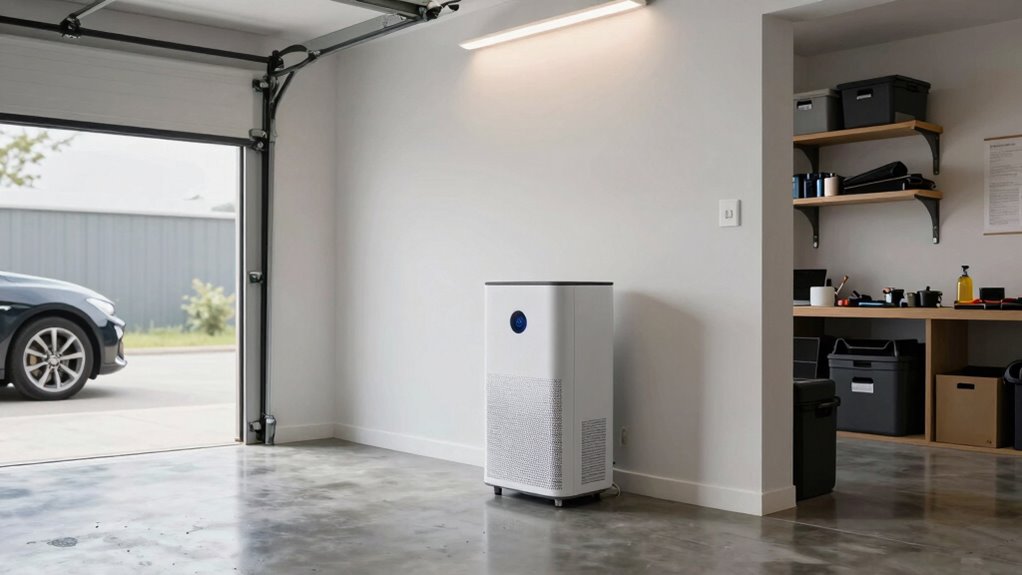
Have you ever wondered how the placement of your air purifier can make a difference when you have an attached garage? The answer lies in understanding how attached garages influence your home’s air quality and how ventilation systems work. Garages are notorious for bringing in dust, fumes, and other pollutants from outside, which can quickly circulate into living spaces if your purifier isn’t strategically placed. This means that simply having an air purifier isn’t enough—you need to position it where it can most effectively filter harmful particles before they spread throughout your home.
Proper placement of your air purifier is essential to prevent garage pollutants from spreading throughout your home.
The best room for your air purifier depends heavily on its proximity to the garage. Typically, the garage connects directly to the main living areas, so placing the purifier nearby ensures it can catch contaminants early. For example, if your garage opens into a laundry room or a mudroom, positioning the purifier there can help prevent pollutants like automotive fumes, chemicals, and dust from migrating into living rooms or bedrooms. This placement maximizes the purifier’s ability to improve overall air quality by intercepting pollutants close to their entry point.
Ventilation systems play an essential role in this process. When your home’s ventilation is working efficiently, it helps circulate fresh air and expel stale or contaminated air. However, if the ventilation system isn’t optimized, pollutants from the garage can linger longer inside your house. Consequently, placing the purifier where the ventilation system pulls in or pushes out air enhances its effectiveness. For example, positioning it near air return vents or exhaust fans can help it work synergistically with these systems, pulling in polluted air and filtering it before it spreads further.
Additionally, consider the airflow patterns in your home. Air naturally flows from areas of higher pressure to lower pressure, so placing the purifier in a location where it can influence this flow is ideal. For instance, near doorways connecting your garage to the home can serve as strategic spots. This way, the purifier actively filters air as it moves from the garage inward, preventing contaminants from settling into your living spaces. Understanding airflow patterns can help you optimize the placement for maximum air purification efficiency. Moreover, being aware of how ventilation interacts with indoor air quality can further enhance your home’s overall air health. Properly managing indoor pollutant sources is also crucial for maintaining a healthier environment inside your home. Recognizing the source of pollutants helps in making more informed decisions about purifier placement and overall air quality management. Additionally, ensuring that your home’s ventilation system is properly balanced can significantly improve air exchange rates, reducing the buildup of contaminants from the garage.
Products Worth Considering

Blueair Blue Pure 511i Max Smart Air Purifier

Samsung 48 4K OLED Smart TV (2026) with WireLogic 8ft Ultra High Speed HDMI Cable

Philips Hue White and Color Ambiance Smart Retrofit Recessed LED Downlights, 5/6-Inch, 4-Pack
As an affiliate, we earn on qualifying purchases.
Frequently Asked Questions
How Does Garage Air Quality Affect Indoor Air in Adjacent Rooms?
Garage fumes can considerably impact indoor air quality in adjacent rooms because air exchange allows pollutants to migrate indoors. When fumes from the garage, like chemicals or exhaust, seep through gaps or vents, they lower air quality inside your home. Proper ventilation and air purifiers help reduce this contamination, but it’s essential to keep the garage well-sealed and guarantee good air exchange to prevent fumes from affecting your living spaces.
Are There Specific Purifier Types Recommended for Garage-Adjacent Spaces?
Think of garage air filters as your home’s immune system. For garage-adjacent spaces, a high-quality HEPA purifier with activated carbon can effectively trap dust, fumes, and odors. Place the purifier near the door connecting your garage, ensuring fresh air flows into your main living area. Proper purifier placement maximizes efficiency, so keep it away from walls or obstructions, and regularly check that your purifier is functioning at its best for cleaner indoor air.
Can Garage Odors Impact the Effectiveness of Air Purifiers Inside the Home?
Garage smells can impact your air purifier’s effectiveness inside your home if odors seep into living spaces. To prevent this, guarantee your air purifier is correctly placed—ideally away from garage doors or vents letting in garage odors. Proper air purifier placement helps minimize the impact of garage smells, keeping indoor air cleaner and fresher. Regular maintenance and choosing a purifier with good odor filtration also boost overall performance.
What Ventilation Methods Help Reduce Garage Air Infiltration Into Living Areas?
You can reduce garage air infiltration with effective garage ventilation methods like installing exhaust fans, sealing gaps, and opening windows regularly. These actions promote fresh air flow, prevent stale garage air from seeping into your home, and improve overall air quality. By actively managing garage ventilation, you protect your living space from harmful odors and pollutants, creating a healthier environment where clean air replaces contaminated air, and comfort replaces concern.
How Often Should Air Purifiers Be Maintained When Placed Near Garages?
You should maintain your air purifier near garages at least every three to four months. Garage fumes can quickly clog filters, reducing efficiency, so regular upkeep is essential. Keep an eye on the filter indicator if your purifier has one, and replace filters promptly when dirty. Proper purifier placement, especially near garages, helps reduce harmful fumes and improves indoor air quality, ensuring you’re breathing cleaner air consistently.
Conclusion
Now that you know how attached garages influence the best purifier placement, won’t you take the extra step to guarantee your home’s air stays clean? By positioning your purifier correctly, you prevent potential pollutants from drifting into your living space, creating a healthier environment for everyone. So, imagine opening your door after a long day—wouldn’t it be reassuring to breathe in fresh, purified air without worry? Make the smart choice and optimize your space today.