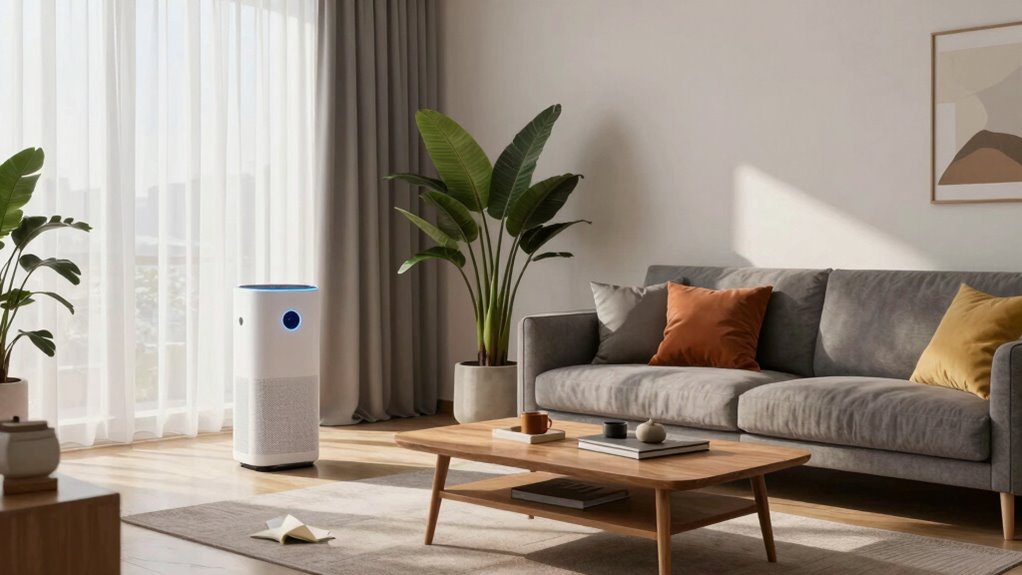
In shared apartments, simply placing one purifier in the living room isn’t enough to guarantee good air quality for everyone. You should set clear rules about where and when to use the air purifier, considering high-traffic and pollution sources like kitchens or smoking areas. Proper placement and regular monitoring help improve indoor air and prevent misunderstandings among roommates. To learn how to establish effective purifier routines, keep exploring strategies to create a healthier shared living space.

Get home appliances delivered free with Prime
- Fast, free delivery on millions of items
- Prime Video, Amazon Music and more included
- Member-only deals all year
Key Takeaways
- Establish specific rules for purifier usage in all rooms, not just the living room, to ensure comprehensive air quality.
- Place purifiers strategically in high-traffic, poorly ventilated, or pollution-prone areas like kitchens and bedrooms.
- Develop clear air quality monitoring guidelines and maintenance schedules to optimize purifier effectiveness.
- Promote shared responsibility among roommates for turning on and maintaining purifiers consistently.
- Incorporate guidelines for additional measures such as ventilation and pollutant source control alongside purifier use.
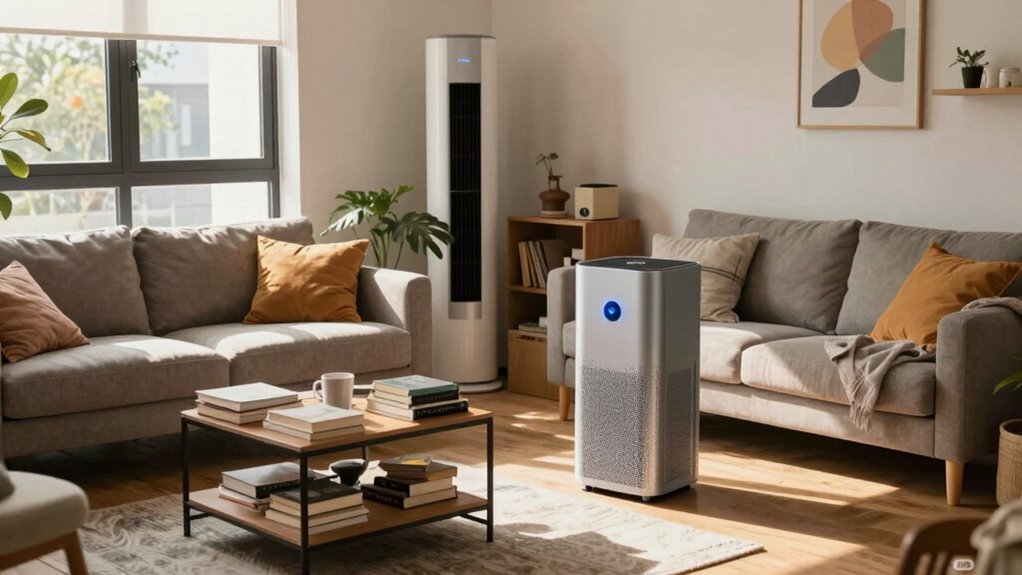
Shared apartments often lack clear rules for air purifier use, which can lead to conflicts and poor air quality. Without specific guidelines, roommates might assume the purifier is only necessary in certain spots, or they may forget to turn it on altogether. This ambiguity can result in uneven air quality throughout the space, leaving some rooms stuffy or filled with airborne pollutants. To avoid these issues, it’s important to establish a thoughtful approach to purifier placement and usage, guaranteeing everyone benefits from cleaner air.
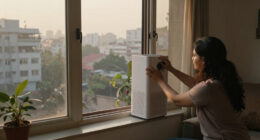
First, consider the layout of your apartment. The air purifier’s placement plays a vital role in optimizing its effectiveness. You might be tempted to put it in the living room, but that doesn’t necessarily cover the entire apartment. Instead, think about high-traffic areas or rooms with poor ventilation where pollutants tend to accumulate. For example, if someone smokes or cooks frequently in the kitchen, placing the purifier nearby can considerably improve overall air quality. Similarly, bedrooms should have their own dedicated purifiers or be within the purifier’s effective range if space permits. Proper placement ensures the purifier can circulate clean air efficiently, rather than just filtering a small section of the apartment. Establishing clear air quality guidelines helps ensure the purifier’s benefits are maximized across the living space. Additionally, understanding indoor air quality can help roommates recognize when additional measures, like increased ventilation, might be necessary. Being aware of air quality standards can guide roommates in setting appropriate expectations for healthy living conditions. Regularly monitoring air quality levels can also help identify when the purifier needs maintenance or if additional air purification measures are required.
Products Worth Considering

Coway Airmega AP-1512HHS Smart HEPA Air Purifier, Black

LEVOIT Air Purifier for Home, Pets, Bedroom, Smart WiFi

Levoit Vital Pet Pro Smart Air Purifier
As an affiliate, we earn on qualifying purchases.
Frequently Asked Questions
How Often Should Air Purifiers Be Replaced in Shared Apartments?
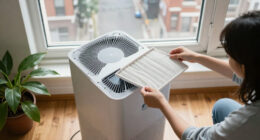
You should replace your air purifier’s filters every 6 to 12 months, depending on usage and air quality, to guarantee ideal air purifier maintenance. Regularly checking the filters helps prevent buildup that reduces efficiency. Keep cost considerations in mind—more frequent replacements might be pricier but improve air quality. If everyone in the shared apartment notices allergies or odors, consider replacing filters sooner to maintain a healthier environment.
Are There Specific Air Purifiers Suitable for Multiple Roommates?
You should pick an air purifier designed for larger spaces with features that handle roommate compatibility and noise levels. Quiet models like the Coway Airmega or Blueair Classic keep everyone comfortable and avoid interruptions. But beware—some purifiers might be too noisy or too small for shared living. Choose one with adjustable fan speeds and smart filters, ensuring all roommates breathe easier without sacrificing peace or cleanliness.
What Is the Ideal Placement for Air Purifiers in Shared Spaces?
You should place the air purifier in a central location of the shared space to maximize air quality. Opt for a purifier design that covers the entire room and has a high CADR rating for effective filtration. Keep it away from walls and furniture to guarantee good airflow. Regularly clean or replace filters to maintain performance. Proper placement ensures everyone benefits from cleaner air and healthier living conditions.
How Do I Determine the Right Purifier Size for My Apartment?
To find the right purifier size, first measure your room size in square feet. Then, check the filter capacity of the purifier, guaranteeing it matches or exceeds your room’s needs. A purifier with a higher CADR (Clean Air Delivery Rate) suits larger spaces, while smaller rooms need less powerful models. Matching the purifier’s size and filter capacity to your room ensures effective air cleaning and healthier indoor air quality.
Do Air Purifiers Effectively Remove All Indoor Pollutants?
Air purifiers aren’t magic wands that banish all indoor pollutants, so don’t buy into air quality myths claiming they can. They effectively reduce many airborne particles and allergens when maintained properly, but require regular filter changes and cleaning. While they improve your air, they won’t eliminate everything. To keep your environment safe, understand their limits, follow purifier maintenance routines, and consider additional measures like ventilation for ideal indoor air quality.
Conclusion
So, step up and set sensible standards for purifier placement in shared spaces. Don’t delay or dismiss the importance—dodge the disaster of dodgy air! By bringing balance, brainstorming better rules, and banning vague directives, you’ll breathe easier and build a better, more balanced living environment. Remember, responsible rules foster fresher, fairer shared spaces. Let’s lead with logic, love, and a little lung-friendly luck!