Using air purifiers with HEPA filters can effectively reduce indoor airborne allergens like dust mites, pet dander, and mold spores, which often trigger asthma symptoms. To get the best results, choose a model suitable for your room size, place it correctly, and keep filters maintained. Combining air purifiers with other air quality strategies, such as controlling humidity and good ventilation, can further improve your environment. Keep exploring the tips that can help you breathe easier and manage asthma better.
Key Takeaways
- HEPA filters effectively capture asthma-triggering particles like dust mites, pet dander, and mold spores, reducing indoor allergen levels.
- Proper placement and regular maintenance of air purifiers ensure optimal allergen removal and consistent indoor air quality improvement.
- Combining air purifiers with other strategies—such as controlling humidity and reducing indoor pollutants—enhances asthma management.
- Monitoring outdoor air quality and pollen forecasts helps optimize indoor air strategies and reduce exposure during high pollution periods.
- Selecting appropriately sized units for the room and following manufacturer guidelines maximizes air purifier efficacy in controlling asthma triggers.
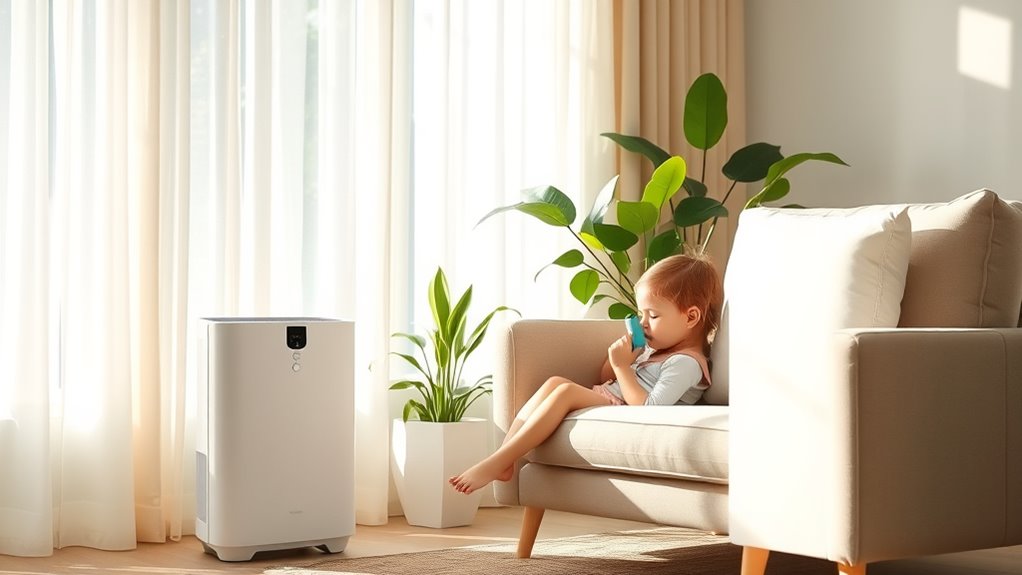
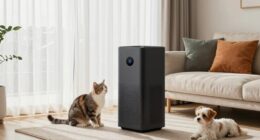
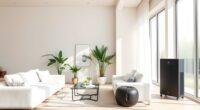
If you have asthma, managing indoor air quality is vital, and air purifiers can play a vital role. Indoor allergens like dust mites, pet dander, mold spores, and pollen can trigger asthma symptoms and worsen your condition. Using an air purifier helps reduce these airborne irritants, creating a safer environment. To maximize benefits, it’s important to choose a device that effectively targets common indoor allergens and meets established air quality standards. Air quality standards set by organizations such as the EPA or WHO provide guidelines for acceptable levels of pollutants indoors, guaranteeing your space remains safe and breathable. When selecting an air purifier, look for models with HEPA filters, as they can trap particles as small as 0.3 microns, including most allergens that trigger asthma. HEPA filters are proven to considerably reduce airborne allergens, helping you breathe easier and lessen the frequency of asthma attacks. It’s also worthwhile to consider the purifier’s coverage area; an appropriately sized device will clean the air more efficiently, especially in larger rooms or open spaces. Remember, the placement of the air purifier matters — position it where you spend most of your time, away from walls or obstructions, to guarantee optimal air circulation. Regular maintenance is essential; change filters as recommended by the manufacturer to keep the device functioning at peak performance. A poorly maintained purifier won’t effectively remove pollutants and might even circulate accumulated allergens back into the air. Beyond using an air purifier, it’s wise to keep your environment clean and dry to prevent mold growth, which is another common indoor allergen. Additionally, controlling humidity levels between 30-50% can limit mold and dust mite proliferation, further improving indoor air quality. Proper air filtration can significantly enhance your indoor environment and reduce allergen levels. Ventilation also plays a role—opening windows when outdoor air quality is good can help dilute indoor pollutants, but avoid doing so during high pollen seasons if pollen triggers your symptoms. Combining these strategies with the use of a quality air purifier aligns with air quality standards and maximizes your ability to manage indoor allergens effectively. It’s important to stay informed about your local air quality index (AQI) and pollen forecasts, so you can adjust your environment accordingly. Overall, incorporating an air purifier into your asthma management plan can appreciably reduce indoor triggers, helping you breathe easier and maintain better control over your symptoms. By staying vigilant about indoor allergens and adhering to air quality standards, you create a healthier living space that supports your respiratory health and reduces the frequency and severity of asthma flare-ups.
Frequently Asked Questions
Do Air Purifiers Help With Allergy Symptoms Beyond Asthma?
Yes, air purifiers can help with allergy symptoms beyond asthma by reducing pollen and pet dander in your environment. They trap airborne allergens, making the air cleaner and less irritating. When you use a purifier, you may notice fewer sneezing, nasal congestion, and itchy eyes. Keep in mind, choosing a HEPA filter and maintaining it properly maximizes these benefits, creating a more comfortable space for allergy sufferers.
How Often Should I Replace Filters in My Air Purifier?
You should replace your air purifier filters based on the manufacturer’s recommended replacement schedule, usually every 3 to 6 months. Regular filter maintenance guarantees peak performance and air quality. Check your filter regularly for dirt and wear, and replace it sooner if it looks dirty or clogged. Keeping up with your replacement schedule helps reduce allergens and pollutants, making your indoor air healthier and more effective at managing asthma symptoms.
Are HEPA Filters the Best Choice for Asthma Sufferers?
Yes, HEPA filters are the best choice for asthma sufferers because of their high effectiveness in capturing small particles like allergens and dust. To maximize HEPA effectiveness, you need to perform regular filter maintenance, replacing filters as recommended by the manufacturer. This guarantees your air purifier continues to work efficiently, helping you breathe easier and reducing asthma triggers in your environment.
Can Air Purifiers Reduce Indoor Mold Growth?
Think of your home as a fortress against mold. Air purifiers with HEPA filters can help, but they mainly trap airborne mold spores rather than stopping mold growth directly. To truly reduce indoor mold, you need good air circulation and moisture control. Regular cleaning and fixing leaks are your strongest allies. An air purifier helps clear spores, making the air safer, but controlling humidity is key to preventing mold from taking hold.
Are Air Purifiers Safe for Children With Asthma?
Yes, air purifiers are generally safe for children with asthma when you choose the right type. Focus on HEPA filters, which effectively remove allergens and particles without emitting harmful substances. Always verify the device has child safety features, like secure filters and stable placement. Regularly clean and maintain the purifier to keep it safe and effective. This way, you support your child’s respiratory health without risking safety.
Conclusion
Think of an air purifier as a lighthouse guiding you through the fog of asthma triggers. By clearing the air, it helps you navigate daily life with confidence and ease. Remember, while it’s not a magic wand, it’s a steady beacon that supports your breathing journey. Keep the light shining bright—embrace cleaner air, and let it symbolize your commitment to better health and brighter days ahead.