Carbon filters are effective at reducing many VOCs in your indoor air, especially those that are polar or larger molecules. They work best when new, properly maintained, and used in well-ventilated spaces. However, some VOCs are resistant or too volatile for carbon to remove effectively. If odors persist or symptoms remain, it’s a sign the filters might need checking or alternatives should be considered. Keep exploring to learn how to optimize your air quality and get the most out of your purifier.
Key Takeaways
- Carbon filters effectively adsorb many VOCs but may struggle with highly volatile or chemically stable compounds.
- Regular maintenance and timely replacement are essential for maintaining VOC removal efficiency of carbon filters.
- Carbon filters are less effective at neutralizing odors or VOCs that resist adsorption, requiring additional purification strategies.
- Combining carbon filtration with proper ventilation and source control enhances overall indoor VOC reduction.
- For stubborn VOCs, specialized filters like catalytic or advanced adsorption media may be necessary beyond standard carbon filters.
What Are VOCs and Why Are They a Concern Indoors?
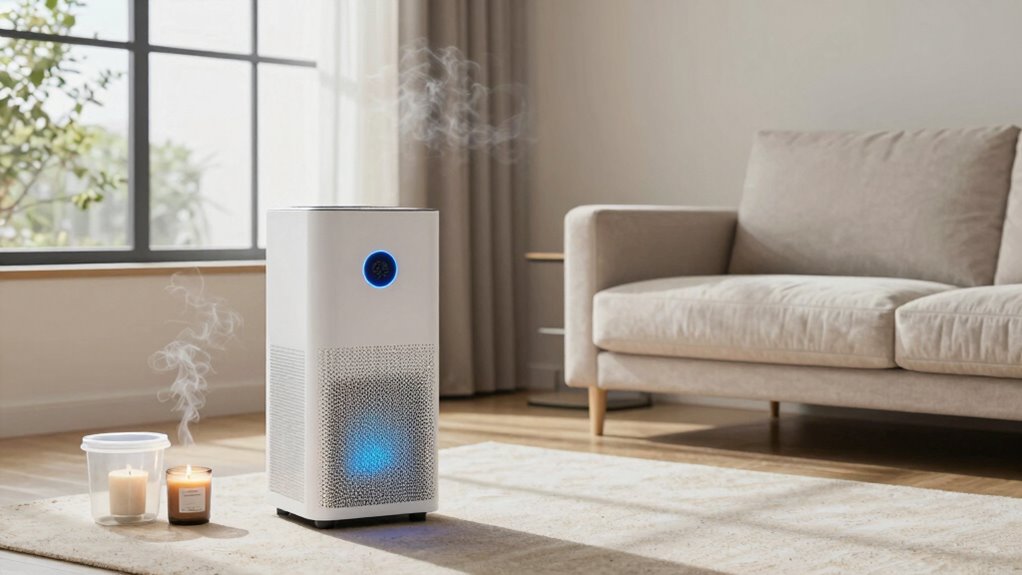
Have you ever wondered what VOCs are and why they matter indoors? Volatile Organic Compounds, or VOCs, are chemicals released into the air from everyday items like paints, cleaning products, and furniture. They can linger indoors and affect your health over time. Indoor plants can help, but they aren’t a complete solution for VOC removal. That’s why air quality testing is essential; it identifies VOC levels and determines if your indoor environment is safe. Understanding what VOCs are and monitoring their presence can help you take better steps to improve your air quality. Staying aware of these compounds allows you to make informed decisions about ventilation, product use, and air purification methods to create a healthier indoor space. VOC mitigation strategies are crucial for effectively managing indoor air quality.
How Do Carbon Filters Remove VOCs in Air Purifiers?
How Do Carbon Filters Remove VOCs in Air Purifiers?
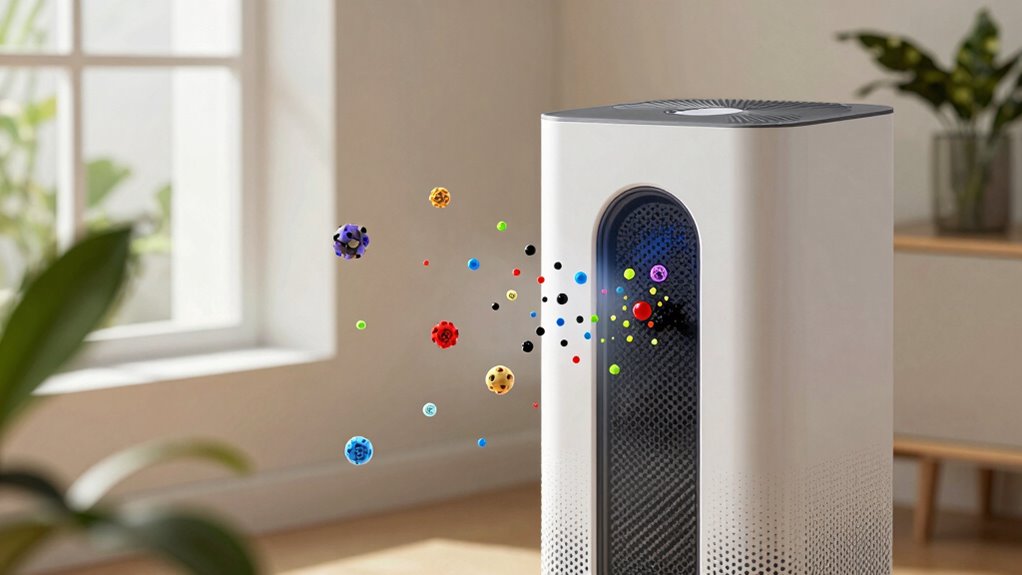
Carbon filters remove VOCs through a process called adsorption, where the gases stick to the surface of activated carbon. This material is highly effective because of its large surface area, which captures many pollutants. When choosing an air purifier, knowing how well the activated carbon can adsorb VOCs helps you select the best filter for clean indoor air. Additionally, understanding the role of Free Floating particles can help optimize air quality management. Recognizing the impact of air filtration technologies on overall health and environment can guide more ethical and sustainable choices in air purification. Incorporating monitoring systems can further ensure that filtration performance remains effective over time, especially as the carbon becomes saturated and less efficient.
Adsorption Process Explained
The adsorption process is the key way that carbon filters capture VOCs in air purifiers. When air passes through, VOC molecules are attracted to the surface of the activated carbon due to their chemical properties. The adsorption efficiency depends on the pore structure of the carbon, which provides a large surface area for molecules to adhere to. The chemical properties of VOCs, such as polarity and molecular size, influence how effectively they are adsorbed. Non-polar VOCs tend to be captured more easily, while some polar compounds may require specific conditions for *ideal* removal. As air flows through, VOCs bind to the carbon surfaces, effectively removing them from the air you breathe. This process is essential for reducing airborne VOC levels, but its effectiveness varies based on the filter’s design and the types of VOCs present. Activated carbon surface area plays a crucial role in determining adsorption capacity, directly impacting how well VOCs are filtered out. Additionally, factors like humidity and airflow rate can affect the adsorption efficiency of the filter, making it important to consider these during use. Proper maintenance, such as regular replacement, is vital to sustain optimal VOC removal performance over time. Furthermore, the pore size distribution of the activated carbon influences which VOCs are most effectively captured, emphasizing the importance of selecting the right type of filter.
Effectiveness of Activated Carbon
Activated carbon filters are highly effective at removing VOCs from your indoor air by leveraging their large surface area and porous structure. This allows them to adsorb a wide range of VOC molecules, trapping them efficiently. To maintain their effectiveness, regular air purifier maintenance is essential, ensuring the carbon doesn’t become saturated. VOC detection sensors can help you monitor air quality and signal when filter replacement is needed. The table below shows how different factors influence carbon filter performance:
| Factor | Impact | Recommendation |
|---|---|---|
| Filter saturation | Reduces VOC removal efficiency | Replace filters promptly |
| Air purifier maintenance | Keeps airflow optimal | Follow manufacturer instructions |
| VOC concentration | Higher levels require more frequent changes | Use VOC detection sensors to monitor levels |
| Humidity levels | Can affect adsorption process | Maintain optimal humidity |
| Type of VOC | Some are harder to adsorb | Choose filters suited for specific VOCs |
When Do Carbon Air Purifiers Effectively Reduce VOCs?

Understanding when carbon air purifiers are most effective at reducing VOCs depends on several factors. First, regular carbon filter maintenance is vital; over time, filters become saturated and lose their ability to adsorb VOCs effectively. Monitoring VOC levels using detection methods helps determine when to replace or refresh your filter. If VOC concentrations are high initially, a carbon filter can greatly reduce indoor pollutants, especially when it’s properly maintained. Keep in mind that the filter’s effectiveness diminishes as it fills, so timely replacements are essential. Additionally, the presence of certain VOCs influences performance, with some being more readily adsorbed than others. Incorporating knowledge of sound vibrations and their influence on cellular health can also enhance understanding of air purification effectiveness. Recognizing the importance of filter lifespan helps ensure optimal performance. By staying vigilant with maintenance and VOC detection, you maximize the chances that your carbon air purifier will effectively reduce harmful VOCs.
What VOCs Can Carbon Filters Remove?

Carbon filters are effective at removing common VOCs like formaldehyde, benzene, and toluene from the air. However, they have limitations and may not capture all types of VOCs or quickly remove high concentrations. Understanding these capabilities helps you choose the right air purifier for your needs. Additionally, Vetted options are available that can provide more comprehensive VOC removal for sensitive environments. It’s important to consider air purification technologies that target a broader range of VOCs for optimal indoor air quality.
Common VOCs Absorbed
Many common VOCs, such as formaldehyde, benzene, and toluene, can be effectively removed by carbon filters. These chemicals are often found in household products, paints, and furniture, impacting your indoor air quality. When your air purifier’s carbon filter absorbs these VOCs, it helps reduce odors and harmful emissions, making your environment safer. Proper filter maintenance is essential to ensure the continued effectiveness of your air purifier; a saturated filter will lose its ability to absorb new VOCs efficiently. Regularly replacing filters prevents VOC saturation, maintaining optimal performance. Additionally, understanding the adsorption process can help you select the most effective air purifier for your needs. Recognizing the importance of air quality improvement allows you to make informed decisions when choosing filtration systems. By understanding which VOCs are absorbed, you can better select your air purifier and ensure it continues to improve your indoor air quality effectively.
Limitations of Carbon Filters
While carbon filters are effective at removing many common VOCs, they have their limitations. They primarily rely on adsorption and chemical reactions to neutralize odors and VOCs, but some compounds resist these processes. For example, highly volatile or chemically stable substances may pass through unaltered. Additionally, once the carbon’s surface becomes saturated, its ability to absorb diminishes rapidly. It’s important to remember that:
- Not all VOCs undergo odor neutralization
- Some require specialized filters beyond activated carbon
- Chemical reactions can be slow or incomplete
- Carbon filters don’t eliminate all airborne VOCs
- Regular replacement is necessary to maintain effectiveness
- Adsorption capacity varies depending on the specific VOCs present and the filter’s age
- The presence of humidity can also impact filter performance and adsorption efficiency
In short, carbon filters are helpful but aren’t a catch-all solution for every VOC or odor.
Signs Your Air Purifier Is Not Removing VOCs Properly?

If your air purifier isn’t effectively removing VOCs, you might notice certain signs indicating it’s not working as intended. One key sign is persistent odors despite running the unit regularly, suggesting insufficient air exchange. You may also observe increased allergy symptoms or lingering fumes, which point to ineffective filtration. Check the filter’s condition—if it’s dirty or clogged, filter maintenance is overdue, reducing its ability to capture VOCs. Additionally, if the purifier’s fan sounds louder than usual or the airflow seems weak, it could mean the filter is blocked or the unit isn’t functioning properly. Regularly replacing or cleaning filters and ensuring proper air exchange are essential; neglecting these can compromise VOC removal and air quality. Proper filtration with the right air quality gear is crucial to effectively reduce VOC levels in your indoor environment.
What Are Your Options if Carbon Filters Can’t Remove Certain VOCs?

When carbon filters fall short in removing certain VOCs, you need to explore alternative strategies to improve indoor air quality. One option is to use filters designed for specific chemical reactions, such as catalytic or advanced adsorption filters, which can target stubborn VOCs. Regular filter maintenance is essential; replacing or regenerating filters ensures ideal performance. You might also consider air purifiers with HEPA filters that, while primarily for particulates, can help reduce VOCs indirectly. Additionally, increasing ventilation dilutes indoor pollutants. Finally, eliminating or reducing VOC sources altogether—like avoiding certain cleaning products or paints—can considerably improve air quality. Keep in mind, combining these methods often yields the best results in managing VOC levels effectively.
How to Maximize VOC Removal With Your Air Purifier?

To maximize VOC removal with your air purifier, you should start by choosing a model equipped with specialized filters designed for chemical absorption, such as activated carbon or advanced adsorption technologies. These filters are essential for reducing VOCs and controlling odors effectively. To keep your purifier working at peak performance, perform regular filter maintenance, replacing or reactivating filters as recommended by the manufacturer. This ensures continued odor masking and VOC filtration. Additionally, proper placement of your air purifier in a central or high-traffic area enhances its efficiency. Avoid blocking airflow and keep the surrounding environment clean to prevent dust and debris from impairing filter function. By maintaining your filters and selecting the right technology, you’ll optimize VOC removal and improve overall air quality.
Common Mistakes When Using Carbon Filters for VOCs?

Many users overlook common mistakes that can limit the effectiveness of carbon filters in removing VOCs. One key mistake is neglecting proper filter maintenance, which causes the carbon to become saturated faster and lose its adsorption capacity. Another is ignoring adequate air exchange; if your space isn’t properly ventilated, VOCs can accumulate faster than the filter can handle. Additionally, some users install filters incorrectly, reducing contact time with polluted air. Overloading filters by placing them in high-VOC areas can also diminish performance. Finally, relying solely on a filter without considering the overall air exchange rate limits VOC removal. To maximize effectiveness, regularly check and replace filters, ensure proper installation, and maintain good air exchange to prevent VOC buildup and keep your air clean.
Choosing the Best Air Purifier for VOCs: Key Features to Look For
Choosing the right air purifier for VOCs involves identifying key features that guarantee effective removal. Look for models with high-efficiency filters, such as HEPA combined with activated carbon, to target both particles and gases. An air purifier that offers real-time air quality monitoring helps you keep track of pollutant levels and adjust settings accordingly. Consider the filter maintenance requirements—filters should be easy to access and replace to ensure continued performance. A purifier with a suitable CADR (Clean Air Delivery Rate) will efficiently clean the air in your space. Additionally, check for appropriate coverage area to match your room size. Prioritizing these features ensures your air quality improves consistently and your filter remains effective over time.
Frequently Asked Questions
How Long Do Carbon Filters Typically Last Before Replacement?
Carbon filters typically last about 6 to 12 months before you need to replace them, depending on usage and air quality. To maximize their filter lifespan, check for signs of saturation like decreased air flow or odors persisting. You should replace the filter when it’s no longer effective, usually around the 6-month mark, though high pollution areas may require more frequent replacement. Regular maintenance guarantees your air purifier functions at its best.
Can Carbon Filters Remove All Types of VOCS Effectively?
You might think carbon filters remove all VOCs effectively, but adsorption limitations mean they can’t handle every chemical. Some VOCs resist adsorption, especially if they quickly undergo chemical reactions or are present in high concentrations. While carbon filters excel at trapping many VOCs, they don’t eliminate all types. For thorough purification, consider combining filters or using additional technologies to target those stubborn compounds that resist adsorption.
Are There Health Risks Associated With Carbon Filter Breakdown?
Yes, there are health risks tied to carbon filter breakdown. When filters degrade or become saturated, they can release trapped VOCs or other pollutants back into the air, potentially affecting your health. You should regularly check and replace filters to prevent filter degradation. If you ignore this, the health implications could include respiratory issues, allergic reactions, or exposure to harmful chemicals that the filter was meant to trap.
How Do I Know if My Air Purifier’s Carbon Filter Is Exhausted?
You can tell if your air purifier’s carbon filter is exhausted by checking the filter’s lifespan date or indicator, if available. If odors aren’t eliminated or persist despite running the purifier, it’s a sign the filter may need replacing. Regularly inspect the filter for signs of buildup or saturation. Replacing the filter guarantees continued odor elimination and maintains ideal air quality.
Can Combining Filters Improve VOC Removal Efficiency?
You might think combining filters complicates things, but filter synergy actually boosts VOC removal. Multi-stage filtration, like pairing activated carbon with HEPA filters, captures a broader range of pollutants. This layered approach guarantees that even if one filter becomes less effective, the other continues to work, maintaining cleaner air. So, yes, combining filters enhances efficiency, giving you better overall protection against VOCs and other airborne contaminants.
Conclusion
By understanding VOCs and choosing the right carbon filters, you can confidently combat contaminants. Keep your air clean, and your home’s health will thrive. Regularly replace filters, remain vigilant for signs of inefficiency, and utilize expert advice. With mindful maintenance and knowledgeable choices, you’ll master methods to minimize VOCs, making your space safer, cleaner, and more comfortable. Take control, and enjoy a fresh, fuss-free, and fabulous airflow every day.