
To keep your air purifier running efficiently, regularly replace filters every 3 to 6 months based on usage and environment, and handle them carefully to avoid spreading dust. Clean vents weekly with a damp cloth, inspect for debris, and make certain airflow isn’t obstructed. Turn off and unplug the device before cleaning or filter changes, and follow manufacturer guidelines. For detailed steps that will help maximize your unit’s performance, keep exploring these essential maintenance tips.
Key Takeaways
- Replace filters every 3 to 6 months and handle them carefully to maintain optimal performance.
- Regularly clean exterior vents, air intake, and outlet vents to prevent obstructions.
- Vacuum or wash filters as recommended to extend their lifespan and ensure efficient filtration.
- Keep vents free of dust and debris, and ensure proper airflow to reduce energy consumption.
- Clean sensor and indicator lights periodically and monitor filter notifications for accurate maintenance.

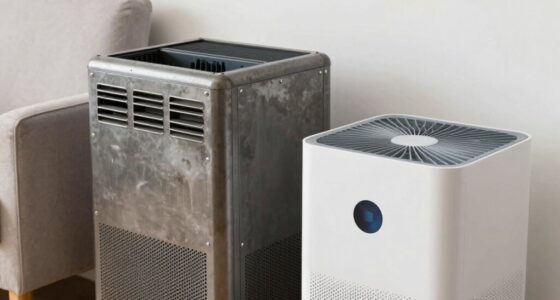
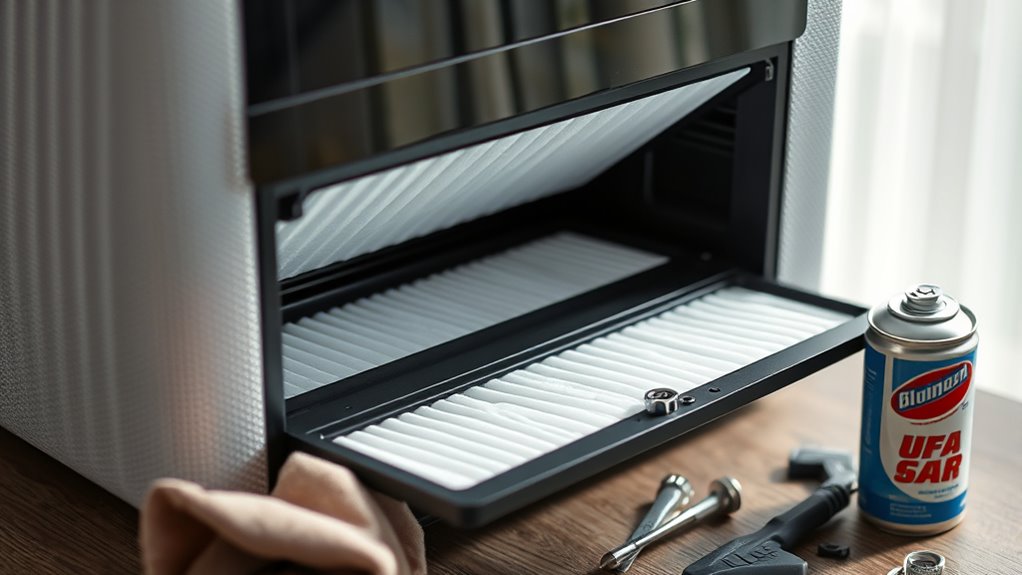
Keeping your air purifier in good condition is essential for ensuring it works effectively and provides clean air. One of the most important aspects of maintenance is regular filter replacement. Over time, filters trap dust, pollen, pet dander, and other airborne pollutants, but they don’t last forever. If you ignore the need for filter replacement, your purifier’s performance will decline, and the air quality in your space will suffer. Check your manufacturer’s guidelines to determine how often to replace the filters—typically every 3 to 6 months, but this can vary based on usage and environment. When replacing filters, handle them carefully to avoid spreading dust or allergens. Make sure to turn off and unplug your unit before changing filters, and always use the recommended filter type for your specific model.
Regular filter replacement ensures your air purifier performs optimally and maintains clean, healthy air.
In addition to replacing filters, regular cleaning tips can greatly extend your air purifier’s life and efficiency. Dust and debris can accumulate on the exterior vents and internal components, restricting airflow and reducing effectiveness. To keep your unit running smoothly, wipe down the exterior with a damp cloth weekly, avoiding harsh chemicals that might damage plastic parts. When cleaning filters, consult your user manual—some models have filters that can be gently vacuumed to remove surface dust, which helps reduce the frequency of full replacements. However, most filters need to be replaced entirely once they reach the end of their lifespan.
Another cleaning tip is to keep the air intake and outlet vents free of obstructions. Dirt or debris blocking these areas can cause your purifier to work harder, increasing energy consumption and wear. Regularly inspect these vents, and if you notice dust buildup, clean them with a soft brush or a vacuum with a brush attachment. Also, check the pre-filter (if your model has one) and wash or replace it as recommended. Doing so prevents larger particles from clogging the main filter, ensuring better airflow and filtration efficiency.
Finally, don’t forget to clean the sensor or indicator lights if your purifier has them. Dust or grime can interfere with their operation, leading to inaccurate filter change notifications. Regular filter monitoring and maintenance are key to keeping your device functioning optimally. Follow your manufacturer’s instructions for cleaning these components. Consistent maintenance—filter replacements, cleaning tips, and careful inspection—will keep your air purifier functioning at its best, providing you with fresh, healthy air for years to come.
Frequently Asked Questions
How Often Should I Replace My Air Purifier’s Filters?
You should replace your air purifier’s filters every 6 to 12 months, depending on the filter lifespan and usage. Check your device’s replacement schedule and monitor filter condition regularly. If you notice reduced airflow or odors persisting, it’s time for a change. Regular filter replacement guarantees your unit operates effectively and maintains air quality. Always follow the manufacturer’s guidelines for peak performance and safety.
Can I Clean the Filter With Water?
Think of your filter as a sponge catching dust, but not all sponges love water. You generally shouldn’t clean your filter with water unless the manufacturer says it’s water-compatible. Filter cleaning with water can damage some filters, making them less effective. Always check your air purifier’s manual first. If water isn’t recommended, opt for gentle vacuuming or replacing the filter to keep your air clean and your unit running smoothly.
What Signs Indicate My Purifier Needs Repair?
If your air purifier isn’t effectively filtering air or eliminating odors, it might need repair. Watch for signs like reduced airflow, persistent odors, or unusual noises. If the filter lifespan has been exceeded and cleaning doesn’t help, it’s time to replace or repair the unit. Ignoring these signs can compromise air quality, so address issues promptly to ensure your purifier continues to provide clean, fresh air.
Is Professional Servicing Necessary for My Unit?
Sure, you could try DIY tips and troubleshooting advice, but professional servicing isn’t a luxury—it’s a necessity. When your air purifier starts acting up or isn’t cleaning like it used to, a trained technician knows the quirks and secrets your DIY attempts won’t uncover. Skip the hassle and potential damage; invest in professional servicing to keep your unit running smoothly and efficiently. After all, some things are better left to the experts.
How Can I Improve My Air Purifier’s Efficiency Long-Term?
To improve your air purifier’s efficiency long-term, regularly clean or replace filters, and check air quality sensors to guarantee accurate readings. Keep the unit in a central location for ideal odor elimination and airflow. Avoid blocking vents, and run the purifier consistently, especially during high pollution periods. These steps help maintain peak performance, ensuring better air quality and odor control over time.
Conclusion
By diligently dusting, replacing, and checking your air purifier, you’ll keep it clean, clear, and functioning flawlessly. Consistent care prevents poor performance and prolongs your unit’s lifespan. Stay strategic with your maintenance, and you’ll breathe better, feel fresher, and enjoy peace of mind. So, stay savvy, stay safe, and keep your air purifier in top shape—because a well-maintained unit makes for pure, pristine air every single day.