
When comparing air purifier filters, genuine HEPA and True HEPA filters are certified to remove at least 99.97% of particles as small as 0.3 microns, ensuring high efficiency. ULPA filters go even further, capturing 99.999% of particles down to 0.12 microns for ultra-clean environments. It’s important to check for certification labels, as false claims can be misleading. Keep exploring to understand how these standards impact your air quality and purification choices.

Get home appliances delivered free with Prime
- Fast, free delivery on millions of items
- Prime Video, Amazon Music and more included
- Member-only deals all year
Key Takeaways
- True HEPA filters are certified to remove 99.97% of 0.3-micron particles, ensuring high filtration performance.
- “HEPA-like” or “HEPA-type” labels lack official certification, so verify labels for genuine HEPA certification.
- ULPA filters are more efficient, capturing 99.999% of particles down to 0.12 microns, suitable for high-purity environments.
- Certification involves rigorous testing to confirm that filters meet strict standards, preventing misleading marketing claims.
- The main difference between HEPA and ULPA is their particle size removal capability, with ULPA targeting smaller particles.
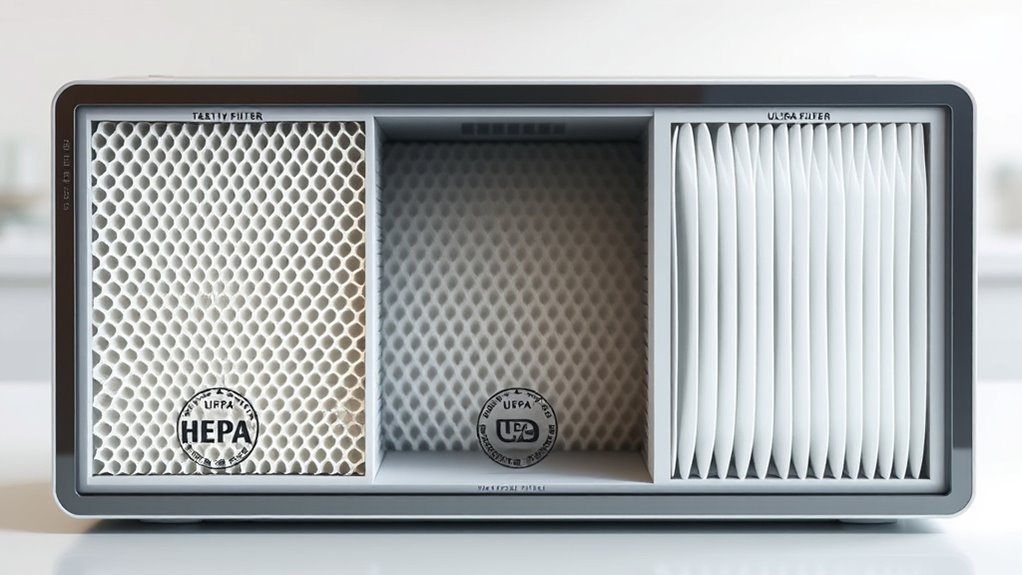
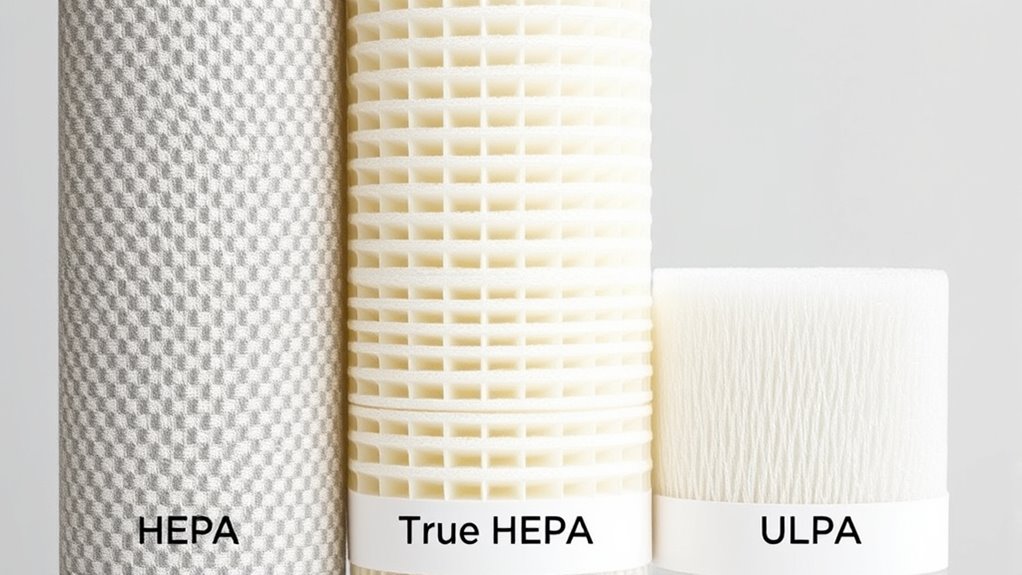
When choosing an air purifier, understanding its filter certifications is crucial to guarantee you’re getting effective air cleaning. One of the most common and trusted certifications you’ll encounter is HEPA, which stands for High-Efficiency Particulate Air. To qualify as HEPA, filters must meet strict standards set by organizations like the U.S. Department of Energy. These HEPA standards specify that the filter must remove at least 99.97% of airborne particles as small as 0.3 microns. Knowing these standards helps you identify filters that genuinely improve air quality and are capable of trapping dust, pollen, pet dander, and even some bacteria and viruses. The certification process involves rigorous testing in controlled environments, where filters are challenged with particles of specific sizes, ensuring they meet the high efficiency claimed by manufacturers. When you see a filter labeled as HEPA, you can trust it has undergone this certification process, which guarantees its performance.
However, not all filters labeled as HEPA are created equal. Some products claim to be “HEPA-like” or “HEPA-type,” but they don’t necessarily meet the strict HEPA standards. This is why checking for official certification and verifying the presence of the HEPA label helps you avoid misleading marketing. True HEPA filters are made from dense fiber mats that trap microscopic particles, ensuring high filtration efficiency. They’re tested and certified to perform consistently over time, providing peace of mind that your air purifier will do its job effectively.
Moving beyond HEPA, you might also come across ULPA filters, which stand for Ultra Low Particulate Air. ULPA filters push filtration efficiency even further, capturing at least 99.999% of particles down to 0.12 microns. This makes ULPA filters ideal for cleanrooms, laboratories, or environments requiring the highest level of particle removal. Just like HEPA filters, ULPA filters go through certification processes that verify their performance claims. The main difference lies in the particle size they target, with ULPA filters handling smaller particles than standard HEPA filters. When selecting an air purifier, understanding these distinctions and the certification processes behind each filter type ensures you choose one suitable for your specific air quality needs.
As an affiliate, we earn on qualifying purchases.
Frequently Asked Questions
How Often Should Filters Be Replaced in Different Certifications?
You should replace HEPA filters every 6 to 12 months, depending on usage and air quality. True HEPA filters typically last the same, but ULPA filters might need replacement every 3 to 6 months due to their higher filtration efficiency. Regularly checking your filter’s condition guarantees ideal air purifier performance. Keep an eye on the filter lifespan and follow the manufacturer’s recommendations for replacement frequency to maintain clean, healthy air.
Are Certified Filters Suitable for All Types of Air Pollutants?
Certified filters are highly effective, but they aren’t suitable for all types of air pollutants. Their filter lifespan depends on the certification standards—HEPA, True HEPA, or ULPA—designed to trap specific particles. You’ll want to match the filter’s certification with the pollutants you face, whether allergens, bacteria, or viruses. Regularly checking the filter’s condition guarantees peak performance, regardless of the certification type.
Do Certifications Guarantee Allergy Relief or Health Benefits?
Certifications like HEPA and ULPA improve your air purifier’s ability to trap tiny particles, but they don’t guarantee allergy relief or health benefits. While certified filters can substantially reduce allergens like dust, pollen, and pet dander, individual health improvements depend on factors like filter maintenance and overall indoor air quality. You’ll likely notice better allergy relief, but certifications alone aren’t a promise of health benefits.
Can Non-Certified Filters Perform as Well as Certified Ones?
Back in the day, folks believed any filter could do the job, but that’s not true. Non-certified filters often can’t meet certification standards, meaning they may not effectively trap allergens or pollutants. While they might seem similar, certified filters like HEPA or ULPA guarantee a certain filter lifespan and performance. So, don’t settle—trust certifications to verify your air purifier works as promised and keeps your air clean.
What Are the Environmental Impacts of Different Filter Certifications?
Different filter certifications impact your environment by influencing air quality and chemical emissions. HEPA and True HEPA filters efficiently trap airborne particles, reducing pollutants and improving indoor air quality. ULPA filters are even more effective but may consume more energy, leading to higher emissions. Choosing certified filters helps minimize chemical emissions from manufacturing and disposal, supporting a healthier environment and cleaner air for you.
As an affiliate, we earn on qualifying purchases.
Conclusion
When choosing an air purifier filter, understanding certifications like HEPA, True HEPA, and ULPAs helps you make an informed decision. Think of it as your armor against airborne foes, much like knights of old battling unseen dragons. Don’t settle for less—trust in certified filters to keep your air pure and safe. After all, in this modern age, your home should be your sanctuary, free from the invisible threats lurking around every corner.
As an affiliate, we earn on qualifying purchases.
As an affiliate, we earn on qualifying purchases.
Fall yard work Picks
leaf blowers
As an affiliate, we earn on qualifying purchases.