Remote sensors are often the missing piece in humidity control because they provide real-time, accurate data from anywhere in your space. They enable you to monitor large or complex environments remotely, helping you respond quickly to environmental changes. With automated alerts and data integration, they improve system responsiveness and precision. By using these sensors, you can prevent issues before they escalate. If you keep exploring, you’ll discover how these tools can transform your humidity management strategy.

Get home appliances delivered free with Prime
- Fast, free delivery on millions of items
- Prime Video, Amazon Music and more included
- Member-only deals all year
Key Takeaways
- Remote sensors provide real-time, accurate humidity data across large or complex environments.
- They enable proactive management by detecting issues before they escalate.
- Integration of remote sensors enhances system automation and responsive environmental adjustments.
- They help maintain stability in sensitive settings like museums and labs.
- Remote sensors fill critical gaps left by traditional humidity control methods, improving accuracy and decision-making.
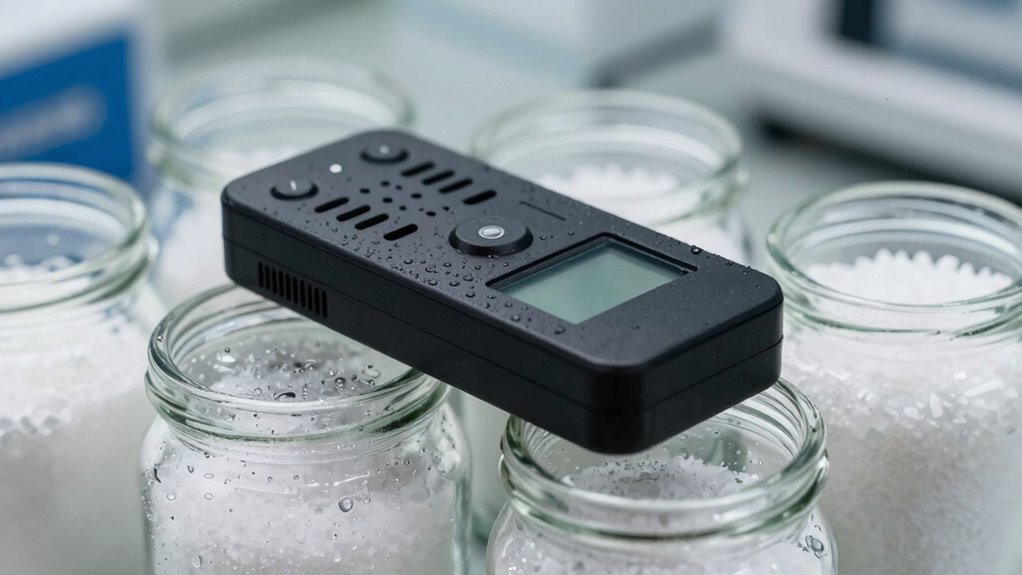
Remote sensors have revolutionized humidity control by providing real-time, accurate data from anywhere within a space. This innovation allows you to monitor environmental conditions without being physically present at every point, giving you a thorough view of humidity levels across large or complex areas. But to truly maximize their potential, you need to understand the importance of sensor calibration and data integration. Proper sensor calibration ensures that the data these sensors provide is precise and reliable, which is essential for making informed adjustments to humidity levels. Over time, sensors can drift from their original calibration, leading to inaccurate readings that could cause you to over- or under-adjust your systems. Regular calibration checks, whether manual or automated, are critical to maintaining data integrity. When sensors are correctly calibrated, you can trust the readings to reflect the true conditions inside your space, making your humidity control more effective and efficient. Additionally, choosing sensors with automated calibration features can simplify maintenance and improve long-term accuracy.
Data integration is another key factor when using remote sensors. It involves combining data from multiple sensors into a centralized system that provides a unified view of humidity levels throughout your environment. This integration allows you to analyze patterns, identify problem areas, and automate responses. For example, if several sensors detect rising humidity in a specific zone, your system can automatically activate dehumidifiers or ventilation without manual intervention. This seamless data flow eliminates blind spots and ensures consistent environmental conditions. When setting up your sensor network, choose systems that support easy data integration with your existing building management systems or custom automation platforms. The ability to visualize data in real time, generate reports, and receive alerts makes it easier to maintain suitable humidity levels. Properly calibrated sensors also help prevent false alarms or unnecessary adjustments, saving time and resources. Incorporating predictive analytics can further enhance your humidity management by forecasting potential issues before they occur, based on historical data trends. Recognizing and addressing sensor drift early is essential for maintaining accuracy over time and ensuring reliable data collection. Furthermore, understanding the limitations of remote sensors can help you set realistic expectations and optimize their deployment within your environment.
In many cases, remote sensors act as the missing piece in humidity control because they fill gaps that traditional methods leave behind. Without precise data, you’re relying on guesswork or outdated information, which can compromise your environment’s stability—especially in sensitive settings like museums, labs, or manufacturing facilities. By prioritizing sensor calibration and investing in robust data integration, you improve your control system’s accuracy and responsiveness. This way, you’re not just reacting to humidity issues after they happen but proactively managing conditions to prevent problems altogether. Ultimately, these sensors empower you with the detailed, trustworthy data needed to make smarter decisions, ensuring your environment stays comfortable, safe, and within desired humidity ranges.
Products Worth Considering

Levoit Air Purifier for Home, Pets, Bedroom – Smart Wi‑Fi for Large Rooms

Sonos Era 100 SL Wireless Speakers, Black, Pack of 2

Sonos Era 300 Wireless Smart Speaker with Dolby Atmos, Black
As an affiliate, we earn on qualifying purchases.
Frequently Asked Questions
How Do Remote Sensors Communicate With Humidity Control Systems?
You observe how remote sensors communicate with humidity control systems through wireless protocols like Wi-Fi, Zigbee, or Z-Wave. These protocols allow the sensors to transmit data over a specific signal range, ensuring accurate readings reach the control system. As you set up, you’ll notice that a good signal range is essential for consistent communication. This seamless exchange helps maintain ideal humidity levels, improving overall environment regulation.
What Is the Lifespan of a Typical Remote Humidity Sensor?
Think of your remote humidity sensor like a trusted companion, lasting about 3 to 5 years. Its lifespan depends on factors like sensor calibration and battery lifespan. Regular calibration keeps it accurate, while good battery management ensures longevity. Just as a well-maintained vehicle runs smoothly longer, a properly cared-for sensor stays reliable, helping you maintain ideal humidity levels without frequent replacements.
Are Remote Sensors Suitable for Both Residential and Industrial Use?
Yes, remote sensors are suitable for both residential and industrial use. They optimize humidity control through accurate sensor calibration and efficient power management, ensuring reliable performance in various environments. In residential settings, they help maintain comfort and prevent mold, while in industrial applications, they support strict humidity regulations. Their adaptability and durability make remote sensors a versatile choice, but regular calibration and power management checks are essential for consistent accuracy.
How Accurate Are Remote Humidity Sensors Compared to Traditional Ones?
Remote humidity sensors are surprisingly accurate—often within 1-3%—but only if you follow proper calibration procedures. Unlike traditional models, they might sip power, making you wonder if they’re powered by a tiny, efficient superhero. While they excel in consistency, you must monitor calibration and power consumption to guarantee precision. So, yes, they’re reliable, but neglect those details, and accuracy might just slip away—like your last good pair of socks.
What Maintenance Do Remote Humidity Sensors Require?
You need to regularly check your remote humidity sensors for sensor calibration to guarantee accuracy. Keep an eye on power management by replacing batteries as needed or ensuring proper power supply. Clean the sensor surfaces periodically to prevent dust or debris from affecting readings. These simple maintenance steps help keep your remote sensors functioning correctly, providing reliable humidity data essential for effective climate control.
Conclusion
Remote sensors truly revolutionize humidity control, making it more precise and reliable. Did you know that homes with smart humidity systems see a 30% improvement in comfort and energy efficiency? By using remote sensors, you can guarantee your space stays perfectly humidified, no matter where you are. So, if you want effortless, consistent control, investing in remote sensors is the smart move. They’re the missing piece to a more comfortable, efficient home.