You’ll get more accurate humidity readings by focusing on proper placement rather than the type of stand or wall installation. Position your hygrometer away from heat sources, cold drafts, and direct sunlight, and keep it at eye level to avoid skewed data. Whether you use a stand or mount it on the wall, placement matters more than brand quality. Keep these tips in mind, and you’ll better understand how placement influences your device’s performance—and there’s more to learn if you keep exploring.
Key Takeaways
- Proper placement ensures accurate readings, which is more crucial than the hygrometer’s brand quality.
- Avoid placing hygrometers near heat sources, vents, or windows to prevent skewed measurements.
- Positioning at eye level and away from drafts improves the reliability of humidity data.
- Regular calibration and maintenance are essential for accuracy, regardless of brand.
- Environmental factors and placement location have greater impact on readings than the hygrometer’s make.

Have you ever wondered where to place your hygrometer for the most accurate readings? The truth is, the location and placement of your hygrometer matter far more than the brand you choose. Even the most expensive model can give misleading readings if it’s not positioned correctly. To guarantee you’re getting precise humidity measurements, you need to focus on proper placement, which directly influences sensor calibration and humidity accuracy.
First, avoid placing your hygrometer near sources of heat, cold drafts, or direct sunlight. These environmental factors can cause the sensor to register incorrect humidity levels. For example, placing it near a radiator or an air vent skews the readings because the sensor responds to temperature fluctuations and air currents that don’t reflect the general room environment. Instead, find a spot in the middle of the room, away from windows, doors, and heat sources. This guarantees your hygrometer measures the typical humidity levels where you spend most of your time.
Next, consider the height at which you place your hygrometer. Positioning it at eye level, roughly 3 to 5 feet from the ground, mimics where your nose and skin are most exposed to the air, giving you a more accurate sense of the room’s humidity. Placing it too high or too low can lead to erroneous readings, especially if there are temperature gradients or localized sources of moisture or dryness.
Another vital aspect is guaranteeing the sensor calibration is maintained. Over time, hygrometer sensors can drift, leading to compromised humidity accuracy. Regularly calibrate your device using a salt test or a calibration kit, particularly if you notice inconsistent readings. Proper sensor calibration ensures your hygrometer maintains reliable accuracy, which is essential for managing indoor environments like greenhouses, wine cellars, or baby nurseries. Additionally, understanding the sensor calibration process helps you maintain the device’s performance over time, ensuring consistent readings and reliable data. Regularly checking for sensor drift can further improve your device’s longevity and accuracy.
It’s also important to keep your hygrometer away from areas prone to humidity fluctuations caused by activities like cooking or drying clothes, as these can temporarily skew your readings and make it harder to interpret long-term trends.

TempPro TP50 Digital Hygrometer Indoor Thermometer Room Thermometer and Humidity Gauge with Temperature Humidity Monitor(Previously ThermoPro)
- Wellness Indicator: Displays air condition levels
- High Accuracy & Fast Updates: Measures with ±2-3%RH and ±1°F, updates every 10 seconds
- Record Tracking: Displays high and low temperature and humidity
As an affiliate, we earn on qualifying purchases.
As an affiliate, we earn on qualifying purchases.
Frequently Asked Questions
How Often Should I Calibrate My Hygrometer?
You should calibrate your hygrometer at least once every six months to guarantee proper humidity control. Regular calibration helps maintain accuracy, especially if you notice inconsistent readings. If your environment experiences significant temperature or humidity changes, consider more frequent calibration. Using the salt test or a calibration kit can help verify your hygrometer’s accuracy. Proper calibration ensures your humidity levels stay within the desired range, protecting your plants, food, or valuables.
Can Extreme Temperatures Affect Hygrometer Accuracy?
Extreme temperatures can definitely impact your hygrometer’s accuracy. Temperature fluctuations cause the device to give false readings, especially if it’s exposed to rapid changes. To keep measurements reliable, you should adjust your calibration frequency during extreme weather periods. Regular calibration helps account for temperature effects, ensuring your hygrometer continues to provide precise humidity readings. Always monitor environmental conditions, and recalibrate as needed to maintain accuracy.
What Materials Are Best for Hygrometer Stands?
You should choose stands made from sturdy materials like metal or high-quality plastic. Metal offers excellent stand stability and durability, resisting warping over time. Plastic, especially heavy-duty types, can also provide good stability and are lightweight, making placement easier. Avoid flimsy materials that wobble or break easily. Prioritize durability and stability, ensuring your hygrometer stays steady and accurate, whether on a stand or wall.
How Do I Prevent Mold Growth Around Hygrometers?
To prevent mold growth around hygrometers, focus on proper sensor placement—avoid areas with high humidity or poor ventilation. Use mold prevention techniques like keeping the area dry, ensuring good airflow, and regularly cleaning the hygrometer and surrounding surfaces with a mild disinfectant. Make sure the hygrometer isn’t placed directly on damp walls or near water sources, as these conditions promote mold development. Proper placement and maintenance help keep mold at bay.
Are Digital Hygrometers More Reliable Than Analog Ones?
Think of digital hygrometers as a reliable friend who’s always on time, unlike analog ones that can drift if not checked. Digital models are generally more accurate and consistent, especially when you pay attention to sensor placement and calibrate them regularly. You’ll find they’re more dependable for precise readings, making it easier to prevent mold. Just remember, calibrate frequently and place the sensor away from drafts or direct sunlight.

HATUSOKU Pack of 2 Digital Thermometer and Hygrometer with Comfort Face Display, Hygrometer, Stand, Magnet, Hanging, Simple, Infectious Disease Prevention, Heat Stroke Prevention
- Easy-to-read display: Clear temperature and humidity readings
- Comfort level face display: Icons indicate comfort, infection, heat stroke risk
- Compact design: Small, lightweight, matches any interior
As an affiliate, we earn on qualifying purchases.
As an affiliate, we earn on qualifying purchases.
Conclusion
Remember, whether you choose a stand or wall placement, what truly matters is positioning your hygrometer properly. A recent study shows that incorrect placement can lead to readings off by up to 15%, impacting your ability to maintain ideal humidity levels. So, focus on placement rather than brand, ensuring your device is away from drafts, direct sunlight, and heat sources. That way, you get the most accurate readings to keep your environment comfortable and healthy.
TempPro TP50 Digital Hygrometer Indoor Thermometer Room Thermometer and Humidity Gauge with Temperature Humidity Monitor(Previously ThermoPro)
- Wellness Indicator: Displays air condition levels
- High Accuracy & Fast Updates: Measures with ±2-3%RH and ±1°F, updates every 10 seconds
- Record Tracking: Displays high and low temperature and humidity
As an affiliate, we earn on qualifying purchases.
As an affiliate, we earn on qualifying purchases.
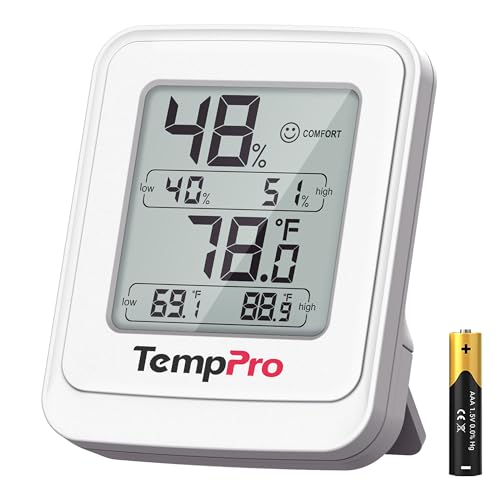
TempPro TP150 Digital Hygrometer Indoor Thermometer, IPX5 High-Humidity Resistant Greenhouse Thermometer Temperature and Humidity Monitor, High/Low Records Humidity Meter for Room Grow Tents, Reptile
- High Accuracy: Temperature ±1℉, Humidity ±2% RH
- Waterproof Design: IPX5 resistant for high-humidity environments
- Real-Time Data: Displays current temperature and humidity quickly
As an affiliate, we earn on qualifying purchases.
As an affiliate, we earn on qualifying purchases.