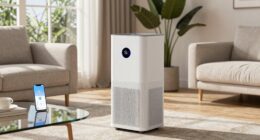
Before buying UV lamps for HVAC, make sure you understand safety guidelines to protect yourself and your system. Always choose lamps with proper shielding and follow installation instructions carefully. Turn off power before any maintenance and wear protective gear, like gloves and UV glasses. Regular inspections and replacements are crucial for safety and effectiveness. If you want to learn about proper installation, maintenance, and safety tips, continue exploring essential steps to keep your system and health protected.
Key Takeaways
- Ensure proper installation with shielding and safety precautions to prevent direct UV exposure to skin and eyes.
- Verify the UV lamp’s specifications match your HVAC system requirements and avoid incorrect wattage or bulb type.
- Follow manufacturer guidelines for placement, grounding, and secure mounting to ensure safety and effectiveness.
- Regularly inspect and maintain UV lamps, replacing them per recommended schedules to prevent hazards and maintain air quality.
- Consult a professional if unsure about installation, safety protocols, or system compatibility to ensure safe and compliant use.
What Are UV Lamps and How Do They Work in HVAC Systems?

UV lamps are specialized lighting devices that emit ultraviolet light, typically in the UV-C spectrum, to target and neutralize airborne pathogens and contaminants. When installed in HVAC systems, they enhance air purification by destroying bacteria, viruses, and mold spores that circulate through your space. The germicidal effects of UV-C light disrupt the DNA and RNA of microorganisms, preventing them from reproducing and causing infections. As air passes over the UV lamp, these pathogens are effectively inactivated, reducing the risk of airborne illnesses. This process improves indoor air quality and creates a healthier environment. UV lamps are a proactive step in maintaining cleaner air within your HVAC system, making them an essential tool for boosting air purification and controlling microbial growth. Proper installation and maintenance are crucial to ensuring the effectiveness and safety of UV HVAC systems. Additionally, understanding UV-C light’s germicidal properties can help you make informed decisions about incorporating UV technology into your climate control systems. To maximize safety and performance, it is important to consider UV lamp specifications and select the appropriate type for your system. Incorporating UV lamp safety guidelines can further ensure safe operation and long-term effectiveness. Regular inspections and adherence to manufacturer recommendations will help sustain optimal performance and safety over time.
Are UV Lamps Safe? Understanding the Health Risks

While UV lamps are effective at improving indoor air quality by neutralizing harmful microorganisms, it’s important to understand their safety aspects. UV safety is a key concern because direct exposure to UV-C light can harm your skin and eyes. When installed properly in your HVAC system, UV lamps pose minimal health risks, but improper handling or accidental exposure can cause burns or eye injuries. You should always follow safety guidelines and manufacturer instructions to minimize risks. It’s also wise to contemplate health considerations, especially if anyone in your household has respiratory sensitivities or skin conditions. Proper UV light safety protocols are essential for preventing accidental exposure and ensuring safe operation. Using UV lamps with proper shielding and ensuring they are installed correctly helps protect you and your family while benefiting from cleaner air. Additionally, understanding air quality safety measures is vital for managing potential risks associated with UV technology. Implementing proper ventilation can further reduce any residual risks associated with UV exposure. Maintaining awareness of UV exposure limits can help prevent overexposure and associated health issues. Safety precautions are essential to making the most of UV technology without risking your health.
How to Safely Install UV Lamps in Your HVAC System
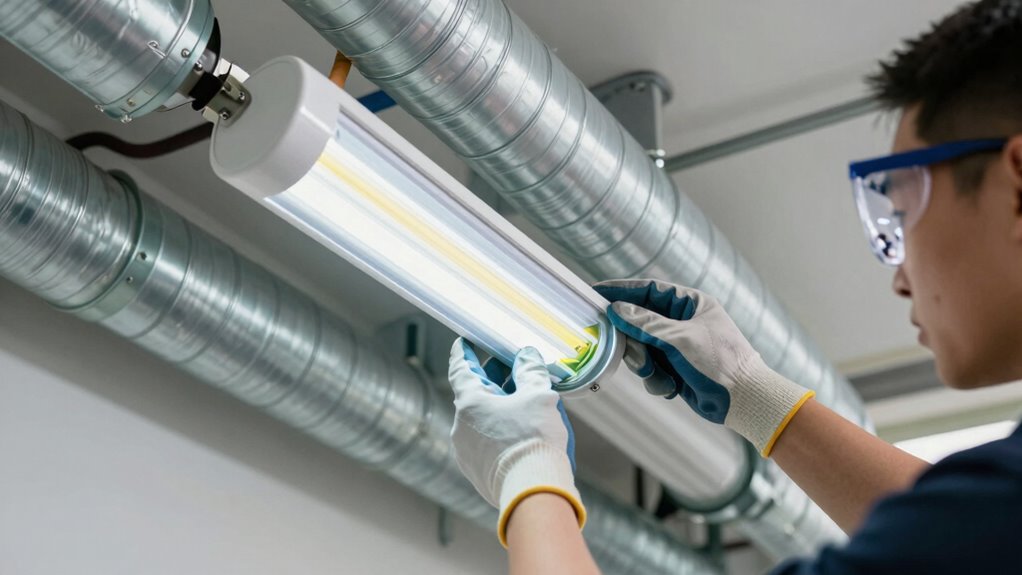
Before installing UV lamps, make sure your HVAC system is properly prepared to prevent any damage or safety issues. Carefully follow the manufacturer’s installation guidelines to guarantee correct placement and wiring. Taking these steps helps you install the UV lamps safely and effectively. Additionally, ensuring that the UV lamps support the appropriate safety standards can help protect both your system and your household. To further ensure safe operation, verify that the system complies with whole-home water system safety regulations and best practices. Consulting with a qualified professional can also help identify specific HVAC system requirements that may impact UV lamp installation. Properly understanding pet training and tracking gear can also help you recognize potential hazards related to UV lamp placement near pet areas. Moreover, being aware of OTC caution can prevent accidental exposure and ensure safe handling during installation and maintenance.
Prepare System Properly
To guarantee safe and effective installation of UV lamps in your HVAC system, start by turning off the power and thoroughly inspecting your unit. Ensure all components are clean and undamaged before proceeding. Proper preparation includes verifying your system’s calibration to ensure UV exposure is accurate and effective. You should also optimize airflow to maximize UV lamp performance and prevent dead zones. Use the table below to guide your preparation:
| Step | Action |
|---|---|
| Inspect Components | Check for dust, damage, and cleanliness |
| Verify Calibration | Ensure system is properly calibrated for UV |
| Optimize Airflow | Adjust fans and dampers for even air distribution |
Additionally, reviewing precious metal investments can provide insights into safeguarding your assets during system upgrades or replacements. Implementing UV lamp safety best practices further helps prevent accidents and ensures longevity of your system. Properly maintaining the system’s air circulation can also contribute to more reliable UV lamp performance. Regular maintenance and monitoring of air filtration systems are crucial for optimal operation and safety. Incorporating system diagnostics can help identify potential issues early and maintain overall system health.
Follow Installation Guidelines
Properly following installation guidelines guarantees your UV lamps operate safely and efficiently within your HVAC system. Correct placement and secure mounting ensure ideal air quality and energy efficiency. Incorrect installation can lead to UV exposure risks or reduced performance. To get it right, consider these key points:
- Install the UV lamp at the right distance from coils for maximum germicidal effect
- Ensure the power source is properly grounded and protected
- Use manufacturer-recommended fixtures and accessories
- Avoid direct exposure of UV light to occupants or ductwork openings
- Regularly inspect and replace lamps as per guidelines to maintain air quality and efficiency
- Pay attention to air quality and system performance to ensure optimal operation and safety. Proper installation also ensures compliance with safety standards, reducing liability concerns.
Following these steps helps you avoid hazards, improve indoor air quality, and maximize energy use in your HVAC system.
Tips for Maintaining UV Lamps Safely and Effectively

To keep your UV lamps working safely and efficiently, it is crucial to inspect them regularly for signs of wear or damage. Make sure you replace the lamps promptly when they reach the end of their lifespan to maintain effectiveness. Always follow safe operating practices to prevent accidents and ensure your system runs smoothly. Additionally, consider weatherproof tool storage options to protect your equipment from environmental hazards and extend the lifespan of your UV lamps.
Regular Lamp Inspection
How often should you inspect your UV lamps to guarantee they’re working effectively? Regular inspections are key to maintaining lamp durability and guaranteeing peak performance. Typically, checking your UV lamps every 6 to 12 months suffices, but this can vary based on usage. During inspections, look for signs of reduced output, discoloration, or physical damage. These indicators suggest it’s time for maintenance or replacement.
Consider these tips:
- Clean the lamp surface gently to remove dust and debris
- Check for signs of corrosion or discoloration
- Ensure the lamp is securely installed
- Verify the UV intensity with a meter if possible
- Record inspection dates for consistent maintenance
Consistent inspection frequency helps keep your UV system running efficiently and extends the lamp’s lifespan.
Proper Lamp Replacement
Regular inspections help keep your UV lamps functioning well, but knowing when and how to replace them is just as important. Lamp durability varies based on usage and quality, so understanding the recommended replacement frequency ensures maximum performance. Typically, UV lamps need replacing every 9 to 12 months, but this can differ depending on the manufacturer’s guidelines. Always turn off and unplug the HVAC system before replacing the lamp to prevent electrical hazards. Handle the new lamp carefully, avoiding direct contact with the glass to prevent oils from shortening its lifespan. Regularly monitor UV output, and replace the lamp if you notice a significant decrease in effectiveness. Proper replacement not only maintains air quality but also prolongs your system’s overall efficiency.
Safe Operating Practices
Are you confident you’re following the safest practices when operating UV lamps in your HVAC system? Ensuring proper safety protocols can prevent accidents and protect your health. Maintain hazard awareness by regularly inspecting the lamp and its housing for damage or wear. Always turn off the power before performing any maintenance or cleaning. Use protective gear like gloves and UV-blocking glasses to shield your skin and eyes from harmful UV exposure. Keep the area well-ventilated and avoid direct contact with the UV lamp. Follow manufacturer guidelines for installation and replacement. Remember, consistency in adhering to safety protocols minimizes risks and keeps your system running efficiently. Staying vigilant with safe operating practices is key to maximizing benefits while safeguarding yourself.
Common Mistakes to Avoid When Using UV Lamps in HVAC
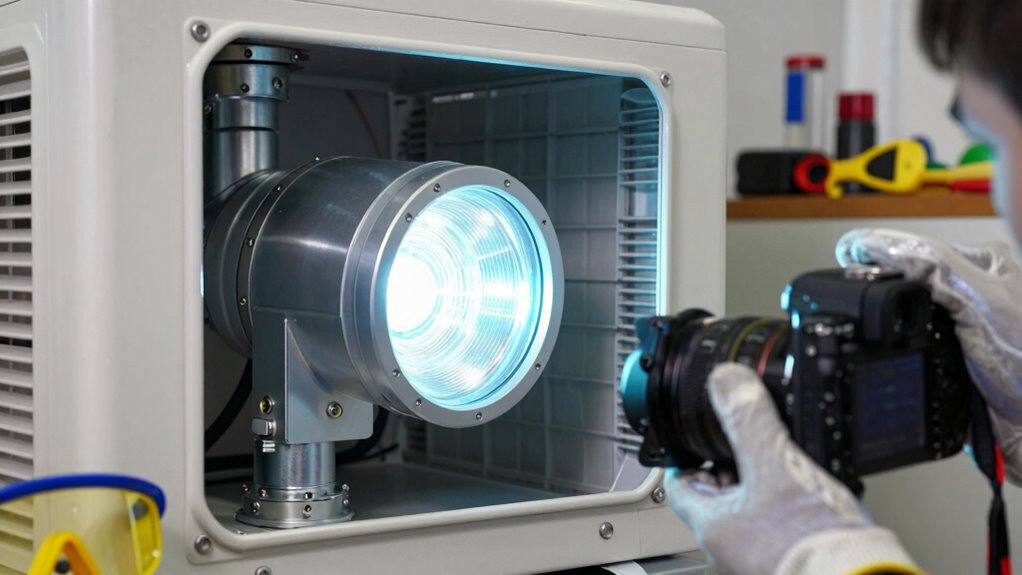
Using UV lamps in HVAC systems can effectively improve air quality, but overlooking common mistakes can reduce their effectiveness or cause damage. One mistake is installing the lamps without proper shielding, which can expose occupants to harmful UV radiation. Another is neglecting regular cleaning and maintenance, leading to reduced energy efficiency and dust buildup that hampers UV performance. Incorrect placement of the lamps, such as too close to air filters or coils, can diminish air quality benefits and strain the system. Additionally, using the wrong UV bulb type or wattage may not deliver the desired results or could damage components. Always ensure proper installation, routine upkeep, and correct specifications to maximize air quality improvements while maintaining energy efficiency.
When Should You Consult a Professional About UV Lamp Safety?

Knowing when to call in a professional is crucial for ensuring your UV lamps are installed and operated safely. If you’re unsure about UV lamp regulations or proper installation procedures, it’s time to seek expert advice. A professional consultation can prevent accidents and ensure compliance with safety standards. You should consult a professional if:
- You’re unfamiliar with UV lamp regulations and safety protocols
- You need help selecting the right UV lamp for your HVAC system
- Your system requires complex installation or modifications
- You notice signs of damage or improper functioning
- You’re unsure about maintenance or replacement procedures
Engaging a professional ensures your UV lamps are safe and effective, minimizing health risks and legal issues. Remember, safety is paramount—don’t hesitate to seek expert guidance when in doubt.
Frequently Asked Questions
Do UV Lamps Emit Harmful Radiation During Operation?
UV lamps do emit some radiation during operation, but with proper UV lamp safety measures, this radiation is minimal and controlled. The risks mainly concern UV-C exposure, which can harm your skin and eyes. That’s why it’s vital to follow manufacturer guidelines and use protective gear. By understanding radiation concerns and adhering to safety rules, you can safely enjoy the benefits of UV lamps without risking your health.
Can UV Lamps Cause Allergic Reactions or Respiratory Issues?
Absolutely, UV lamps can cause allergy triggers or respiratory issues if not used properly. You might notice symptoms like sneezing, coughing, or throat irritation. To protect your respiratory health, make sure the lamps are correctly installed and maintained, and avoid direct exposure to UV rays. Proper precautions help prevent allergic reactions, so always follow safety guidelines and consider consulting a professional for ideal, safe operation.
Are There Specific Safety Certifications for UV HVAC Lamps?
Yes, there are specific safety certifications for UV HVAC lamps. You should look for UV lamp certifications that meet safety standards like UL (Underwriters Laboratories) and CSA (Canadian Standards Association). These certifications confirm the lamps have been tested for safety, proper electrical wiring, and emission control. Always verify the certifications before purchasing, as they help protect you from potential hazards such as UV exposure, electrical issues, and material degradation.
How Long Do UV Lamps Typically Last Before Replacement?
UV lamps for HVAC typically last about 9 to 14 months before you need to ensure a replacement. Your lamp lifespan depends on usage and quality, so it’s crucial to follow a regular replacement schedule, usually every year. Keep an eye on the lamp’s output; if it dims or the air quality drops, it’s time for a new one. Regular maintenance guarantees ideal safety and efficiency.
What Are the Environmental Impacts of Disposing UV Lamps?
You might think UV lamps are harmless, but improper disposal can pose environmental hazards. These lamps contain mercury and other chemicals that can leach into soil and water, harming ecosystems. Disposal regulations often require special handling to minimize risks. If you don’t follow these rules, you could contribute to environmental damage. Always check local guidelines and recycling options to guarantee safe disposal, protecting both the environment and public health.
Conclusion
Remember, safety always comes first when dealing with UV lamps in your HVAC system. By understanding how they work, following proper installation and maintenance tips, and knowing when to seek professional help, you protect yourself and your loved ones. Don’t put all your eggs in one basket—approach UV lamp use with caution and care. After all, an ounce of prevention is worth a pound of cure, so stay vigilant and prioritize safety every step of the way.