You’ll notice your air purifier struggling when airflow slows, odors linger, or you see visible dirt on the filter. Unusual noises, decreased performance, or indicator lights also signal it’s time for a change. Regularly check for dirt, discoloration, or damage to the filter, and follow manufacturer guidelines. Ignoring these signs can lead to poor air quality or device damage. Keep watch for these cues — discovering more helps guarantee you maintain clean, fresh air.
Key Takeaways
- Decreased airflow or weaker air circulation despite proper device operation.
- Lingering odors or a musty smell indicating filter inefficiency.
- Visible dirt, discoloration, or damage on the filter surface.
- Unusual noises like rattling or buzzing from the purifier.
- Indicator lights or performance declines signaling the need for filter replacement.
How Can You Tell When Your Air Purifier Filter Needs Changing?

Knowing when to change your air purifier filter isn’t always obvious, but there are clear signs to watch for. Your filter’s lifespan varies depending on usage, environment, and the type of filter, so following a consistent replacement schedule is essential. Most filters need changing every 3 to 6 months, but heavy use or polluted air can shorten that timeframe. If you notice a decrease in airflow or if the air feels less clean, it’s time to evaluate your filter’s condition. Regularly checking your device’s manual can help you establish a reliable replacement schedule. Even if you don’t see visible dirt, adhering to the recommended timeline guarantees your purifier continues to operate efficiently and maintains healthy indoor air quality.
What Are the Signs of a Failing Filter? Noises, Airflow, and Odors

How can you tell if your air purifier filter is failing? You might notice unusual filter noise, like rattling or buzzing sounds, which indicate the filter is struggling. Airflow issues are common too; you’ll feel less air coming out of the vents or notice the purifier working harder than usual. Odors that linger or worsen over time also signal a problem, as a clogged filter can’t trap pollutants effectively. Additionally, some models have filter indicators that alert you when it’s time for a replacement or cleaning. Pay attention to sensor readings, which can provide more precise indications of filter health. Regular maintenance and understanding these signs can help prevent air quality issues caused by a failing filter. Keep an eye out for:
Unusual noise, reduced airflow, and lingering odors indicate your air purifier filter may need replacement or cleaning.
- Increased filter noise that’s louder than normal
- Reduced airflow or weak air circulation
- Persistent odors despite running the purifier
- Filter lifespan estimates that have passed or seem shorter than before
These signs point to a filter that’s no longer functioning properly, meaning it might be time to replace or clean it to restore ideal performance.
How to Check Your Filter’s Condition and Decide When to Replace It
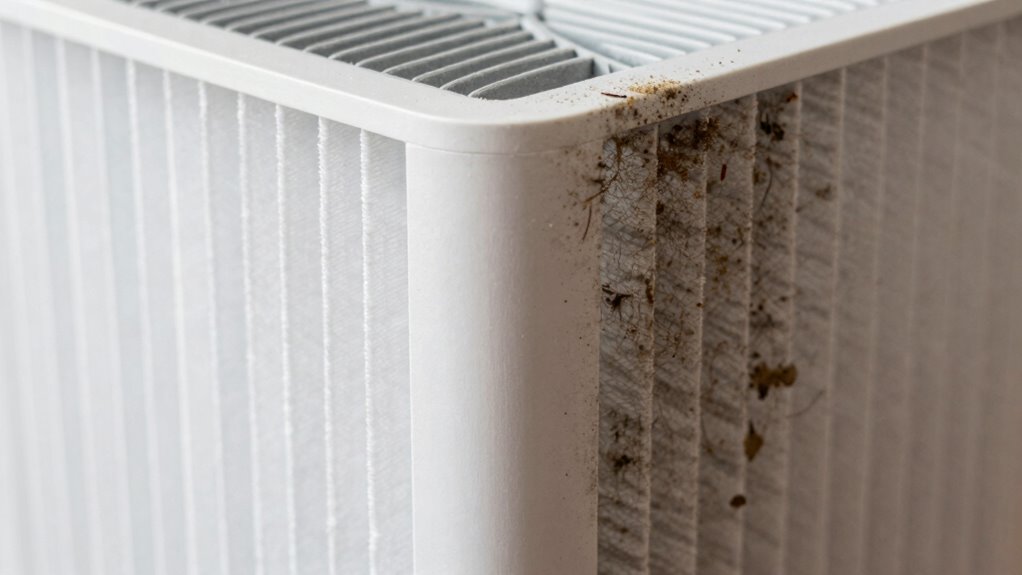
You should regularly inspect your filter visually for dirt, dust, or discoloration to see if it needs replacing. Pay attention to changes in your indoor air quality, like stuffiness or unusual odors, which can signal a clogged filter. When you notice these signs, it’s time to contemplate swapping out your filter for a fresh one. Additionally, monitoring air quality metrics can help you determine if your filtration system is functioning effectively and needs attention. Regularly checking filter lifespan guidelines provided by manufacturers can also prevent premature replacements and maintain optimal air purification. Being aware of filter performance indicators can further assist in assessing when a replacement is necessary. Recognizing system efficiency trends over time can also give you early warnings about potential filter issues. Keeping track of filter replacement schedules ensures your system remains effective and prolongs its lifespan.
Visual Filter Inspection
Inspecting your filter visually is an essential step in determining whether it needs replacing. During a visual inspection, focus on the filter material to identify signs of wear or damage. Look for accumulated dirt, dust, or debris that may have turned the filter dark or clogged. Check for tears, holes, or warping in the filter material that could compromise its effectiveness. Regularly monitoring for microplastics in dust and other pollutants can also help you assess filter performance. Imagine the filter as a barrier that should look relatively clean and intact. If you see:
- A thick layer of dust or grime covering the surface
- Discoloration or darkening of the filter material
- Physical damage like tears or deformations
then it’s time to replace the filter. Regular visual inspections help ensure your purifier stays effective and your air stays clean. Being aware of filter lifespan and replacement schedules can further prevent performance issues. Additionally, understanding signs of filter failure can help you recognize when your filter is no longer functioning optimally. In addition, paying attention to air quality changes can provide clues that your filter may be failing before visible signs appear. It is also beneficial to consider the environmental conditions that may accelerate filter deterioration.
Air Quality Changes
Changes in your indoor air quality are key indicators that your filter may need replacing. If you notice a sudden increase in air pollution or persistent indoor allergens, it’s a sign your filter isn’t doing its job effectively. Poor air quality can cause discomfort, allergies, and respiratory issues, so paying attention to these changes is vital. When your purifier struggles to maintain fresh air, it’s likely due to a clogged or dirty filter. You might also notice a lingering musty smell or dust settling quickly. Regularly monitor how your air feels and smells, especially during high pollution days or allergy seasons. These subtle signs help you decide when it’s time to replace your filter, ensuring your purifier continues to protect your indoor environment. Additionally, understanding filter lifespan can help you anticipate when replacements are needed before issues become noticeable. Recognizing air purifier performance trends can also prevent overuse of a failing filter. Keeping track of filter efficiency can further enhance your ability to maintain optimal indoor air quality, especially when you’re aware of maintenance schedules for your specific purifier model. Staying informed about filter replacement guidelines ensures your purifier continues to function effectively and efficiently.
When Is the Best Time to Change Your Air Purifier Filter? Tips and Guidelines

Knowing the right time to change your air purifier filter guarantees peak performance and healthier air quality. Typically, you should replace the filter when it looks dirty, smells musty, or your purifier’s performance drops. Check your user manual for specific guidelines, as factors like filter material and brand compatibility influence timing. Regular inspections can help you stay ahead, especially if you notice decreased airflow or increased allergy symptoms. Keep in mind:
- Dirty filter material causing restricted airflow
- Unpleasant odors indicating it’s time for a change
- Reduced purifier efficiency affecting air quality
- Monitoring filter performance can prevent unexpected failures and maintain optimal air purification.
Replacing the filter at recommended intervals ensures your purifier functions effectively. Always choose filters compatible with your device and made from quality filter material to maintain ideal performance and air cleanliness. Filter material quality is crucial for optimal operation and air purification. Additionally, understanding the filter lifespan based on your usage can help prevent unexpected failures.
Common Mistakes to Avoid When Replacing Your Filter

When replacing your air purifier filter, it’s easy to make mistakes that can compromise your device’s effectiveness. One common error is ignoring the filter’s lifespan and replacing it too late, which can reduce air quality. Conversely, replacing it too early wastes money and may not improve performance. Be mindful of the recommended replacement frequency; sticking to it ensures your purifier works efficiently. Avoid using a worn or dirty filter beyond its intended lifespan, as it can strain the motor and lower filtration quality. Also, don’t forget to install the new filter correctly, aligning it properly to prevent air bypass. Skipping these steps can lead to reduced airflow and compromised air quality. Properly timing your replacements guarantees your purifier performs at its best.
Quick Tips for Maintaining Your Air Purifier’s Performance

Regularly maintaining your air purifier guarantees it continues to operate efficiently and provides clean air. To maximize your device’s lifespan and filter material durability, follow these quick tips:
- Clean or replace filters as recommended, preventing buildup that hampers airflow and efficiency.
- Keep vents unobstructed by regularly dusting and vacuuming surrounding areas, ensuring unrestricted airflow.
- Monitor filter indicators and replace filters promptly, avoiding strain on the motor and prolonging component life.
Frequently Asked Questions
Can a Dirty Filter Cause Health Issues Beyond Allergies?
A dirty filter can definitely impact your health beyond allergies. It can reduce indoor air quality, allowing bacteria, mold spores, and pollutants to circulate. This can irritate your respiratory health, leading to coughing, shortness of breath, or asthma flare-ups. When your filter is clogged, it can’t effectively trap harmful particles, so you might experience more respiratory issues over time. Regularly changing your filter helps keep your indoor air clean and your respiratory health protected.
How Often Should Filters Be Replaced in Different Air Purifier Models?
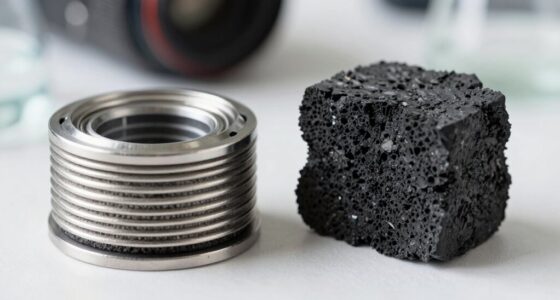
For ideal operation, you should replace filters based on your purifier’s filter lifespan and recommended replacement frequency. Typically, HEPA filters last 6 to 12 months, while carbon filters may need changing every 3 to 6 months. Check your model’s specific guidelines, as some purifiers feature indicator lights or digital timers. Regularly replacing filters ensures your purifier performs perfectly, providing pure, healthy air without unnecessary strain or staleness.
Are There Eco-Friendly or Reusable Filter Options Available?
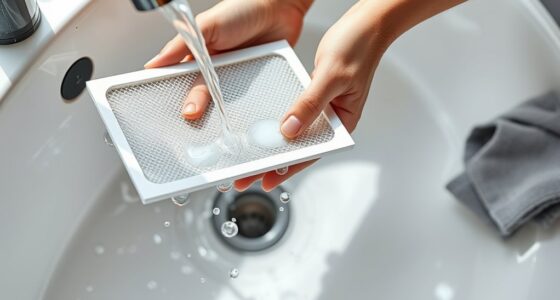
Yes, you can find reusable filters that are eco-friendly options for your air purifier. These filters are designed to be washed and reused multiple times, reducing waste and saving you money. Look for brands that offer high-quality, washable filters made from sustainable materials. Switching to reusable filters helps you maintain clean air while being environmentally conscious, making it a smart choice for eco-minded users.
What Is the Cost Difference Between Replacing Filters and Buying New Purifiers?
Replacing filters typically costs between $20 and $50 annually, while a new purifier can run from $150 to over $500. Did you know that regular filter replacement extends your purifier’s lifespan by up to 50%? Investing in filter replacement is more budget-friendly and eco-conscious, making purifier maintenance a smart choice. It saves you money and keeps your air cleaner longer, avoiding the higher costs of buying a new unit.
How Do Environmental Factors Influence Filter Lifespan and Performance?
Environmental factors like high levels of dust, smoke, or pollen can substantially impact your air quality, causing your filter to degrade faster. Humidity and temperature fluctuations also speed up filter wear, reducing its effectiveness. To maintain ideal performance, you should monitor these conditions and replace your filter more frequently when environmental factors are harsh. This proactive approach helps prevent filter degradation and keeps your air purifier working efficiently.
Conclusion
Knowing when to change your air purifier’s filter keeps your air clean and fresh, but ignoring signs can lead to poor performance and lingering odors. It’s easy to overlook subtle cues like unusual noises or reduced airflow—yet those hints can prevent bigger issues. Treat your purifier like a trusted friend: stay attentive, replace filters timely, and enjoy the clean, healthy air you deserve. After all, a well-maintained filter is the secret to truly fresh, breathable air.